
13.1 : Business Insurance

The insurance industry is massive and as such, there are a range of insurance policies you can put in place to protect yourself financially, your customers, and any employees you have working for you. Some insurance policies are mandatory for all business owners, while others may not be required by law, but they certainly give you essential peace of mind knowing that should anything unexpected happen, you aren't going to be out of business, due to the financial consequences of human error, or negligence which can have an extremely negative impact on your business finances. It will be worthwhile to seek professional advice from an independent financial advisor to ensure you have adequate protection in place for your business; however, the following information will give you an outline of the insurance policies that you really ought to have to protect your assets, customers, and employees.
13.2 : Guide to business insurance
13.2a: Employer's liability insurance
When you reach the stage of hiring your own staff, this is mandatory. In fact, it's the only type of business insurance you are required legally to have in place to protect the people working for you under the Employers' Liability (Compulsory Insurance) Act 1969. Even if you have someone with you, volunteering, such as someone interested in becoming an oven cleaner and you allow them to shadow you on the job, you are still required to have this cover in place. Anyone who can remotely be considered as having an employee role, when you're carrying out your work, you must have this cover in place to protect them. The best advice is that if you think you may need to have this insurance, then put it in place. The worst time to research this is after something happens and you're at risk of a claim against your firm.
That can render you out of business and a serious amount of cash for financial compensation. You cannot neglect this type of business insurance.
13.2b: Public Liability Insurance
While this type of insurance is not required, it's certainly going to be a mistake to not carry it. It's a wise investment in this day and age because people are more informed than they ever were. You've seen the adverts for Personal Injury Lawyers, haven't you? While the vast majority of claims will be legitimate, there can be times when they aren't.
Be aware of fraudulent insurance claims It is possible for someone to make a claim against you, even if there hasn't been an incident that requires you to compensate. You'll probably have heard of this. Fraudulent insurance claims. It only takes you to leave your equipment in someone's kitchen, nip out to the van, and before you know it, the gates to hell have opened. Someone in the household has popped into the kitchen and tripped over the rag you have lying under the oven to catch the debris. That results in a fall and you're liable to compensate for it. A personal injury lawyer could soon be on your tail, and you will have legal costs incurred. The best course of action is to always protect yourself and that is exactly the type of cover you have with public liability insurance.
Just as the name infers, it protects your liability to members of the public. Those will be the people whose homes you visit to clean their ovens.
It is advised that you to get your insurance cover from an insurance provider who has an advisory line for business owners. By having a dedicated business support line, even if an incident occurs and the customer hasn't claimed, you can speak to an advisor and let them know about the incident, so they can record the details on file.
If a claim is made, it will usually be months after the incident has happened. By that time, your recollection of events may be blurry. The best time to advise your insurer about a possible claim is right when the incident occurs. Get a record on file while it's still fresh in your memory. It will get your version of events on file so that if a solicitor does get involved further down the road, your insurer will have pertinent information to decide whether a case is there, or if your customer is chancing their luck.
It's not always the case that when you notify your insurer that there is a potential for a claim that they will hike your premiums. If you have been negligent in your work, then they may do that, but if you are edging on the side of caution, you're saving them money by protecting your cover by filling in all the details they need to fight a case against you. Without it, they may be paying out compensation, when none is due. The more compensation paid, the higher your premiums will go, so it's crucial to protect yourself to keep your overheads low.
If the worst should happen, your customers will have peace of mind that they are protected by your
level of insurance cover.
Get the right level of cover
The amount of cover you have in place can matter to the types of contracts you work with. It is possible to have cover start from as much as £1 million, but with some government contracts, they may stipulate in a commercial cleaning contract that you must carry public liability insurance to a specific amount set out in your contract with them. This is due to the level of risk, and the financial implications larger businesses have should something go wrong.
13.2c: Professional Indemnity Insurance
This isn't going to be necessary for domestic oven cleaning, but nevertheless, it can be beneficial, should you damage the oven to the extent it no longer works. For cleaning commercial ovens, it's going to be essential, and the majority of food businesses will insist that you have this cover in place. The reason being that if you make a mistake on the job, and break the oven, the kitchen is out of use, and so too is the restaurant.
That business will be losing money and the only way to cover their financial losses is to make a claim on your professional indemnity insurance. Without it, you will be liable for the costs yourself, but with it, although it will still be a nightmare to deal with, the financial implications will be covered, and the only thing you will have to worry about is making things right with your client, and protecting your brand reputation. As with public liability insurance, the amount you are covered for will vary by insurer, and it will be your responsibility to ensure you have adequate cover in place to protect your clientele. The best approach to putting your professional indemnity insurance in place is to consider the financial ramifications to a business if your work damages their equipment to the extent it prevents them from trading.
If the oven is down for a week to repair or have a replacement oven installed, you will have to bear the brunt of the financial losses, plus the cost for compensation. That can be in the thousands, which is why the majority of policies will begin at around £50,000.
13.2 d: Business Property Insurance
All the products you carry should be insured, but the cost of those products will not be expensive, as the bulk of your equipment will be cleaning products. If you are operating with your own business premises, then you will need more cover, as buildings insurance will also need to be included. Buildings insurance is mandatory for any property, but for business premises, it's extremely important that you do not under-insure, and you let your insurer know you are a business. Fixtures and fittings cover will vary, and it is a subject that causes some confusion with buyers.
To clarify...
Fixtures and fittings include everything that is bolted down on the premises and not removable. That is your lights, kitchen cupboards, doors, etc. Equipment stored on the premises will be covered by a separate insurance known as contents insurance. This will include all the equipment you have that is removable from the premises. If you are storing your products at home, you will need to notify your insurance provider that you're using your home for business purposes. They will ask you the nature of your business, and the amount of equipment you are storing, the value of them, but since you are dealing with chemical storage, that is the most crucial part you will need to notify them of.
It does pose a higher risk due to chemical spills, in addition to being a fire hazard.
13.3 : Where things get complicated with your dip tank
Your dip tank is going to be bolted to the back of your van, and unlike buildings insurance where you can add on contents insurance to your policy, it's unlikely you'll find vehicle insurance with contents cover. Some policies may also stipulate that your equipment is not covered if it's left in the vehicle and
unattended overnight. This is no use to you cannot remove and re-install your dip tank daily. Instead, you need to be sure that your vehicle has business cover, and all the equipment you have stored in the van, including the dip tank, are all insured to the correct value. Don't underestimate the value of insurance, as if things go wrong, the policies you have in place, are your only protection against financial disaster.
13.4 : Business Equipment
If you choose to set up your own business, you will need more than your oven cleaning equipment. You will also need equipment and tools to help you manage the administration side of your business efficiently. In this day and age, you do not need to have a home office to run your operations from home. A laptop is sufficient and will let you manage your business administration tasks from the comfort of your sofa.
If you do choose or just prefer to have a home office, you can offset part of the cost on your tax returns, but the home office you use must be a dedicated area of your home and not be used for additional purposes. Such instances could be that you have a home office, but it doubles up as a guest bedroom when you have family visiting. A home office should only have your office equipment in it, and not a spare bed for relatives to sleep on. If you're using your spare room from anything other than business
activities, you will not be eligible for tax deductions on your self-assessment tax return.
13.5 : The business equipment to invest in to make your home work for your business
A computer You do not need to invest in a desktop PC, as a laptop will be sufficient. As long as you're able to get online and use a range of administration tools, including Microsoft Office, you will be able to use the computer for business purposes. A suite of tools can be used to design your own leaflets, business cards, and many more advertising tools.
A mobile phone with internet access is not ideal for business purposes, as the range of tools you will need are not always compatible. There are a number of mobile apps available, but none will come close to the power a laptop or desktop has for business purposes.
Multi-function printer
Your printer should not only print, as you can get models that will print in full colour, but also copy and scan documents. These all-in-one printers are ideal for home business use. When you have documents to send to clients, you can simply scan the document to your hard drive, save it to a folder you can find easily on your computer, and then you can attach the document to an email. At the end of your financial year, you are going to need to print out your tax documents, invoices, and all the receipts you've racked up throughout the year, and then retain those on file too. Filing cabinet
Whether you use a home office or not, you are going to need a filing cabinet. Much of your paperwork will be in digital format, and may even be stored in the cloud, but you are required to retain all your financial documents for a minimum of seven years. Even if you only operate your business for one year, and decide it's not for you, you still need the financial records on file.
If you do use online backup tools, do not rely on them exclusively. Data can be lost or corrupted, but it is not an excuse not to have pertinent information available if you are asked to provide it to the HMRC. You must retain hard copies of all financial data, and the best place to keep all those documents organised in your filing cabinet.
It is preferable to have one that is lockable, as you will be handling sensitive information about your customers. That information will need to be kept secured at all times, in accordance with the Data
Protection Act.
Another vital piece of equipment you'd be wise to have is a smartphone so that you can get the most out of cloud-based applications. Your accounting requirements are one of those tasks that mobile apps can help tremendously with. There are also services that let you attend your meetings with clients, and if they are happy to proceed, you can manage your bookings online, and accept payment upfront.
This can be a productive way to enhance your business with a professional touch, generating invoices in an instant, and having them arrive in your client's inbox before the meeting is over. Services like that help you streamline your cash flow by reducing the length of time you wait between the service being delivered, and the invoice is settled.
Smartphones are a wise investment in your business, and provided you use it exclusively for business, it will be tax-deductible.
13.6 : Software, accountant, or bookkeeper?
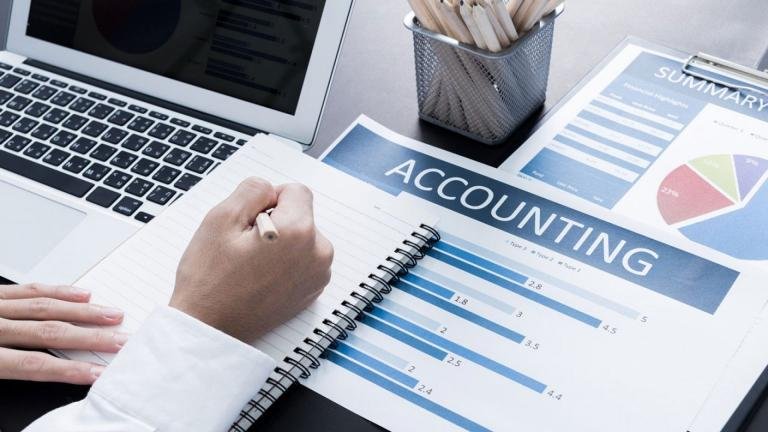
When it comes to managing your business transactions, you do have options. The most expensive will be retain the services of a qualified accountant. The alternative is to use the services of a bookkeeper, which will work out cheaper. What's the difference between an accountant and a bookkeeper?
An accountant will manage all your accounts for you, and you can also authorise him or her to act on your behalf with the HMRC. Instead of you doing your annual returns, you can instruct an accountant to do this for you. They may or may not include the option of bookkeeping, but you will find that most accountants do not provide this service, but could have a software application available for you to use, to help keep all your information organised.
A bookkeeper is someone who organises your financial data to make the accounting process easier. The organisation of your financial data is crucial when you reach the end of your financial year, as you will have expenses, petty cash, and other overheads that will be tax-deductible. A bookkeeper will manage all your financial documents and log them in the appropriate ledger so you have all the information you need to fill out your self-assessment tax return with ease. Accountants do not do your bookkeeping but they will do a couple of things for you.
1. They will manage your business finances with the HMRC
2. They can advise when asked about tax savings or investments
Accounting software is something you can use to help you manage your business finances, but there are also some software applications that may be made available through your accountant or an
independent service. This could be an agreement an accountancy firm has in place to help their clients manage their bookkeeping, such as using Fresh books as one example.
You will need to decide for yourself whether you're comfortable with managing your own finances, or if you'd prefer to hand that responsibility over to an accountant, or to enlist the help of a qualified bookkeeper to make your job that bit easier for you to yourself.
The choice is yours but do not disregard an accountant because they are the most expensive option. When it comes to tax deductions, these are the people who know the best ways to legitimately lower your tax bill.
13.7 : Vehicle advertising

At the very heart of your business, will be your company van. Within it lies your dip tank that will allow you to get more than just the one oven cleaned per day. To clean more than the one a day, you need others to know what your van can do. Tell people by using your vehicle as a tool for advertising. That way, people learn about your business, each time you drive around, park up at someone's home, or even leave it in your driveway.
The more people know about your service, the increased exposure you have to your target audience, and that alone can generate your business leads, without additional expense. You're using your vehicle anyway, so you may as well get the most mileage from it. It's easier than you think too...
You don't need to invest in a custom paint job to get your business details painted onto your vehicle. Instead, what you want to do is invest in quality vehicle stickers. Even a roof sign could be installed, but generally speaking, the side of your van and the rear doors are the only areas you need to focus on.
The details to include:
Company name
Contact telephone number
Email address
Website address
Social media handles
Areas your service covers.
Keep your vehicle clean
Remember you are in the cleaning business, so a dirty van is not going to be an efficient method of advertising. People will pick up on the cleanliness of your van, so you want to keep that looking and
shining as much as possible. Your company details are going to be stamped all over the van, so your reputation will always be in the spotlight. To keep things positive with your brand, you cannot fall slack on vehicle maintenance.
Depending on your location, you may need a quality clean once per week to keep your van looking fresh. In urban areas, where you're using country roads, your vehicle is going to get more messy and you will feel the need to clean it. Every time your van goes through a service wash, even it is only a few quid, keep the receipt as it will be tax-deductible.
13.8 : Saving Money on Equipment

Everyone loves a bargain but since you're going into business now, you need to have your eyes peeled and constantly be on the lookout for ways to lower your overheads.
Insurance costs can be lowered by using online comparison sites Product costs can be reduced by bulk buy discounts, or sometimes contracting to a trade supplier Operational costs could be lowered by investing in an eco-friendly van with lower running costs, and perhaps a lower road tax band.
13.9 : Tax

The instant you start your own business, you are classed as a sole trader, even if you don't register with the HMRC as such. Therefore, it is important that you get yourself registered as soon as possible. The earlier the better and you can do everything online at http://gov.uk/new-business-register-for-tax You need to do this early on to ensure you will be paying the correct amount of tax, and that your national insurance contributions are kept up to date.
All of your income and expenses will need to be documented and retained for seven years, but for the time being, these documents will be pertinent when it comes to filling out your self-assessment tax returns. The deadline for online self-assessment tax returns is January 31st.
You do not need to register for VAT until you reach the point where you are generating a turnover of more than the current VAT threshold in one financial year. That is business turnover though, and not
profit. You can opt-in before you reach the threshold. The rates can fluctuate each year, so you should keep an eye on that when the budget is announced. If you're using the services of an accountant, they'll be able to advise you on that aspect, but otherwise, check with the HMRC official website.
For VAT registration, click this link: http://gov.uk/vat-registration
13.10 : Registering with the HMRC
This is the part when your set up really matters, because if you were to set up as a Limited Company, you are liable to pay Corporation Tax, whereas by setting up as a sole trader, you only pay Personal Income Tax on your earnings. You do not have to pay all your tax in the one go, but it is handy to put a proportion of your revenue away to budget for your tax.
Your tax will be due on January 31st each year, although you can split the payment in two, and pay the second instalment by July 31st the same year. This is important to remember because your tax return is due by January 31st too.
If you file your self-assessment tax return close to the deadline, the HMRC will not have enough time to send you your statement, letting you know how much tax you are due to pay. For that reason, you should get into the habit of filing early.
Besides, leaving things until the last minute will be stressful, and if you do miss the filing deadline, a financial penalty will be imposed on your account.
13.11 : National Insurance Contributions
There are two NIC classes that you may eventually have to pay. Depending on your profits, you will need to pay Class 2 and Class 4 national insurance contributions. Most people pay these through their self-assessment. See the latest NIC rates here.
13.12 : What you need to know for your self-assessment tax return
You only pay tax on total profits, and not on net sales. This is why you must keep records of all your finances and not just your invoices. If you base your calculations on invoices alone, you will be paying tax on all revenue, because the HMRC will not know any different.
You need to tell the HMRC how much it cost you to generate the income. By using the applicable deductions, your tax will be determined. The more you spend on your business, the less your tax bill will be. You need to document all your expenditure such as your cleaning products, the cost of fuel, paper, ink, advertising, your business insurance etc.
All the smallest of costs your business incurs can rack up and make a big difference on your tax bill. There are three types of expenditure the HMRC recognise that you will incur during the course of
your business operations.
These are
1. Capital expenditure
2. Business Expenditure
3. Private expenditure
Capital expenditure All capital expenditure you incur in your business will be eligible for a capital allowance. This will include your oven cleaning dip tank, your company van, and your dry steam cleaner if you purchase done of those. Any tools and machinery you buy to use in your business falls under the category of capital expenditure.
Business expenditure
The rule for deducting business expenses is that the money you spent must be “wholly and exclusively” for business purposes. Things like your advertising costs, fuel costs when you're travelling to and from jobs, insurance premiums, business cards, and other equipment you purchase for business use only.
Private expenditure
This is the category where there is no tax relief. It covers the money you spend on yourself, including the salary you draw from your business. While you may be tempted to claim tax relief on the number of receipts you have for sandwiches you bought for lunch while you were working, you won't be able to do that.
By knowing the above three types of expenses, you will be able to make your bookkeeping simpler by filing each expense in an appropriate ledger, making it easier and quicker for you to complete your self-assessment tax return when the time comes.
13.13 : Accounting for larger purchases
Larger purchases you make for business purposes will be eligible for capital allowance. Your dip tank, company van, and dry steam cleaner will be the main items you're eligible to claim capital allowance on. These aren't as straightforward as the business expenses that you can simply deduct from your
trading profits.
Instead, you can use apportioning for the expense. This lets you deduct a proportion of the expense for the tax year and not the full amount. If you pay £2,500 for a new dip tank to be installed in your van, and you expect to use it for 3 years before you renew it, then you would divide the £2,500 over the 3 year period, giving you around £833 being used in capital allowances.
Instead of deducting the entire £2,500 in one year, and then having none the next, you can spread the tax savings over a few years, rather than have your tax bill fluctuate significantly.
13.14 : Annual Investment Allowance
You can deduct the full value of an item that qualifies for annual investment allowance (AIA) from your profits before tax. In your first year of trading, it would be beneficial to invest in the best, so this allowance can help you.
It is best to consult with a financial advisor or an accountant to find out what you can and cannot claim for before you splash out on the best of equipment though. Once you hit the ground running and your equipment starts to suffer from wear and tear and you need to invest in a new dip tank or other equipment, you will only be able to use your capital allowance by working out the cost over a number the years for which you will be using the tools. To find out more about Annual Investment Allowance, go to the government website:
www.gov.uk/capital-allowances/annual-investment-allowance
.svg)



