
10.1 : Environmentally Friendly Cleaning Solutions
Not every customer subscribes to green living for environmental reasons. There will be some of your customers prefer this service, because other services using harsh chemicals can render their kitchen useless.
It's not unheard of for someone to clean their oven with store bought oven cleaning products, only to find themselves overdoing it on the application, scrubbing way to hard, and not being able to get the entire base product out the oven before using it again.
Such instances can and do leave a foul taste on the food that comes out the oven. Not only that, but for people with allergies, there are some products that can be so noxious they leave people with bloodshot eyes for days, in addition to breathing problems.
Many people are unaware of the risk associated with chemical cleaning agents. There are so many potential problems with chemical cleaning agents that people do not want to risk using a product they know very little about. That's in addition to a task that their just looking for an excuse to back out of anyway. Instead, they will back out and ring the professionals, but they will not want people coming in with all sorts of proclaimed miracle cleaners. Instead, they will hire people who know their needs, and can cater to them empathetically.
If you believe you cannot get an oven cleaned without using harsh chemicals, do not try to persuade your customers to subscribe to your way of doing things. Someone else will come along and provide the service the customer is asking for.
Eco-friendly solutions o oven cleaning are becoming more popular
Parents with young families often want eco-friendly cleaning solutions for health reasons as they do not want harmful chemicals putting their family's health at risk. That's the primary reason for offering this service so if you are struggling with cleaning the oven, you cannot use your normal chemicals. Customers will be dissatisfied with your service and that will not be good for business. The process does take longer, as well as a bit of elbow-grease, but with the right approach, that hardwork can be minimised, without sneaking in a bottle of chemical cleaner. (not that you should ever consider that)
10.2 : Cleaning Ovens the Green Way
The best approach is the longest, and it will also be a bit inconvenient for your client, however, for green cleaning, it doesn't get any more eco- friendly than this. That's something to point out to your client too.
Bicarbonate of Soda – aka: Baking Soda
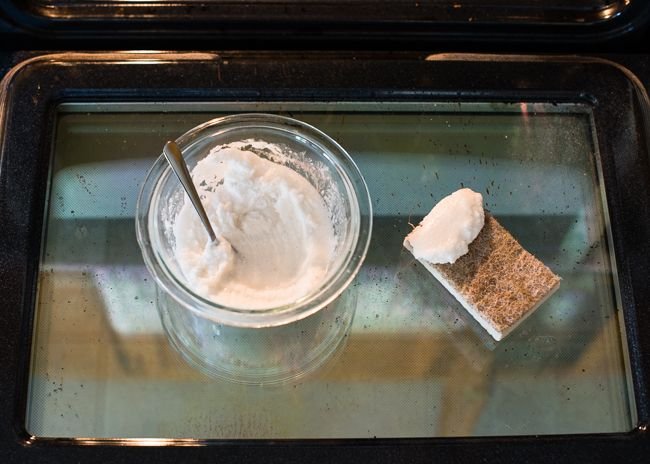
If you've never tried this method for cleaning your oven, you'll be amazed at what a little bit of baking soda and plain old H20 can do for cleaning. Of course, it' s also possible that you've read, heard and even discussed this method of cleaning with people you know. Taking a small amount of baking soda, mixing in some tap water, stirring it to make a paste, and then apply to whatever surface you need to clean. That really is all there is to it. For the application anyway.
How to clean your oven with Bicarbonate Soda
There's a number of variations to green cleaning with baking soda, some of which require salt, others vinegar, others some other concoction of different natural ingredients. One of the craziest methods you may have heard of is mixing it with vinegar. Don't do that. It defeats the purpose as one cancels the other out. It's called an acid base reaction and it happens because baking soda is a base, and vinegar is an acid.
It might look like it's powerful when you have the oven sprayed with vinegar, and sprinkle over baking soda to see it start to fizz and bubble. It's not doing anything to clean the oven though, other than cancel the other out and defeat the purpose. That's only mentioned above so you know not to try it as it will be a waste of time.
Using Vinegar
What's not a waste of time is using vinegar on its own. As vinegar is an acid, it's great to use as a de-greaser. For shifting stubborn food debris that's burnt onto the surface, the vinegar will soften it. You just need to give it time.
There's a bit of problem with just the baking soda and vinegar though. It only works on the surfaces and unless you're prepared to be scrubbing burnt parts of racks and shelves for a while with some seriously strong arm power, you will still need your dip tank.
But... You don't need to use harsh chemicals but you do still need chemicals.
Eco-friendly dip tank solutions
There are a number of eco-friendly solutions you can use for your dip tank. The majority of janitorial supply stores will carry a range of these products. You can identify organic products by the ingredients on the label. Plant-based surfactants will always be there, and there should be significantly higher percentage than any other ingredient. Plant-based surfactants are citrus oils. Lemon, orange, and lime are all examples of those all-natural cleaning products, which you can use on their own for cleaning but you can also get cleaning solutions that are designed using these extracts. That's what to use in your dip tank.
No matter which type of cleaning solution you use, you are going to need to scrub the debris off. However, the most powerful all-natural solution is by far baking soda and water, mixed to a paste
and applied to the surface. Apply the paste all over the inside of the oven cavity, and leave that to work overnight. This is why it is going to be inconvenient for you and your customer. You will have to do a late night call, and your customer will have to go without their oven for the evening, until you return to finish the job in the morning.
When you return to finish off, it's simply a case of scraping off the large chunks of debris with a plastic spatula, and then using a scouring pad to scrub the inside of the oven. The internal racks will be left in your dip tank while you do this, and the longer they are soaking the more the debris will loosen, taking the burden of heavy scrubbing away from the job. As with all other rack, and shelf cleaning, use the crimped wire brush to ensure you get all the debris removed.
10.3 : Working with citrus oils for a lemon fresh scented finish
You can make your cleaning solutions at home using nothing more than the fruit rinds, apple cider vinegar, and glass jar. You can also use white vinegar, but you do not want to advertise your services as 100% bio-friendly if you do use white vinegar. The reason for this is that white vinegar contains ethanol. It's part of the fermentation process of sugars and carbohydrates used in the manufacturing process. For this reason, whatever vinegar you are going to be using, check the labels and the company website to find out about how they manufacture their vinegar.
A good example is the Heinz® brand. heinz.com
On their website, they provide everything you need to know about their manufacturing process, and they do let you know the following information: “Heinz® Distilled White and Apple Cider Vinegars are guaranteed to only be made from sun-ripened corn or apples” Going from the above information, you can use their Distilled White and Apple Cider vinegar to legally advertise that the products you use for oven cleaning are 100% eco-friendly. You don't need to use the Heinz® brand vinegar, but you need to use Apple Cider Vinegar or Distilled White, and research the brand to ensure the products do not contain any of thefollowing on their labels:
Synthetic ethyl alcohol
Grain alcohol
Neutral grain spirits
Eco-friendly cleaning solutions that claim to be environmentally friendly, may be that, but it does not make them 100% chemical free. Which there really is no such thing because fruit rinds contain chemicals, which makes them useful for cleaning because their natural power. What happens in the manufacturing process for industrial strength cleaners using natural products can see a number of different chemicals added to the natural ingredients, making them more powerful, but extremely harsh. That is something you need to avoid when you're advertising a green cleaning service. You can only do that by using all natural ingredients with your cleaners.
10.4 : Making your own solutions

One way you can make your own cleaning solutions is by using fruit rinds and Distilled White or Apple Cider Vinegar. Put the fruit rinds into a glass jar, and fill it up with your vinegar. The mixture will need to be left for around two weeks before you can do anything with it. It would be handy to have a separate shelf in your garage to store the solutions while they're being prepared. Once the solution is ready, it will be in concentrate form, so you can mix it at a ratio of 1:1 with tap water and store the solution in a spray bottle.
Don't forget to dilute
If you choose to make your own cleaning solutions with this method, you will need to remember that the original solution will be a concentrate, therefore, dilution is required. To retain the strongest cleaner, mix to a ratio of 1:1,but you can go as high as 8 parts water, 1 part solution, but this will not be as strong.
Mixing with a ratio of 8:1 will allow you get more from your solution but for stubborn stains, it won't be nearly as effective. For that reason, a strong solution can be used for stubborn stains, and the most diluted product for finishing off the oven and surfaces to leave a fresh scent. If you want to experiment with different scents, or give your customers options, you could have lemon, orange, grapefruit, orange etc.
Any citrus fruit that that is peelable, you can use the rinds and soak in a suitable vinegar to produce a powerful citrus cleaner.
Why citrus?
Citrus oil in itself is a powerful cleaner, but when mixed with vinegar, it's even more powerful. For cutting through baked on dirt you need the power in the cleaning solution or it will be extremely
difficult to get the debris removed. The baking soda will work a charm at loosening burnt on food debris but when there are even tougher stains that the baking soda hasn't worked on, you can use your spray to break the dirt down even more and then take a scraper to it. The only thing you cannot use this solution on are marble, granite and wood as it can damage them. If you're cleaning the oven in a kitchen with a wooden floor, you will need to be careful that none of the spray comes into contact with the floor.
Does this work for commercial businesses?
Not particularly well, but it does depend on your client requirements. For smaller sized food establishments, it is possible through hard work and time, but for larger establishments, it's probably not going to be effective. The most eco-friendly solution you will have is the dry steam cleaning approach, described in the earlier module for commercial oven cleaning. Instead of using the dip tank, you'd solely use the dry steam cleaner on all the oven, and components to heat the surfaces and scrape, wipe and buffer to a gleaming finish.
All-natural cleaning products and techniques work best in a domestic kitchen, unless you have a dry steam cleaner with which you can do all your cleaning.
The reason for this is that the extreme heat (must be over 80 Degrees Celsius) will not only help break down grease making it easier to clean but with the high temperatures, it will also kill bacteria. That is what you need to be doing as it is the entire point of cleaning an oven. To make it hygienically friendly and aesthetically appealing.
10.5 : Cleaning cookers and oven parts without a dip tank
Should your customer not want the dip tank used for whatever reason, then you can get the cleaning done without one.
Here's how
Boiling water, but you will need to ensure your customer knows you are going to need boiling water, so they will have a few boils of the kettle racking up their energy usage. As mentioned previously, bacteria is killed using temperatures above 80 Degrees Celsius. Water reaches boiling point at 100 Degrees Celsius.
The only other component you need is eco-friendly washing up liquid to use on the cooker surfaces, and biological eco washing powder can be added to boiling water to soak pan stands and burners in. For removable parts, soak them in the water for a minimum of 30 minutes, then tackle the
scrubbing. Unfortunately, using only soap, boiling water and elbow-grease is going to be inefficient time wise, as it will take you quite a bit longer on the job, so to get it done with speed, and proficient cleaning, the only real way to get fast results is using your dip tank. It will be required for a deep clean.
10.6 : The Lemon Solution for a Citrus Scented Finish
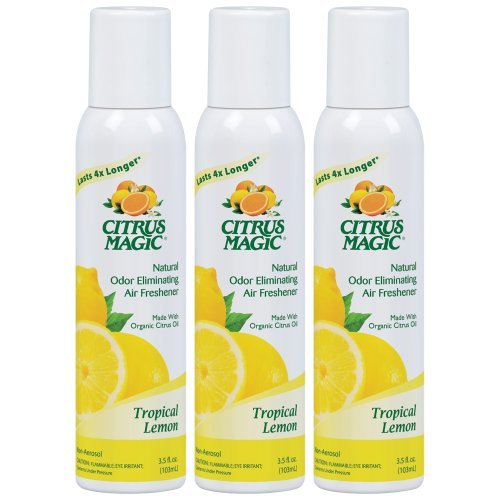
As with all oven cleaning, there is going to be a foul smell. This is just because of the food debris being softened with any solution you are using to de-grease. You want to be sure that when your customer goes to use their often after you've cleaned it, that there is no foul smells lingering. You can do that with lemons and an oven safe dish. Add 200 ml of water and four lemons sliced in half. Bake them for half an hour at around 180 degrees. Remove them and then leave the oven door open for it to cool. Once cool and safe, use a little cold water to wipe the oven down. This should make it smell great, and is a fast way to remove grease too.
10.7 : Tackling Burned on Food
Again, the bicarbonate of soda and warm water paste is going to come in handy when it comes to removing burned on food. Before applying the paste, you need to do a little preparatory work. Begin this by spraying on some warm soapy water and leaving it to soak. Use a scraper to remove a little of the food, then leave it to dry slightly. Add the bicarbonate of soda paste and then leave it for half-an-hour. Scrub off gently when the time is up and the dried in food should be gone.
10.8 : Using a Steam Cleaner to Clean an Oven
Although they use electricity, steam cleaners are the ultimate eco-friendly cleaning tools when it comes to cleaning ovens. You do not have to worry about oven cleaning dip tanks and bicarbonate of soda pastes, if you learn how to use a steam cleaner properly. When using a steam cleaner, make sure you allow it to reach the maximum heat before applying it to surfaces or shelves.
Buy the right cleaner
It will be in your best interests to buy a steam cleaner designed for industrial usage, as you are going to be using this much more than a normal domestic steam cleaner is intended for. Domestic steam cleaners often have a maximum usage time of around 20 – 30 minutes, after which you need to let them cool before refilling and using again. Without giving the machines sufficient cool time, between refills, they are at risk of breaking down. When they do, it can be difficult to find a repair service as the majority of electricians will not want to attempt these types of repairs.
Water+ electric makes even the most experienced electricians break out in a cold sweat even thinking about attempting this. You need a repair service that specialise in steam cleaners and that can be expensive.
To avoid unnecessary repair fees, buy commercial dry steam cleaners. The bigger the tank, the less you refill and the longer consistent usage you get. Do not use steam around the main mechanical constituents, as this can damage some essential components, rendering the cooker useless.
Begin by using your cleaner to remove grease—do this by letting it reach the highest heat setting and powerfully spraying it at greasy areas. Once you've blasted the oven, or cooker surfaces with steam, wipe it down, and scrape at more difficult burnt on food.
Continue to wipe down after each blast, scrape, and scrub you do to prevent the debris and grease from cooling down and settling again. Otherwise, you will be on the job much longer than you have to be.
To finish the process, add a head to the steam cleaner that wipes down or scrapes off. The only attachment you should not be using is a brass wire brush attachment as the fibres can become loose, and leave the potential of food contamination.
The Nylon brush component and the detail nozzle are ideal for steam cleaning ovens. Use it for a little while and then go back to using the steam cleaner without the head again. After this, rinse the shelves with cold water or wipe down the area you are cleaning with a microfiber cloth to buff and shine.
.svg)



