
8:1 Know your ovens
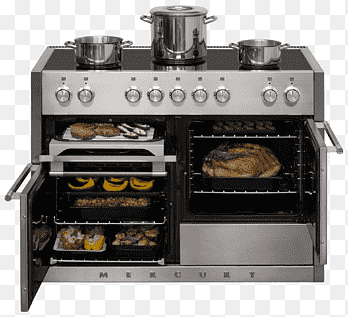
The AGA and Rayburn cooker brands are a range cookers. There are different types of range cookers, but the AGA brand prides itself on the radiant heat feature of all their cookers due to the engineering that goes into them and the radiant heat they produce. These are not just cookers. They are multi-purpose, but there are differences between a traditional AGA cooker and a Rayburn cooker.
8.2: The difference between the two
An AGA cooker stores heat and it is always turned on. That is unless your customer has opted for the AGA Total Control model, which can be switched off and on. Older AGA cookers are always on. They store heat and some can even power domestic hot water.The largest AGA cooker has four ovens. Standard models have two.
The four ovens are:
1. A roasting oven
2. A baking oven
3. A simmering oven
4. A plate-warming oven
You must be sure that you clean every oven for your customers, as they will expect that. Just because the simmering oven and the plate-warming oven aren't doing anything in the way of cooking, they still need cleaned just like every other oven. It's just not as intensive a clean as the main two oven compartments. Due to the radiant heat produced, the cookers can also be used for additional purposes, such aspiring clothes, heating the kitchen and surrounding rooms, boiling water, and making toast, which reduces the need for boiling kettles, using a toaster, running central heating, and powering up the tumble dryer.
People rely on these cookers much more than a standard cooker, so you must ensure you work with precise care and attention to avoid causing any damage. Range cookers can save on energy bills because of the additional functions they have, but that comes at a cost. These cookers are not cheap. The average price is around £5,000 for an AGA cooker, which is why you cannot go gun-ho at cleaning them with just any old cleaner. Newer models can stretch as high as £13,000+. The cookers are made of cast iron metal, and to clean that, you need to use an approved oven cleaner that is safe to use on vitreous enamel. You can find a list of these products at the Vitreous Enamel Association website at the followingwebsite address - http://vea.org.uk/enamel-care-list
Rayburn cookers are different in the fact that they only contain two ovens maximum, and they canalso power central heating systems.The main difference is that Rayburn cookers can be turned off, whereas other AGA cookers are on continuously, with the exception of the Total Control model, which can be operated independently to further lower household energy bills. Because these are used year round, always on and provide a source of heat to the home, the best time to get the deep cleaning done is in the summer months. When the climate is warm enough to do without the heating. That's the time of year people will turn their appliances off and it's the busiest time for oven cleaners and AGA service engineers. You cannot do any cleaning with these cookers when they are on. It's far too dangerous. When an AGA cooker is turned on, you can expect the following temperatures:
Top boiling plate - 390 Degrees Celsius
Top simmering plate – 175 Degrees Celsius
Roasting oven – 220 Degrees Celsius
Baking oven – 175 Degrees Celsius
Simmering oven – 120 Degrees Celsius
Warming plate – 60 Degrees Celsius
There is no way you could safely work with those high temperatures. The cookers must be off and cold, or at least warm to the touch before you begin cleaning them. There is an element of self-cleaning built-in to the cookers due to the high temperatures. As you may already know, high temperatures are great for killing bacteria. So any food debris that is spilt, or soup boiled over, there won't be any bacteria lingering, because the temperatures will kill it. That doesn't exactly add up to total self-cleaning though as you still need to clean the debris. For regular maintenance, the ovens will carbonise most materials, allowing the owner to simply brush off the dust, but there will be other debris that can become burnt into the oven, and the ever present problem of browning on metal caused by the high temperatures.
AGA Ovens
1. Classic 2 oven Aga
2. 3 Oven AGA cooker
Rayburn Oven
8.3: The cleaning process
Enamel
The enamel is the first thing to tackle and the best cleaner for the job is warm soapy water. While there are approved cleaning products for this type of enamel, none can guarantee 100% protection. All products have chemicals, and the type of enamels there are respond differently to them. It all depends on what the chemicals were tested on, as there are different types of enamel. If you must use a cleaner, always test it on a non-visible part of the cooker, before you apply it as chemicals can cause irreparable damage. The first cleaning agent to use is by far soap and water. Use that for all outer parts of the cooker. For the most part, the outer of AGA cookers are easy to clean as they are consistently hot and can easily be wiped clean with a damp cloth and no chemical cleaners. Use warm soapy water on all outer areas of the cooker and clean with a smooth cloth to remove any traces of grease.
The top of the cooker
At the top of the cooker you will have two different plates to tackle.
1. Boiling plate
2. Simmering plate
Do not attempt to remove the barrel under the boiling plate. That's a two-person job and should only be done by a servicing engineer. The only part of the top that you should remove is the outer insulating rings around the hot plate.
These will lift off easily, so remove them and set them aside but be careful not to mix them up. Use a course brush to dust under and around the hot plate. The hot plate itself can be cleaned using warm soapy water and it will require some heavy manual scrubbing if there is burnt on food to be removed.
Cleaning the enamel
All around the outside of the cooker is vitreous enamel and you cannot use any chemical detergents other than approved products that are safe to use, but you are best to keep things safe and only use warm soapy water.
A soft cloth will be needed as you cannot use anything course on the enamel. It's far too fragile and is likely to scratch or chip. If that happens, there's no way to fix it, or mask it. It's a new top it will need and those are pricey.
If you do notice existing scratches on the surface, let your customer know that your cleaning isn't going to get rid of the scratch and be sure they know it is there. You do not blamed for existing scratches as your customer will be likely to file a claim and that will hike your insurance premiums. Inspect the units first for existing scratches, and inform your customers they are present before you tackle the cleaning. Use soap, tepid water, and a soft cleaning cloth to clean the enamel all around the cooker.
Cleaning the cavity in each oven
In each of the ovens there are removable parts. All the shelving and other chrome fixtures can be
removed and placed in your dip tray.
The inside of the oven doors
The inside of the oven doors can get really dirty, and to remove it you are going to have to scrape it off the surface. If the model has liners, those can also be removed and placed in the dip tank, but you must remember which lining is for what oven door, because these are designed to control the temperatures in each oven compartment. If you mix up the inner liners, the ovens will not operate to the set temperatures and will cause your customer the expense of requiring a service engineer to get the temperatures fixed on each of the ovens.
Cleaning the lids on the top of the cooker
While the chrome racks, shelving, fixtures and fittings are soaking in your dip tank, shift your attention back to the top of the cooker for the inside of the lids covering the hot plates. These can become a haven for dirt to collect and you may need to scrape off the dirt. Tepid water again and not chemical cleaners. The inside of the lids will take the most scrubbing, with the external enamel being able to be
carefully scraped with a plastic scraper, if required. For the most part, the external cover of the lids will be clean, but the inside is always going to require more attention. The doors can be removed from the oven for easier and more thorough cleaning, but if you do this, the doors must be put back onto the right oven as they do have different linings to control the radiant heat in each oven compartment.
There will be parts of the cooker that are powder coated, so no chemical cleaners will be able to be used on them, as it will damage the surface. The safest option for all parts of an AGA cooker is always to use soap and water. Only after attempting to remove stubborn stains naturally, should you clean with a cream cleaner, and even at that, always test on a non-visible part of the cooker to ensure it won't damage the surface material.
8.4: Cleaning a Rayburn Cooker
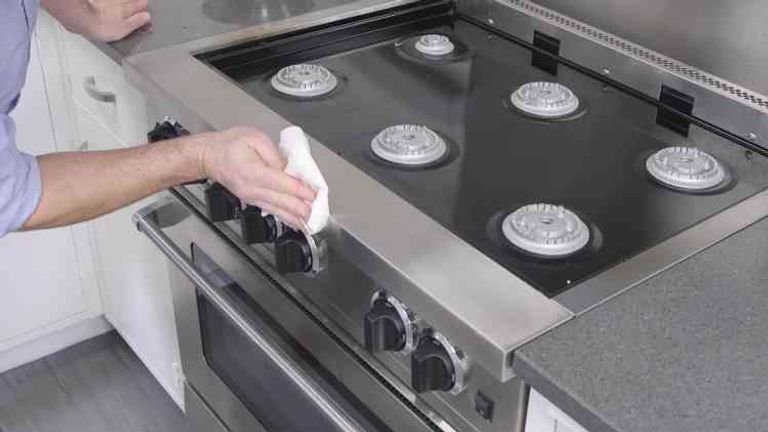
The lids
On older Rayburn models the lids will be hinged on pins and these will be difficult to remove. You are best to clean them without removing the lid on older models. If you are working on a newer model, there will be a lid hinge at the base that you can unscrew and remove for cleaning. The lids will be cleaned in the same way you'd clean any other AGA cooker. The only difference is that some lids are removable and others aren't. It depends on the model.
Cleaning the metal hob
The metal hob is going to need cleaned with the same cautious and careful approach. As with any AGA hob, or even ceramic hobs for that matter, always clear away the large and loose debris first. With the loose debris gone, then use a plastic scraper with a shallow angle to scrape away the baked on foods. Use a soft cloth with warm soapy water and clean in a circular motion, and dry the surface with a microfiber cloth.
Cleaning under the hob
The hobs are removable but they are also heavy and bulky. On older models, you may need to prise the hob up from the edge to get a good grip of it. However, there are many newer Rayburns that are designed with a recess in the centre for easier removal. Under the hob is where you'll find the majority of the grime that has accrued from fat splashes of grease, fat and cooking oils.
You will need to clean with a non-scratch cleaning pad, as well as a neutral cleaner. It does take a lot of elbow-grease to get rid of stubborn marks, but you should never try to short cut it by thinking you can use a more abrasive chemical to break down the burnt on grime and get the job done faster. There's no speeding up the cleaning process. You need to ride it out with these cookers, and give them the best cleaning power you have, to get the surfaces cleaning to a shine. All the chrome racks, railings and other removable attachments from the cooker will be able to go inyour dip tank to help revive them.
Once you're finished with the cleaning, put the hob back in place and the plate rings too. You may also want to apply a light coating of oil to prevent any rusting.
.svg)



