
3.1 Introduction
This part isn't complicated but it is important that you know the facts before you begin providing your oven cleaning service.
There are two types of oven cleaning jobs you could be doing.
1. Domestic oven cleaning
2. Commercial oven cleaning
Both have different cleaning techniques, and done for different reasons. The homeowner will want a sparkling clean oven for health benefits, whereas businesses are required to have their equipment cleaned regularly for compliance with the Food Safety Act.
Typical domestic kitchen / oven
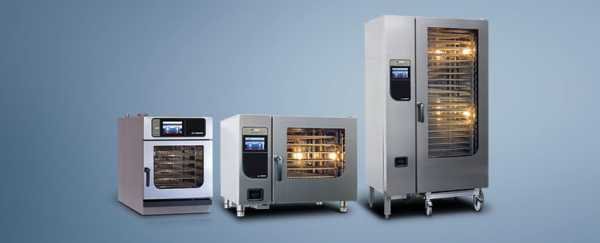
Typical commercial kitchen / oven
3.2: Domestic oven cleaning

This is the safest route to go when you are first starting out and you'll soon understand why. It will give you the opportunity to get a bit of experience under your belt, working with the equipment and chemicals you have.
In a residential kitchen, you don't have some of the restrictions you would have in a commercial environment. Food businesses rely heavily on the ovens being operational in order for them to serve their customers.
If you're lagging on time, they will be losing money, and that is not going to be good for your business.
That's one of the benefits you have by opting for the residential route. You don't have the time limitations.
Domestic sector = more control over working hours.
The domestic sector is also the area where you'll have more control over your working hours. Although, you will need to keep convenience in mind. Some people may be working on weekdays, and require your services at the weekend.
Another thing about residential customers is that you will have time on your side. If you need to push the job past the couple of hours you scheduled, the customer will be happy with that, as they'll know they are getting their oven super cleaned.
A commercial kitchen wouldn't/couldn't afford you that luxury. As long as the ovens are off, the kitchen is out of use. That means the business is not taking profit's, and you're holding them back. You don't have that hassle in the domestic sector.
A more laid back environment
You can work to your own devices, and provided you aren't causing a nuisance to the homeowner by eh...smoking in the kitchen, which you should NEVER do, then they'll be more than happy for you to stay and see the job through to completion.
Also note that being left to your own devices, also means working on your own, without a kitchen supervisor or management shadowing your work. This can happen, in particular on your first job, as the business establishment is responsible for your health and safety while you work in their establishment.
(In a residential property, it's the other way around. You're responsible for the safety of the people you're working around.)
For the business's protection and yours, they are likely to be observing you work, ensuring you are complying with the required health and safety policies put in place.
That doesn't mean that can let your guard down and dismiss health and safety when you're working in a residential property. Far from it in fact, because there are far more risks in a family home than there is in a commercial kitchen.
Maintain vigilance at all times
You've kids and family pets to consider the safety of, because you will be using chemicals, and not just when you're on the job, but after you leave to, you must be sure the oven and the kitchen is safe for everyone. No chemical spills, or any rags left sitting on the worktops.
You need to be sure that any chemicals you use are not going to leave toxic fumes in the environment, as you cannot expect each member of a household to wear PPE for the rest of the day, or tell them that the kitchen is out of bounds.
When you're finished cleaning, the kitchen should be ready to use:
Commercial Oven Cleaning Commercial kitchens are different.
There are some shortcuts you can take to clean ovens, which you will learn about in this course, but they may not always work so well for commercial environments.
When you are working in schools, hospitals, restaurants, and other areas of the hospitality industry, your tasks become much harder.
Use only commercial cleaning products It is therefore recommended that you only use commercial cleaning products, which means steering clear of remedies like baking soda, which are about as useful as a chocolate teapot when you are tackling commercial ovens.
Any cleaning product that is not supplied with an accompanying Safety Data Sheet and Technical Data Sheet, will not be strong enough to be used for commercial purposes. Strong chemical cleaning solutions are required to have those documents. These are regulated by the Controlof Substances Hazardous to Health. (COSHH)
In a commercial kitchen, you don't have the luxury of eco- friendly cleaning solutions. Ovens in food establishments take a beating because they are used consistently. What a normal cooker at home does in a month, a commercial oven will do that same amount in less than a week, sometimes
even a day!
If you have never stepped foot in a commercial kitchen, then imagine the amount of different foods being served on a menu, and all those different types of foods being in the oven for a few hours longer than the businesses opening times.
That is how frequent these ovens are in use and as such there is a huge amount of food debris going to be burnt onto the racks, and shelves, and around the inside of the oven, you can guarantee you're going to need some seriously strong arm power, and chemical cleaners to get the oven clean and ready for use again.
Environmentally friendly products are not best suited to commercial ovens If you insist that your business only uses environmentally friendly products for oven cleaning, then commercial is not for you. You are going to need to use caustic solutions on commercial ovens. It's the only way you'll ever get all the baked on grime removed in a timely fashion.
Asides from commercial ovens being more laborious, you also need to consider the legalities. Food establishments are regulated by the Food Safety Act 1990 and 1995, and part of that includes the regular cleaning of their cooking equipment. That's why if you decide to tackle commercial kitchens, you can expect more long-term work.
These jobs pay far higher than domestic, and they are often required quarterly, whereas residential may only be an annual clean, or six-monthly. There are some businesses that prefer to have a monthly deep clean done when their business is closed for the day.
Every commercial kitchen will have a “clean as you go” policy, which kitchen staff are required to adhere to. However, ovens are not part of the “clean as you go” policy for the obvious reason that you cannot safely put your hand into a hot oven and expect not to be burned.
Make sure the oven is off and cool before you begin The oven needs to be off and allowed to cool before it can be cleaned. That's why businesses will use a professional oven cleaner. You're able to get into the parts of the oven that are inaccessible every other day and give the oven a deep clean, keeping it producing healthy foods, and therefore, assist food businesses in maintaining and possibly increasing their food hygiene rating.
For a business to demonstrate their proficiency and adherence to the Food Safety Act, they must have clear policies in place describing the cleaning policy, and the frequency of any deep cleaning of appliances are done. The work you do and the paperwork you supply is their evidence of complying with the Food Safety Act.
3.3: Which is the Right Type of Job for You?
There's no denying that commercial oven cleaning will be more labour intensive. The rewards are far greater though. If you're only cleaning ovens in residential properties, you're only contributing to the health of the family living there.
When you branch into the commercial sector, the cleaning you do contributes to the food hygiene, and therefore benefits every customer eating the food coming from the oven you clean. You really can make a positive impact on the quality of food in your local area, but you must be prepared to put the work in. If you fall short, it's you could be held liable for any contamination to the food produced if you do not take adequate precautions.
The less work and risk is in the residential sector. The more rewards can be found in the commercial sector, as you can make a positive impact on food quality and the bottom line of your clients.
.svg)



