
6.1: Introduction
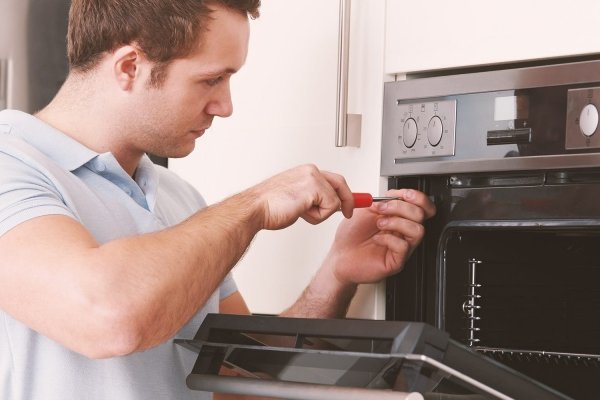
There's no doubt about it that cleaning ovens is quite a laborious job. It involves getting into the thick of it with some gruesome scrubbing in often super mucky ovens. This is particularly true for the commercial oven cleaning industry, as those will be large ovens, but regardless the size, you may be surprised to see some of the dirt that comes out a standard single oven in a family kitchen. The majority of the grime will be invisible to the eye, even in ovens with lights inside them. What you see is the caked on grime around the sides and on the rails. What comes out the oven is a whole other matter.
The reason for this is the powerful paste you'll apply to the oven surfaces and side panels as they will de-grease every piece of fatty deposit beneath the surface they're applied to. Those can be caustic or non-caustic solutions. The chemicals will do the bulk of the heavy lifting by
breaking down the debris, so that it's easier for you scrub the oven. When you get around to scrubbing after you've left the paste to settle... that's when things get interesting. What you thought would be an easy job when you first looked at the oven, can hit you as quite a surprise when you open the oven door to get stuck into the cleaning.
One swipe of your scraper and a stroke with the scouring pad to lift the dirt and you're going to be removing thick coats of black dirt. It's a messy job, but someone's got to do it. That someone will be you, and it's why you can attract good rates in this line of work. As you're using chemicals, safety gloves are required, but you will want to use thick gloves so you don't feel the grit and grime on your hands.
The thicker the glove the better, unless you have a strong stomach. Depending on the chemical agents you're using, you may need to wear a mask when working with the chemicals, but generally speaking, you're best to wear one anyway. The smell from some ovens and the fumes from the chemicals you're working with can be overwhelming. As with anything though, the more you do it, the easier it becomes. Kind of like second nature. You will get used to it eventually.
6.2: Conditions of both types of oven cleaning services
Residential
These are where you'll find the smaller jobs. Homes across the nation need professional oven cleaning services. Well, they don't really, but
home-owners want hygienically friendly and bacteria free cooking equipment and that's exactly what you'll be turning up to do for them. Providing superior oven cleaning services that they just can't get on their own. The majority of ovens are single ovens and those will be your straightforward jobs. There will be dirt and grime to deal with obviously, but certainly nowhere near as much as you will have with a commercial oven. You will need to work in a clean manner as you are in other people's home. The dirt and grime that comes out the oven, can spill onto the floor, so be sure you take old rags, or liners that you can lay across the floor under the oven door to catch any dirty water running out of the oven.
Commercial
The ovens you clean in a commercial kitchen will vary in size. Much larger than any domestic oven. The hospitality industry is where you'll find the majority of oven cleaning contracts, but in addition to the ovens being larger, you've also got larger hobs. There are also likely to be more niche cleaning tasks involved too, such as cleaning steamers. This is why your hours on the job will be much longer than cleaning residential ovens. The largest ovens will be in government facilities. Schools, colleges, hospitals and similar facilities use their ovens to cook en-masse, which means they are going to take a heavy battering, requiring the most cleaning. These types of jobs are rare, but nevertheless, they still need done.
6.3: The working hours
If you want a job with flexible working hours, then you're heading into the right career. Unlike general cleaners, who are often required to work outside of normal operational business hours, your hours will be during the day.
Weekend work
That's not to say that weekend work is off the cards, as it is highly likely that you will be working the weekends. It's the convenience aspect of the job for your customers, as they may be too busy with work and other commitments on weekdays. Should you choose to work for a cleaning agency, or as a general cleaning operative, with oven cleaning being a part of your duties, you will often find that employers are likely to want you working the weekends.
Self employed = total flexibility
If you go into business for yourself though, it's entirely up to you whether you work weekends or not. You may decide that you're prepared to provide the service on weekends for an additional fee.
For example:
if you charge £50 for cleaning a standard oven, you may decide that for weekend work, you'd rather have a supplemental fee of £75 for weekend call-out. How you price your service is entirely up to you. The example above would allow you to charge your usual rates on weekdays, and time and a half for weekend work. One of the advantages with that pricing approach is that your customers will be encouraged to arrange for you to clean the oven during the week, rather than pay you more to come out on a Saturday or a Sunday. If you choose to work for someone else, the hours you work will be determined by your employers. By being in business for yourself though, you can take charge of the hours you work.
Finding a Balance
You will need to find a balance that you and your customers are happy with. Some people may not be home until after 5pm, while others will be able to give you access whenever you're available. It is ideal that when you start your advertising to have a set schedule that you're comfortable with. If you want to work between 10am and 2pm, and happy to go back out on a job later between 6 pm and 8 pm, then make those your time slots. Your clients don't need to know why. You just need to let them know the times you are available.
“I can book you in for 10 am, Monday morning”
If that's unsuitable and an evening appointment is preferred...
“Would 6 pm Thursday suit you?”
Do you see how that works?
To the customer on the other end of the phone, they'll feel as though you're looking through your diary of appointments. What you're really doing is booking the appointment at the hours you decided works for you.
6.4: How long for each job?
You can expect to clean a standard oven within two hours, with experience. When you're first starting though, put your best foot forward and approach your jobs with caution. If in the example above, that's the schedule you're after, then only book one morning appointment. That gives you four hours to get the job done. A standard oven, you will be charging in the region of £50.
For four hours work, it's not a lot. Before you go reaching for the calculator thinking it is a lot; it works out at £12.50 per hour, if you take four hours to clean the oven. That may seem a lot, but remember you have overheads for cleaning chemicals, your insurances, and other business overheads, plus holidays all coming off those rates. When you factor in your expenses, £12.50 per hour can soon be whittled down to the equivalent of minimum wage. But with experience, you will become more proficient and be cleaning a standard oven in two hours, so consider your first jobs as work experience. The more experience you gain, the better returns you'll begin to see as your business grow's.Also remember to account for travel time. You cannot book an appointment for 10 am, and a second for midday, as you will be late arriving to your next appointment. And you won't be finished the job by 2 pm either. Time management is something you must be good at. Without it, you'll be chasing your tail for the majority of the day, and your customers will be irritated by the inconvenience. Set what hours you want to work and then arrange your appointments around what works for you. That's how you achieve flexible working hours.
Here's some more advantages you have Your customers know what to expect
You can clearly advertise booking hours on your website and pamphlets
You are likely to be more productive when you have a set timetable
6.5: Holidays
One of the benefits of employment is that you are entitled to
paid leave annually.
You get a security blanket income, and paid for holidays. 5.6 weeks to be exact but you will very rarely find you will get the full 5.6 weeks paid annual leave from your employer. The reason for this is that employers are not required to pay you for bank holidays. These are usually worked into your annual leave. If you're working a five-day week, your five days are multiplied by the 5.6 weeks annual leave entitlement to give you your statutory holiday entitlement of 28 days per year. Most employers cap your holiday entitlement at that. Part-time workers are entitled to holiday pay too Even if you work part-time, you still get some holiday pay.
Just not the full 28 days. What you get instead is the amount of days you would normally work, multiplied by the 5.6. Say you decide to take a Saturday morning cleaning job in an office. You only work one day per week. That would entitle you to five days annual leave. It is something worth considering if you are going to go self-employed as it can give you at least one week's wages paid for when you're off on holiday. Whether it is worth it in financial terms, you will need to research things for yourself. It would be advised to seek the advice of an accountant if you are self-employed as working as an employee and self-employed will have an effect on your tax status. Self-employed responsibilities
When you're self-employed, you're responsible for paying your own tax off the income your business generates. As an employee, you will pay tax through P.A.Y.E (Pay as You Earn). You don't get a choice in that. Depending on the amount of days you work part-time, the wages you get, and the holidays you take, plus the income from your own business, it may not work out financially better, but you would have the security of a regular income.
Again, when it come to tax affairs, seek professional advice as you do need to be informed about all the implications before you do anything hasty that could cost you in the long run. When you're self-employed, your paid holiday leave is forfeited. You cannot force yourself to pay yourself, and you're not expected to either. What you need to do instead is decide on the amount of holidays/leave you want to take in a year, and break the cost of that down to include in your pricing. It is recommended that for each invoice your customers settle, you put a proportion of it aside to cover the times when you aren't working. When you are not working, you are not earning.
That's why you need to account for this in your service pricing. It is also worth considering any other cleaning services operating in your area, as many will not be available on bank holidays. That is something you can use to your advantage, as there are so many customers that are off work and would be delighted to have your service provided at a time that is convenient for them. When a bank holiday is approaching, that's the best time to up the ante on your advertising, and let people know they can book you for the coming Bank Holiday. A time when other services are closed for business.
6.6: Earnings

How much you earn is entirely in your control, provided youare in business for yourself. If you're providing the service as an employee, then you can expect earnings of around £14k to £25k per annum. The higher bracket of pay will only be accessible by those with plenty of experience, or in city areas, such as London, Manchester, or Birmingham. Areas where the cost of living is higher, there are often businesses using the living wage, rather than the minimum wage, and in turn, people have higher earnings, so can therefore afford to spend a little extra. However, the cost of living is more anyway, so you will need to factor in what you need to make regularly to cover your own cost of living. If you are going to work self-employed, then the earnings you make will be an accumulation of the jobs you do and the rates you charge for doing them. As a rough guideline, the following rates are typical for an oven cleaning service.
• Single oven: £50
• Double oven: £65
• Hobs: £15
• Microwaves: £10
• Extractor fans: £15
• Two-oven size AGA: £80
• Raeburn Ovens £80 (these are always two-oven cookers)
• Four oven size AGA: £125
• Light bulbs: £5 (buy these bulk to increase your profit margin)
• Barbecue racks: £5
The last on the list is something that not very many people will consider until you mention that the service is available.
Research prices
These are minimum prices and should only be used a guideline. Research other services in your area, or if there aren't any; check the prices of the nearest oven cleaning service to where you are as prices do vary by region. You don't want to undercut other businesses to gain business, but you do want to keep things competitive. Go too high, and you price yourself out the market, and go too low, and you
undercut your potential income. There are some services you will be offering that may not be worth your while financially. An
example is someone booking you to clean their micro wave. A £10 job. Hardly a booking you'll be thrilled about and it is likely to cost you to provide the service, by the time you pay for fuel, chemicals, and your time. A good way to avoid losing money that doesn't cover your expenses is to have a minimum booking charge.
If you reckon you need a minimum £30 to cover your expenses and make some profit on each job, then advertise your services with a minimum booking fee of £30 for all services. You will have a few lower priced services for customers to choose from, so if they want their microwave cleaned, they may as well get the cooker hobs done as well. Throw in a barbecue rack and they have their £30 worth of cleaning services, and you have your minimum booking fee, without asking the customer to pay more for the one job they thought would be £10. You could have some customers who only want the smaller jobs, and you will have others who want the full works. Oven cleaning, hobs, microwave, racks, and the extractor fan. It all adds up. Say for example you do put a blanket booking fee of £30 on your services. Three jobs per day, you're looking at £90. That's minimum. Get three standard ovens and you're up to £150 in a day. Not all days will be the same, but you will have good earning days and bad ones. It's the same in every business.
Use your free time productively
The important thing is how you use your down time. If you're not out on a job, be working at marketing your services. The more people know about you, the more calls you'll receive, and with that, you can fill up your appointment slots, and grow your business. For commercial pricing, you should never advertise pricing because all commercial ovens will vary in size. The amount of cleaning required will vary too. If you are going to provide commercial oven cleaning, then only advertise commercial cleaning quotes available upon request and ask businesses to contact you. Follow up with an appointment to find out the exact service required, and to have a look at the oven needing cleaned. Then quote your rate for the service. If you think it's going to take you a full day, then quote based on a daily rate.
.svg)



