
9.1: What it's like to clean commercial ovens
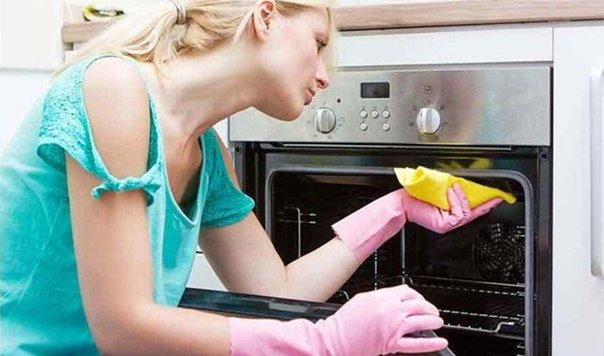
When you are working in schools, hospitals, restaurants, and other
areas of the hospitality industry, your tasks become much harder.
This is why it's recommended that you only use commercial cleaning products, which means steering
clear of remedies like baking soda, which are about as useful as a chocolate tea pot when you are
tackling commercial ovens.
When working in a commercial environment, you are going to face challenges like:
Seriously burned in food
Deep grease from tough animal fats
Oven shelves that need much more soaking
One of the primary reasons you can get more money from these jobs is that they are much tougher.
You should therefore consider placing a 50% mark-up in comparison with the pricing detailed
earlier. That's minimum because as you will soon find out, your equipment and chemicals will cost
you far more than your standard cleaning equipment.
Cleaning a commercial oven is no easy feat, but you can make the job a whole lot easier by using the
right tools for the job.
There are two pieces of industrial equipment you're best to use to get the job done and
those are...
1. A commercial dip tank
2. A dry steam cleaner
The commercial/industrial dip tank is different from a standard unit and they will be more expensive.
The difference is the temperatures they can reach and the chemicals they are compatible with.
If you buy a bio dip tank, or worse still, a plastic dip tray, you will not be able to use industrial
strength cleaning solutions with it. You are going to need caustic cleaning solutions and you need to
know that those pose a risk to your personal health and safety and those around you.
Personal protective equipment must always be worn when working with caustic chemicals. Thick
rubber gloves, or your gauntlets, eye goggles, and a face-mask are mandatory to prevent inhaling
the toxic fumes released from the chemicals.
You will find that in commercial kitchens, the work you do will be done outside of business hours.
The company staff are unlikely to be on the premises, so you shouldn't have to worry about others
around you while you're working and if there are, you are best to ask your client about their health
and safety training and awareness.
9.2: General appliance cleaning and advice
In a commercial kitchen, you aren't there to provide aesthetically
pleasing results only.
Your client will rely heavily on your proficient cleaning, as it will have a bearing on their hygiene
rating. An essential component to any food business.
While you do need to provide aesthetically pleasing results to your client, you also need to get rid of
every ounce of bacteria lingering in around their oven, to ensure the food that's cooked in it is safe
for human consumption.
To do that, you need a few things
1. Upper body strength as the carbonised parts of the oven components will only be able to be
removed with brute force. Powerful scrubbing, and scraping to get every last part of burnt on
grease and food debris removed from the surface.
2. Heat: Any harmful bacteria is killed under high temperatures. 82 Degrees Celsius. Your dip
tank will operate around that temperature, but possibly as high as 90 Degrees.
The other way to reach this temperature is to use steam, or boiling hot water. That's why you
have a choice in the cleaning techniques you use to clean the equipment. Use a dip tank, or a
dry steam cleaner but bear in mind that having both will make your job a whole lot easier and
speed up the time it takes you to do the job.
The faster you get the job done, the more money your business makes. But you can't slacken
off your quality of service to compensate for the extra time it takes to clean commercial ovens.
You could have it done in four or five hours, or it might take you entire weekend. It all depends
on your own stamina and the tools you employ to help you get the job done to quality
standards.
3. Chemicals: There are a number of cleaning solutions available but you must know about each
type and how to use them safely.
The chemicals for this type of cleaning, if you are using a dip tank will be caustic chemicals,
meaning they are extremely hazardous to health and will be regulated by the Control of
Substances Hazardous to Health Act.
9.3: Know your chemicals
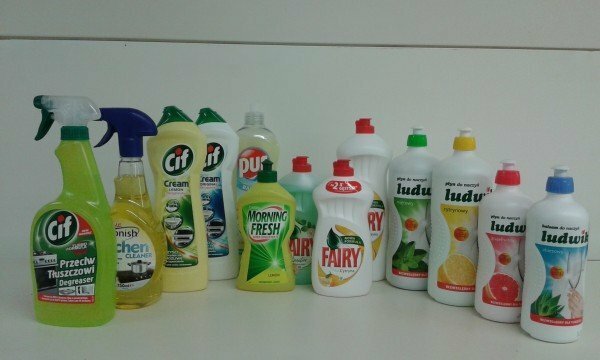
There are different categories of chemicals you should be aware of. Those are:
1) Detergent
Items such as your de-greaser, and washing up liquid are detergents that you will use to help break
down grease, and remove stubborn food debris.
2) Sanitiser
These are two-in-one products combining both detergents and a sanitiser into the one solution to
break down dirt and grease, as well as kill off any harmful bacteria.
They will clean and sanitise, but only when you use them in accordance with the directions supplied
with the product.
3) Disinfectant
This is where the commercial cleaning solutions differ as there are two different types of
disinfectant.
a) Hypochlorites
In more common terms, this is your every day bleach you'll use around the kitchen. It needs diluted
following the manufacturers guidelines.
Sodium hypochlorite is the most widely available cleaning disinfectant there is, making it a cheap
and effective cleaning solution for a variety of surfaces.
But it will fail you in a commercial environment because it just isn't strong enough for the job.
b) Quats (Quaternary Ammonium Compounds)
These are seriously strong chemical solutions with a natural liking to surfaces. They stick to it and
when salt compounds are added to the solution, it becomes an effective pH neutral cleaning product,
safe to use on corrosive surfaces.
They're extremely dangerous to work with though and these are the chemicals you need to
be sure you are careful with. They can cause:
Skin problems
Breathing problems
Hypotension
Caustic burning to the skin
Vomiting
Nausea
And Contact Dermatitis
The above are all some of the recognised affects on health that these types of chemicals can cause.
This is the reason why you must be careful when working with industrial strength cleaning solutions.
9.4: Dilution guidelines
When you buy your products, the majority are going to be in
concentrate form.
That just means you will need to dilute in line with the manufacturers guidelines. These are provided
on the safety data sheet that comes supplied with concentrate industrial strength cleaning solutions.
If you do buy a cleaning solution that does not have this, then you probably don't have a strong
enough concentrate for commercial cleaning. Industrial strength cleaning solutions are always
supplied with a safety data sheet.
Follow the guidelines provided with the solution and dilute it exactly as the instructions describe.
Do not make the mistake of thinking you're going to weaken the product by diluting it, and think it
wise to add more concentrate solution with less water in the blind hope that it'll work faster at
breaking down the fatty deposits inside ovens.
It won't work!
If it did, the manufacturers would have changed their guidelines as they know you won't want to
wait a half hour to get to work.
Once you have the product diluted and ready to use, apply it to the surfaces to be cleaned and wait
for the recommended time the instructions provide.
Chemicals need time to work their magic, so apply it, leave it, and then return to clean it.
9.5: Never be tempted to mix your chemicals
Unless you're a scientist, you're likely to have an accident. Mixing different chemicals can cause
reactions. Sometimes fatal because it really can blow up in your face. Chemical reactions can be
flammable and have been known to cause explosions. The other risk you have is the toxic gases
produced by the chemical reaction.
9.6: The cleaning technique when working with a dip tank
Using an industrial dip tank will not only soak the chemicals into
the carbon but they will agitate it too, which is why they're an essential piece of kit for
cleaning commercial ovens.
The agitation along with a strong caustic cleaning solution is the only way to get the shiny new look
of stainless steel revived.
For cleaning the surfaces, a thixotropic oven cleaner can be used. This is a thick gel that you'll coat
the surface with, leave it to work on the carbon and melt it for easier removal.
A thixotropic oven cleaner should only be used for removing carbonised parts from oven surfaces. It
should not be used on less carbonised areas of the oven. Instead, work with a spray cleaner for areas
such as the glass on the oven doors, or lightly soiled areas of the oven.
Take all the removable parts of a commercial oven out and soak them in your dip tank with the
appropriate chemical solution.
Follow the manufacturers recommended guidelines
The strength of chemical cleaners vary, so you will need to follow the instructions provided and
leave the parts soaking for the recommended time.
While the components are soaking, you'll be getting busy and stuck in about the nitty-gritty part of
the job and scrubbing.
Scrapers are going to be ultimate weapon to tackle the tough stubborn stains on the cooker and the
oven.
Food spills and liquids boiling over are inevitable and unfortunately, they aren't always caught quick
enough, or they get into parts of the cooker that can't be accessed safely to wipe down because the
oven's on.
The only time staff get a chance to clean up is at the start of the day, after the oven's been off and
had sufficient time cool down.
In larger establishments such as hospitals and schools, the job will be even tougher and often
require a team of professional cleaners as operations are often run 24/7, so cleaning can only be
done during a shut-down.
For schools, colleges and universities, this will be during the holidays when the kitchen's out of use.
By the time you get called in to clean the ovens, the grease will have carbonised and burnt into the
surface, which is what you're going to have to remove.
By hand too, unless you use a dry steam cleaner to tackle this part of the job.
Stronger chemical solutions = less elbow grease
The stronger the chemical solution you use, the easier you will get the debris removed.
Each cleaner is different and you will need to follow the directions provided for usage. There are
some chemical cleaners that require ovens to be heated to a certain temperature to enable them get
to work faster.
You cannot tackle these jobs with many (if any) of the cleaning techniques you'd use on a domestic
oven.
These ovens are used more in a day than a standard oven does in a month, so they do take a
tremendous amount of abuse.
The larger the establishment, and bigger the menu they have, the tougher a job you will have.
That's why you should always visit the premises before providing a quote.
Every kitchen will have different cleaning schedules, with some only being deep cleaned once every
six months. Others may have their deep cleaning done monthly.
Once you've removed the parts you can from the oven, placed them in your dip tank, then it's time to
get apply the cleaning solution.
It may be required (and probably will be) to dilute the solution and if that is the case, be sure to
dilute to the exact specifications provided with the cleaning product. Dilute it too much and you will
lose its power, but if you under dilute it, you are putting yourself at more risk due to the strength of
these cleaners.
Don't think that by under-diluting the chemical cleaner that you can short cut the work by working
with it at its most caustic level to cut through thick grease faster. It doesn't work like that.
Steel wool, metal scrapers, hard bristle brushes, and scourers will all need used to tackle the grime.
If you find yourself still struggling to get under the grit, take a step back and apply a second coating
of your cleaning solution, but be sure it's the same one because mixing can cause a chemical
reaction.
9.7: Cleaning commercial ovens with a dry steam cleaner
To work more safely and avoid some hazards of the job with chemical
cleaning agents, you may want to opt for the dry steam cleaning option.
You may also want to have one anyway as the job will be heavy going without one.
Bear in mind that it is going to take you far too long to clean commercial ovens by hand. Others
providing the same service with the tools will be able to land the contracts easier because your rates
will not/cannot be competitive without quality equipment to get the job done.
Others will base quotes on five or six hours work, plus supplies. Without the equipment, you could
be quoting for two days work. During which time their oven is non-operational, so they're perhaps
already losing revenue.
If you are going to go this route, you will need to make sure your equipment is designed for
industrial usage. They need powerful motors and must be capable of operating for a substantial
period of time without over-heating.
A steam cleaner designed for home use will break down.
For specialist dry steam cleaners, you may want to check out the range at daimer.com
They are not a UK based supplier, but they do ship internationally. Be warned though, the
equipment does not come cheap.
Other models can be sourced from UK based suppliers, such as
http://rgk.co.uk/acatalog/Steam_Cleaners.html
http://hughcrane.co.uk/machine-range-1/dry-steam-cleaners/commercial-dry-steam-cleaner.html
(price range unadvertised)
As well as on http://ebay.co.uk
9.8: The equipment you need your dry steam cleaner to have Triangle shaped brush
Rectangular shaped brush
Nylon brush
Steam mop (use to clean the outer of ovens)
Detail nozzle
Squeegee
Most will come with a small brass brush and those should never be used on cookers or parts.
The small bristles on brass brush attachments can come loose, and if they do on the oven equipment
and aren't removed, they could contaminate the food that goes into the oven. Only use the detail
nozzle for cleaning cooking equipment
9.9: Dry Steam Cleaning Techniques
Cleaning the exterior of the cooker and oven
The steam mop attachment can be used to clean the outside of all kitchen appliances. The
rectangular shaped attachment will be used for the large flat surfaces, and the triangular
attachment you can use to get into hard to reach corners.
Cleaning Grills, oven racks and hobs
For these parts, you need to use the small brush with the detail nozzle attached. Work the steam
across the oven components slowly, to give the temperature a chance to break down the grease and
kill off bacteria.
For tough stains that you find difficult to get out even using the steam, use a normal de-greaser and
coat the surface first, give the chemicals some time to work into the grease and then go over it again
with the detail nozzle to get under the dirt and lift it off the surface.
You can also use the same detail nozzle to go around the hinges of the oven and grill door(s).
For faster and superior results, you can also attach a stainless steel sponge to the detail nozzle, to
agitate the grease.
Remember that you're working with very hot steam, so you need to be careful when handling the
racks and other components with one hand and spraying with the other.
It would be a good idea to wear your gauntlets when you're cleaning the racks, hobs and grills.
The glass panes
Using the squeegee attachment you can simply apply the steam to loosen the grease and then take
your scraper across it to remove it.
Take the heavy dirt off first with the scraper before you use the squeegee as this attachment is only
for drying the running surface water.
The cooker surfaces
Commercial ovens are going to be stainless steel, so you will need to use the appropriate cleaning
products. There a variety of strengths, and they are all designed for different purposes.
Do not mistake stainless steel to be scratch resistant. It's not, so you can't use a hard wire brush on
these surfaces. Use a course brush or a scouring pad to clean the stainless steel and buff it to a
shine using a microfiber cloth when you're finished.
9.10: Staying Safe
When working on commercial premises there are more nominal risks to your health and safety than
when you work in a private residence.
To minimise these risks, you need to do the following:
When you enter the environment you are working in, make sure there is no food left out on the
side.
This is particularly important when it comes to meat. If there is, ask the person you are
working for to show you where you need to remove it to. Doing this ensures you do not
encounter any pathogens and prevents cross contamination for those who will be eating food
from the kitchen.
Carry and use hand sanitizer regularly. Follow the same approach for using gloves.
Be aware of any fire hazards, fire assembly points, and where extinguishers are.
Know where the spill kits are.
.svg)



