
Dialogue

Read and listen to the following dialogue between mother and daughter: Roswitha and Anja. Both of them want to decorate for Christmas.
Roswitha :Heute ist der erste Advent. Lass uns zusammen schmücken!
Anja: Au ja, Mama. Ich hole die Dekoration heraus.
Roswitha: Den Adventskranz stellen wir wie jedes Jahr auf den Wohnzimmertisch und die Weihnachtspyramide kommt auf das Regal.
Anja: Wo soll ich den Räuchermann hinstellen?
Roswitha: Stelle ihn bitte mal auf den Fenstersims hin, Mäuschen.
Anja :Wird gemacht!
Words
advent- der Advent
decorate -schmücken, dekorieren
decoration -die Dekoration, die Deko coll., der Schmuck
advent -wreath der Adventskranz
coffee table- der Wohnzimmertisch
Christmas pyramid -die Weihnachtspyramide
shelf -das Regal
sill -der Fenstersims, die Fensterbank
Little mouse- das Mäuschen
• In Austria Adventkranz
Es gibt
German English
Es gibt Zimt- There is cinnamon
Es gibt ein Rentier- There is a reindeer
Es gibt Nussknacker -There are nutcrackers
Es gibt ein paar Ausstecher-There are some cookie cutter
• The English words there is and there are are both in German es gibt. When you ask someone, if there's a snowman, you say Gibt es hier einen Schneemann?. Many German native speaker put the words gibt and es into gibt's.
Weihnachten in Deutschland
In Germany the advent season begins on Sunday four weeks before Christmas. It's the day where many families decorate their houses or flats, begin to bake some biscuits and start to sing some Christmas carols. One typical decoration is the advent wreath, which has four candles - one candle is lit in the first week, two candles in the second week, etc. - and normally stands on the dining table or on the coffee table. Another tradition, especially for children, is the advent calendar that you hang on the wall. They've often got 24 doors and you're only allowed to open one a day.
Other typical Christmas decorations are a crib, a Räuchermann - a wooden figure that blows flavour of incense cones - in Northern Germany a Moosmann, Christmas pyramids and Schwibbogen and nutcrackers and poinsettias and much more. Most Christmas markets start in the first week of Advent. There you can buy some little Christmas presents, decorations, ride some carnival rides, and often drink some hot spiced wine - the children drink punch for children, listen to carolers and enjoy a warm, snowy atmosphere. On the 6th of December, German children celebrate St. Nicholas Day.
The children put a boot in front of the door and wait until St. Nicholas brings little presents that are often sweets, walnuts, apples, tangerines and oranges. Bad children get birching by Knecht Ruprecht (which is now forbidden in Germany). Pupils do a secret Santa with other pupils on the last school days before the Christmas holidays, which are often two or three weeks long. St. Nicholas looks similar to Santa Claus who brings big presents on the evening of the 24th of December; in Southern Germany Christkind brings the presents. Most families decorate their Christmas trees on this day with Christmas baubles and tinsel and candles and so forth. After the Christmas dinner, the whole family sits next to the Christmas tree and exchanges gifts.
Christmas words
Merry Christmas! -Frohe Weihnachten!
Fröhliche Weihnachten! (used by Santa)
advent season- die Adventszeit
advent calendar- der Adventskalender
bag -der Sack
boot -der Stiefel
caroller -der Sternsinger
Christmas bauble -die Christbaumkugel
Christmas bonus- Weihnachtsgeld
Christmas carol -das Weihnachtslied
Christmas card -die Weihnachtskarte
Christmas cracker -Knallbonbon
Christmas Day Speech -die Weihnachtsansprache
Christmas Eve -der Heiligabend
Christmas market- der Weihnachtsmarkt
Christmas ornament- Christbaumschmuck, Weihnachtsbaumschmuck
Christmas present -das Weihnachtsgeschenk
Christmas spirit -die Weihnachtsstimmung
Christmas time -die Weihnachtszeit
Christmas tree -der Weihnachtsbaum, der Christbaum crib die Krippe
dining table- der Esstisch
do a secret -Santa wichteln
flavour -der Duft
gift giving- die Bescherung
gnome -der Wichtel
holly- die Stechpalme
Jack Frost- Väterchen Frost
list of wishes -der Wunschzettel
mistletoe- der Mistelzweig
North Pole- der Nordpol
nutcracker -der Nussknacker poinsettia der Weihnachtsstern
Santa's Little Helper- Knecht Ruprecht
sleigh -der Schlitten
St. Nicholas -St. Nikolaus
the three Magi die heiligen drei Könige
tinsel -das Lametta
tradition- der Brauch
• Do you have the Christmas spirit yet?
- Bist du schon in Weihnachtsstimmung?
• Do you decorate your house this year?
- Schmückst du dieses Jahr dein Haus?
• On St. Nicholas Day gets Julian a little present.
- An Nikolaustag bekommt Julian ein kleines Geschenk.
• The Queen takes every year a Christmas Day Speech.
- Die Queen hält jedes Jahr eine Weihnachtsansprache.
• The whole room is sweet with cinnamon.
- Der ganze Raum duftet nach Zimt.
Dativsätze
• The Dativ, also called 3. Fall or Wemfall is in the German language the third object.
• Die Kokosmakronen gehören der Anja.
- You ask: Wem gehören die Kokosmakronen? - the answer is: Der Anja (gehören die Kokosmakronen).
• Lisa schenkt (dem) Björn ein Spekulatius
- You ask: Wem schenkt Lisa ein Spekulatius? - the answer is: Dem Björn (schenkt Lisa ein Spekulatius).
Weihnachtsessen
das Plätzchen, der Keks- cookie
die Ausstecher -cookie cutter
das Nudelholz -rolling pin
die Vanillekipferl- vanilla cornets
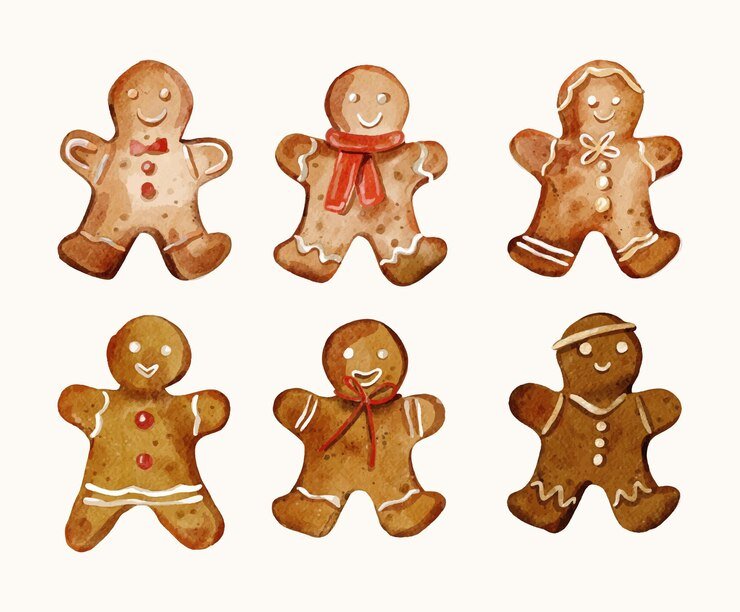
der Lebkuchen -gingerbread
das Lebkuchenhaus- gingerbread house
die Kokosmakrone -coconut macaroon
die Spitzbuben jammy dodgers, linzer eye- a biscuit with currant jam and icing powdered sugar
die Pfeffernuss -spice nut
der Christstollen -stollen
die Marzipankartoffel marzipan- potato
die Weihnachtsgans -Christmas goose
der Weihnachtskarpfen -Christmas carp
der Truthahn turkey Würstchen und Kartoffelsalat- sausages and potato salad
das Spekulatius -almond biscuit
der Baumkuchen- pyramid cake
der Mürbeteig -shortcrust
der Springerle -springerle
das Bethmännchen bethmännchen typical- Frankfurt marzipan biscuits
der Zimtstern star-shaped-cinnamon biscuit
das Früchtebrot -fruitcake
der Bratapfel -roast apple
der Dominostein domino- a candy that you can eat in advent time
die Zuckerstange -candy cane
der Glühwein -hot spiced wine
der Kinderpunsch -punch for children
das Kenkentjüch kenkentjüch- cookies from northern Germany
die gebrannte Mandeln -roasted almonds
das Weihnachtsessen -Christmas dinner
das Hirschhornsalz- salt of harts horn
der Zimt -cinnamon
der Puderzucker i-cing powdered sugar
das Aroma -flavour
• In the southern part of Germany they have other words for Plätzchen. So in Swabian they call it Plätzle or Brötle and in Bavaria Platzerl. In Switzerland they call it Guetsli.
• Other names for Nudelholz are Teigrolle, Wellholz, Wälgerholz and Rollholz rare. In Austria and Bavaria they call it Nudelwalker and in Switzerland Wallholz
.svg)



