
15.1 Hello from Berlin!
15.1.1 Facts
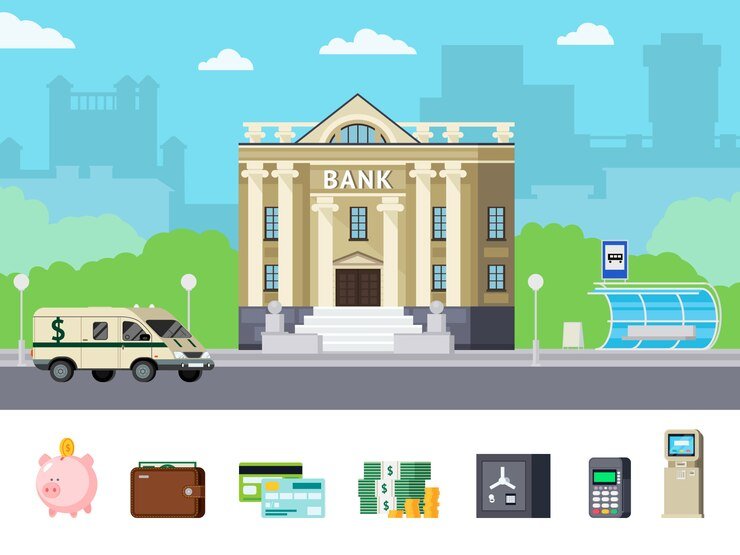
Banks and Money
Germany's main banks are Deutsche Bank, Dresdner Bank and Commerzbank. There are
many banks of all kinds throughout the country. Banks are open Mon-Fri 9am-12pm and
2:30-4pm. On Thursdays, they are open until 5:30 or 6pm. Changing money is best done
at a bank because their rates will be better than exchange services located at a Bureau
de Change. Major post office branches and travel agents also offer currency exchange.
Germany is one of 15 European countries that have replaced their national currencies with
the Euro, which is stronger to the U.S. Dollar, but weaker than the British Pound.
15.2 Dialog
Vater, Mutter und die Geschwister bekommen Besuch von Oma und
Opa
Vater Karl Hallo Mama, Hallo Papa! Wie geht es euch?
Opa Rudolf Na mein Enkel, du bist ja richtig groß geworden!
Oma Lisa Mir geht's gut. Ich gehe zum Kurfürstendamm. Möchtet ihr mit mir
kommen?
Sohn Thomas Ja, Opa, ich weiß.
Tochter
Marie
Oma! Hast du uns etwas mitgebracht?
Mutter Bettina
Nun sei nicht so aufgeregt Marie, lass Oma und Opa erst einmal
hereinkommen.
kurze Zeit später, die Geschenke wurden schon ausgepackt...
Tochter Marie Mutti! Thomas nimmt mir immer meine Puppe weg.
Mutter Bettina
Thomas! Du sollst deiner Schwester nicht ihre Puppe wegnehmen.
Sohn Thomas Nein, das ist meine Puppe.
Mutter Bettina
Nein. Die Puppe gehört deiner Schwester.
Sohn Thomas Gut, hier hast du die Puppe...
Mutter Bettina
Und bedanke dich bei deinen Großeltern, Marie.
15.3 People

15.3.1 The Family
Home is where the heart is, they say. And what is in the home? Family! of course, so this
is a very important section of the lesson. It'll give all vocabulary for the family, and later
in a different section, you'll learn how to describe your brothers and sisters or any person!
And now to get started lets do some vocabulary...
English German
Son der Sohn, die Söhne (plural)
Daughter die Tochter, die Töchter
Father der Vater, die Väter
Mother die Mutter, die Mütter
Dad der Papa (informal), der Vati/der Papi (informal)
Mum die Mama (informal), die Mutti/die Mami (informal)
Grandfather der Großvater, die Großväter
Grandmother die Großmutter, die Großmütter
Grandpa der Opa, die Opas
Grandma die Oma, die Omas
Sister die Schwester, die Schwestern
Brother der Bruder, die Brüder
English German
Siblings die Geschwister
Grandson der Enkel/der Enkelsohn, die Enkelsöhne
Granddaughter die Enkelin, die Enkelinnen
Wife die Ehefrau, die Frau (informal), die Gattin (formal)
Husband der Ehemann, der Mann (informal), der Gatte (formal)
Father-in-law der Schwiegervater
Mother-in-law die Schwiegermutter
Brother-in-law der Schwager, die Schwagern
Sister-in-law die Schwägerin, die Schwägerinnen
Son-in-law der Schwiegersohn, die Schwiegersöhne
Daughter-in-law die Schwiegertochter, die Schwiegertöchter
Uncle der Onkel, die Onkel
Aunt die Tante, die Tanten
Now even though many of these are common phrases you and I would say in everyday life,
some of these are rather used when you are on a visit to grandmother's, or things your
mother would say. Maybe you notice some of these in the dialogue. Now you might be
asking "How am I going to speak fluent German, if I just learn phrases?" Like I said, these
are basically from the dialogue, and you can study these to look at the word order. Also
certain things are just different in German, like "Wie heißt du?" which translates literally
to "How are you called?" when we use "What is your name?".
Okay let's get started on
these common phrases...
Du bist ja richtig groß geworden.
You have grown up so much (usual sentence used by Opa und Oma)
Hast du uns etwas mitgebracht?
Have you brought something for us?
Nun sei nicht so aufgeregt.
Now don't be so excited.
Komm rein.
Come in.
(Sie) Wurden schon ausgepackt.
(They) Have already been opened.
(Sich) Bedanken für etwas.
To thank for something.
Using Formal and Informal Pronouns in the Family
Some very conservative families might still use Sie with grandparents or even parents!
This is sometimes practiced in families of nobility or exterritorial cultural islands in which older German customs have survived. However, using "Sie" feels very outdated to the vast
majority of people. In practically every family all members use du with each other.
15.3.2 Describing People

I can't describe in words how important this section of the lesson is. Even though you
have already learned to describe to some degree, here we will introduce a new aspect of
describing, and we will review. But how could we describe if we didn't have vocabulary?
Here it is...
English German
Nice nett, sympathisch
Mean unfreundlich, gemein
Nasty fies, gemein
Pretty schön
Ugly hässlich
Intelligent intelligent
Unintelligent unintelligent
Clever schlau, klug, clever
Stupid dumm/blöd/deppert (Austrian German)
Interesting interessant
Boring langweilig, fad (Austrian German)
Active rührig, aktiv
Lazy faul
Funny komisch, witzig
Serious ernst(haft)
Strong stark, kräftig
Weak schwach
Odd eigenartig
Talented begabt, talentiert
Untalented unbegabt, untalentiert
Bossy rechthaberisch
Passive untätig
Old alt
Young jung
Fat fett, dick
Skinny dünn
Tall groß
Short klein
Evil böse
The verb used most often for describing is "to be" which we learned in the first lesson. Some
examples are: He iswet, This isstupid, I amlazy. But you do use other verbs like feel, look,
etc. This lesson we will be sticking mostly with the verbs we've learned in the past. We
will, however, learn one new verb. All sentences we will create will be in the nominative
case. Okay, let's get started!
94
People
In term of beauty, you can say four basic things. These aren't the all but these are the
easiest and simplest ones.
She is beautiful.
Sie ist schön.
He is ugly.
Er ist hässlich.
These two use the verb to be, and the next one will use the verb to look which would need
something else in order to make sense.
She looks beautiful, but that shirt is ugly.
Sie sieht schön aus, aber dieses Hemd ist hässlich.
He looks ugly, but he looked handsome yesterday.
Er sieht hässlich aus, aber gestern sah er schön aus.
And in the last sentence it says "ausgesehen." Don't worry about that--it wouldn't be taught
until Level 3. So since you get the idea of describing, let's learn a new verb! And the new
verb is klingen which is to sound. As in "He sounds weird.", "She sounds boring." Since
we know how to describe, we really don't have to cover it. It's works just like other verbs.
He sounds nice.
Er klingt nett.
They sound funny.
Sie klingen komisch.
Remember that whendescribing it's S+V+A, or subject, verb, then adjective. Exactly like
in English. For right now, that's all for describing things. We are going to have some small
describing lessons with some parts of this lesson.
15.3.3 Related Verbs
Okay we just went over the verb in the previous section. This will basically be a list that will
help you memorize them better, and there is not a lot. Other than "klingen" and "fühlen"
you should know all of these. The "Er sieht aus" is to show you it is a separable-prefix verb.
English German
To be sein
To look aussehen, ausschauen (Austrian German)
He looks Er sieht aus
To feel (sich) fühlen
To sound klingen
15.3.4 Nationality
This is also a large section of this lesson: nationality, and it's very important. There are
many nationalities, too many to go over in this lesson, but you will learn more nationality
as this level and book goes on. Right now we are just going to have a vague little list, and
as this section goes on there will be more.
Finally, gentlemen, get ready to have your minds
blown...
Some Nationalities
This is the small list, make sure you memorize this list and the next one.
English German
German(s) (masculine) der Deutsche, (m. plural) die Deutschen; (feminine) die
Deutsche, (f. plural) die Deutschen
American(s) der Amerikaner, die Amerikaner; die Amerikanerin, die Amerikanerinnen
Englishman der Engländer, die Engländer; die Engländerin, die Engländerinnen
Spaniard(s) der Spanier, die Spanier; die Spanierin, die Spanierinnen
Italian(s) der Italiener, die Italiener; die Italienerin, die Italienerinnen
Frenchman der Franzose, die Franzosen; die Französin, die Französinnen
Describing People with Nationality
It is no surprise you can describe people with nationality, most times, it's stereotypical, like
Norwegians are blonde, tall, etc. or Germans wear lederhosen, drink beer, and play polka all
day long, but that is just not true. However you can just use it for what it is, a nationality.
If you do describe people by nationality this will help. Okay, you should already know how
to describe, right?
This part we will get more in to detail later, but right it is an important part of describing
people with nationality, even though in English we most times don't do this, in German
they do. The difference between nationality and language, like in English, French and
French. But in German it is französisch and Franzose, Französin. This also is how
it works for nationality describing by noun or adjective, which we are going to learn right
now.
Noun or Adjective Nationality
There are two ways to describe someone. With a noun-based nationality word or an
adjective-based nationality word. But note that in German the noun-based form is used
more often.
Example: Ich bin Schwede (I am Swedish) and Ich bin schwedisch (I am Swedish)
Example: Ich bin Franzose (I am French) and Ich bin französisch (I am French)
More Nationalities
A longer list of nationalities found in and around Germany:
African (m.) Afrikaner (-); (f.) Afrikanerin (-nen)
Albanian Albaner (-); Albanerin (-nen)
Austrian Österreicher (-); Österreicherin (-nen)
Czech Tscheche (-n); Tschechin (-nen)
Chinese Chinese (-n); Chinesin (-nen)
Dane Däne (-n); Dänin (-nen)
Dutchman/woman
Holländer (-); Holländerin (-nen)
Estonian Este (-n); Estin (-nen)
Finnish Finne (-n); Finnin (-nen)
Greek Grieche (-n); Griechin (-nen)
Hungarian Ungar (-n);
Ungarin (nen)
Irish Ire (-n); Irin (-nen)
Indian Inder (-); Inderin (-nen)
Japanese Japaner (-); Japanerin (-nen)
Korean Koreaner (-); Koreanerin (-nen)
Latvian Lette (-n); Lettin (-nen)
Lithuanian Litauer (-); Litauerin (-nen)
Norwegian Norweger (-); Norwegerin (-nen)
Polish Pole (-n); Polin (-nen)
Romanian Rumäne (-n); Rumänin (-nen)
Russian Russe (-n); Russin (-nen)
Serbian Serbe (-n); Serbin (-nen)
Slovakian Slovake (-n); Slovakin (-nen)
Swede Schwede (-n); Schwedin (-nen)
Swiss Schweizer (-); Schweizerin (-nen)
Turkish Türke (-n); Türkin (-nen)
Ukrainian Ukrainer (-); Ukrainerin (-nen)
15.3.5 Age
Now we are all familiar with the word "alt", which meansold. And in English, to find
out somebody's age we ask "How old are you?". In German it is exactly the
same. The "alt" kind of belongs to the interrogative adverb, so in both German
and English it may be in front of the verb:
Wie alt bist du?
How old are you?
Now to ask the question with 1st person it is...
Wie alt bin ich?
How old am I?
And as response you might get...
Ich bin __ Jahre alt.
I am __ years old.
Du bist __ Jahre alt.
You are __ years old.
And now the plural version of the 1st person...
Wie alt sind wir?
How old are we?
The responses you will get is...
Wir sind __ Jahre alt.
We are __ years old.
Ihr seid __ Jahre alt.
You all are __ years old.
To ask this important question in the 2nd person. First, we will learn the biggest question
here, "How old are you?" which is...
Wie alt bist du?
How old are you?
And there is only one response to this it is...
Ich bin __ Jahre alt.
I am __ years old.
For the equally important plural 2nd person...
Wie alt seid ihr?
How old are you all?
Which the response is...
Wir sind __ Jahre alt.
We are __ years old.
And formal question, for both singular and plural is...
Wie alt sind Sie?
How old are you?
How old are you all?
You should all ready get the pattern for this, but we are going to keep on doing this list, if
you aren't sure of something or you are confused. So for the 3rd person...
Wie alt ist er/sie?
How old is he/she?
The responses to this are...
Er ist __ Jahre alt.
He is __ years old.
Sie ist __ Jahre alt.
She is __ years old.
And now the plural 3rd person of question and response...
Wie alt sind sie?
How old are they?
And of course the response...
Sie sind __ Jahre alt.
They __ years old.
Now with some people you might be able to guess their age, and you could ask them directly
about it. This is usually pretty of rude, but it illustrates nicely how the phrase has to be
changed if you ask a yes-no-question, so let's get started, anyway!
Bist du __ Jahre alt?
Are you __ years old?
Ist er/sie __ Jahre alt?
Is he/she __ years old?
Sind sie __ Jahre alt?
Are they __ years old?
Note the inversed order between "Wie alt bist du?" und "Bist du __ Jahre alt?" This is
exactly the same as in English!
15.4 Possessives
Person Singular Plural English German English German 1st my mein our unser 2nd your dein, Ihr your euer, Ihr 3rd his, her, its sein, ihr, sein their ihr
100
Expressing Favorites
Note: 'Euer' is irregular. When 'euer' has to have a different ending the e before r is
dropped, so it turns into 'eur-'.
15.4.1 Gender, Case, and Endings
15.5 Expressing Favorites
.svg)



