
13.1 Introduction
Out of all the workplaces a cleaner may operate in, hospitals and medical practices require the closest attention to detail.
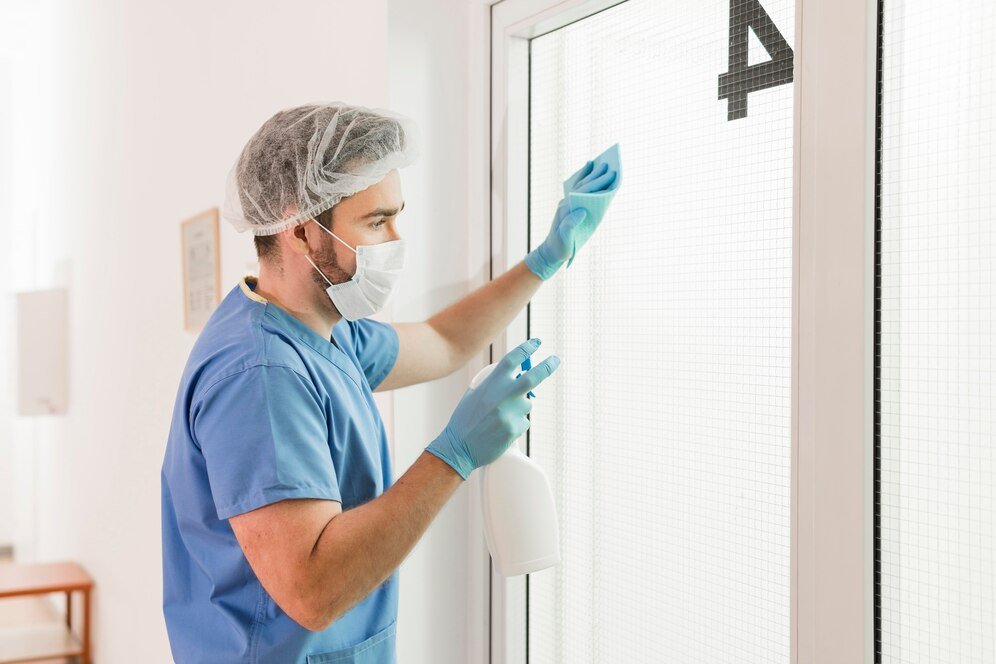
Hospital cleaning is an essential element for a workplace that represents healing and overall health. People come to hospitals to heal and be treated for ailments. However, in order for this healing process to occur a hospital has to be a pathogen-free environment, to avoid further sickness. This is why continuous cleaning and upkeep in a hospital is an absolute necessity.
While science is working to continuously keep on top of the most common pathogens affecting human health, the best way to deal with pathogens on a day to day basis is by maintaining a clean environment that is disease free.
Strict standards for your cleaning requirements will guide you to help produce and maintain the health environment of a hospital building, protecting everyone within it from the spread of disease.
13.2 The Areas of a Hospital to Clean
- The wards
- The corridors
- The toilets
You may also spend time in the rooms belonging to staff and management, such as the doctors' lounge and the cafeteria. Unless you receive specialist training, which is on offer with some hospitals, you are unlikely to clean operating theatres. This is because these rooms require a high degree of attention and have the highest standard of sanitization.
13.3 Cleaning Requirements of Wards and Rooms
The wards and rooms are the areas that bed ridden patients stay on a long-term basis, from as little as one night and upwards of several months.
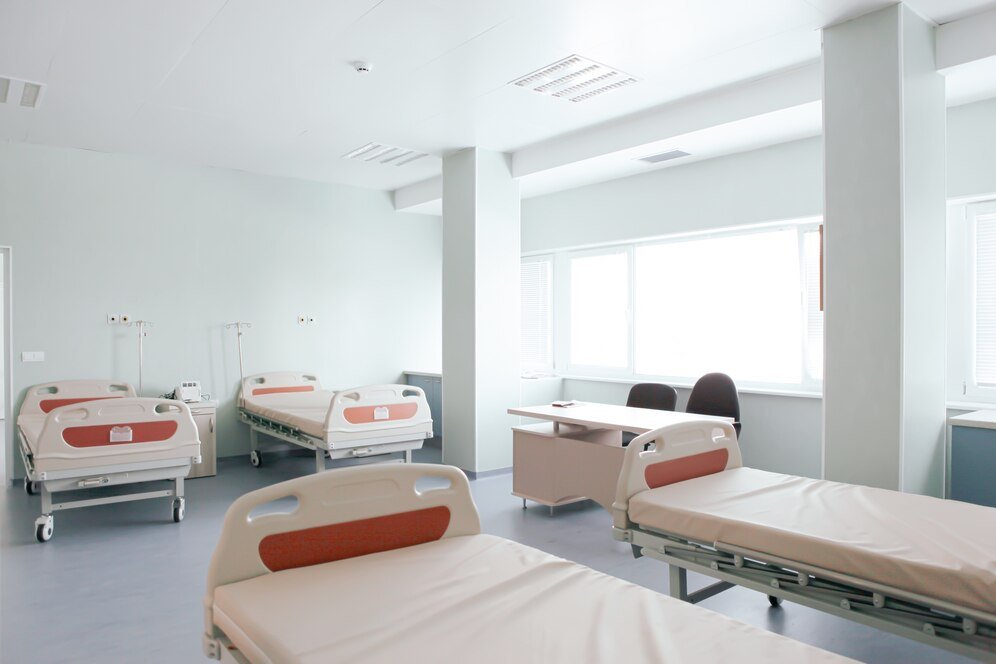
As a hospital cleaner, you are likely to work in close contact with auxiliary nurses when it comes to changing beds; a task required at every changeover or discharge of a previous patient. Using specially designated laundry bins, you will transport bed linen from the wards and rooms to the laundry centre. You are also likely to bring bed clothes back to the wards, but, it is the auxiliary nurses who normally make the beds. Occasionally you may also clean the ward curtains, although this is not as common as changing the bed.
In addition, you will sweep, mop, and change the patient's bin. Usually, these tasks are performed every day. The chemical cleaning solutions that you use will be provided by the hospital, as well as the equipment. Make sure that when you are cleaning a patient's room that you respect their space, for example, if a patient is sleeping - be as quiet as possible. However, you will most likely have to clean the room based on a set schedule and regardless of what the patient is doing.
Tasks such as wiping down the beds after a patient has used them take place between discharges. Other tasks that should be thoroughly done after discharges is the cleaning of specific items such as room telephones, table tops, shelves and window ledges. All dust, dirt and grime needs to be removed from the room in readiness for the next patient.
Many germs and pathogens can linger in a room from a previous patient. If the last thing you touched was an item from the room you were cleaning, you must ensure you clean yourself with sanitizer or warm soap and water - before you touch yourself. This will avoid-cross contamination and prevent you from getting sick, thus allowing you to keep doing your job.
13.4 Cleaning Requirements of Corridors and Toilets
Due to the very nature of hospitals, cleaning corridors and toilets will also put you at risk of coming into contact with pathogens.
These places have as many germs as the wards, and possibly more, because of the volume of human traffic - particularly the corridors.
Naturally, patients cannot control where they vomit or bleed. Therefore, you need to remain just as mindful of fluid hazards around corridors and toilets as when you are on the wards.
Cleaning Regime for the Corridors
The corridors are single-handedly the dirtiest areas of the hospital. People, from both inside the hospital and the outside world, are continuously walking and touching their way through them. Doctors, nurses, patients, and visitors all contaminate this space.
The cleaning recommendations for the corridor are to focus on the wall spaces and the floor spaces. The wall space is particularly important because patients often touch this for support as they walk down the hall, and guests and visitors often touch this space when they visit. In essence, it gets a lot of contact, which means that it can harbour many germs that can easily spread. So, ensure you wipe the wall spaces down - particularly any hand rails - with a fast-drying antibacterial solution. This will make the job efficient and effective.
The floors should be dry-mop swept every hour of the day and a good mopping with a strong cleaning solution should happen no less than once a day. However, this will be determined by the hospital.
Many hospitals will have a cleaner attending to the floors (with single solution mopping) throughout the day as an emergency – such as when someone spills, vomits, or bleeds on the floor, as it needs to be cleaned as soon as possible. This means that you would have one bucket filled with a cleaning solution and one mop to wipe off the floors with.
For an end-of-day floor cleaning, the hospital may expect you to us a two solution mopping method for the floors in the corridors. This would mean that you would have two buckets with you. One of the buckets will be filled with a cleaning solution that is strong and concentrated. The other of the two buckets will be filled with water as a rinse solution. You would first mop the floor with the cleaning solution, making sure that all visible grime is removed and that all areas of the floor have been covered by your cleaning path. Then, you would go back to the beginning (where you first started mopping) and repeat the process with the water to rinse off the cleaning solution.
Cleaning Regime for the Toilets
When you are cleaning a hospital toilet area, you start with the least dirty item and finish with the most dirty. In this case, the toilet will have the least number of germs (believe it or not) and the floor will have the most. Make sure you have specific cloths or cleaning materials for each part of the bathroom: a sponge used only for the sink, a sponge used only for the toilet, a cloth for the shower (if there is one) and so on. This will prevent cross contamination, or the carrying of germs from one area to another.
Start your cleaning with the toilet. Begin by spraying an antibacterial spray around the seat, into the bowl and on the handle. Let this sit for about ten seconds and then begin to scrub. Let this dry and rinse out your sponge. Continue washing down the rest of the toilet (the outside of the bowl and the feet and sides of the toilet).
The sink should be thoroughly washed and wiped with a good antibacterial cleaning agent. Make sure to saturate and scrub the tap spout, handles and the sink bowl. Rinse out the sponge and give everything a final polish.
With a strong cleaning solution in the bucket, mop the floor with good effort to remove any dirt worked into the floor and to let the chemical work into the material as well.
Important Considerations
Depending on the hospital you work in, there may be an hourly cleaning rota. This means you must visit the toilets to check them on an hourly basis and clean them if necessary. When it comes to both corridors and toilets, you may receive a call from the emergency 'estates' service to clean an area where a fluid hazard has occurred.
The hospital you work in should provide additional training, but bear the following in mind to keep yourself and others safe:
When cleaning up vomit, blood or other bodily fluids, never use the mop or sponge for the next area. Even if you wash the mop down a little, the chances are the water you used was not hot enough to remove harmful pathogens. Therefore, you need to change equipment between areas and follow hospital protocol regarding sterilisation.
Be especially mindful when it comes to blood. Because of Data Protection Regulations, you cannot know whether a patient has a blood-borne disease like HIV or Hepatitis. Therefore, you must remain vigilant around blood at all times.
Place signs in recently washed areas immediately. If you do not have a sign with you, call someone and ask them to do it. Hospitals are home to a lot of fragile people; if one of them falls over because of one of your mistakes, there could be an issue that you will be liable for and which may be difficult to deal with.
13.5 Health and Safety for Hospital Cleaners
The need to keep yourself and others safe cannot be emphasised enough.

A hospital is a place of healing, meaning that you have an obligation to uphold that as an employed cleaner. This requires you to have a strong understanding of the best hygienic and sanitary practices possible.
- Wash your hands when you move between areas. When you see a hand pump, use it, as this can prevent diseases like MRSA.
- Understand the different types of bins and how to dispose of clinical waste. This can prevent you from contracting diseases, and will help others who handle refuse further down the line.
- Wear gloves wherever possible, preferably whenever you are cleaning. In many hospitals, you may need to wear latex gloves, which you will change and dispose of between rooms. Gloves other than latex could be provided upon request to your manager.
- Steam and sanitise all equipment when you move between rooms. When you do this, you ensure the equipment you use is safe to operate in the next area.
- Double check each room before you leave it to ensure you have not forgotten a task, and to inspect the general order of the room.
- Look out for breakages, as patients may not notice these or report them. This can help keep patients safe, for example, a broken curtain rail.
- Look to see what others are doing. You all need to work together as a team, which means making sure you all reach the same standards.
You will need to be able to push and pull furniture so you can reach every area to maintain good hygiene. Before you begin applying for work in a hospital, consider whether you can do that continuously for at least five hours of the day.
Other physical skills may include needing to crawl, stoop and lean into tight spaces. If you do feel comfortable doing all of that, great! However, always be mindful of physical strain injuries. Always bend at the knees rather than curving your spine. Bend your knees when you need to pick something up, especially heavy equipment. This helps to draw strength from your leg muscles as well as drawing strength from your thighs. Usually, you can expect to be lifting up to 30 pounds maximum by yourself.
Finally, if you have vision problems, always wear your contact lenses or glasses at work. Being able to read a label is essential, as well as having an ability to detect inadequate cleanliness or missed spots.
13.6 Finding Hospital Cleaning Jobs
As you are probably already aware, the majority of hospitals in the UK are operated by the NHS.
As such, you will need to look for jobs through the NHS' jobs portal. The NHS jobs application forms are incredibly generic, but most allow you to make a small personal statement at the end. Before writing about yourself, check out the personal specifications and detail how you meet the job requirements.
Obviously there are some private hospitals in the UK, in which case you can search standard job websites for hospital based cleaning work. In addition, you can locate private hospitals in your area and send them your CV. However, this is not an area of work for the inexperienced as there are rigorous standards for health and sanitation. An experienced worker who understands the job requirements will be more desirable to the hospital than someone who is new to cleaning.
Finally, try joining cleaning agencies. You may attract bank work in hospitals, although this is not guaranteed. However, it is a good way to increase your chances of finding hospital work if you prefer to stay at least partially self-employed.
13.7 How Much Do Hospital Cleaners Get Paid
The average pay for an NHS hospital cleaner varies according to the area you live in and your years of experience.
In most cases, London hospitals will pay more than other regions. However, the cost of living there is higher. Some urban areas may also pay more than cheaper rural areas. Again, this is so that employees are able to provide for themselves in these more expensive areas while allowing them to stay within the area of their work.
If you want to top up your earnings, it is recommended that you find some self-employed work. Depending on the hospital you work for, you may be expected to work similar shifts to NHS staff. This means you can work four 12-hour shifts per week, with four 12-hour shifts off. Most NHS hospital cleaners do not have to work nights, but some do. It all depends on the employer and the hospital's requirements.
Another great way to make more money as a hospital cleaner is to work for an agency. This will ensure that a bigger company is looking out for your interests and has connections with hospitals that may not even be advertising their jobs, thus increasing your chances of employment. Make it clear to the agency which hours you can work every week to boost your earnings.
13.8 NHS Hospital Cleaner Career Progression
Naturally, cleaning in a hospital is more complex than working in a typical cleaning environment, domestic and commercial alike.
As such, once you have entered the hospital with your basic cleaning skills and qualifications, there are chances to train further.
As well as hiring cleaners, the NHS trains staff to become supervisors, housekeepers, and cleaning managers. This is how some cleaners reach the point of earning as much as £35,000 per year. To reach this stage, take up training opportunities as they arise and keep your eye out for internal job openings. In most cases, the NHS rarely hires for these higher paying positions using anything other than an internal system. This is because it is only cleaners who have worked in the NHS system, and who understand it sufficiently, who are able to progress onto these stages.
While the NHS is probably the most common employer for hospital cleaners, it is not the only one. Register yourself with a bank agency and send your CV off to private hospitals for further opportunities. Once you get your foot in the door, keep it there, especially if you work for the NHS, as the chances are you will attract benefits, including a pension.
Hospital cleaner (domestic services) jobs can be rewarding and provide a great deal of job security. However, they can be amongst some of the most challenging cleaning jobs available because of their high cleaning standards, and the consequences if these standards are not properly upheld.
Module Summary
In this module we learned that hospital cleaners can be expected to deal with a wide range of circumstances, including cleaning bodily fluids, and the potential that this has for bringing you in to contact with potentially harmful viruses. The content has advised you on the risks that this environment can pose, and the way that you can ensure that you do not contract any pathogens yourself during your job.
This module also went in to detail about which areas of a hospital you may be expected to clean, what to look out for when cleaning and how to prevent the spread of MRSA when moving from one area to another.
You are now able to identify the techniques required to clean hospital wards, corridors and toilets, as well as understand the health and safety requirements for hospital cleaners. In essence, you now understand the importance and necessity of maintaining a cleaning hospital - a cleaner's responsibility.
.svg)



