
5.1 Introduction
As in any career, it is important that you consider the ins and outs of the job before committing.

Having a fuller understanding of the role of a professional cleaner and the market in which the role exists will prepare you to enter into it without making any crucial mistakes.
Understanding the job prepares you emotionally and physically. Having a realistic view of what to expect means that you will go in with your eyes wide open; prepared to embrace the challenges that often come with the territory.
Being prepared for the job also allows you to create a better business. This is important because you need to be realistic when writing a business plan. Knowing what you can handle, how much you can do and what is required of you is essential for creating a business plan that can be transformed into a functional and profitable business.
Yet, you will have good days too. Client appreciation and the satisfaction of a job well done will provide motivation and the reassurance that comes from doing a job with such tangible results can help alleviate negative feelings, making you feeling happier.
In this module you will learn about the day-to-day realities that face anyone in the cleaning industry. Whether you are self-employed or you work for an agency or crew, you will face similar trials and tribulations in your career as a cleaner.
5.2 Typical Cleaner Working Hours
There are no typical working hours for the cleaning industry.
Cleaning crews can go in at any time of the day or night depending on the client's needs. In fact, you may see cleaners scheduled to arrive at 2 p.m. and 2 a.m. in equal turn.
You can, however, get a basic idea of cleaning hours depending on the area that you specialise in and the type of cleaning you do.
For example:
If you are working as an office or business cleaner, expect to start after 6 p.m. This is generally because you begin working once employees have left the building. This reduces the level of disturbance for both the office and for the cleaner.
However, some cleaners who are employed by a building or an office are around during the day to deal with issues that arise. Again, it all depends on the type of cleaning you do and the contract you have.
In contrast, those who work in the hospitality industry will do early morning cleaning. They will generally come in before a restaurant opens so that they can clear up the remnants of the previous night. This is due to the late closing time of pubs and restaurants. It is also because many of them open later in the day, which means that there is no need for cleaners to work in the middle of the night.
There are, of course, certain cleaning jobs which operate during normal business hours or between 8 a.m. and 6 p.m.
If you work in a hotel you will generally arrive in the morning to begin preparing rooms or common areas. Window cleaners will also be called in during business hours, primarily for safety. Also, if you are working as a domestic cleaner, you will also usually be cleaning houses whilst clients are at work.
All of these working hours offer opportunities to cleaners, depending on what you are looking for. Whether you prefer to work in the early morning, afternoon or late at night, there is opportunity to find a job that suits.
5.3 Cleaning Contracts
The hours you work will often depend on what type of cleaning contract you have.
This mostly depends on whether you are an employee, a freelancer, self-employed or an agency cleaner.
Employees will often be given schedules. You will need to show up at your scheduled time and leave at your scheduled time, regardless of the work you have to do. Rather than working at your own pace, you will need to work within the confines of the schedule. Sometimes this means that you will spend time doing work to fill up the last hours, should you finish tasks early.
If you are self-employed you may also be contracted on an hourly basis. This means that you will go into a building and clean it during scheduled hours and those are the hours that you will be paid for.
Alternatively you might be contracted for specific services, for example to clean the floors. When all the floors are clean you are at liberty to leave, regardless of what time it is.
Domestic cleaners are another example of this. Many British cleaning services offer services by room, which means that you might work two hours or longer, depending on how much there is to do.
Complete flexibility often comes with being self-employed because it allows you to have more control of your hours. Some of the most flexible jobs that self-employed cleaners take are as domestic cleaners or in ironing or detailing services.
5.4 Typical Working Conditions
There are no typical working hours for cleaning crews and also no typical working conditions.
It depends on the type of cleaning you do and who you do it for. Even within the same sectors of cleaning you will experience varying states of cleanliness in your working conditions.
Generally, you can expect the conditions you face to be somewhat dirty and it is appropriate to be aware of this before entering into this industry. You will not be working in hygienic and sanitary conditions every day. You must be able to cope with less-than-ideal situations and take the rough with the smooth.
Different environments will pose different challenges. You might face dirt and grime in some situations, and in others you might face bodily fluids. Each requires you to approach the cleaning environment differently.
Here is a breakdown of the different working conditions you can expect, depending on the services you offer:
Relatively Clean Environments
- Ironing
- Corporate cleaning
- Domestic cleaning
- Window cleaning
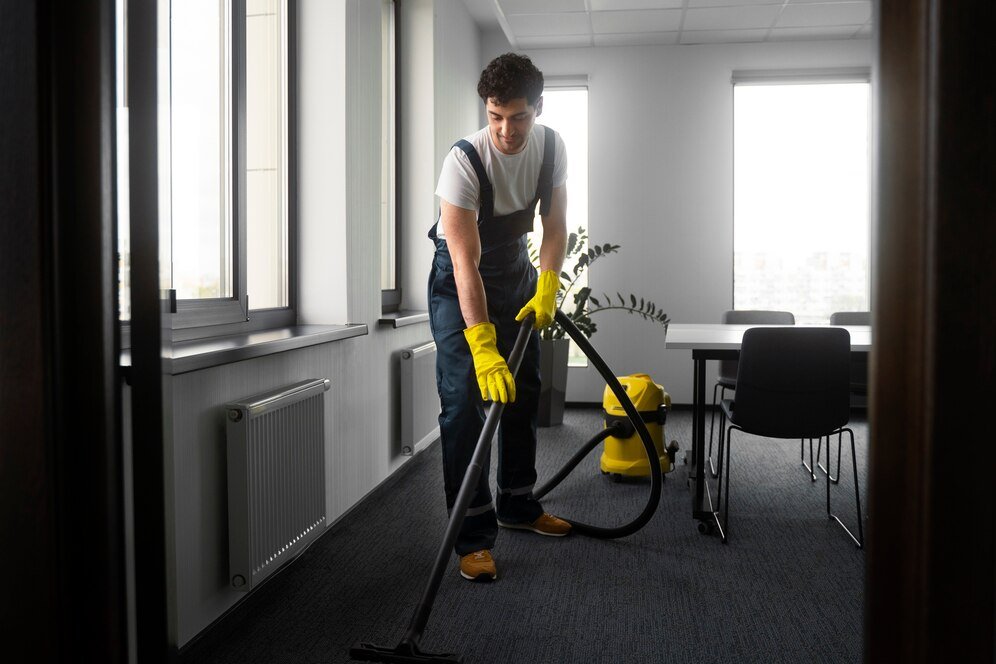
- Carpet cleaning
- Domestic cleaning
- Hospitality
- Food industry
- Healthcare
- Council work
Also note that domestic cleaning covers several categories. This is because the state of people's homes varies greatly. You may be helping with housework or doing a deep-clean to supplement the client's light-cleaning, however, some of the houses you enter may shock you. This is particularly true if you are cleaning for letting agents or in student accommodation.
Remember, whatever you find, it is not your place to judge the occupier. People have varying standards of cleanliness and it is not up to you to determine what is appropriate. If you cannot cope with poor conditions in some homes, you would be best suited choosing another sector of the industry.
5.5 Taking Holidays
An employed cleaner is entitled to the standard in UK paid holiday laws.
This means you are entitled to 28 days per year, pro rata. How and when you take them may need to be negotiated between you and your employer, however, it is important to remember that you are legally entitled to them as long as you are in an employment contract.
Bank holidays are difficult as a cleaner. If you work in an office environment, you might be given the day off because many offices are closed on bank holidays. However, if you work in hospitality this will not be the case. This is because hospitality and leisure sectors benefit from these holidays; thus there is a greater need for your services during these periods.
Taking holidays as a self-employed person is more difficult. You will need to assess your client needs before you take holiday time. For example, taking a week off when everyone is having their Christmas parties will probably be detrimental to your clients and your business.
A good rule of thumb is to stick to traditional holidays such as Christmas, Easter and Bank Holidays. Take a summer holiday, too. August is a good time because this is when many other people are on holiday, so you are likely to have less work to do anyway. Avoid taking holidays at the beginning and the end of school terms because this is when many people move. This is especially relevant if you live in a town with a large student population.
5.6 Expected Pay
In 2017, Total Jobs conducted a survey of cleaner's wages.

The sample taken was 800 people, which means the average wages reflected only provided a rough idea of how much a cleaner can expect to earn.
- Low paid cleaners earn £14,665 per annum.
- The average pay for a cleaner is £17,000 per annum.
- Highly paid cleaners earn around £23,000 per annum.
These wages are likely to change on an annual basis. As such, anybody who wants a clear reflection of how much cleaners are paid should consult sites like Total Jobs on a regular basis.
Remember that wages will also vary significantly by market. Cleaners in London will often make more than cleaners in Perth. Similarly, remember that cleaners who work in high-pressure environments or who deal with hazardous wastes will also be paid more for their training and for the risks they take.
5.7 A Day in the Life of a Cleaner
So far you have read a lot information regarding the various types of cleaners.
However, the best way to put this in context is to put it all together in an example of a typical day for a cleaner. After reading this example you will have a better idea of how challenging but rewarding being a professional cleaner is.
Here is a day in the life of a fictional cleaner named Nicola, who works as a cleaning service assistant at a hospital.
6:00: Nicola wakes up early. She tidies up her own home and prepares for her working day, which begins at the hospital at 7:00.
7:00: Nicola arrives at the hospital and begins working with her unit. She starts by cleaning the outer ward areas, including the visitors' room, the staff room and the nurses' station that are all in her designated area. They are relatively easy and often require just a general tidy up.
8:00: It is time to begin the dirtier work. Nicola and her team begin to work through all the bathrooms on the ward. She cleans all the public toilets and additional shower and bathroom areas. These jobs are done every day.
9:00: Nicola prepares to clean the actual ward. This requires her to work with her team and with the doctors and nurses, to follow them around the ward. This way they avoid trying to clean rooms that the doctors and patients occupy.
The rooms are cleaned thoroughly. Because it is a hospital it is imperative that nothing is overlooked. The furniture is moved, the floors are mopped and the beds are wiped down. Every surface must be clean and sterile, to be safe for patients.
Because most of the rooms are occupied, the cleaners must work around the patients. To keep patients at ease, the cleaners interact with them by saying "good morning" and chatting quietly while they work, if the patient is receptive. If they need to move the patient or any of the patient's belongings, they explain what they are doing to make sure that the patient is comfortable.
Nicola likes to spend a few minutes chatting with the patient after she finishes, especially elderly patients who do not have many visitors. This is Nicola's favourite part of her job because she enjoys being social. The patients will often tell her what a good job she is doing which makes her feel proud of her work.
11:30: Barring any major disasters, Nicola uses this opportunity to take her lunch. By this point she is tired. She gets cleaned up and then spends an hour in the staff canteen eating her lunch and chatting with the staff.
12:30: Because Nicola is experienced she is often on call in cases of emergency. On this particular day a rare emergency occurs. An infection has broken out in one of the wards and all the patients are moved to another ward. Nicola must spend the rest of the day disinfecting the ward with her team. The whole ward has to pass a very high standard of cleanliness before it can be opened again.
14:30: Nicola takes a break from the cleaning to meet with the infection control team. Because the outbreak was unexpected the systems need to be reviewed to ensure cleanliness standards are up to scratch.
15:30: Nicola meets with her supervisor to check the recently cleaned area. Everything is scrutinised and her supervisor finds errors in the work. Nicola and the rest of her team then go back to correct these and ensure nothing further is missed.
16:30: Because of the emergency Nicola has worked past her scheduled finish time. Although the later shifts could have taken over for her, it was better that Nicola finished the job for continuity of care. You cannot be too careful in hospitals. Also, Nicola is assured that she will not have an even bigger mess in store for her tomorrow.
17:00: Nicola is almost ready to go home, but she has to make preparations for a training session scheduled two days from now. She needs to assemble her papers and her presentation and make sure that the email reminder has been sent to all relevant staff.
17:30: Finally, Nicola is in the car park and on her way home. She had to stay late today, but sometimes this is necessary to keep the patients and community safe. Nicola is not alone. The infection control team and some of the ward nurses also stayed late to help transition the patients from the infected ward to the clean ward.
Nicola's life involves a lot of manual labour and some very long hours. Nicola cannot easily say that she has to leave when patients' lives are in danger, but most cleaners are not put in that position. However, it is important to note that Nicola stayed to ensure the job was finished. This is the mark of a good cleaner and a true professional.
This is an important lesson to note regardless of whether you are employed or self-employed. It is inappropriate to leave a cleaning job unfinished, and in commercial and hospital settings is dangerous to do so. Remember that your flexible hours are flexible in good ways and bad. If something crops up or a job is bigger than expected then you will spend more time than you previously allotted, working to complete it.
Module Summary
In this module you learned what it means to be a professional cleaner. You learned about the hours you might work. You also learned about the conditions that you come across as a cleaner. Additionally, you also learned that you cannot judge the conditions (good, bad or ugly) because it is not your place to judge your clients.
More importantly you learned of the different factors that can affect your life as a cleaner. The services you provide and the manner in which you work can have a significant impact on your daily routine. The biggest difference you learned, was the difference between having an employment contract and being self-employed. Self-employment offers more freedom but also requires more responsibility.
.svg)



