
MODULE 7: Dry Lining & Plasterboard Fixing
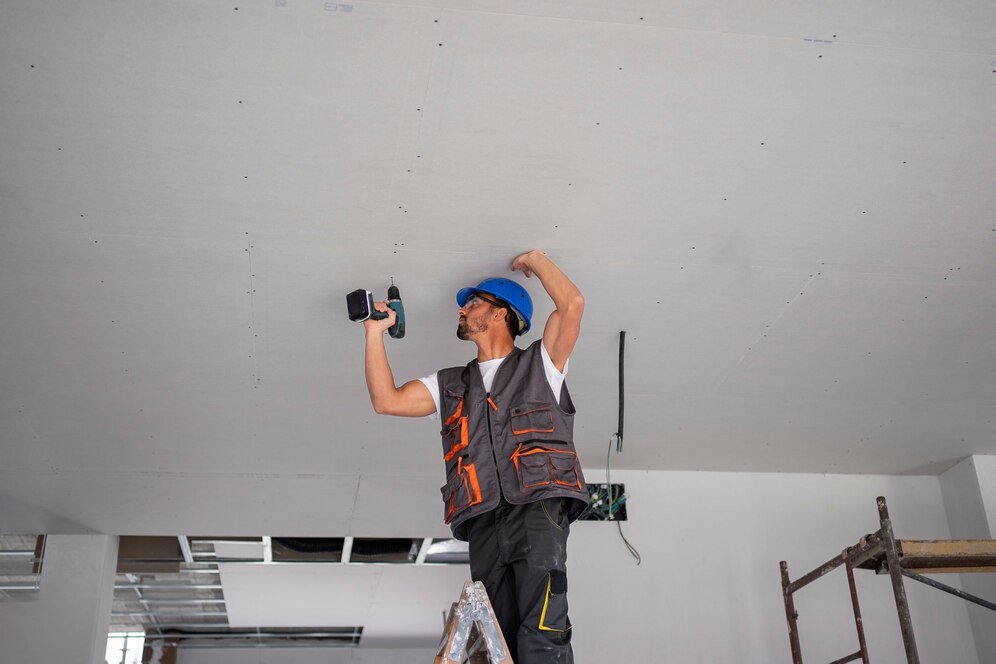
This module covers modern drywall installation methods, focusing on efficient dot & dab adhesive fixing and professional taping/jointing techniques for seamless finishes.
1. Dot & Dab Techniques (Adhesive Fixing)
A. Suitable Applications
B. Materials Required
Plasterboard (12.5mm standard, 15mm for fire-rated)
Drywall adhesive (gypsum-based, pre-mixed)
Plumb bob/laser level
Notched trowel (10mm notches recommended)
C. Step-by-Step Process
Surface Preparation
Remove loose debris/dust
Apply primer (PVA or proprietary dab adhesive primer)
Adhesive Application
Apply dabs (~50mm diameter, 25mm thick)
Vertical spacing: 400mm max
Horizontal rows: 3-4 per board (top/middle/bottom)
Board Fixing
Press board firmly into adhesive
Check plumb with level
Leave 10mm gap at floor (for expansion)
Temporary support (props or battens) until adhesive sets
Mechanical Fixing (Optional)
Add drywall screws at 600mm centres if required
Countersink screws 1mm below surface
D. Key Considerations
2. Taping and Jointing (Seam Finishing)
A. Materials Selection
Paper tape (standard for most joints)
Fibreglass mesh tape (for cracks/stress points)
Joint compound (ready-mixed or powder)
Corner beads (metal/plastic for external angles)
B. 3-Coat System (Professional Finish)
1. First Coat (Bedding Layer)
Apply compound over joint (150mm wide)
Embed tape firmly with 100mm knife
Smooth out excess compound
2. Second Coat (Filling Layer)
Apply after 24 hours drying
Feather edges to 200mm width
Fill screw dimples simultaneously
3. Third Coat (Skim Coat)
Thin final layer (250mm feather)
Sand lightly with 120-grit when dry
C. Pro Techniques
D. Common Mistakes to Avoid

Comparison: Dot & Dab vs Stud Partitioning
Health & Safety Notes
Wear dust mask when cutting boards
Use step platforms rather than makeshift supports
Ensure good ventilation when sanding
.svg)



