
10.1 Introduction
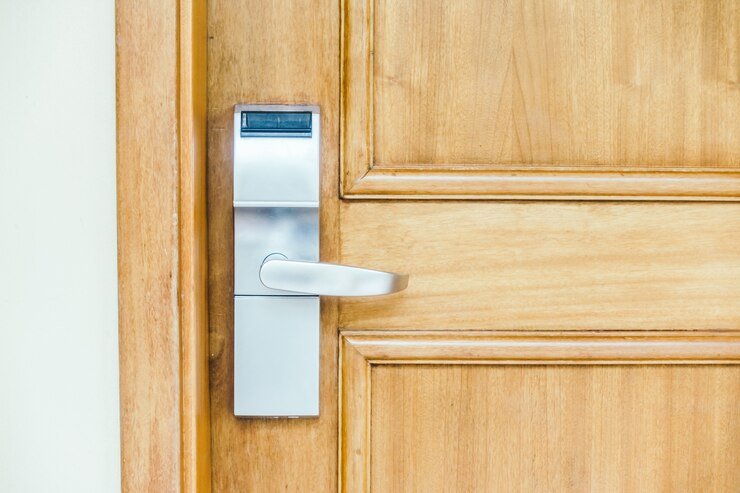
This module
will cover the various types of home security methods, mainly pertaining to certain doors,
windows and locks.
We will identify and explain the different
types of each and choose which types are the best, when safety is a concern. You should feel comfortable replacing locks and handles and remedying window malfunctions, once you are through the module.
There are a wide variety of windows,
doors and locks that homeowners
can choose to have installed
in their home. Options cover a broad spectrum of design, as well as implement different
measures of security. Before working on any of them, you should be sure to review and get an idea of all of the different
types.
10.2 Doors

Homeowners do not have any shortage of options, when it comes
to choosing their type of doors.
These can range
anywhere from flushed,
solid styles, to glass-panelled, decorative designs. Below we look at some of the most common doors you will see in the homes of your clients.
Wooden
This is a widely used option and covers most choices for luxurious and custom builds.
They are found in a variety of homes, with styles ranging
from Craftsmen, to Victorian, to Colonial.
Metallic
Steel is a leading choice amongst custom doors, as it is sturdy, reliable
and very affordable. A common feature of a steel door is an insulating core of foam, covered by the durable steel. It can then be painted,
to suit a variety of different palettes.
Fibreglass
styles and finishes
and are very durable, affordable and energy efficient.
They can even be made with embossed
patterns from grain, to resemble real wood.
Flush
with wallpaper. These are mostly used on the interiors
of homes.
Panels
These are also referred to as style and rail doors. You will see them in eight, six, or four panel configurations. They are used both indoors and outdoors
and feature smooth, framed sections
that sit around embossed panels. Many of them will feature a window insert.
Dutch
These doors are cut horizontally through the middle into two sections. The top panel of the door can be opened, whilst the bottom piece remains closed.The Dutch door design dates back to the 17th century and was made to let in air and light, without allowing
livestock to enter the home.
French
Also known as casement doors, French doors are highly decorative and a popular
choice for both indoors and outdoors. They come in a pair, with each door framing one or more window panels. They are usually
designed to permit access to either outdoors,
or to formal living areas, as they let the viewer see a lot.
Barn
As country-chic becomes a more widely known decorative
design in the home, barn doors are beginning to be seen as a design choice
inside the home. They are often designed
with rough-hewn wood, which is typically characterised with a wrought
iron “Z” or “X” design.
These were designed
as a clever way to save on space.
As they open, they disappear
into the wall, with a handle attached
that allows them to be pulled back to the closed position.
They are usually suspended on a track and slide back and forth on rollers.
They are usually used indoors, as they are most often designed
with a hollow core and are very light to provide ease of use.
Patio
These doors are usually made with giant glass panels. They are very attracted
to the eye and, as you can tell from their name, are most used leading
outside to a patio or lawn area.
10.3 Windows
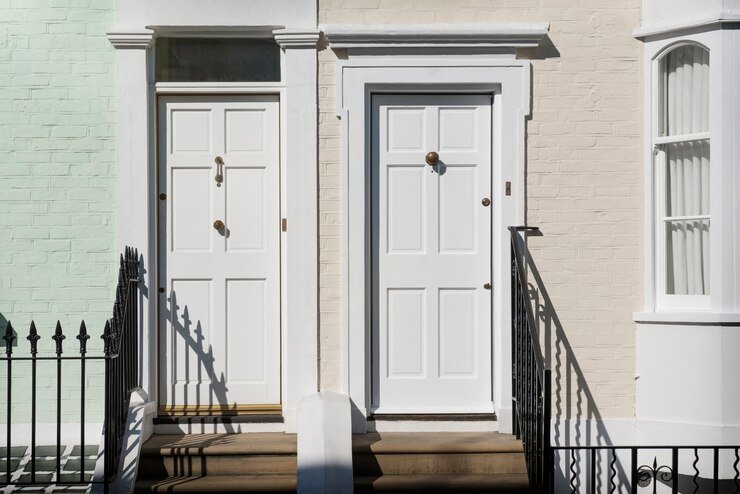
Many different types of windows
can make up the construction of different types of homes.
They allow for natural light to flood into a room, as well as let in fresh, crisp air, to keep the room from becoming overly stuffy. They also help to define the style of house, be it modern or traditional. Almost all windows can be customised to suit one's desires and needs.
Below are listed the most common types of windows that you will see.
Double-hung
There are two sashes in this type of window that help it to slide down and up in its frame. They can open up from the top or from the bottom,
but will not protrude inside or outside,
as they remain inside the frame. In a single-hung window, the top part remains in place and only the bottom part can be opened.
Casement
This is a hinged type of window,
which can be opened or closed by turning a crank. They will open outward from the home.
Awning
This is another type of hinged window that can open up to let air in from the bottom, right, or left.
Picture
This window is very large and completely stationary. It does not open to let any air in, but does provide
a gorgeous, unlimited
view of the outdoors.
Transom
This is a narrow window that can either move to be opened, or be completely
stationary. They are typically placed above a door or another window, to let more light in.
Sliders
There is at least one operational window in place here and they slide along a track to open. Modern
or contemporary houses use these most often.
Stationary
These will not open, like the picture windows, but can be customised to fit any shape or angle desired.
Bow or bay
These are the types of windows that
have one stationary piece in the middle, with two operational windows on either side. They are designed
to create the illusion of extra space on the interior of a home.
10.4 Locks

There are many, many different types of locks and there are more designed almost daily.
However, there are four types that are
the most common, because they have proved to be the most reliable over the years.
Padlock
The only lock to not be permanently
attached to anything else, padlocks come in a range of styles and sizes, are portable and freestanding
and are one of the easiest to recognise. You can buy one either with a key, or with a combination code.It is recommended to stick with the keyed padlock, as the combination ones are easily shimmied off or decoded.
Deadbolt
These are most commonly found on external
doors of the home and provide a lot of security. There are single deadbolts, double deadbolts and lockable thumbturn
deadbolts, which are a sort of hybrid between the first two.
Knob
These are installed
alongside the deadbolt
lock on exterior doors and are also commonly found on interior
doors. These should never be used as the only security on external doors, as they can easily be bypassed.
Lever
These are used just as the knob locks, but are a bit easier to open, because of their long handles requiring a simple push. They are most commonly
found in handicapped-accessible homes and buildings.
Fact
A mortice deadbolt is the leading type of lock on homes
in the UK. They require a key to both lock from the outside,
as well as the inside. They are always required
to comply with the British standard BS3621.
Source: Churchill.com
Updating
When most homeowners consider increasing their home's value, they tend to think about the big- ticket
items, such as remodelling a guest bathroom
or adding a brand new splashback to their kitchen.
bring up the value, not everyone can afford such big changes,
so they will commonly look into updating
the home's hardware,
such as doors, locks, etc. However, this is not an easy task for those who do not have a basic grasp of handyperson work, hence where you come in.
Steps to change a Lock/Handle
In order to change a lock for someone,
you should first identify the type of lock they already have and look for one that resembles the same
basic makeup for fitting into the door. This is commonly printed on the lock itself and can also be found on the key the lock came with.
is not going to want their exact same lock, but knowing the brand and type, as well as certain features of the current
one, will help you give them options
on ones that they can choose from. Replacing the lock with a similar one will also ensure there is no modification needed to the door itself, which is typically where a certified
locksmith would need to come in.
Release the springs holding the knob in place, as you unscrew the interior
side of the mechanism first. It should come off fairly easily, leaving only the decorative cover. You should then remove this cover.
The screws to it should be visible, once you remove the first piece. There are two interior screws here that should be taken out, which help you to disassemble the lock sections.
Remove the latch assembly.
When you go to replace the new lock/handle, you should follow all of the steps backwards, starting
with placing the new latch in before the handles.
Ensure you replace
all screws tightly,
to provide the client with the utmost safety.
Activity
1
Estimated time: 20 minutes
You should try to remove and replace a couple of doorknobs
and locks in your own home, before
taking it on as a job for a client.
a regular knob and an exterior door, preferably one with a deadbolt lock. Completely remove all
screws, pieces, knobs, latches and locks and then test your knowledge
and skill, by replacing every part where you found it.
You can even take it a step further and purchase a different type of lock for yourself,
so you start to gain a grasp of what different types will look like.
10.5 Bettering Doors and Locks to Strengthen Security

When a client chooses to update their doors and locks, it may also be for security reasons.
Either they just moved in to a new house and are in fear of the previous resident
having a copy of their house key, or something
might have happened
with a fallout concerning an ex and they want to ensure
they do not sneak in. Whatever the case may be, doors and locks should always be up to date and modern.
Whilst some may want a certain type of look to their exterior doors, certain designs are not always the best option when it comes to security and safety. Doors with glass or thinner
wooden panels are easily broken into. Even with a single deadbolt lock, all it takes is an intruder breaking part of the door, sticking their hand in and turning the lock open.
For this reason, choosing one of the thumbturn deadbolts
we mentioned before is the best option for an external door upgrade. This lock requires
a key to lock it from the inside, as well as the outside.
A key to the inside lock should always be kept conveniently at hand, however, as this might pose an emergency when the occupants
need to quickly escape, such as during a fire.
this issue, the best way to go about remedying
it is to either reinforce
the frame, or replace the door itself with one that fits better.
If the client does not want to go to the expense
of replacing such parts, you may recommend
they let you attach a flat plate to the door that covers the opening, but cannot be removed from the outside.
A solid outside door should also possess
a peephole, simply to allow the homeowner
to assess whomever
may be outside before they open their door, rendering
them vulnerable.
Though beautiful, of all of the doors permitting access inside someone's
house, patio doors are the most dangerous,
mostly the sliding glass kind.
The locks on these doors are generally
not very good and there is no way to install a deadbolt on such doors. Even if the lock does hold up, the glass can easily be kicked in by an intruder.
One safeguard you can recommend
to your clients is to attach locks that have vertical bolts that will fit into holes made in the floor, holding the door in place when it is closed and locked. You can also recommend
they replace the regular panes of glass with a shatterproof type, such as polycarbonate.
Activity 2
Estimated time: 30 to 45 minutes
else who has this issue. In order to gain proper skill, you will need hands-on
practice.
the frame or the door and buy what you need from the hardware store to make it happen. You will need to measure the door properly, so that you can either replace it or the frame, to ensure you find one that fits properly.
Bonus points to you if you do it on a door in your own home - you will notice a huge saving in your energy
costs!
10.6 Common Window Problems
and How to Fix Them

There are many
issues that can occur with windows.
They may become damaged, stuck, or the homeowner might want one with better security. The following scenarios
will identify various issues you might be called in to fix and provide
you with solutions to go about doing that.
Stuck wooden windows
Windows made of wood can typically swell in wet weather. You might find luck in rubbing wax against the edge that seems to stick. If this does not work, you can use a planer to remove some of the excess wood. You will need to remove enough to allow for repainting the area as well.
Rotting window sill
the section. Cut back the sill to where you get no rotten parts and use a template
for the patch you removed.
Mark the position
where the groove is under the sill. You will need to cut the patch a little larger than the piece you removed and after you put it in place with screws, you can plane it down.
Vinyl window maintenance
The hinges on vinyl windows may just need to be lubricated
and you might need to occasionally replace
a catch.
Fact
An astonishing 30% of all burglars enter the home through an unlocked door or window!
Source: Safewise.com
10.7 Reglazing

Glazing is the term for the hard putty that creates a weather tight
seal on the outside of the window, between the wood and the glass.
There are two scenarios that can lead to a window needing reglazing. Either the window pane gets damaged, or they deteriorate over time. Over time, the putty can fall off or simply become badly cracked. This leaves the window completely
vulnerable to the effects of weather and rot.
Reglazing is not at all difficult,
but takes certain know how:
You should first examine the situation
and see what condition the exterior of the window is in. If there are just a few hairline cracks here and there, it definitely still has a lot of left to it, but needs occasional
checking to ensure it is not getting worse too quickly. If you can clearly see that glaze is missing,
or you can fit the blade of a knife through one of the cracks, it is time for reglazing.
Before you start the glazing process,
you need to remove the old glaze. Take out the operating part of the window, also known as the sash. You will have to remove the thin pieces of wood on the inside of the window,
perpendicular to the sash, that hold the window in place. Once the sash is removed, begin chipping off the loose glazed pieces with a scraper or a razor knife.
Whatever is under this will need to be removed
with extreme caution,
so as to not damage the window itself. You can take a heat gun to it, which will soften the glaze to the extent that it actually
falls off itself. If you use the heat gun, keep in mind that you will more than likely cause some damage to the paint with it, so you might want to plan on scraping and repainting the window for your client as well.
Once uncovered from the glaze, you will notice small metal clips holding the glass pane in its spot. These are known as glazier's points. Be aware of them when removing the glaze and detach them once you find them, if you plan to replace a pane.
Once all of the glaze has been carefully
removed, check the wood frame to decide if it needs any repairing. You should use a two-part
wood epoxy to do any needed patching
here. You can then shape and match the epoxy to the wood, once settled.
If
you are replacing the pane, now is the time to do it. Measure for it and have it cut at the hardware store. When you return, lay down a thin layer of glaze compound around the wooden
frame, set the glass in place and secure it
by reattaching the
glazier's points and
pressing those in place with your putty knife.
It
is now time to apply the new putty. It can be found at almost any hardware store and does not cost much at all. Make sure the glazing compound
is at room temperature. Take a golf ball- sized portion of the mix and work it around in your hands, until it becomes pliable. Roll this into a long thin string-like piece and press it along the edge of the windowpane.
Press the glaze into the frame and the glass and then smooth it. Work your way around the entire window, removing excess glaze as you go along. To get a nice, finished
look, take your putty knife and use single passes on each side to run it along the glaze at an angle. After a week of setting and drying, the frame can then be repainted.
10.8 Dealing with a Jammed uPVC Window Lock

Material made of uPVC is based of polyvinyl chloride
polymer, but numerous additives and stabilisers are used to make it suitable for using as a window.
They are made from sections
of profile that are then cut to join together,
creating the shape of the window. You may be called out by a client who has a uPVC-based window that has jammed itself shut. You should remove the handle from the window to inspect it. In a lot of cases, the metal bar sticking out from the back of the handle comes loose. If the handle seems fine, you can conclude that there is an issue with the uPVC locking mechanism.
Try to insert a small metal hook into the lock, and then turn it to attempt to pry the lock loose.
Alternatively, you may need to shimmy the window open by prying in a wide, metal-bladed chisel. Once you have gotten the window open, you will need to replace the lock.
10.9 Why Does Double
Glazing Fog Up?

If a client complains about their windows
no longer being clear, their
double-glazed windows have probably fogged over time.
This is due to a constant build-up of condensation, either on the outside, inside, or in between two panes on a double-paned window.
The only solution is to replace the
affected units. It needs to be replaced with careful attention directed to the correct drainage system,
in order to prevent future fogging - something a lot of installers fail to do.
Module Summary
In this module, we covered a range of doors, locks and windows.
We identified them and went over what makes each unique in their own way.
has and what you need to do to fix it.
.svg)



