
1.1 Introduction to the DIY Course

If you are a hands on person, a career as a handyperson might be the
perfect career path for you.
However, working as a handyperson is much more than doing
a minor repair
here and there. Instead, this course will show you the importance of what a handyperson does. Remember, every big issue in a home starts as something
much smaller.
You probably realise that water running down the side of a home is a small problem, but a homeowner
might not. The running water could indicate that the guttering needs to be cleared, or that the downspouts are clogged. Both are relatively small, easy jobs, but they are also jobs that homeowners just do not want to do. Therefore,
many homeowners put it off and put it off again.
However, if these jobs are not done in adequate time, several things might happen.
For instance
The joints of the guttering
might break, the downspouts might loosen up, or it is possible
that the guttering will fall from the side of the house. These issues, as you might imagine,
are a big and expensive
problem.
All of it is avoidable
from the start, by calling a local handyperson. If you are reading this right now, you are probably the person you want people to call.
There are also opportunities to work with franchises and other businesses that hire handypersons.
By the time you are finished with the course, you will have all of the information you require to start a successful career as a handyperson.
First, you should know that you will not be able to accept every job that comes your way. There are some jobs that will simply be beyond your skillset and some jobs that you will be unqualified to do. You will also find that there are jobs that homeowners might want to hire you for, that you cannot do legally.
For instance
If a homeowner
calls you to fix a moderate electrical problem in their home, you might not be able to take that job. Why? Because
in the UK, there are certifications that are necessary
to have before working on these parts of the home.
Does this mean that you cannot get certified? No, you can, but if you are not, you should never take on these jobs. We will discuss these legal matters,
later in the course.
There is also some judgement
involved in working as a handyperson. Some customers might ask you to do a job that might only be a temporary
(and rather dangerous) fix. In this case, by saying “yes”, you could put yourself
in a position where you could be blamed if something goes wrong with the repair.
1.2 Understanding Your Skills and Limitations

It is also important
to understand your skills and limitations as a handyperson.
Most jobs that you take on will have instructions to follow, at least on a basic level. In fact, this course has instructions on several common handyperson jobs. However, anyone can read instructions on how to do certain jobs around the home, but that does not mean that they can do it.
For example
You
might read instructions on how to replace a door, but have you ever done it?
This is where understanding your skills and limitations comes into play. For all jobs that you have knowledge on, it is a good idea to get practice
before you start getting paid for your work.
It is not fair to the client to go to their home to do a job without ever having done the job previously. This could also put your reputation at risk. The first time you do a job, the odds are not in your favour for it to go off without a hitch - and you do not want this to happen in front of a client.
Start Simple
The main idea when it comes to starting a handyperson business
is to start small and simple. Start your business
with simple jobs that only require basic tools and then grow from there. You might even want to start with applying paint, fixing drywall, fitting light fixtures,
or repairing a leaky tap. Over time, you will work on gaining more capital and then investing
in things like tools, branding
and advertising.
The more work you do at the beginning, the more you will begin to understand
the inner functions
of homes. Your experience will lead to expertise - and this is when you will see more and more customers and more success.
You will also see customer
loyalty, which could boost your business into a highly successful enterprise.
Each Home Has Multiple Job Oppurtunities Available
Another thing that you must know about being a handyperson is that every home you do a job in will give you the opportunity for more jobs.If you do a good job the first time, a customer will call on you again and again.
Not only will this give you consistent
work, but it can also save you money on advertising and help you to grow. So, spend a little time getting
to know your clients and developing relationships.
Another thing to be aware of is that no home will only have a single repair to do. If the tap is leaking, for instance, the odds are that there is another small job that the homeowner has been putting off. Keep your eyes open and ask questions.
your customers will do the same. Each job that they cannot
do or do not want to do is now your responsibility. Whether you are fixing a floorboard that constantly squeaks, or simply mowing a lawn, you are providing
an important service to the homeowner.
Fact
Middle-class fathers are using handypersons more than ever before to do chores around the house, so that they can balance their work and family life with efficiency.
Source: lse.ac.uk
1.3 What Makes a Home Function
and Your Role Within It
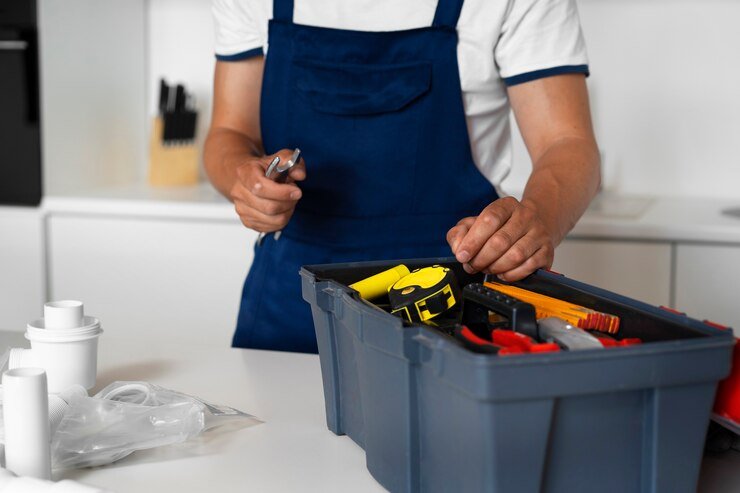
As mentioned, inside a home
there are many systems that work to
keep the inhabitants comfortable.
Some of these systems are quite large, such as the heating
system, plumbing system,
air conditioning system and electrical system. Each of these large systems is made up of many small systems - and these all need occasional maintenance, in order to keep them working correctly.
Most homeowners will call upon a handyperson for maintenance and most are not savvy about these home systems.
Thus, they are unable to identify signs of trouble,
or they wait until it is too late and have a major problem on their hands.
When a homeowner
finally acknowledges that they have a problem,
they have two options - call a trade professional, or call a handyperson.Most homeowners
take the handyperson route because they know the costs are more affordable.
Depending on the job, you should be able to provide this service to them, but as you will learn, these jobs are best looked at on a case-by-case basis.
Sure, you can fix the blown fuse on an electrical switchboard, but you cannot add housing to a fuse box without certification. Again, some handypersons get certified in certain situations, but if you are not certified, you should not do these jobs.
1.4 Big Profits are in Small Jobs

As a handyperson, you must also know what
jobs are the most profitable
for you. For instance
The most profitable
jobs you will find include repairing windows,
doors, appliance cleaning,
guttering, walls and cabinet doors. Why? Because these jobs take minimal time and this makes you more profitable.
you can provide when you work as a handyperson. That's the reason you are called a handyperson - you are handy at fixing anything
and everything.
of the inner and outer workings of a home, you will be equipped
to go into the home and know what requires
fixing, how to fix it and the costs associated with that fix.
Fact
The average wage of a handyperson in the UK is £10.90 per hour, as of May 2021.
Source: uk.jobted.com
1.5 The Fundamentals of a Home's Interior

As a handyperson, you will know that jobs will vary and you can complete small or medium sized jobs.
You might be hired to complete simple jobs, such as cleaning
out guttering, or something more intense, such as remodelling a room. Because
of this variety, it is important that you are familiar with both the interior and exterior fundamentals of a home. Yes, many of your jobs will occur inside the home, but many also occur on and around the home's exterior.
You might even find yourself
working in gardens.
The goal of a handyperson is to have a list of jobs you can do that is larger than those you cannot do.
Some of the common services that customers will seek out when looking for a handyperson include:
 *Painting - many handypersons are called upon for small painting jobs - those that professional painters or decorators
are not required for, such as touch-ups.
 *Carpentry - handypersons also often do carpentry work, such as fitting a new door, putting shelving
in, or other renovation projects.
 *Wall hangings
- People also often call a handyperson for wall hangings,
such as hanging televisions, mirrors,
or paintings.
*Plumbing - handypersons often have a basic understanding of plumbing and they can carry out tasks such as clearing
clogs, installing toilets and sinks and other such jobs. Other jobs will require
certification.
 *Electrical - In the UK, most electrical jobs require electrical certification, but there
are jobs, such as switching
out a socket for another
socket, known as like for like, that a handyperson can do. However,
installing a new socket, or similar jobs, requires certification.
 *Doors
and Windows - Doing jobs such as switching out locks or re-glazing windows
often fall into the realm of handyperson work.
 *Decorating
and DIY - Wallpapering, painting, plasterboard repairs, tiling, hanging photos
and even fitting cat flaps are all jobs that you might get as a handyperson.
*Flooring - handypersons are often called upon to do flooring
jobs, such as fixing squeaky
boards or laying carpeting or laminate.
Activity 1Estimated time: 10-15 minutes
we have already
mentioned that there are many jobs that a handyperson can do, but there
are some that shouldn't be done by those who have no certification. In the UK,
there are certifications that you will need, in order to do certain
jobs. It is not necessary
for all handypersons to have these certifications, but you should consider those that are required.
Take 10 to 15 minutes of your time and do some research online about what certifications you might require
working as a handyperson. Specifically, consider plumbing, electricity and gas fitting.
but it will help you to stand out from your competitors.
1.6 The Fundamentals of a Home's Exterior

Now that you have a basic understanding of the jobs you might encounter
as a handyperson in a home's interior, you are likely wondering about a home's exterior.
In many cases, the exterior of a home is even more important
than the internal
aspects of the home.
For instance
A stucco crack or siding damage will not only look bad, but it could also affect the structure of the home.
Another task that you might carry out as a handyperson is to clean the roof of a home, work on the guttering, or tidy up the downpipes.
In addition to being able to take on these exterior tasks, you must also recognise
when the task at hand is too difficult and an expert must be called in. You might look at this as losing work, but consider
the fact that homeowners will appreciate your honesty. This can easily lead to that very important customer loyalty.
The most common cause of damp is the roof, which then works its way downwards.
Guttering might become damaged and water can then run down through the siding, which causes chips and cracks. Before you know it, moisture gets into those cracks and chips and this creates the perfect environment for mildew. Painting
the damaged area is only masking the issue - and it will always return. As a handyperson, you should be able to recognise situations
like this and take steps to repair them.
Some specific exterior
jobs that you will likely face include:
*Gardening work - You might have the chance to do some work in the garden or on the client's property. This includes mowing, cutting, planting
and landscaping.
*Roof and guttering work - As mentioned, many homeowners will contact a local handyperson to take care of their roof and guttering systems.
*General repairs
- A handyperson will often be called upon to do general
outdoor repairs, such as fixing fences, repairing
sheds, power washing
and more.
*Painting - Exterior painting is another common job for a handyperson.
*Lighting - Installing and doing minor repairs on exterior lighting
is great work for a handyperson.
1.7
The Realm of Knowledge
Required to Become a Handyperson

The point that you should have gotten to thus far in this first module is that, by knowing how different things work in a home, you can make small repairs and keep your clients happy.
Knowledge as a handyperson will always pay off, even if it is just to point your customer in the right direction. Again, you might lose a job if you refer a customer
to an expert, but you can be sure that your customers
will appreciate this transparency. This helps you to build trust and gain credibility, which will certainly
lead to repeat business from your customers.
The bottom line is that you need to
know everything about how a home works, on both the exterior and the interior. This knowledge will
allow you to make proposals to customers and to explain what and why you are doing what you do.
By the time you reach the end of this course, you will have everything you need to get a handyperson business
up and running and successfully serve the needs of the homeowners in your local area. The more you know, the more in demand you will be - and this will lead to success over the upcoming
months and years.
Activity 2
Estimated time: 10 - 15 Minutes
Now that you know more about what type of work a handyperson does, it will be well worth your time to think about your own skillset. Some handypersons are “jacks of all trades”, whilst others specialise in certain areas. For instance, if you are very good at painting and papering walls, you might want to consider focusing on those things. Alternatively, you might be up to anything.
For the next 10 to 15 minutes,
make a list of your skillset, then rank these skills based on your talent and comfort level on them. For example,
you might feel very confident
in your ability to paint, but when it comes to flooring,
you might not have a lot of experience.
As we move forward through the course,
you can use this information to see where you might need more practice and experience. This will also give you an idea of where you can start with your business. To make the right first impression, you should start by doing the things you do best.
Module Summary
This module gave you a good overview of what it means to be a handyperson.
You were introduced to the concept of
what a handyperson might do and what skills are required for those who want to be a handyperson.
We gave you advice on what limitations you might face as a handyperson and information about how to best work with a client to get the most out of each call to their home.
As we move forward to the next module,
you will learn more about meeting with clients and creating client relationships. You will also learn
more about the requirements necessary for a handyperson in the UK.
 |
.svg)



