
4.1 Introduction
Before tackling any type of plumbing issue, one
should learn about what it is they are working with.
This module is meant to cover exactly that and
explain the concepts of water systems, defining what can and cannot be done with them.
without you necessarily being certified. However,
carrying out work on any part of the heating elements involved, including pipes
located under the floorboards because
they will carry hot water through them, should be prohibited. One wrong component
is all it takes to cause a water leak, which can easily seep into the electrical
system. Only minor repairs to the cold water system should be carried out by a handyperson service.
Some of the pipes are specifically engineered to carry water
at high temperatures. For that reason, work with the main water delivery
pipes and the wastewater drainage system should not be performed. Those pipes
are usually copper and the joining components linking all the pipes together
must be able to cope with high temperatures.
In situations where there is a burst pipe, it is
not able to be fixed. Some older homes still have lead pipes and most countries do not permit lead
material to be used in water pipes, for the obvious reason of lead poisoning.
Only qualified/certified plumbers can work with pipelines.
Certain handypersons, with a little effort in
researching, can work with some of the components, such as traps under sinks and toilet cisterns.
The rest of this module will explain how the water
systems work in homes so that figuring out what it is that is causing a problem is a breeze. It should also make
understanding the plumbing repairs section to
follow, a lot easier.
The only thing to remember when visiting homes is
to let the client know you do not have certification in
plumbing and that you are not a member of any trading body in the plumbing
sector. That is, of course, unless
you are, which some of you will be.
For those of you who are not trained in plumbing,
let's get your knowledge of the systems up to
speed, so you know what you're working with when a basic plumbing job
comes your way.
Fact
In the UK, approximately 6.1 million
people have water that is treated with fluoride, which is about 10% of the
population
Source: Telegraph.co.uk
How the Plumbing Systems Generally Work
There are two subsystems in every home.
One is to let fresh water into the home, which is
the main water supply. The other is to let wastewater
out, which is the drainage system. That's it.
pressure. It is that pressure that allows the water to travel through the magnitude of pipes around the
home, forcing its way to the higher floors, around
bends and into any room with a sink, bathtub, shower and/or toilet.
Even if a home has a separate laundry room for the
washing machine, it will be connected to both
subsystems of the plumbing. Every home will also have a water meter.
This is needed to measure the amount
of water used by homeowners and to ensure the water company bills
appropriately.
Finding the Stop Valve
Near the water meter, if you have one,
is where you can find the water stop valve. This works the same for gas
supplies. A gas meter will have the main gas safety stop valve near the meter.
Every homeowner should know where these valves are, but surprisingly, many do
not. This is why plumbers can receive frantic phone calls in the
middle of the night about a burst radiator pipe or something similar, when it could really wait until the morning
if they only knew how to shut the water supply off and prevent their home from
flooding.
shut off valve is located, it is a catastrophic disaster waiting to happen.
For that reason, any time you are called to a
plumbing related job, always be sure that the
homeowner is aware of the location of the stop valve. If they do not
know, find it and make them aware of
it - they will thank you for it!
About The Stop Valve
There are some instances when a block of four homes
(or more, in blocks of flats) can be sharing the same stop valve. The water will be supplied from the water mains
(street supply), with enough pressure to force-feed the cold water around a
block of houses and/or flats.
If you are working in any other type of home
besides a detached or semi, you should find out from the homeowner about their stop valve. Most modern homes have
individual stop valves, as it is far more convenient when the water needs to be
turned off for one home, without it affecting every other home sharing the same
valve. That said, do check, because older homes may not have had their plumbing system updated to include
its own water mains stop valve.
The valve is needed for any plumbing problem
because, with just one turn, it will cut the water feed off and leave no water coming into the home.
Therefore, it is not only a stop valve but a flood prevention valve as well. That is why most homes
have them and they should not be difficult to find. Typically, it can be found around the water meter.
The water meter is always connected to a water
pipe, which connects to the main water supply outside of the home. It needs to
be in that precise location, so it can cut the water supply off from the source.
If the meter is installed inside the home, it is
usually under the kitchen sink. In homes with
basements, it might be installed there. Older homes can have the stop
valve located near the front door, as well as
underneath the floorboards. That is obviously not the most convenient of places
to have them, so do not check there first. If you cannot find the stop valve under the kitchen sink, in a basement, or downstairs toilet, it is
only then that the underneath of the floorboards should be checked.
in modern homes, do not be fooled into thinking that you have shut the entire water supply off; if you have shut
it off in the bathroom. The main supply
can still have water being fed into the home, yet individual stop valves can be
found under toilet cisterns and
beneath washbasins.
As the name suggests, individual stop valves are
only to cut the water supply to the fixture it is connected to.
Most fixtures in a home connected to the water
supply can have individual stop valves. However, that is
not always the case. These will only limit the flow of water to the fixture and
not shut off the incoming water
feed. If a leak is confined to a sink,
bath, or toilet,
those are the only times
the individual stop valves will be of use. However, it is always best to
apply caution and shut the main water supply off, when you are doing even the smallest
of jobs on a plumbing
system.
Remember, the main stop valve is the only one that will cut the water supply off from the source.
Activity
1
Estimated time: 15 to 20 minutes
A good way to show how knowledgeable you are to
prospective clients is to create a brochure containing certain plumbing tips
that would be of use to them. You can have one professionally made, eventually, but for now, it would be
a good idea to gather up information to get ready for them later.
to fix things or how they too can be a handyperson,
but customers like to feel that you are recognising them as a human being. In
the brochure, inform them of the different systems and
the typical location of water stop valves, so they know what to do in a flooding emergency. Include the importance
of water in a community and how everyone is connected to the main system. The
more that customers are made aware of and communicated with, the more they will take care of their
own system and, thus, the entire system.
Until you can get professional ones made, there are
plenty of brochure templates online, which are
very simple to use. Just gather up all of the basic information you'd
like to have in them and write it out
onto one of the online programs. It shouldn't take you more than 20 minutes and
will benefit you and your customers.
4.2 How Hot Water Systems Work
.jpg)
The above
explanation covers only the cold water set up in homes.
For warm water, things begin to get a little
different and somewhat more complicated. Cold water is simply fed into the home from the main water supply in the area
and is immediately ready for use.
adding fluoride (in most cases) and basically,
decontaminate the water and make it ready to drink from the tap.
On the other hand, for warm water, heating
components come into the system. This is where you cannot help your clients because the repairs to pipework
carrying hot water need to be done by someone who knows the type of pipes to
use, how to connect them and the purpose of each within the plumbing system.
is related to copper, lead, or brass pipes, not a
handyperson.
Difference Between a Direct and Indirect System
Some homes will have a hot water tank in the loft,
whereas others will have the more economical
system of the combination boiler. A combination boiler has the main
water supply directly connected to it. This is why they are cheaper
to run than using an indirect water supply.
Direct/Indirect:
 *An indirect water supply - The water is fed into a
cold water tank and then passed into a hot water
cylinder.
*A direct water supply - The main water is fed directly into the boiler.
Inside an indirect system, the heating elements are
consistently running to keep the hot water cylinder
working. Without that tank being turned on, there will be no hot water. This is
the type of system that the homeowner
operates separately from their heating system. The warm water will be
constantly running, unlike combination boilers, which are direct.
The water is fed to them directly from the main
supply and when you turn the hot water tap on, the boiler fires up to heat the water as you use it, rather than
keeping a storage tank filled with warm water
to use when you need it. This is the reason it takes a few seconds to a minute
to feel the initial heated water when the water is
turned on.
Combination boilers are the most energy-efficient
choice for homes, because they only require use when the homeowner wants heat
either for their home or for hot water.
If the heating or warm water is not needed, it is
not being paid for. That is the main issue that is sending heating costs spiralling out of control in
other homes and it is one of the main reasons for the surge in homeowners installing combination boilers - they
are far more cost-efficient.
Combination boilers account for well
over half of all new domestic boilers installed in Britain every single year.
Source: Worcester-Bosch.co.uk
The Flow of Hot Water
For hot water
to get from the hot water cylinder, or from a combination boiler
to the fixtures they are
connected to, the water starts there and is then transported through the pipes
to reach whatever fixture needs hot
water. These pipelines will either be plastic or copper. Sizes range between 15
and 22 millimetres, although there are some pipes as
small as eight millimetres and as large as 35
millimetres.
Any new pipes
being fitted are either copper
or plastic, although
there some older
homes that still have lead pipes, which are being
phased out due to the risk of poisoning they pose to domestic water supplies.
Only plumbers should be repairing any pipework
connected to the boiler or to the hot water cylinder.
regarding anything to do with the water supply. Most countries have specific guidelines for plumbers and
engineers to follow, for any pipework. In addition,
there may also be governing bodies requiring inspection of new fittings to
ensure compliance with local regulations.
To be sure you are not tampering with pipes you
should not be near, it is advisable not to work with any pipes if you have had
to remove panels to access them. Under floorboards, behind plasterboard, or in lofts are a few examples.
If the pipes are hidden within a property, consider
them out of reach
for a reason. Those pipes form the internal parts of a home's plumbing system.
The only jobs you should be doing will involve
working with plastic pipes only. The only time you should be lifting
floorboards is when you need to find a stop valve and never to replace worn
components, such as joining caps that have caused a leak.
Activity 2
Estimated time: Ongoing
Explore your own home's plumbing. The more familiar
you are with certain systems and functions, the easier it will be to perform
simple tasks for customers and then grow your handyperson business. You do not
even have to spend any money on books - there is a plethora of information
online, for even the completely unfamiliar.
You will not be able to tell a customer
about their system
and certain parts
they need to buy unless you are familiar with them
yourself. Without getting certifiably trained in plumbing as an apprentice, you will find that your own house is your
school.
Every now and then, open your kitchen or bathroom
cabinets, take the lid off the toilet, or even go outside and locate your water meter. Is there anything
you see that you are unfamiliar with?
Can you name every single part you are looking at?
This is the best way to test and retest yourself over and over again until you know the basic parts like the back of your hand.
4.3 Waste Water Drainage
Systems
Unlike the incoming water supply to homes, which
requires pressure delivery, wastewater drainage systems do
not.
They rely on gravity to pull the waste downward, around angles and eventually out of the system.
simple enough, but just like the hot water pipes
in homes, there
are a lot more moving
parts to keep the drainage system operational. There are vents, various traps
and cleanouts, which keep the systems
functioning. They need a supply of air to work, which is what the vents are for. This is why radiators need to be bled on occasion. Some of the air flowing
through the system can build up to the extent that it prevents radiators
from reaching the full temperature they are set to.
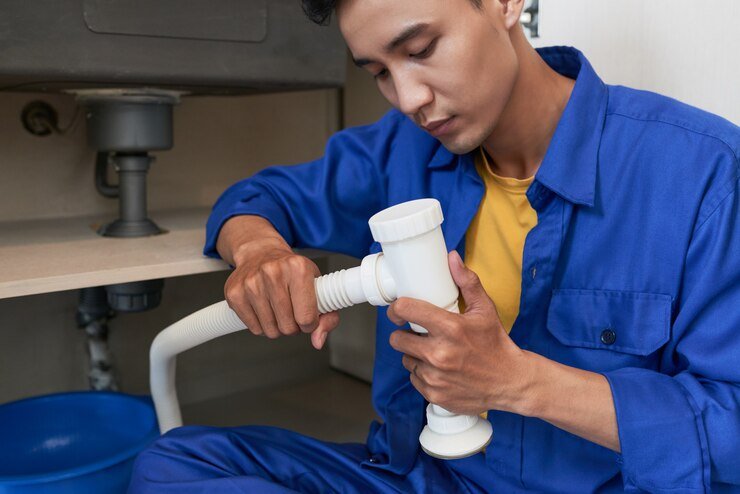
this under the sink, be it the kitchen or the bathroom.
It is the curved pipe attached to the system, which resembles an S-shape. Water
will pour down the plughole with
enough force to push wastewater through the trap, but not enough to empty it.
These traps are designed
to keep some water in the trap, creating a barrier that prevents some horrid smells from pushing
back up the drains and causing a stench in the home.
When there is a blockage,
the trap is the problem.
It becomes clogged
in kitchen sinks by grease and, in baths and showers; it is
usually hair that clogs the traps up. That is actually meant to happen because
it is far better to trap large particles before they reach the main drainage pipes. It is easier
to clean out traps than it is to unblock a main wastewater pipeline.
When Hot water is not Hot,Neither are the Radiators
As you know now, radiators need bleeding on
occasion, in order to keep the air from locking inside the pipes. It is simple enough to bleed a radiator and you've
likely done it many a time. However, what you may not know is that entire
heating systems need flushing from time to time as well
few months, there can come a point with an older heating system when no amount of bleeding gets a decent
temperature from radiators or hot water pouring from the taps.
system, a lot of sludge can accumulate. The dirty black water
is caused by debris in the system and will cause small blockages, resulting in
slowing the pressure flow throughout the pipes.
The debris will be a combination of things, including limescale and rust. For a heating system to remain in good shape, it helps to consistently power flush it.
A Power flush is needed once every five to six years and should ideally be done by a specialist.
This is because new boiler systems that are
installed, as well as any previously under warranty, can have such warranties voided without the rigorous work of a
professional.
How you can tell a heating system needs to be power flushed?
* When you bleed the radiators, you will notice the water is near black or a dark shade of brown - a nasty, dirty colour.
 * When the heating system or hot water tap is turned on, the boiler makes a banging noise.

If a heating system has the symptoms mentioned
above, it may be in need of a power flush. It is only that water that runs through the pipes will, over time, cause
those pipes to rust. Limescale will build up and all sorts
of debris can accumulate. The power flush
is to eradicate as much,
if not all, of the sludge out of the pipes used to
transport the water from tanks/cylinders to taps and radiators.
Unless you know what you are doing and you do not
mind spending money on a power flush machine and training costs for using the
machine, you should only advise your client about power flushing services. If you find many of your clients
have older heating systems, you may want to call around yourself to find out which companies in your area are
specialists in this field, or if any local plumbers provide the service.
Because a power flush puts chemical cleaning agents
through an entire water system to flush the sludge out, it is best to advise your client of the process
and how it works, as well as the benefits.
It is not intended to be done by anyone other than a plumber.
The benefits
of a power flush service are:
 *Improved heat distribution throughout
the home.
 *Energy savings from the relieved pressure.
*The system will be more reliable,
which will increase
its lifespan.
If you attempt this yourself, remember it is the
entire heating system you are working with. This is why you would be best to advise your clients about the service,
explain the process and the benefits listed above,
for the sole intent of referring them to have it done by a plumber.
Whilst you may not feel it is the right thing to do
to advise clients, you do not know what you are doing here. In this case,
people will appreciate your honesty and value your advice. After
all, they will be paying more
for their hot water and heating every day, so you are saving them money just by telling them the exact service they need.
Do not risk your reputation by taking on more than
you can chew. Stick with the simple jobs, rather than the more complicated tasks. Let your knowledge provide your
clients with the trust level they need, in order to bring more business back to
you.
All domestic plumbing systems have two subsystems
to them - the main supply of the water feed into the home and the drainage
system to let wastewater out. They are simple systems, yet possess complicated setups, due to all the
components.
Copper and brass pipes used to transport water at
high temperatures can only be dealt with by plumbers.
Handypersons can do minor repair work and those are the components you'll be
working with. Plastic parts, toilet cisterns
(which are basically
cold water tanks) and dealing
with blockages.
Blockages to the drainage system are as simple as
unblocking the trap under the problematic fixture. Blockages
to the water flow affecting
radiators can be as simple as bleeding
them, or as complicated as using a power flush to
the entire system.
Knowing the symptoms of pipeline blockages will
allow you to let your clients know if they may require a power flush to their
heating system. You do not want to find yourself providing a service, only to have customers complaining it made
no difference.
With an understanding of how a domestic plumbing
system works, you'll be better equipped to know what jobs you can and can't do,
as part of your handyperson service.
 |
.svg)



