
MODULE 7
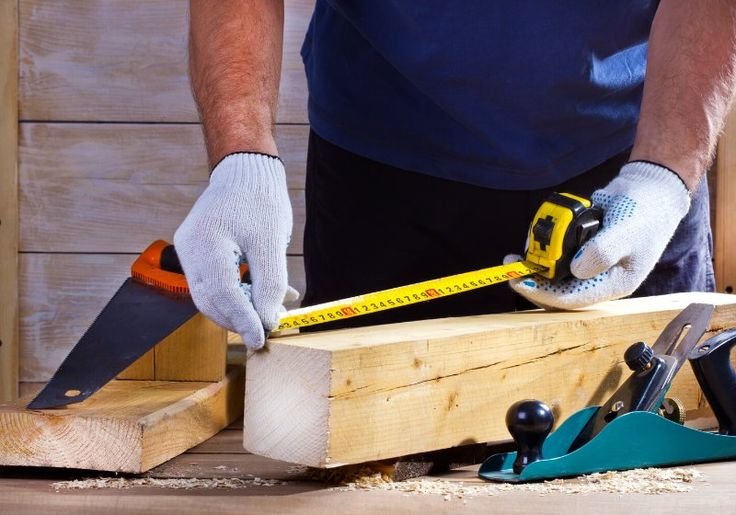
Site Carpentry: Key Skills and Responsibilities
Site carpentry is a specialized field within the construction industry that focuses on structural woodwork and temporary frameworks necessary for building projects. Site carpenters play a crucial role in ensuring that structures are built accurately, safely, and efficiently. Below is a detailed breakdown of the key aspects of site carpentry:
1. Reading Construction Drawings and Blueprints
Site carpenters must be proficient in interpreting architectural and engineering drawings to execute their work precisely.
Understanding Scale and Dimensions: Carpenters must accurately measure and translate scaled drawings into real-world structures.
Identifying Symbols and Notations: Blueprints contain symbols for materials, fixtures, and structural elements that carpenters must recognize.
Following Specifications: Drawings include details on materials, load-bearing requirements, and assembly methods.
Collaborating with Other Trades: Carpenters coordinate with engineers, architects, and other trades to ensure alignment with design intent.
2. Formwork for Concrete (Shuttering)
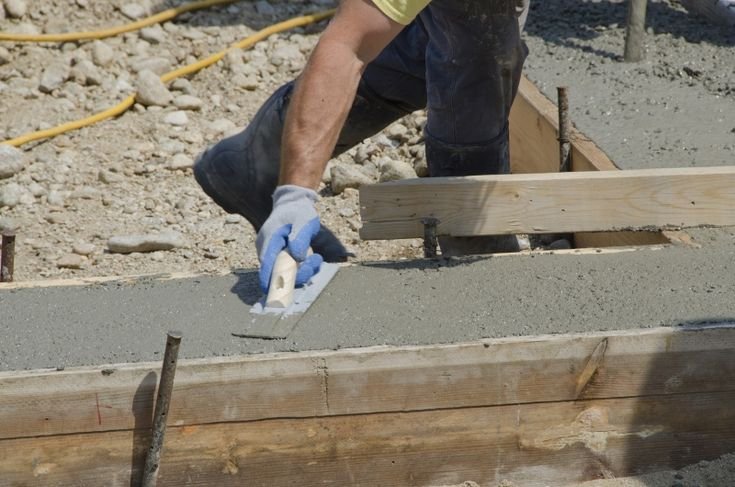
Formwork, or shuttering, involves creating temporary molds into which concrete is poured to form slabs, walls, columns, and other structural elements.
Material Selection: Formwork can be made from timber, plywood, steel, or engineered systems depending on project needs.
Structural Stability: Forms must withstand the weight and pressure of wet concrete without bending or collapsing.
Precision in Alignment: Proper leveling and bracing ensure that concrete sets in the correct shape and position.
Stripping (Removal): Forms must be removed at the right time to prevent damage to the cured concrete.
3. Erecting Partitions and Cladding
Carpenters install internal partitions (walls) and external cladding (protective outer layers) to define spaces and enhance durability.
Partition Walls:
Framing with timber or metal studs.
Installing insulation, vapor barriers, and soundproofing materials.
Fixing drywall or other finishing panels.
Cladding Systems:
Fitting weather-resistant materials like timber, composite panels, or metal sheets.
Ensuring proper sealing and waterproofing to protect the building envelope.
Following aesthetic and functional design requirements.
4. Working on Construction Sites (Teamwork and Timelines)
Site carpentry is highly collaborative, requiring coordination with other trades and adherence to project schedules.
Team Coordination:
Communicating with masons, electricians, plumbers, and other workers to avoid conflicts.
Following site safety protocols to prevent accidents.
Time Management:
Meeting deadlines to keep the project on schedule.
Adapting to changes or delays while maintaining efficiency.
Problem-Solving:
Addressing unexpected issues like material shortages or design modifications.
Ensuring quality workmanship under time constraints.
Conclusion
Site carpentry is a dynamic and essential trade that combines technical skill, precision, and teamwork. From interpreting blueprints to constructing formwork and installing partitions, carpenters ensure that buildings are structurally sound and built to specification. Their ability to work efficiently under tight deadlines while maintaining safety and quality makes them indispensable in the construction industry.
.svg)




Class Sessions
1- Introduction to Carpentry and Joinery
2- Tools and Equipment in Carpentry and Joinery
3- Materials and Fastenings in Carpentry and Joinery
4- Basic Woodworking Techniques
5- Joinery (Second Fixing)
6- Construction Carpentry (First Fixing)
7- Site Carpentry: Key Skills and Responsibilities
8- Advanced Joinery Techniques
9- Restoration and Repair
10- Finishing and Surface Treatments