
10.1 Introduction
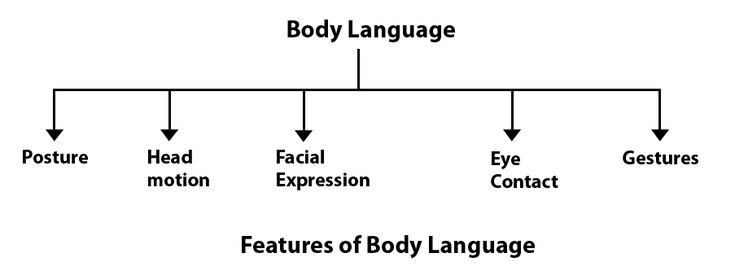
Just as different cultures across the world speak different languages, there can also be significant variations in the way body language is interpreted. Whether you work in a globalised environment or travel to emerging markets to explore the avenues of business, it pays to be familiar with the gestures and expressions that are considered polite and avoid those that are perceived as rude. Different gestures mean different things, in different cultures.
Body language in communication
Body language is even more important, because you may not be familiar with the language. Your ability to communicate on a subtle level becomes even more important than before. If you are travelling on business, you do not want to offend people by not making eye contact or by nodding your head in the wrong manner. Excessive or lack of eye contact may mean completely different things in other cultures.
Gestures
Ambiguous gestures, such as showing the “okay” sign or a thumbs-up are considered deeply offensive in certain cultures. If your work or business happens to take you to those countries, it pays to be respectful of their understanding of body language. The way you sit, use your hands and regulate eye contact can make the difference between respect and offence.
If you are unsure of what to do, it may be better to keep your hands close to your body. This module explains the important cross-cultural interpretations of gestures and postures.
Body language in our lives
Body language is not only pertinent to our professional lives, but plays an integral part in our personal lives too. Our bodies speak eloquently and plainly express feelings, including love, affection, camaraderie, derision, contempt and resentment, amongst many other emotions. By watching how we move our hands and feet and controlling facial emotions, we can minimise confrontations and misunderstandings with loved ones. Positive body language can be used as an affirmation of love.
10.2 Cross Cultural Body Language Interpretations
There is often a significant degree of complexity in cross-cultural interpretations of body language. The components where differences in perceptions can occur include eye contact, gestures, physical contact and proxemics (degree of personal space). The correct body language will help you to build business relationships with overseas clients.
If you happen to work in your home country, you may still need to collaborate with clients, suppliers and vendors from other cultural backgrounds. Seen in this light, cultural intelligence can help you to become successful and lack of it can mar important relationships and damage potential business or personal prospects.
Most of our faux pas are unintentional - they are not meant to give offence. However, body language interpretations are based on perceptions, rather than the literal truth.
10.3 Important body language differences across cultures.
Eye Contact
The degree of eye contact varies across cultures.
For example
In the UK, Canada and the US, etc., intermittent eye contact is considered essential for effective communication. Eye contact is considered indicative of confidence, attentiveness and interest.
Eastern cultures, in general, perceive strong eye contact as angry or aggressive. In the Middle East, strong eye contact between people of the same gender is recommended. It is considered impolite to make prolonged eye contact. Also, in most eastern cultures, staring or making strong eye contact with women is perceived as an indication of sexual interest.
Steady eye contact may also be perceived as intimidation or disagreement.
This viewpoint is shared amongst many cultures, including Hispanic, Native American, Asian and Middle Eastern cultures. However, strong eye contact between members of the same gender is perceived as a sign of transparency and honesty. In Western Europe, eye contact etiquette is generally the same as it is in the UK or the US.
For instance
If you see a Japanese woman who does not look you in the eye, this does not indicate submissiveness or lack of self-confidence. She is trying to be polite and respectful to you according to the rules of Japanese culture.
Touch/Physical Contact
Whilst hugging or a high-five is normal in western cultures, most Asian cultures tend to be more conservative in their approach. Shaking hands is a universally accepted gesture and it is safer to shake hands than suddenly give the other person a squeeze.
The British are also known to be more reserved and may also opt for a handshake and may prefer to hug, etc. only if they are familiar with the other person.
In the Middle East, Italy and Greece, men may kiss each other on the cheek when greeting each other.
Finger or Hand Gestures
Gestures are an extremely important component of body language and even heads of state and important leaders have been known to make mistakes by unintentionally using the wrong gesture. It is best to keep your hands to yourself.
For example
The okay sign, which is considered a sign of cheer and camaraderie in the west, is considered as an obscene gesture in Brazil, Germany and Russia. In Japan, the okay sign indicates money, whilst in France, it can be interpreted as zero.
Similarly, the popular V sign with the palm facing outwards was introduced by Winston Churchill as a signal for victory. However, if the same gesture is shown with the palm facing inwards, it is considered as an obscenity in countries like Australia and South Africa.
Similarly, the thumbs-up sign is interpreted as the number one in countries like Hungary and Germany, whilst it is often perceived as the number five in Japan. Be careful if you are counting on your fingers or gesturing to indicate a total. There is a lot of difference between one and five million
pounds!
Pointing at people or curling the finger with the palms facing upward is also considered extremely rude in many parts of the world.
Sitting cross-legged
This is also considered rude, as you are showing the soles of your feet to other people. This also includes the American figure four, or placing the ankle of one foot on the knee of the other leg.
Fact
Research indicates that nodding the head during a conversation encourages the speaker to speak three to four times more than usual. The optimal rate of nodding is one nod per second for at least four to five times.
Source: Allen and Barbara Pease, Definitive Book of Body Language
Nodding the head
Head nodding is a universal gesture to indicate agreement, or lack of it.
In most western countries, the head slightly bowed forward is a sign of agreement and is an adaptation of the bow, where you submit to the other person's view. In some countries like India, people nod their head by moving it from side to side, which is often confusing for westerners who interpret it as the “maybe” gesture. In Middle Eastern cultures, an upward movement of the head can indicate disagreement.
Nodding helps the conversation flow, by encouraging the speaker to provide more information. Slow, deliberate nodding indicates understanding, comprehension and interest. Nodding two to three times consecutively indicates agreement and nodding fast may demonstrate impatience.
Nodding is a contagious gesture and when you see someone nodding, you will invariably nod your head too. Nodding comes to us naturally, even if we are not necessarily in agreement with the other person. Hence, nodding your head deliberately is an excellent way to build rapport and foster positive communication.
Nodding is also an example of the "cause and effect” law of body language that we discussed in earlier modules. This implies that you generally nod when you agree with someone and nodding deliberately will help you to pay attention and show interest in the speaker. When he sees a listener nodding his head to show solidarity or acquiescence, it generates positive feelings for the speaker.
Activity 1
Estimated time: 10-15 minutes
Why do you think that it is important to step out of the comfort zone, when it comes to learning cross-cultural body language?
Why is it important to broaden our perspectives with regard to non-verbal communication, whilst interacting with other cultures?
10.4 Proxemics across Cultures
The concept of personal space can vary widely across cultures. Research indicates that in warmer countries, people generally tend to be comfortable with a closer personal space and this is thought to be attributable to more friendliness. People in Latin America, India, Italy, or Spain will be more comfortable standing or sitting closer together, compared to the British or the Americans. So if you find that people are standing closer to you during an office party or sitting next to you during a conference, do not be embarrassed. They may not be intending to intrude into your personal space, they are simply comfortable at this specific level of personal space.
For the average westerner, personal space is usually about 28 inches in front, 16 inches at the back and two feet on either side.
People who happen to live in densely populated cities like Mumbai, Dubai, or Tokyo will tend to have a reduced sense of personal space.
Fact
According to a report in the Independent, UK, British people are generally comfortable with a personal space of roughly 80cm from an acquaintance and about 50cm, when interacting with a friend.
Source: www.independent.co.uk
10.5 Key to Understanding Body Language in Personal Relationships and Marriage

Our body language can produce emotion and mood altering reactions in our partners or spouses.
The wrong signals can result in a breakdown in relationships with your spouse and children. It is not
only important to speak, but also to posture ourselves as we speak. Our body language speaks volumes and it speaks all of the time, so we need to be mindful about the message that we are giving out to our families.
Attention
Learn to give your full attention to your spouse, when you speak to each other. It is very common to find your eyes wandering away to the TV, mobile, or laptop and then you begin to give disinterested answers. The spouse who is speaking then has to repeat sentences and finally gets annoyed. Sit with your body facing your spouse and listen carefully to what he or she has to say.
Lack of attention is easily perceived through our body language and it is very important to give each other the courtesy of attention. Make eye contact, keep aside your phone and keep your body angled towards her.
Anger
Anger may be expressed silently in a lot of different ways. Tightly pressed lips, narrowed eyes, straight back and clenched fists may indicate anger. If you notice these signs, remember to ask what is wrong. Unresolved anger issues are often the cause for most problems in relationships. Careful observation of body language can help improve understanding between spouses or partners.
Anxiety
Anxiety and stress are expressed by skin picking, fidgetiness, nail biting and restless eye movements.
Rolling of the eyes
Many of us unconsciously use this rather derisive gesture, to indicate disbelief and passive- aggressive behaviour. It is often a sign of disapproval and contempt and can precipitate negative reactions in the other partner.
The eye roll is also a way of avoiding making eye contact with your partner or spouse because they have said something unpleasant to you. Eye rolling is particularly common amongst teenagers, when they tend to feel overwhelmed by their own feelings.
Hiding behind the newspaper
Men typically display this sort of body language when they wish to avoid conversation - the newspaper hides the face and prevents them from having to make eye contact. Crossing the arms
This is common behaviour, especially during an argument or disagreement and the spouse who feels more defensive is likely to cross his or her arms. If both have crossed their arms across the chest, the argument is unlikely to get resolved as both have taken on a defensive stance - they are less likely to listen to each other. It is a good idea to consciously uncross your arms while speaking to each other.
Walking position
Walking a few paces ahead or behind your partner indicates a lack of connection - make an effort to walk together.
Head
Leaning your head back and laughing indicates interest and enjoyment and conveys engagement. In general, women tend to be more expressive with their body language. On the other hand, men tend to speak fewer than 13,000 words a day compared to females, so body language plays a critical role when it comes to men.
You can interpret the following gestures, which are usually associated with males:
He stretches his open palm towards you while speaking: This often indicates interest and attraction - he wants to unconsciously welcome you into the conversation
Using hands for gesturing: If the man uses his hands between the shoulders and chest, he may be an expressive character and is unlikely to hide his feelings from you Men who splay their arms and legs take up more space, in a subtle bid to establish dominance.
Other signs of male dominance include hands on the hips (women also use this gesture), standing taller and staring at others
Activity 2
Estimated time: 10 minutes
Do you feel that loved ones and colleagues react positively to your body language?
What do you think you should do in order to connect better with people?
Are you able to identify any negative gestures that seem to be putting others off?
10.6 Common Gestures and Expressions that we come across in Daily Life / The Fundamental Head Positions
There are three fundamental head positions that convey different sets of emotions.
As with other gestures, these should be interpreted together with other gesture clusters.
Head Down
Traditionally, the head down position indicates submission, surrender and a non-threatening attitude. However, the gesture may also demonstrate passive aggression, negativity and a judgmental attitude. Experienced meeting and conference speakers are aware that if the audience has their heads down, they should attempt to induce them to raise their heads by showing images or a chart to stimulate their interest.
Once their head is raised to the upward position or the head tilt (explained in the next section), the listeners can be expected to be more receptive to your ideas. British men, in particular, demonstrate the “head twist”, which involves bowing the head and then turning it to one side. This habit is known to have evolved from the time that men doffed their hats.
The Head Tilt
The head tilt is a gesture that is more commonly used by people in the west. It indicates interest and comprehension, whilst displaying a non-threatening attitude at the same time. Experts feel that the head tilt may have probably evolved from the time that babies rest their heads on their parent's shoulder.
This gesture, in general makes a person appear smaller. Women are known to use this during courtship, as men are more likely to be attracted to a female who appears non-threatening. If you are a speaker and observe members of the audience tilting their heads, it means that your points are being well received. The head tilt is often accompanied by hand-cheek evaluation gestures (such as the index finger pointing towards the ear and the middle finger pointing towards the chin).
Head up
The head up position indicates interest and comprehension and is often accompanied by hand-to- cheek evaluation as the listener processes your ideas. However, if the chin is jutted outwards and the head is raised, it often demonstrates arrogance, superiority and obstinacy.
The underlying principle of this gesture involves the intentional exposure of the throat, in order to give the impression of additional height.
You may need to convince a listener who seems to have adopted this attitude during the interaction. It is a good idea to show her some products or brochures, etc. laid on the table, so that she lowers her chin in a natural gesture.
Shrugging the Shoulders
There are several different types of shrug and each may convey a different meaning. If the shoulders are raised and the head is slightly lowered into the shoulder, it usually indicates submission or protection from danger. The individual is trying to protect their neck from attack. If you are trying to project a confident image, then you may wish to avoid this form of shrugging, as it implies fear and timidity.
The head duck, on the other hand, is a voluntary lowering of the head whilst raising the shoulders,
when walking towards a superior or walking past a group of colleagues. It may demonstrate a non- threatening attitude and is often expressive of the relationship and power play dynamics between individuals.
In addition, the shrug may also indicate uncertainty, especially when the shoulders are shrugged in response to a question. At the same time, it could indicate disinterest in the answer or an inability to respond to the questioner. This form of shrugging (to indicate a “do not know”) is usually implied by raising one shoulder.
In general, the one-sided shoulder shrug denotes a lack of commitment or even lying behaviour, compared to the two-shouldered shrug. Again, please remember that gestures should always be interpreted in clusters.
The shrug may sometimes be accompanied by an open palm gesture, which shows a lack of information. Shrugging may also occasionally be used as a persuasive ploy during negotiation, in order to get a speaker to continue speaking. However, it should not be used in excess, as it may be interpreted as a negative gesture.
Hands on the Hips Pose
The hands-on-the-hips pose can mean one of several emotions - it could indicate male dominance by taking up more space, impatience for an event to begin, or defiance when a child argues with their parent.
It is interesting to note that if the fingers are pointed inwards (this is more typical of women), it indicates inquisitiveness and if the fingers point outward (more common with men), it expresses a desire to stand one's ground.
Along with power, impatience and authority, the gesture is also meant to ward off competition from the same gender.
For example
If you notice two people quarrelling on the road, the man who strikes this particular pose is more likely to be the first one to strike a blow. In this instance, the hands may be placed on the hips and the man may lean forward towards his adversary.
This is one of the reasons that superheroes are often seen in this pose - it indicates a readiness to fight and take on the next challenge. An individual with hands placed on the hips with the fingers pointing downwards is likely to feel uncertain or confused.
language helps to provide important insights into people's emotions, feelings and attitudes.
[Tweet "I just completed Module 10 of the Body Language Diploma Course"]
.svg)



