

9.1
Maintaining a Positive Attitude
In this module, we will look at how you can revise for the
theory test and develop a positive mind set towards it.
Very few people enjoy taking examinations and tests, but, if
you take the time to properly prepare for your theory test, then you have
little to worry about. You will discover why you already possess much of the
knowledge you need, how to effectively revise, and how to control your nerves,
if you are among the many people who find the thought of taking a test to be
extremely anxiety-provoking.
Remind yourself that the theory test is an essential step
that you need to take, on the way to becoming a competent, qualified driver.
See it as an opportunity to develop a valuable skill and become more
independent.
Even if you have no plans to buy a vehicle in the near
future, being able to drive a car or ride a bike opens the door to many new
jobs, hobbies and even relationships. Driving and riding are also enjoyable
activities in their own right, and you can expect to become more confident over
time.
Acquiring knowledge for its own sake can be rewarding. You
may not enjoy learning about speed limits or towing regulations, but you will
feel proud of yourself, once you have passed the test. Having a positive
attitude will make learning the material easier. Before continuing, complete
the following activity:
Activity 1: What will you Gain by Taking the Theory Test?
9.2
Implicit Versus Explicit Learning
The good news is that you will have already picked up a lot
of the knowledge that you require for the test.
Whilst it is not quite true to say that much of the theory
test is just based on common sense, when you take some practice tests, you will
soon notice that you can at least make sensible guesses, when trying to answer
many of the questions.
Implicit
Most of us have been passengers, many of us on a frequent
basis. You are bound to have noticed the way in which the driver responds to
various road hazards. Even if your parents, carers, friends or whoever else
drove you did not consider themselves to be a 'good driver', you will at least
know how not to behave on the road! This understanding and awareness is an
example of what psychologists refer to as 'implicit learning'.
Explicit
At the same time, few people have memorised details, such as
braking distances, and you will therefore have to make a conscious effort to
learn this kind of information. This is an example of 'explicit learning'.
9.3
The Three Books that you Need, in Order to Prepare for the Test

As mentioned in the first module, there are three books that
you should consult, when preparing for your theory test: 'The Highway Code',
'Know Your Traffic Signs' and 'The Official DVSA Guide to Driving'.
· They are all published by the DVSA and are all available
from booksellers at relatively low prices..
·These books are often available to buy second-hand via the
internet, so you only need to spend a few pounds, in order to acquire all
three.
·'The Highway Code' and 'Know Your Traffic Signs' are short
publications, but 'The Official DVSA Guide to Driving' is several hundred pages
long. Fortunately, you do not have to learn the entire book by heart. Much of
the content overlaps with that of 'The Highway Code' and 'Know Your Traffic
Signs'.
In addition, this book is set out in easy-to-read chunks and
contains lots of illustrations. The text is well spaced and often presented as
bullet points. Much of the book is dedicated to describing processes that you
will learn in your driving lessons, so a lot of its contents will not be new to
you. The DVSA also publishes various guides to the theory test, tailored to the
needs of car drivers, motorcyclists, large vehicles, and so on
Fact
Approximately a quarter of all theory tests sat result in a
pass first time.
Source: Driving Test Success
9.4
How to Improve your Knowledge Retention
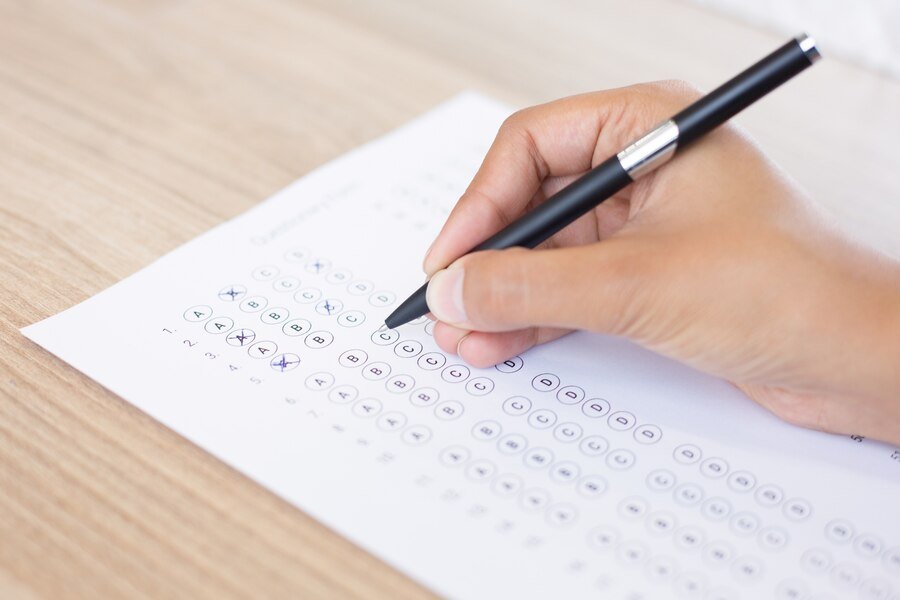
Test
yourself.
Start by undertaking an official online practice test at
https://www.gov.uk/take-practice-theory-test.
The results page will show you the questions that you
answered correctly and those that you got wrong. You should allow yourself
plenty of time to identify gaps in your understanding, put together a plan as
to how you will fill in the gaps, and then establish a schedule. Another way of
establishing what you need to work on is to skim through the books listed
above, and note down any sections that seem new to you.
Avoid the temptation to leave your revision to the last
minute. Attempting to glean all the required knowledge one or two days before
the test is not a good idea. Not only will you forget most of what you have
read, but you will also be needlessly stressed. It is far better to put aside
half an hour per day for a couple of weeks. This gives you the chance to
process and revise the information.
In order for revision to be effective, it needs to be
active, rather than passive. Passive revision consists of reading or merely
looking at information - it requires no active engagement.
For example
·Reading a chapter is an example of a passive strategy.
·Passive revision is better than nothing, but you will feel
much more confident and have a greater chance of passing your test, if you use
active strategies instead.
·The following techniques will improve your knowledge
retention:
Use a highlighter
This is the next step up from passive reading. Highlight
sections that you think are particularly important or those that contain
information about which you need to learn more.
Look, cover, say, write, check
For each section or set of facts that you wish to memories,
start by carefully reading through the text. Cover it up with a piece of paper,
and summaries the main points aloud. Next, take a piece of paper and a pen, and
write down the same information. Finally, refer back to the original source,
and check that you have successfully memorized the information. If not, repeat
the exercise, until you feel confident.
Tie the information to your personal experiences
Some of the information given in the above books above can
seem a little dry or even abstract. Make it more memorable, by thinking about
the relationship between what you are reading and what you have covered in your
practical driving lessons. Remember that your bad experiences have as much to
teach you as your successes! Look back over your driving skills record, to jog
your memory.
Try reading or listening to the information in another
format
·Some people learn best by reading, but others find it
easier to focus on an idea, when they hear it explained verbally.
·If you are struggling to revise using the standard
materials, why not try looking up videos online or trying an app that
structures your revision.
·Make sure that whatever option you choose covers the
syllabus in sufficient detail.
Set yourself
questions
Imagine that you are setting your own driving theory test.
What kinds of questions would you include? Try and write at least 100 questions
in total, covering a range of topics contained within the three above books.
Make them multiple-choice format, as this is the type of question that you will
have to answer in the real test. Do not be tempted to make the questions too
easy. This exercise is highly effective because, not only will you be able to
test yourself on the material, but the act of compiling the questions is in
itself a good way of encouraging yourself to retain knowledge.
Use practice tests,
to monitor your progress
Along with your own test questions, it is a good idea to
regularly use practice tests, to check that your understanding is improving.
There is a wide range of books and pieces of software that you can use. Visit
your local book shop, or look online, to explore your options. Apps that test
your knowledge and highlight areas in which you need to improve are also
available. You may need to try a few, in order to see which style or layout
suits you best.
Take breaks every
30-40 minutes
You may be tempted to cram as much revision into a single
session as possible, but most people cannot focus on a task for more than about
half an hour at a time. Break your study sessions into 30-40 minute chunks.
Take a few minutes to rest and relax, before starting again.
Use the primacy and
recency effects
The primacy and recency effects were first discovered by
psychologists several decades ago. Essentially, when they read or hear a list
of items, people tend to remember pieces of information from the beginning and
the end of the list. Bear this in mind, when you revise the day before or even
the hour before the test. Take advantage of these effects, by revising the most
difficult and the least memorable information first or last. You can also use
this technique within an individual study session.
Experiment with the
time of day and the setting
Some people concentrate better in the morning, some find it
easier to focus in the afternoon, and others are at their best in the evening.
You probably already know what works for you, but, if it has been a while since
you took a test or examination, you may wish to experiment. When you book your
test online, you can choose at which time of day you would like to take it, so
make sure that it is a time of day at which you feel at your best.
The place in which you revise can also make a big
difference.
Although clutter can be comforting, you are more likely to
concentrate for longer in a tidy, well-lit area or location. If your desk is
messy, tidy it up, or at least place your clutter in a box out of sight, when
you revise. If you are very bored with the revision process, take your books or
laptop to a new location. It will give your brain a jolt and refocus your
attention. Some people also like to play a relaxing background sound as they
work, such as ocean or rainforest sounds.
Form positive
associations
If you come to dread your revision sessions, you will
quickly find excuses to delay test preparation or even skip it entirely. The
solution is to think of ways in which to train yourself to look forward to your
study sessions. Make a cup of your favorite coffee or tea, before you begin
revising, or have a snack that you enjoy, once you have completed a particular
number of hours studying.
Buying special supplies that appeal to you, such as an
attractive notebook or a new set of pens, can also help you to feel more
positive. After a while, you may even find yourself looking forward to your
study sessions.
Develop a rewards
system
Passing the test will be satisfying in its own right, but
you will benefit from developing your own reward system along the way. Break
down the topics that you are revising into small chunks, and reward yourself,
both for the amount of time that you spend studying and for the results that
you get in practice tests and in answering practice questions.
9.5
How to Prepare for the Hazard Perception Part of the Test
Memories
the rules in advance
You will need to click the mouse, whenever you believe that
you can see something that may present a hazard, such as a car beginning to
move away from the side of the road. Be prepared for the fact that the video
clips are silent and that each begins with a freeze-frame. You will be
presented with 14 clips in total. Thirteen of the clips feature one hazard that
develops, and one clip features two hazards that develop.
The definition of a 'developing hazard' is something that
would cause you to take action, such as changing your direction or speed. To
continue with the above example, if you would have to slow down, as the car
pulled further away from the kerb, the incident would now be a 'developing
hazard'.
In order to receive the maximum number of marks possible for
spotting a hazard, you need to click promptly when the hazard first becomes
visible and then again, when you would have to change your driving or riding
behavior. You can score up to five points per developing hazard. If you click
too often or in a pattern, the computer will automatically decide that you are
trying to 'game the system' and will award you zero points for that clip.
Be prepared to spot a number of different hazards on the
test
Pedestrian behavior is implicated in many hazards that may
come up in the test.
For example
. You must click the button, if a pedestrian looks as though
they may be about to move onto a zebra crossing.
. You should pay
special attention to vulnerable pedestrians that may not be physically able to
move as fast as other pedestrians, but you should also be aware that, even
those with no particular vulnerabilities, may act in an irresponsible or
unpredictable manner. Therefore, you should monitor both sides of the road, and
look out for anything that seems out of place. Pay close attention to
pedestrians who are loading and unloading vehicles at the side of the road.
. If in doubt as to whether you should click, do so. You
will not be penalized for clicking too many times, unless you do so
indiscriminately and to excess.
. Scenarios involving two or more vehicles meeting in the
road also frequently come up in the hazard perception test.
For example
You may be presented with a clip in which a vehicle is
moving towards you on the opposite side of the road, but you can see that the
road will narrow within a few meters.
Such instances are clearly hazards because they demand that
you change your driving behaviors', to suit the situation.
Large vehicles are another common source of developing
hazards. In the video clip, they may be depicted as taking up a lot of space or
making turns in the road. This would cause you to slow down in real life, and
you should indicate that you understand this in the test, by clicking
appropriately.
Depending on their position and behavior, horse riders and
cyclists may cause you to slow down or stop.
As long as you are familiar with 'The Highway Code' and the
rules governing how you should deal with various kinds of road users, you
should have no trouble mastering the hazard perception test.
Test yourself using simulations
There are a number of programmes and apps that give you the
opportunity to practice spotting hazards. The rules of the test are
straightforward, but it will take a bit of practice, before you feel confident
in responding to the questions. Make sure that, whatever simulation you use,
bears a close resemblance to that used in the actual theory test.
Keep a running
commentary of hazards, when you are out driving or riding
Go out driving, or riding, and keep an internal or spoken
commentary of potential hazards that you see developing. Acknowledge what you
are doing, in response to the hazard, and make sure that you can identify the
ways in which it may develop. The more time you spend behind the wheel or on
your bike, the more readily you will be able to identify with the driver or
rider's point of view in the real test.
Take advantage of the
'warm-up' on the day
Even if you have taken many practice hazard perception tests
and have accumulated a lot of practical experience, you should still pay
attention to the tutorial that will play, before you actually sit the test.
9.6
How others can Help you Pass your Test

You do not have to prepare for your test alone.
In fact, if you can find a willing friend or relative, you
may stand a greater chance of success.
·Firstly, other people can help you prepare, by asking you
questions that you have written yourself or by selecting a page at random, from
one of your books, and testing your knowledge of the information contained
therein.
·Secondly, they can accompany you during your driving
practice, and point out what is happening around you. Together, you can talk
about how this relates to what you are learning, as you prepare for your test.
·Finally, if you know someone who is also due to sit their
test in the near future, you could suggest that you revise together. Choose
someone who will help, as opposed to distract you.
Do not forget that you can ask your driving instructor to
clarify anything that is confusing to you. They should be willing to help -
after all, they want you to pass both parts of your test!
Activity 2: What Helps you Revise?
Estimated time: 5+ minutes
Think back to the last time that you prepared for a test or
other kind of assessment. How did you revise?
Which techniques helped you retain the most information, and
which did not work for you? Which techniques do you think will help you get
ready for the theory test, and why?
9.7
How to Control your Nerves Before the Test

 Even if you have taken plenty of time to revise for your For some people, the level of anxiety induced by the CBT In the world of psychology, there is a paradigm known as In brief, the concept underpinning this approach is that the For example 'You may think to yourself, 'I can't do this, and, when I Imagine that you are experiencing this thought - how would A more helpful way of approaching the situation would be to Physical symptoms of If your level of test anxiety is severe, you might Attacks often begin with a feeling of breathlessness, When you begin to panic, your sympathetic nervous system is For example They trigger changes in the body's breathing patterns. Over breathing, or hyperventilation, occurs when an individual takes in more Excess adrenalin produced by the body under stress can also For example If someone suffers a panic attack during a test in school, If you suffer from physical symptoms of anxiety, knowing the Most people can learn to overcome anxiety and panic by Fact Around a third of the population suffer from moderate to Source: Washington Post Visualization Finally, visualization can help you handle pre-test nerves. Whenever you start to feel worried, take a few minutes to do Once your brain has become accustomed to rehearsing and
|
.svg)



