
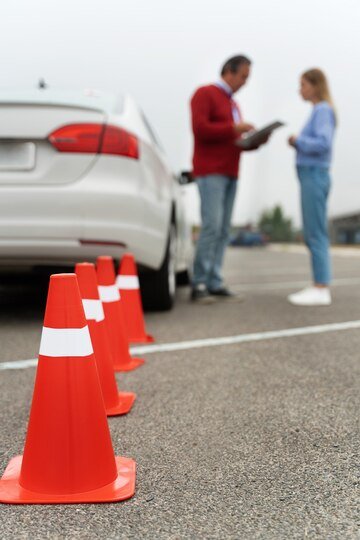
3.1 To Whom do these Rules Apply?
3.1 To Whom do these Rules Apply?
In this
module, you will learn about the rules and laws that all drivers and riders
need to remember, whenever they are on
the road.
These rules
cover a range of areas, including signals, stopping procedures, the correct use
of lights, speed limits, stopping
distances, lane and line markings, and general advice, to ensure that your
journey goes as smoothly and safely as
possible.
When you
prepare for your theory test, you might be tempted to skip over specific
numbers and facts, such as speed limits
and stopping distances. However, there is a good chance that this material will
come up in the test, so you should make every effort to commit them to memory.
3.2 Signals
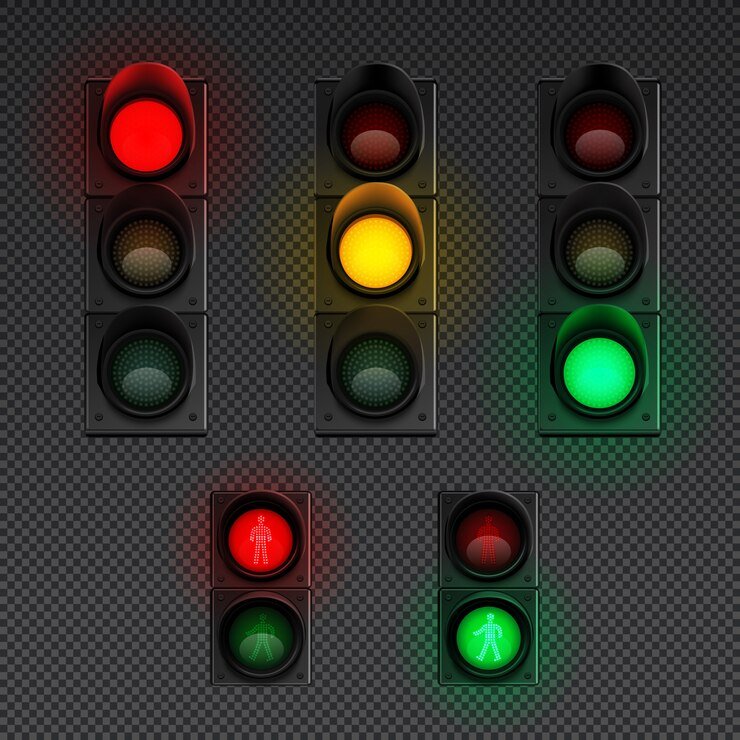
Signals are
designed to warn and inform others of the actions that you intend to take,
whilstdriving or riding.
You must
give signals well in advance of your intended action but not so far in advance
that they might mislead other road
users. You should use them to advise other road users that you are changing
course or direction, stopping or moving
off.
You can use
an arm signal, to emphasise your signal, if necessary, but remember that no
form of signalling grants you priority
over other road users. Signals must be cancelled after use. At the same time,
you should also be on the lookout for signals given by other road users, and
only proceed with your journey, when you are satisfied that it is safe to do so. Be aware that the user of
another vehicle may have forgotten to cancel their signal.
You are legally obliged to obey any signals
given by police officers, traffic officers or traffic wardens and signs used by
school crossing patrols.
Police Officers
If the
police want to stop your vehicle, they will attract your attention in the
following ways:
Flashing blue lights.
Sounding their siren or horn from
behind.
Directing you to pull over to the
side of the road, by pointing and/or using the left indicator.
By law, you
must pull over and stop on the side of the road, as soon as it is safe to do
so.
Fact
There are over 4,000 traffic police working in
England and Wales
Source: BBC
News
DVSA
Driver and
Vehicle Standards Agency (DVSA) officers have the right to stop vehicles on all
roads, including trunk roads, in England
and Wales.
They will
attract your attention, by flashing amber lights, either from the front,
requesting you to follow them to a safe
place to stop, or from behind, directing you to pull over to the side, by
pointing and/or using the left indicator.
You are legally obliged to comply with their directions.
Traffic Officers
Traffic
officers have the authority to stop vehicles on most motorways and some 'A'
roads only in England. If uniformed
traffic officers want to stop your vehicle because they have a safety concern,
if possible, they will attract your attention, by flashing amber lights,
usually from behind, or directing you to pull over to the side, by
pointing and/or using the left
indicator.
You are
legally obliged to respond to their directions, by pulling over and stopping,
as soon as it is safe to do so. You must then turn off your engine.
Traffic Lights and signs
The law
states that you must obey all traffic light signals and traffic signs giving
orders, including temporary signals and
signs. Make sure that you understand and act on all other traffic and
information signs and road markings.
Use of your horn
You should
only use your horn, when your vehicle is moving, and you need to warn other
road users of your presence. You should
not use your horn in an aggressive fashion, with the intention of intimidating
other road users.
With the
exception of circumstances in which another road user poses a danger, the law
states that you must not use your horn while
stationary on the road or when driving in built-up areas between 11.30 pm and
7am.
Headlight Flashing
There are
rules governing the appropriate use of flashing headlights. You should only
flash your headlights, in order to let other road users know that you are
there. Do not use them to convey any other message or with the intention of
intimidating other road users.
If someone
else is flashing their headlights, do not assume that it is safe to proceed.
You should use your own judgement, and
carefully assess the situation.
Activity 1:
Whose Signals Must You Obey?
Estimated time: 5 minutes
By law, you must follow signals given by
certain individuals Make a list of those that you believe have the authority to
give signals that must be obeyed
3.3 Lighting Requirements
For the sake
of your own safety and that of other road users, you must ensure that your vehicle
is fitted with proper working lights.
By law, you must follow signals given by
certain individuals Make a list of those that you believe have the authority to
give signals that must be obeyed
3.3
Lighting Requirements
For the sake
of your own safety and that of other road users, you must ensure that your vehicle
is fitted with proper working lights.
By law, you
must adhere to the following:
· Ensure that all sidelights and rear
registration plate lights are lit between sunset and sunrise.
· Use headlights at night. 'Night' is
defined as the period between half an hour after sunset and half an hour
before sunrise.
· Roads that have street lights are
usually restricted to a speed limit of 30 mph, unless otherwise stated
· Use full headlights when visibility
is seriously reduced. *Do not use any
lights in a way that would dazzle or cause discomfort to other road users,
including pedestrians, cyclists and
horse riders. *Do not use front or rear fog lights, unless visibility is
seriously reduced.*Switch fog lights off, once visibility has improved, in
order to avoid dazzling other road users.
· When in stationary queues of traffic, drivers
should apply the brake, and, once the following traffic has stopped, take their foot off the foot brake, to
deactivate the vehicle's brake lights. This will minimise glare to road users
behind the vehicle, until the traffic moves again.
· In built-up areas and during dull
daytime weather, use dipped headlights or dim-dip, if fitted, to ensure that
you can be seen.
· Keep headlights dipped when
overtaking, until you are level with the other vehicle, and then change to the
full beam, if necessary; unless doing so would dazzle oncoming road users. If
you are dazzled by oncoming headlights,
you should slow down and, if necessary, stop.
· Hazard warning lights should be used,
when your vehicle is stationary, to
warn other road users that it is temporarily
obstructing the flow of traffic. Hazard warning lights do not provide you with
an excuse for dangerous or illegal
parking. *Do not use hazard warning
lights whilst driving or being towed, unless you are on a motorway or dual
carriageway,and you need to warn drivers behind you of a hazard or obstruction
ahead. You must only use them for long
enough to ensure that other road users have observed your warning.
3.4
Braking
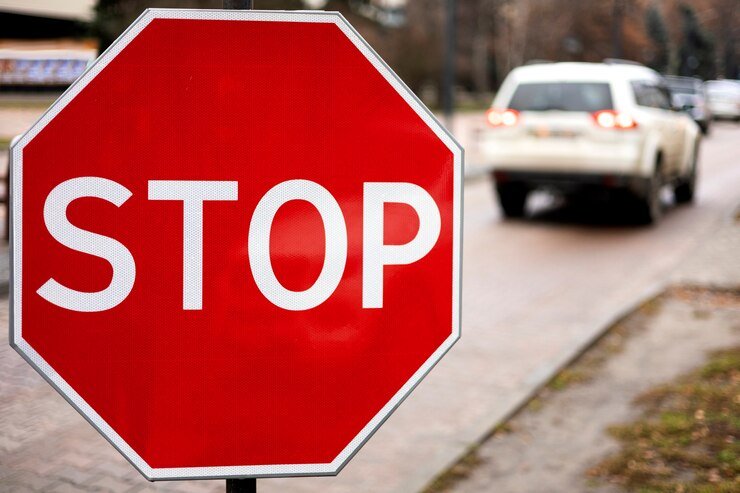
Under normal
circumstances, braking should be done early and lightly.
As your
vehicle begins to stop, brake more firmly, and ease the pressure, just before
the vehicle stops, in order to avoid a
sudden stop. In an emergency, brake immediately. Try to avoid braking so
harshly that you lock your wheels - locked wheels can lead to loss of control.
If a vehicle skids, this is usually caused by
the driver braking, accelerating or steering too harshly or driving too fast
for the road conditions. If skidding occurs, remove the cause, by fully
releasing the brake pedal or easing off the
accelerator, and turn the steering wheel into the direction of the skid.
For example.
If the rear
of the vehicle skids to the right, immediately steer to the right, in order to
recover. If your vehicle is fitted with
an antilock braking system (ABS), you should follow the advice given in the vehicle
handbook. However, in the case of an emergency, firmly apply the foot brake,
and do not release the pressure, until the vehicle has slowed to the desired speed. The ABS should ensure that
steering control will be retained, but do not assume that a vehicle with ABS will stop in a shorter distance.
If you have
driven through deep water, your brakes may be less effective. Test them at the
first safe opportunity, by pushing gently on the brake pedal, to ensure that
they work. If they are not fully effective, gently apply light pressure, whilst driving slowly. This will
help to dry them out.
Do not coast
'Coasting'
is a term used to describe a vehicle that is travelling in neutral or with the
clutch pressed down. It can reduce
driver control for the following reasons: engine braking is eliminated; the
vehicle's speed downhill will quickly
increase; increased use of the foot brake can reduce its effectiveness; the
steering response will be affected, particularly on bends and corners, and it
may be more difficult to select the appropriate gear, when required.
There are
also laws in place, to help reduce the impact of driving on the environment. You
must not leave a parked vehicle
unattended, with the engine running, or leave a vehicle engine running
unnecessarily, while the vehicle is
stationary on a public road.
Generally
speaking, if the vehicle is stationary and is likely to remain so for more than
a couple of minutes, you should apply
the parking brake (hand brake), and switch off the engine, to reduce emissions
and noise pollution. However, it is
permissible to leave the engine running, if the vehicle is stationary in
traffic, or for the purpose of
diagnosing faults.
3.5
Speed Limits
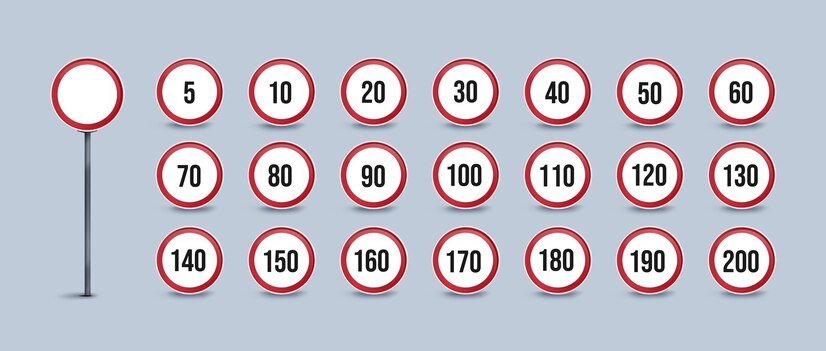
You must
always adhere to the speed limit, taking into account your vehicle type and the
kind of road you are using.
Bear in mind
that the speed limit is the legal maximum, and it is not always safe to drive
at this speed.
You should
reduce your speed when any of the following apply: the road layout or condition
presents hazards, such as bends; when you are sharing the road with
pedestrians, cyclists and horse riders, particularly children and motorcyclists;
when weather conditions make it safer to do so, and when driving at night, as
it is more difficult to see other road users.
Total
Car Length Equivalent
· 12 m or 3 car lengths
· 23 m or 6 car lengths
· 36 m or 9 car lengths
· 53 m or 13 car lengths
· 73 m or 18 car lengths
· 96 m or 24 car lengths
Note that
road surface, your individual thinking time and the condition of your vehicle
will all affect your thinking and braking distance. You must drive at a speed
that will allow you to stop well within the distance you can see clearly in
front of you.
You should
leave enough space between your vehicle and the vehicle in front of you, so that
you can pull up safely, if it slows
down or stops. Refer to the above table, for an overview of stopping and
thinking on roads on which there is
faster moving traffic and in tunnels in which visibility is reduced, you should
allow at least a two second gap between
vehicle and the vehicle in front of you.
The gap
should be at least doubled on wet roads and further increased on icy roads.
Large vehicles and motorcycles need a greater distance in which to stop. If
driving a large vehicle in a tunnel, you should allow a four second gap between
your vehicle and the vehicle in front of you. If you have to stop in a tunnel,
leave at least a five metre gap between your vehicle and the vehicle in front
of you.
Fact
Penalties
for speeding start at a £100 fine and three penalty points.
Source:
Daily Telegraph
3.6
Lines and Lane Markings on the Road
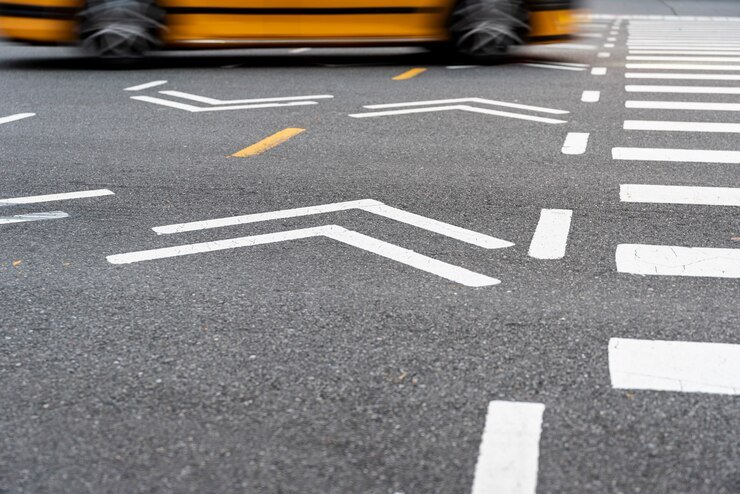
A white line
marks the centre of the road.
When this
line lengthens and the gaps shorten, it means that there is a hazard ahead. Do
not cross the line, unless you can see that the road is clear, and you wish to
overtake or turn off.
Double White Lines
Double white
lines, whereby the line nearest to you is broken, indicate that you may cross
the lines to overtake, provided that it is safe to do so and that you can
complete the manoeuvre, before reaching a solid white line on your side. White
direction arrows on the road indicate that you need to get back onto your side
of the road.
Double white
lines, whereby the line nearest to you is solid, indicate that you must not
cross or straddle the lines, unless it is safe to do so, and you need to enter
adjoining premises or a side road. It is illegal to violate this rule.
Provided
that the road is clear, you may cross the line, if necessary, in order to pass
a stationary vehicle or to overtake a pedal cycle, a horse or a road
maintenance vehicle, if they are travelling at 10 mph (16 km/h) or less.
White Diagnal Stripes/Chevrons
Areas of
white diagonal stripes or chevrons painted on the road are to separate traffic
lanes or to protect traffic turning right. If the area is bordered by a broken
white line, you should not enter the area, unless it is necessary to do so, and
you can see that it is safe to do so.
If the area
is marked with chevrons and bordered by solid white lines, it is illegal to
enter it, except in the case of an emergency. Short, broken white lines, that
are used on wide carriageways, in order to divide them into lanes, are known as
'lane dividers'.
Road Studs
Reflective
road studs may be used in conjunction with white lines:
· White studs mark the lanes or the
middle of the road.*Red studs mark the left edge of the road.
· Amber studs mark the central reservation
of a dual carriageway or motorway.
· Green studs mark the edge of the main
carriageway, at lay-bys and slip roads.
· Green or yellow studs indicate
temporary adjustments to lane layouts; such as where road works are taking
place.
3.7
Use of Carriageways
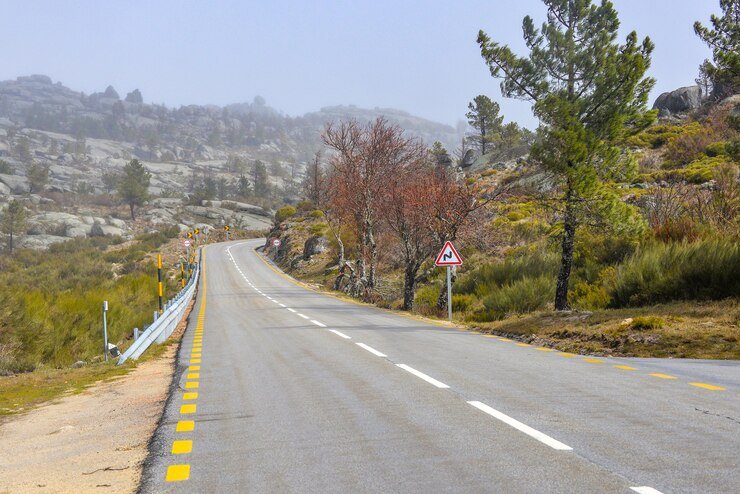
Multi-lane Carriageways
If you need
to change lane, firstly use your mirrors, and, if necessary, take a quick,
sideways glance, to ensure that you will not force another road user to change
course or speed. When it is safe to do so, signal, in order to indicate your
intentions to other road users and, when clear, move over. You should follow
the signs and road markings and get into the lane, as directed.
In congested
road conditions, do not change lanes unnecessarily. Merging in turn is
recommended, but only if it is safe and appropriate, when vehicles are
travelling at a very low speed
For example
When
approaching road works or a road traffic incident. It is not recommended at
high speed.
Single Carriageways
Where a
single carriageway has three lanes, and the road markings or signs do not give
priority to traffic in either direction, only use the middle lane for
overtaking or turning right. Remember, you have no more right to use the middle
lane than a driver coming from the opposite direction. Do not use the
right-hand lane.
Where a
single carriageway has four or more lanes, only use the lanes indicated by the
signs or road markings.
Dual Carriageways
A dual
carriageway is a road that has a central reservation, to separate the
carriageways. On a two lane dual carriageway, you should stay in the left-hand
lane. Use the right-hand lane for overtaking or turning right. After
overtaking, move back to the left hand lane, when it is safe to do so.
On a three-lane
dual carriageway, you may use the middle lane or the rig hand lane to
overtake, but return to the middle lane and then the left-hand lane, when it is safe to do
so.
Crawler Lanes
Climbing and
crawler lanes are provided on some hills. Use these lanes, if you are driving a
slow- moving vehicle, or if there are vehicles behind you that are wishing to
overtake. Be aware of the signs and road markings that indicate that the lane
is about to end.
Cycle Lanes
Cycle lanes
are shown by road markings and signs. By law, you must not drive or park in a
cycle lane marked by a solid white line, during its times of operation.
Do not drive
or park in a cycle lane marked by a broken white line, unless it is
unavoidable. By law, you must not park in any cycle lane whilst waiting
restrictions apply.
Bus
Lanes
Bus lanes
are indicated by road markings and signs that show which, if any, other
vehicles are permitted to use the lanes.
Unless
otherwise indicated, you should not drive in a bus lane during its period of
operation. You may enter a bus lane, to stop, load or unload, if this is not
prohibited.
High-occupancy Vehicle Lanes and
Other Designated Vehicle Lanes
Lanes may be
restricted for use by particular types of vehicles - these restrictions may
apply some of the time or all of the time. The operating times and vehicle
types will be indicated on the accompanying traffic signs. By law, you must not
drive in such lanes during their times of operation, unless signs indicate that
your vehicle is permitted.
Vehicles
permitted to use designated lanes may or may not include cycles, buses, taxis,
licensed private hire vehicles, motorcycles, heavy goods vehicles (HGV's) and
high-occupancy vehicles (HOV's).
Where HOV
lanes are in operation, by law, they must only be used by vehicles containing
at least the minimum number of people indicated on the traffic signs or any
other vehicles, such as buses and motorcycles, as indicated on the signs prior
to the start of the lane, irrespective of the number of occupants.
One
-way Streets
By law,
traffic must travel in the direction indicated by the signs.
Buses and/or
cycles may have a contraflow lane. You should choose the correct lane for your
exit, as soon as possible. Do not change lanes suddenly.
Unless road
signs or markings indicate otherwise, you should use the left-hand lane when
going left, the right-hand lane when going right, and the most appropriate lane
when going straight ahead. Remember that traffic could be passing on both sides.
3.8
General Advice
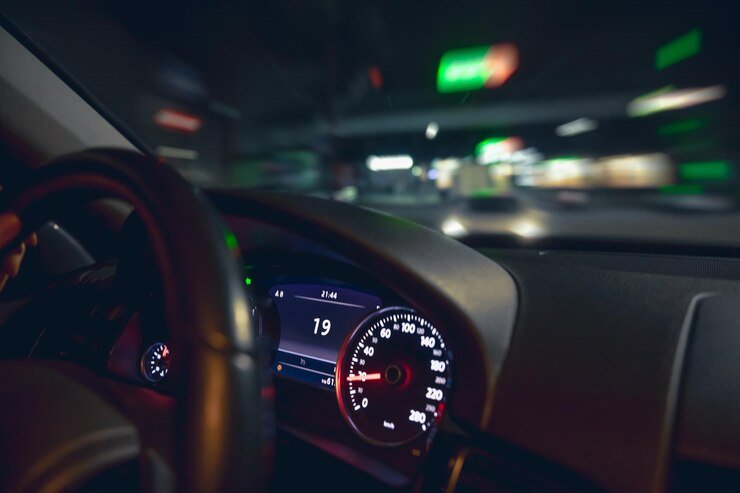
The law
states that you must not drive dangerously, drive without due care and
attention, or drive without reasonable consideration for other road users.
It also
states that you must not drive on or over a pavement, footpath or bridleway,
except to gain lawful access to property or in the case of an emergency. You
should take the road and traffic conditions into account, and adapt your driving
to the appropriate type and condition of road on which you are driving. Be
prepared for unexpected or difficult situations,
For example
The road
being blocked beyond a blind bend. Be prepared to adjust your speed, as a
precaution. Where there are junctions, be prepared for road users emerging. On
side roads and country lanes, look out for unmarked junctions, whereby nobody
has priority. Be prepared to stop at traffic control systems, road works,
pedestrian crossings or traffic lights, as necessary.
Try to
anticipate what pedestrians and cyclists might do. If pedestrians, particularly
children, are looking the other way, they may step out into the road, without
seeing you. You should also show due consideration to to her road users at all
times, especially those requiring extra care. By law, you must not throw
anything out of a vehicle.
For example
Food or food
packaging, cigarette ends, cans, paper or carrier bags. Doing so can endanger
other road users, particularly motorcyclists and cyclists. If other road users
cause problems, try to be understanding - they may be inexperienced or not know
the area well. Be patient; remember that anyone can make a mistake. Do not allow yourself to become agitated or
involved, if someone is behaving badly on the road - this will only make the
situation worse. Pull over, calm down, and, when you feel relaxed, continue
your journey. If a road user pulls out into your path at a junction, slow down
and hold back. Allow them to get clear. Do not over-react, by driving too close
behind, in order to intimidate them.
3.9
Safe Driving and Riding Requires Concentration

Avoid
distractions when driving or riding.
Distractions
such as loud music (this may mask other sounds), trying to read maps, starting
or adjusting any music or radio, arguing with your passengers or other road
users, eating and drinking or smoking. By law, you must not smoke in public
transport vehicles or in vehicles used for work purposes, in certain prescribed
circumstances.
Separate
regulations apply to England/Wales and Scotland respectively. In England and
Wales, by law, the driver must not smoke or allow anyone to smoke in an enclosed
private vehicle, including a motor caravan, when it is carrying someone under
the age of 18.
In Scotland,
it is an offence for anyone aged 18 or over to smoke in a private motor
vehicle unless it is parked and being
used as living accommodation - when there is someone under the age of 18 in the
vehicle, and the vehicle is in a public place.
Activity 2: Limiting Distractions
Estimated time: 5 minutes
List at least five potential distractions that
could prevent you from driving or riding safely. Rank them in order, from the
most distracting to the least distracting.
Can you
explain the reasons behind your decision?
More
importantly, how could you limit or prevent the effects of these distractions?
3.10
Mobile Phones and In-vehicle Technology
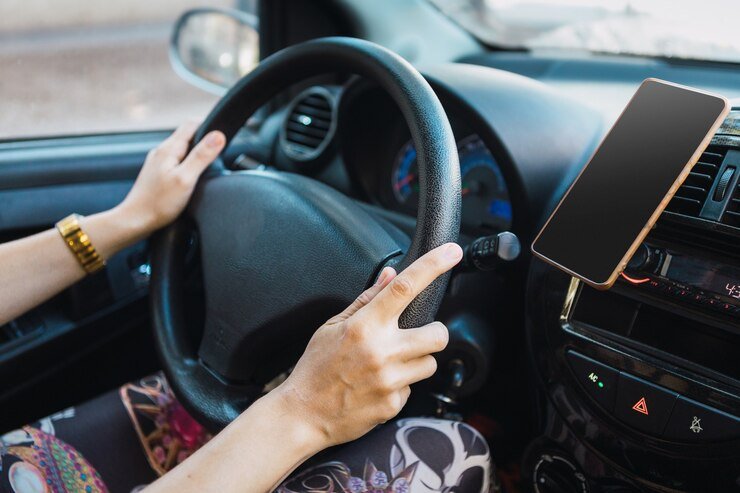
The law
states that you must exercise proper control of your vehicle at all times.
Under the
law, you are forbidden from using a handheld mobile phone or similar device
when driving or when supervising a learner driver, except to call 999 or 112,
in a genuine emergency, when it is unsafe or impractical to stop. Never use a
hand-held microphone when driving. Using hands-free equipment is also likely to
distract your attention from the road.
It is far
safer not to use any telephone, while you are driving or riding find a safe place to stop first, or use the
voicemail facility, and listen to messages later. There is a danger of driver
distraction being caused by in vehicle systems, such as satellite navigation
systems, congestion warning systems, PC's, multi-media, etc.
Under the
law, you must exercise proper control of your vehicle at all times. Do not rely
on driver assistance systems, such as cruise control or lane departure
warnings. They are available to assist you, but you should not reduce your
concentration levels. Do not be distracted by maps or screen based information,
such as navigation or vehicle management systems, while driving or riding. If necessary,
find a safe place to stop first.
3.11 Slow-moving Traffic
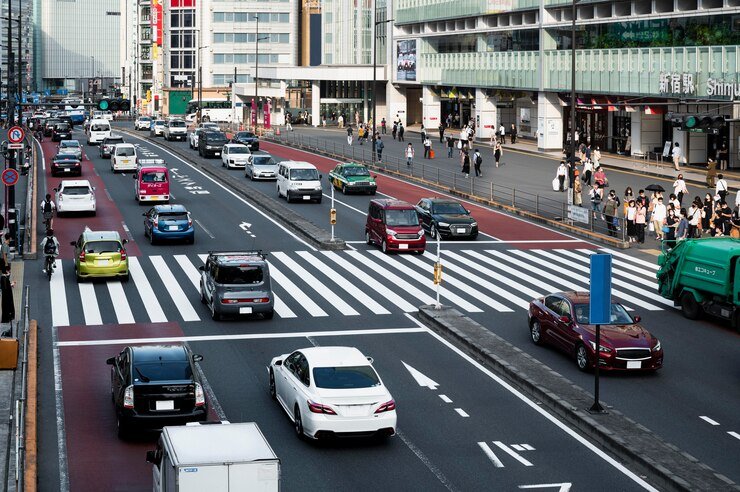
You should
reduce the distance between your vehicle and the vehicle in front of you, in
order to maintain traffic flow and to ensure that you never get so close to the
vehicle in front of you that you cannot safely stop.
You must
leave enough space, to be able to manoeuvre, if the vehicle in front of you
breaks down, or an emergency vehicle needs to get past. Never change lanes to
the left, in order to overtake. Always allow access into and from side roads,
as blocking these will add to congestion, and be aware of cyclists and
motorcyclists who may be passing on either side.
3.12 Driving in Built-up Areas
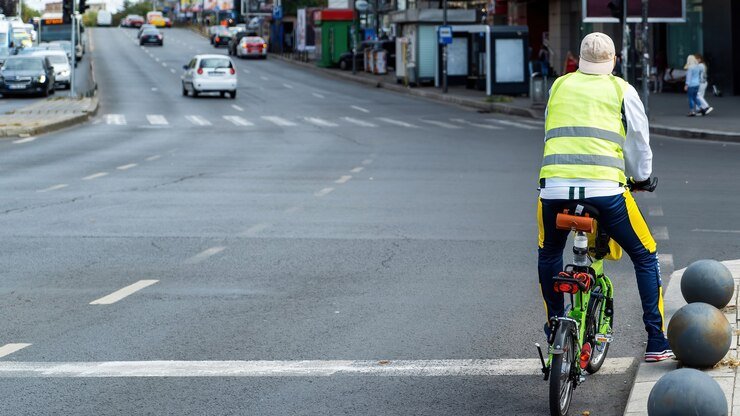
You should
drive slowly and carefully on streets on which there are likely to be
pedestrians, cyclists and parked cars, i.e., residential streets. In some
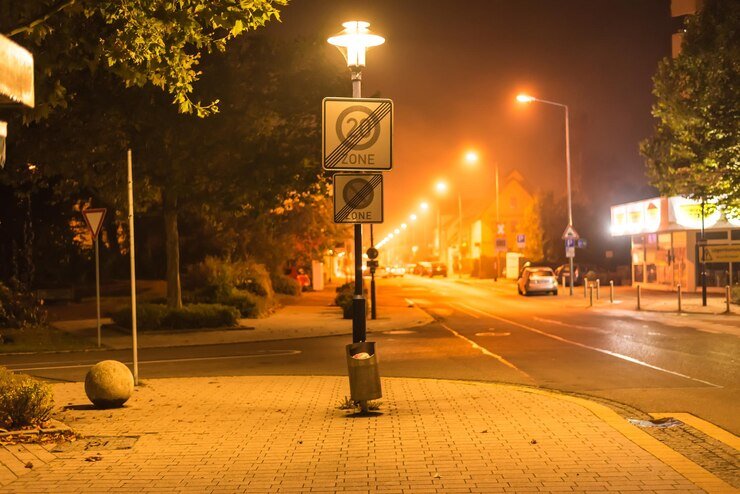
areas, a 20 mph (32 km/h) maximum speed limit may be in force.
Look out for
the following: vehicles emerging from junctions or driveways; vehicles moving
off; car doors opening; pedestrians; children running out from between parked
cars; cyclists and motorcyclists. On some roads, there are features, such as
road humps, chicanes and narrowing’s, which are intended to slow you down. These are
known as 'traffic calming measures'.
When you
approach these features, reduce your speed. Allow cyclists and motor cyclists
room to pass through them. Maintain a reduced speed along the whole of the
stretch of road within the traffic calming measures. Give way to oncoming road
users, if directed to do so by the signs. You should not overtake other moving
road users, whilst in these areas.
3.13 Driving on Country Roads
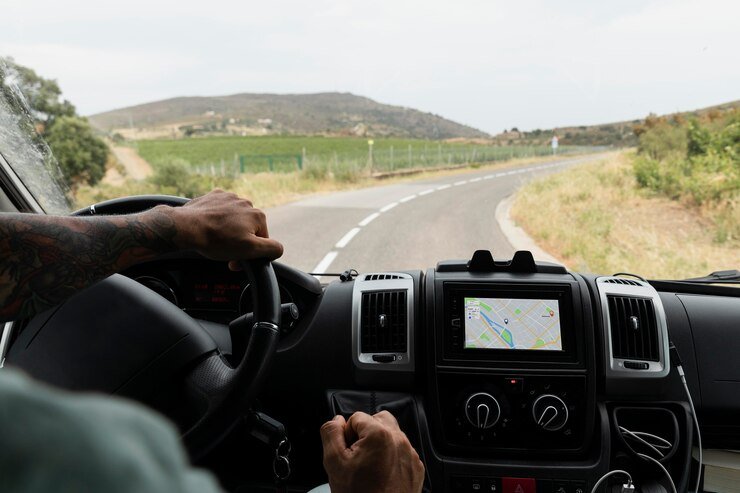
Take extra care on country roads.
Reduce your
speed at approaches to bends that can be sharper than they appear, and at
junctions and turnings that may be partially hidden. Be prepared for
pedestrians, horse riders, cyclists, slow-moving farm vehicles or mud on the
road surface.
Make sure
that you can stop within the distance that you can see to be clear. You should
also reduce your speed where country roads enter villages. Singletrack roads
are only wide enough for one vehicle. They may have special passing places. If
you see a vehicle coming towards you, or the driver behind you wants to
overtake, pull into a passing place on your left, or wait opposite a passing
place on your right.
Whenever you
can, give way to road users coming uphill. If necessary, reverse, until you
reach a passing place, in order to let the other vehicle pass. Slow down, when
passing pedestrians, cyclists and horse riders. Do not park in passing places.
3.14
Vehicles Prohibited from Using Roads and Pavements

Certain
motorised vehicles do not meet the construction and technical requirements for
road vehicles and are generally not intended, not suitable and not legal for
road, pavement, footpath, cycle path or bridleway use.
These
include most types of miniature motorcycles, also called 'mini motos', and
motorised scooters, also called 'go peds', which are powered by electric or
internal combustion engines.
Certain
models of motorcycles, motor tricycles and quadricycles, also called quad
bikes, are only suitable for off-road use and do not meet legal standards for
use on roads. The law also states that they must not be used on pavements,
footpaths, cycle paths or bridleways.
In order to
avoid breaking the law, you must ensure that any motorcycle, motor tricycle,
quadricycle or any other motor vehicle meets legal standards and is properly
registered, taxed and insured, before using it on the roads. Even when
registered, taxed and insured for the road, vehicles cannot legally be used on
pavements.
 |
.svg)



