
8.1 Why you Need to Know How to Execute Common Manoeuvres
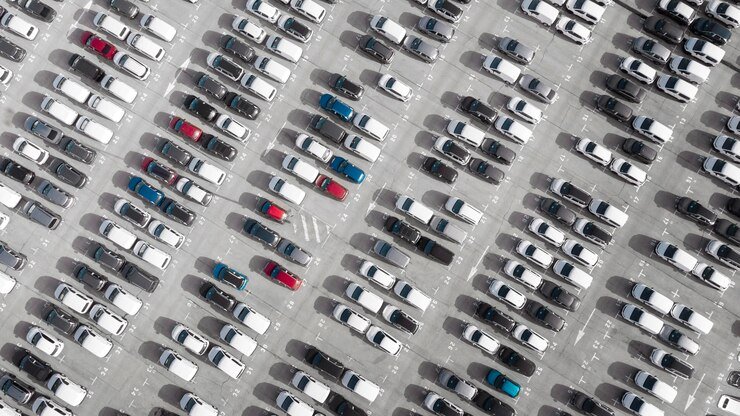
As well
as driving on the road, you will need to know how to perform manoeuvres.
In this
module, you will learn how to reverse, turn around and park a car. Although
this may seem more relevant to the practical test, as opposed to the theory
test, the theory test may include questions about how to safely move a vehicle.
You will pick much of this knowledge up during your driving practice, but you
should also take time to study the finer details, in readiness for both parts
of your driving assessment.
You do
not just draw on your physical skills and coordination, when moving a vehicle.
You also need to think about the law, the safety of yourself and others, and
the rules contained within 'The Highway Code'. If you are in any doubt as to
your own competence, the safest option is to not attempt a particular
manoeuvre.
Always
avoid inconveniencing other road users, where possible. Other road users should
have to adjust their speed or make a diversion, as a result of your actions.
Sometimes, other road users may stop, in order to give you room. You can take
advantage of their courtesy, but you must be certain that they are
intentionally stopping, in order to help you, and not for some other reason.
Please
note that the practical test changed in December 2017 to include following
directions from a sat nav and testing different manoeuvres.
The four
driving test changes are:
1. Independent driving part of the
test is now 20 minutes - during this part of the test, you have to drive
without turn-by-turn directions from the driving examiner
2. Following directions from a sat
nav - the examiner will provide the sat nav and set it up (one in five driving
tests won't use a sat nav)
3. Reversing manoeuvres will be
changed - the 'reverse around a corner'
and 'turn-in-the-road' manoeuvres will no longer be tested, but you should
still be taught them by your instructor.
You will
be asked to do one of three possible manoeuvres:
·
parallel
park at the side of the road
·
park in a
bay - either driving in and reversing out, or reversing in and driving out
·
pull up
on the right-hand side of the road, reverse for two car lengths and rejoin the
traffic
4. Answering a vehicle safety
question while you're driving - you will be asked two vehicle safety questions
during your driving test - these are known as the 'show me, tell me' questions.
Before reading on, complete this short
activity:
Activity
1: What Should You Think About, Before Carrying Out a Manoeuvre?
Estimated
time: 5 minutes
Imagine
that you have to reverse, turn or park a car.
How could
you make sure that you keep yourself and other road users safe?
8.2
Reversing
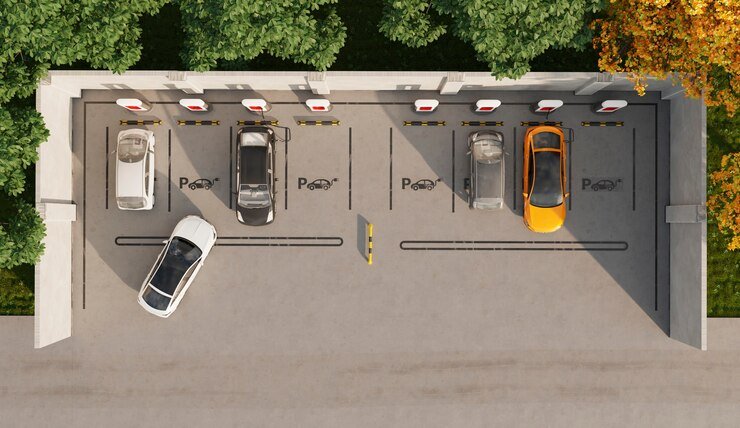
Most
people need plenty of practice, in order to become competent in reversing a
car.
It is
best to begin by practising reversing in a straight line, and then build up to
reversing around corners, once you have become more confident. As a general
rule, you should always move slowly, when reversing. This is because the
steering will feel different - you cannot sense exactly how the vehicle is
turning in the same way as when driving forwards
When
reversing, you will need to turn slightly in your seat, and change the position
of your hands on the steering wheel. If you wish to reverse in a straight line
or to the left, place your right hand at the 12 o'clock position and your left
hand near the bottom of the wheel. Alternatively, you can place your right hand
at the 12 o'clock position and rest your left arm on the back of your seat or
the back of the front passenger's seat. It is permissible to undo your seatbelt
whilst reversing.
Do not
steer the vehicle whilst it is stationary because this increases wear and tear
on the tyres and the steering mechanism. However, you should start steering, as
soon as the vehicle begins to move. You need to turn the steering wheel in the
direction in which you wish the rear of the vehicle to turn. Although it may go
against your instincts, it is usually a good idea to start straightening up or
turning earlier than seems necessary.
When you
reverse slowly, you have better control over the vehicle and have more time to
make mirror checks. Maintain good all-round observation - this is just as vital
when reversing as it is when going forwards. Check before you start reversing,
and as you go.
It is
particularly important that you look in your mirrors as you turn. Be prepared
to stop at any point, if you identify a hazard. If you are uncertain as to
whether you are in danger of hitting an object or a wall, get out of the
vehicle and look.
There are
two main types of technology available in modern cars, which are designed to
help the driver reverse in a safe, accurate manner:
·
Ultrasonic
parking sensors - these emit a noise, when the car approaches an object, such
as a pillar or a wall.
·
Rear-facing
cameras - the camera image is then displayed on a screen on the car's
dashboard.
These
types of technology can be very helpful, but you should still maintain good
observation, move slowly and have the right attitude, when reversing.
8.3
Turning Around
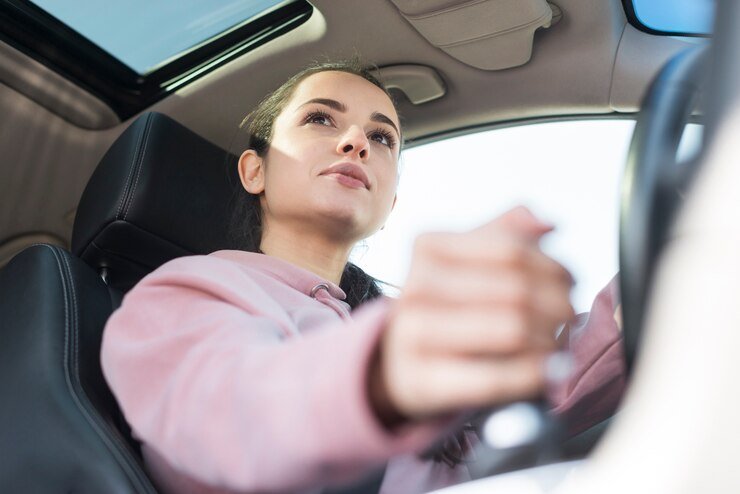
There are
three main methods of turning around; you can make a U- turn, make a turn in
the road or use a side road.
The
safest option is to use a side road, but it is likely that you will have to
turn around using all three methods, at some stage in your driving career.
If you
are driving on a narrow or busy road, the best option is to find a side road,
on either the left or right, and use a turning off it for reversing. You can
then go into the side road, and use your forward and reverse gears, to execute
a turn.
You must
never reverse into a main road from a side road, as this is extremely
dangerous.
You
should always take every possible precaution, to ensure that it is safe to
reverse. Sometimes, this may mean getting help from one of your passengers or
even a stranger. You should also reverse for as short a distance as possible,
and always be prepared to give way to others.
It is an
offence to reverse for an excessive distance.
Sometimes,
you may need to reverse out of your driveway, when leaving home. Ideally, you
should reverse into your driveway, when coming home, so that you can drive
straight out into the road. You should not use someone else's driveway, if you
are out and need to turn around. Wait until you come across a more appropriate
space in which to turn.
How to
Reverse into a Side Road on the Left
Once you
have identified the side road, employ the MSM routine, as you come up to the
corner. Stop parallel to the kerb, near the side of the road. If the corner is
sharp, you will need to be further away from the kerb. With practice, you will
become better at making this kind of judgement.
To execute the manoeuvre:
·
Apply the
parking brake (hand brake), before putting the car into neutral.
·
The next
step is to carry out an all-round observation.
·
Select
reverse gear, bring the clutch pedal up to the biting point, check again, and
then begin to reverse around the corner.
·
Aim to
keep the nearside rear wheel parallel to the edge of the kerb.
·
When the
rear wheels reach the beginning of the corner, begin to turn left.
Keep the vehicle moving slowly.It is better to
retain your control over the vehicle and take your time, rather than risk
causing an accident. You will need to adjust the amount of steering, based on
the sharpness of the corner.
How to
Reverse into a Side Road on the Right
If there
is not a suitable side road on the left or you cannot see through the rear
window, you can reverse into a side road on the right. This is also useful, if
you only have a restricted view out of the sides of your vehicle.
It is
helpful to think of this process as comprising two manoeuvres. Firstly, you
need to move to the other side of the road, immediately following a junction.
Your observation skills are vital here, and you will need to properly judge the
position and speed of other road users. Once you are on the correct side of the
road, you will need to reverse around the corner. Follow the same precautions
as you would when reversing into a side road on the left. Remember to keep an
eye out for potential hazards and to avoid rushing the process.
Turning in the Road
If you
cannot find a side road or a suitable opening, you can make a turn in the road.
You will need to keep your vehicle moving slowly, whilst steering quickly. When
choosing a place to turn, check that you will have sufficient room in which to
manoeuvre your vehicle and that there are no obstructions on the road or the
pavement.
Stop your
vehicle on the left-hand side. Choose a place with no nearby lamp posts or trees.
Put the
vehicle into first gear, and prepare to execute the manoeuvre:
·
Check in
every mirror, and be prepared to give way to other road users.
·
To turn
across the road, slowly drive forward. As you do so, immediately turn the
steering wheel, so that it locks to the right. Your objective is to move the
vehicle, so that it is at a right angle across the road.
·
As you
near the kerb, move the steering wheel to the left.
·
Push down
the foot brake and clutch, to stop.
·
You then
need to select reverse gear, check for other road users, and reverse back
across the road.
·
The
steering wheel should be turned sharply to the right.
·
Again,
use the brake and clutch, to stop. The front wheels of the vehicle should be
turned to the right, so that you can immediately drive forwards.
·
Select
first gear, and then move forwards.
Keep
observing all around you, and be prepared to brake, if necessary. If your
vehicle is hard to steer, or you are turning on a particularly narrow road, you
may need to reverse again. Finally, straighten the vehicle on the left-hand
side of the road.
Making a U-turn
When you
make a U-turn, you are changing the direction of the car, without having to
reverse it.You must never make a U-turn on a motorway, in a one-way street or
anywhere else in which you are forbidden to do so by road traffic signs.
You must
take extra care, and continue making all-round observations at every stage.
Sometimes you may need to cross lines of oncoming traffic, so good judgement is
imperative. Although other drivers should expect the unexpected, they will not
know that you are planning a U-turn, until you begin the manoeuvre.
8.4
Parking
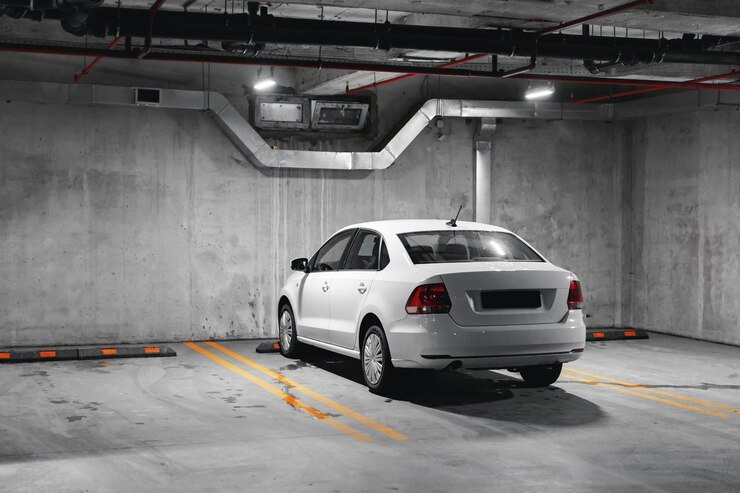
You
should always try to park in a designated car park, or at least away from the
road.
If this
is not possible, always ask yourself whether your intended spot is legal, safe,
and convenient. There are various road signs and road markings that inform you
where you may and may not park a car. Always adhere to the rules set out in
'The Highway Code', which outline in detail where you can and cannot park.
Remember
that, just because another driver has parked in a particular place, this does
not mean a lack of penalty for doing the same, if you are caught. The use of
hazard lights does not excuse you from bad or illegal parking.
Parking on the Road
Be
cautious. Use the MSM routine, before you park. Signal your intentions to other
road users, if necessary. As you park, aim to stay away from the kerb because
scraping your wheels along the kerb can damage them.
When you
park, consider your vehicle positioning:
·
Ensure
that you and other drivers can access all vehicles and move them, when desired.
·
Do not
park in such a way that causes an obstruction.
·
Never
leave your vehicle parked in such a way that it prevents emergency vehicles
from passing.
Do not leave your vehicle parked, until you
have turned off the engine, the headlights and the fog lights. The vehicle must
also be in gear, with the parking brake (hand brake) applied. Make sure that
the space in which you are parking is not reserved for Blue Badge holders,
unless you or one of your passengers holds a Blue Badge. Before leaving your
vehicle, make sure that you will not hit any other road users, when opening the
car door.
Parking on a Hill
If you
need to park on a hill, you need to ensure that your vehicle will not roll down
the hill in your absence.
If you
are parking facing uphill, leave your steering wheel turned to the right. Thus,
if the vehicle should move backwards, the kerb will prevent the front wheels
from continuing to roll. The vehicle should be left in first gear, and you must
apply the parking brake (hand brake).
If you
are parking facing downhill, leave your steering wheel turned to the left.
Thus, the kerb will prevent the car from moving forwards. The car should be
left in reverse gear, and the parking brake (hand brake) should be applied.
As
parking on a hill is often more difficult than parking on a flat surface, you
should allow a larger gap between yourself and other vehicles, in order to
ensure a safe and efficient manoeuvre.
If your
vehicle has an automatic transmission, ensure that your vehicle has come to a
stop and that you have applied the parking brake (hand brake), before you
select 'P' (Park). If it has no 'P' setting, ensure that the parking brake
(hand brake) is firmly applied and that the front wheels are turned towards the
kerb.
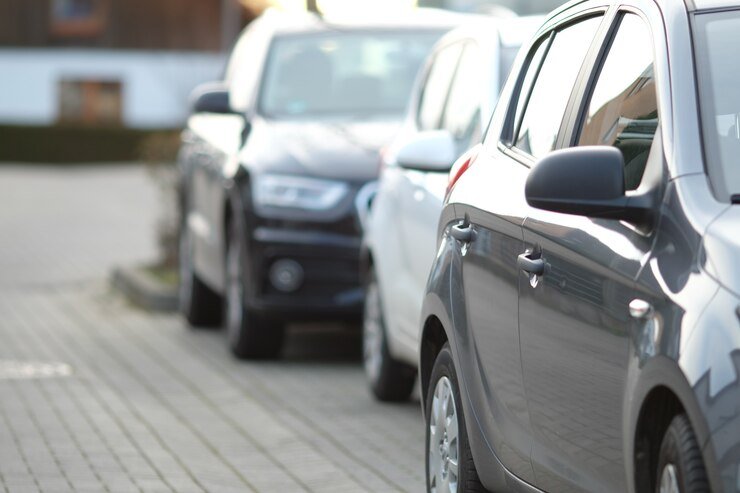
Reverse Parking
This
manoeuvre can be hazardous, so make sure that your vehicle will not present a
danger to others, before moving off. Always signal, and use the MSM routine, to
check that you will not collide with property, people or animals, before
executing the manoeuvre.
To
execute the manoeuvre:
·
Park
parallel to the vehicles ahead of the gap, fairly close to the vehicle in front
or behind (as applicable to the situation). When finding a suitable space,
carefully assess its length - the gap
in which you intend to park should be at least one-and-a-half times the length
of your own vehicle.
·
To move
into the gap, firstly apply the parking brake (hand brake), if required.
·
Press the
foot brake, to show your brake lights to other road users in the vicinity.
·
Select
reverse gear, and carry out comprehensive observations.
·
Raise the
clutch to the biting point.
·
Check
that it is still safe to move, and release the parking brake (hand brake), if
necessary.
·
Lock the
steering wheel left, and reverse slowly. The front of the vehicle may move out
into the road, so keep looking all around you, as you continue to reverse.
·
To
straighten up, move the steering wheel from the left lock position, and remain
vigilant as to where your car is heading.
·
Once the
car is clear of the parked vehicle in front of you, move the wheel to the
right, in order to bring it close to, and parallel with, the kerb.
You may wish to use park-assist technology, if
it is installed in your car. However, it is no substitute for good observation
and proper adherence to the signalling and MSM routines.
Fact
There are
over 1,800 parking scrapes and collisions in the UK every day.
Source:
Accident Exchange
8.5 Using a Car Park
When
using a car park, always follow signs and road markings.
They tell
you where you may and may not park. Never drive against the main flow of
traffic, as this could easily result in a collision. You should use dipped
headlights in a multi-storey or underground car park, in order to notify other
vehicles and pedestrians of your presence.
Before
entering a space, check that there is enough room for you to park your vehicle
in the middle of the space and that you will be able to safely open the doors.
Always manoeuvre your car slowly and carefully. This gives you control over the
vehicle and allows you to correct mistakes early.
It is
generally better to reverse into a parking space, as opposed to driving
forwards. This is because you will have a better view of your surroundings as you
drive away, which is especially important, if you are driving in dimly-lit
conditions or will be carrying passengers in the back seat.
There are
two main methods that you can use, in order to reverse into a parking space:
·
You can
turn as you approach the space. This allows you to position your car in such a
way that you can reverse into it.
·
You can
also drive past the space, and then reverse into it.
The technique you use will depend on the
layout of the car park and your level of confidence in manoeuvring the vehicle.
Park in
the middle of the space. Positioning your vehicle over to one side will prevent
the car next to you from parking properly. They may also struggle to open their
doors.
Activity
2: Using your Local Car Park
Estimated
time: 5+ minutes
Aside
from your own property, where in the local area could you park your car? Where
is your nearest car park? What kind of parking style would you use?
Think
about how busy the car park usually is and how the spaces are laid out.
8.6 Using Junctions
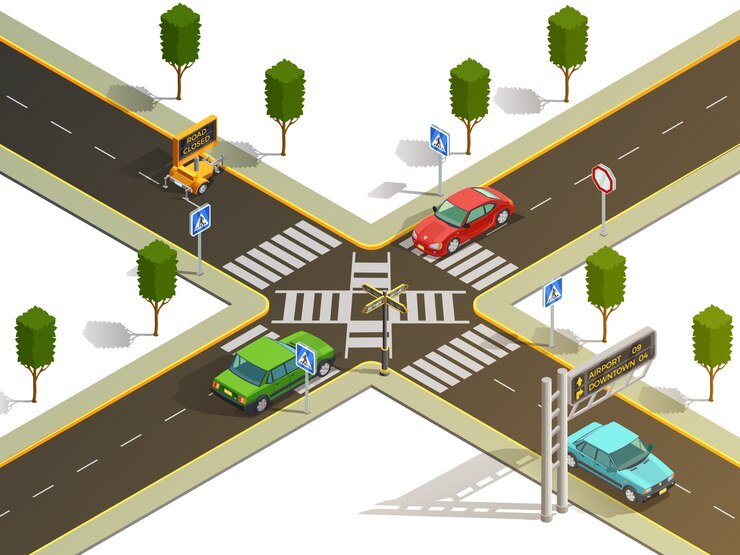
A
'junction' describes a point at which multiple roads meet.
Even when
they appear to be straightforward, such as those involving only two roads and
good visibility, they should always be treated as a hazard. Many collisions and
other incidents are the result of poor junction use.
Pay
attention, as you approach a junction. Note whether there is a change in the
type of road surface and how much traffic is approaching the junction, and heed
all signs and road markings.
You will
usually be given notice as to who must give way and who has priority. If there
is no priority marked, approach the situation with caution.
There is
a set junction routine that you should follow, in order to use junctions
safely. Use the MSM and PSL routines as guidance, to help you watch out for
hazards and spot potential difficulties well in advance. Always act in
accordance with lane markings, if they are available.
Whenever
you turn at a junction, check your mirrors. Some road users, such as cyclists
and motorcyclists, can approach quickly and, in some cases, almost silently.
Fact
55% of
accidents involving motorbikes happen at junctions
Source:
BikeLawyer
Turning Left at a Junction
Position
your vehicle to the left, and use the MSM/PSL routine, as you approach the
junction. Ensure that you are in the correct gear, and slow down, as you
approach the turning. Always be aware that other vehicles may present a hazard.
For instance
You
should take extra care, if you see a vehicle parked, or about to park, immediately
before the junction.
You
should also look out for vehicles approaching in the side road and any parked
around the corner, close to the junction. By the time you turn the corner,
pedestrians who have already begun to cross have priority. If a cyclist is
using the junction, let them clear it, before you begin to turn.
Once you
have turned, check your mirrors again, to ascertain who is now following you.
Cancel your signal, and begin to increase your speed, as soon as it is safe to
do so.
Turning
Right at a Junction
As you
approach, use the same routine, and take the same care as you would when making
a left turn. Move into the correct position, well before you turn right. This
indicates to other drivers and riders that you intend to make a right turn. You
should aim to position your vehicle in the centre of the road. This allows
vehicles to pass you on the left, if the road is sufficiently wide.
Keep an
eye out for oncoming traffic, especially vulnerable road users, such as
motorcyclists. If you are not sure whether you will be able to safely cross the
junction, stop and wait, until it is less dangerous to proceed.
It is
against the law to cross to the other side of the centre line, unless you are
certain that you can safely proceed to the minor road.
If you
miss your turn, do not suddenly stop. Keep moving forwards, and look for a safe
place in which to turn around. Check your mirrors as often as possible,
watching out for emerging vehicles, pedestrians and obstructions.
Emerging from a Minor Road to a
Major Road
Good
emerging skills rely on being able to accurately judge the distance and speed
of the road that you wish to cross or join. You must take extra care, and
remain patient, if you need to wait a while.
Assess
the junction, adhere to signs and road markings, and use the MSM/PSL routine.
If there is a 'GIVE WAY' sign and lines across the road, you must give way to
all traffic that is already using theroad that you are looking to enter. You do
not have to stop, if you can continue onto the major road, without causing
other road users to change course or speed.
If there
is a 'STOP' sign, you must always stop before proceeding, even if the route
looks clear. If you come across a junction with no signs or markings, do not
assume that you have priority.
You will
need to draw on your experience and judgement, to decide when it is safe to
move out from the junction. The better your zone of vision - the area that you
can see from your vehicle - the safer it is to move from the junction. Bear in
mind that your zone of vision is determined by weather conditions, light conditions,
bends in the road, buildings, hedges and vehicles (both moving and parked).
Once you
have emerged from a minor road, ensure that your indicator is cancelled.
Maintain an appropriate distance from the vehicle in front of you, and
accelerate to a safe speed suitable for the type of road and conditions. Do not
try to overtake a vehicle, until you have had the opportunity to assess the new
conditions.
Types of Junction
The five
main types of junction are as follows: T-junctions
·
Y-junctions
·
Staggered
junctions
·
Crossroads
·
Roundabouts
Each type
can be configured in multiple ways. Therefore, every junction needs to be
assessed on an individual basis. A comprehensive outline of each type is beyond
the scope of this module.
During
your driving lessons, it is important that you learn how to handle each type of
junction and that you consult 'The Highway Code' and 'The Official DVSA Guide
to Driving', if you are uncertain as to the rules governing their use.
 |
.svg)



