
6.1
Why you Must Become Familiar with Traffic Signs
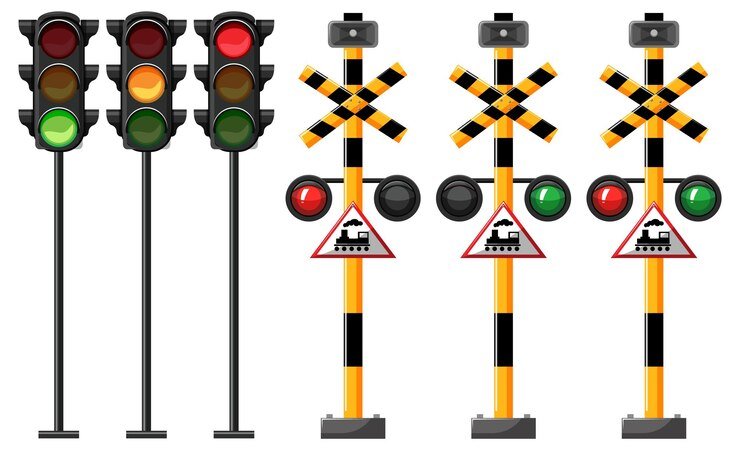
Traffic
signs play a key role in directing and controlling the behaviour of everyone
who uses the road; this keeps the roads as safe as possible for all users.
Therefore,
you need to understand the meaning of traffic signs. Signs frequently come up
in the theory test, and, therefore, it is well worth taking the time, to ensure
that you know what they signify.
In this
module, you will learn about the most common classes or 'types' of sign. This
module is not intended to be a substitute for a complete guide to all signs
currently in use on UK roads; however, it will give you an essential grounding
in how to interpret the signs that you are most likely to find when driving.
You should
also be aware that traffic signs change, from time to time. New road signs
conveying new messages and in new formats are occasionally introduced, therefore,
drivers or riders who passed their test a few years ago need to make sure that
they remain up-to-date with the current traffic sign system.
Below are
some events for which new signs had to be introduced:
* Britain's
first motorway
* Introduction
of Pelican crossings
* Reintroduction
of trams
* Advanced
stop lines
* Vehicle-activated
signs
* Active
traffic management
Driving
experience is highly valuable, but you need to supplement this with knowledge.
Fact
Two in five drivers
report being so confused by traffic signs that they have consequently
encountered problems on the road
Source: Kwik
Fit Survey
The Three Key Types of Sign
There are
three basic types of traffic signs: signs that give orders, signs that provide
some kind of warning and signs that provide information. Each type has a
different shape.
A sign's
function is also indicated by its colour:
· Circular signs give orders,
triangular signs provide warnings and rectangular signs provide information.
· Blue rectangles are used for
information signs, except on motorways, whereby blue is used for directional
signs.
· Green rectangles are used for directional
signs on primary routes.
· White rectangles are used for
directional signs on non-primary routes or for plates used in combination with
warning and regulatory signs.
There are a few
exceptions to the usual rules governing shape and colour. These rules are
sometimes changed, in order to give particularly important signs greater
prominence.
For example
The 'STOP' sign has eight
sides, but it is red. Similarly, the 'GIVE WAY' sign does not communicate a
warning, but it is still red.
This is justified on the
grounds that driver observation of these signs is essential, in preventing many
accidents.
A red triangle signifies
some kind of warning. It usually contains an illustration of a potential hazard
or dangerous situation.
For example
A red triangular sign
showing a bending line tells you that you will soon drive around a bend.
You would respond to the
warning, by reducing your speed and taking extra care, when going around the
bend.
Sometimes, a red warning
sign will also include text.
For example
· 'STOP 100 yds' means 'It is 100 yards
to the STOP line from this sign'.
· Other commonly-used pieces of text
include 'Oncoming vehicles in middle of road', 'Single file traffic' and
'Single track road'.
· Not all warning signs are red. A
black and white sign reading 'Adverse camber,' with an illustration of a
tilting vehicle, indicates that there is a risk of lorries overturning on the
bend to the left or right.
· White chevrons on a black background
indicate a sharp deviation. Sometimes the edge of a roundabout will be paved in
a chevron pattern. Again, this signals that the route is about to deviate
sharply.
· Some signs tell you for how long or
over what distance you should expect a hazard to last.
For example
· You might see a sign reading 'For 2
miles', underneath an illustration of a skidding car, which indicates that you
should expect slippery road conditions for two miles.
· Sometimes, a sign may be accompanied
by a crossing. Regulatory signs, which are designed to enforce rules, are
usually circular in shape.
· A red ring or a red circle indicates
that something is prohibited.
· A blue circle gives a positive
instruction, i.e. something you should do. Blue circles are also used to
indicate that a route is only to be used by particular classes of vehicle.
· There are two exceptions to this
rule. The 'STOP' sign is a red octagon, and the 'GIVE WAY' sign is a red
triangle.
· The 'GIVE WAY' sign is accompanied by
road markings, and you must give way to traffic on the major road. The upright
sign or both the sign and the triangle on the road might not be used at
junctions at which there is relatively little traffic.
Activity 1: Any
Exceptions?
Estimated time: 5 minutes
Think of the most common
signs that you see when out on the road.
Can you think of any
signs that go against the general guidelines outlined above?
6.2 Speed-limit Sign
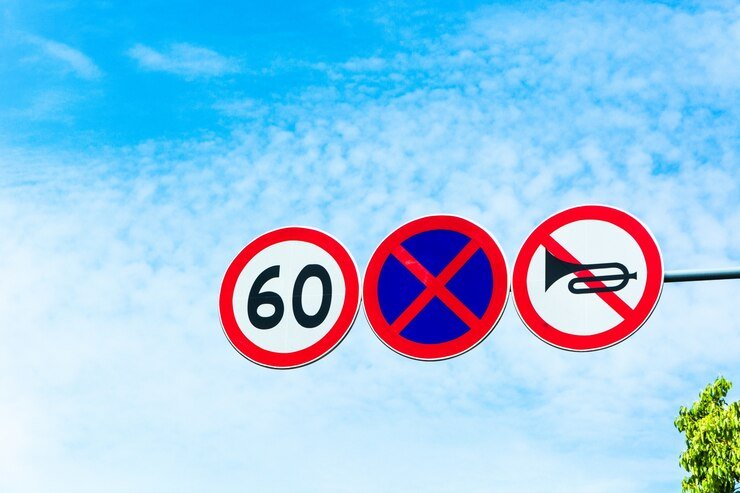
A black number printed on
a white circular sign ringed in red advises you of the speed limit for that
road.
If you see a white circle with a black
diagonal line across it, this means that the previous speed limit has been
cancelled. However, you should still adhere to the general rules governing how
fast you should go in a built-up area. These are outlined in the table below:
Type of vehicle, Built-up
areas, Single Cars and motorcycles
Cars towing caravans or
trailers
Buses, coaches and
minibuses (12 metres or less in overall length)
Dual carriageway
Motorways
70mph 60 mph
70mph
Goods vehicles (7.5
tonnes or less maximum laden weight)
Goods vehicles (7.5
tonnes or 30 mph,50 mph,60 mph,70 mph,60 mph more laden weight 30 mph,50 mph,60
mph in England and Wales)
Goods vehicles (7.5
tonnes or more laden weight in Scotland)30 mph,40 mph,50 mph
If you are driving in an
area with street lights, keep to a maximum speed of 30 mph, unless you see
signs advising you of a different speed limit. Sometimes, you will see 'repeater
signs', which are smaller in size than the first sign. They are positioned at
regular intervals along a road, to remind road users of the limit.
Fact
Exceeding the speed limit
is the most common mistake that people make, as a result of misinterpreting
road signs.
Source: Kwik Fit Survey
6.3 Signs Giving
Directions and Other Information
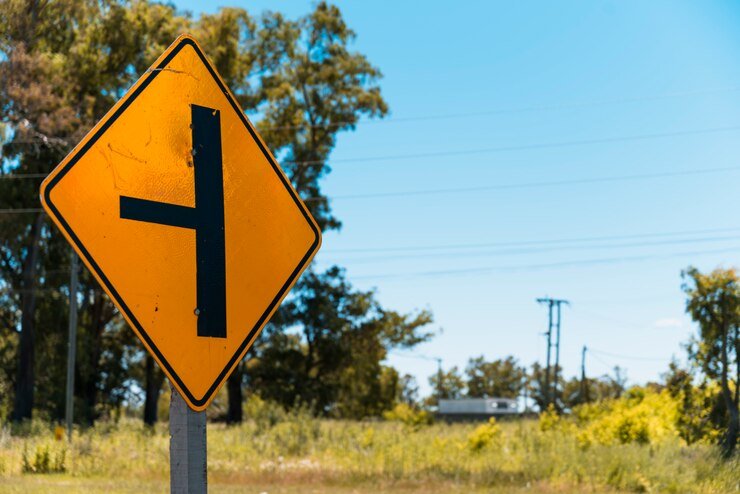
Some signs are designed
to help road users locate the correct road.
*Some also serve to
direct you to the nearest hospital, station, or tourist attraction, etc. These
kinds of signs are in various colours, depending on the type of road.
*On motorways, they will
be blue with white borders and letters.
*On primary routes -
aside from motorways - they will be green with white letters and a white
border. The route numbers will be printed in yellow.
*On all other routes,
information signs will have a black border, a white background and black
letters.
Primary
routes
*On primary routes, you
will see signs giving advance directions, in the lead-up to a junction. These
enable you to decide on the right direction, and to prepare yourself
accordingly. There will be further signage at the junction itself, which again
serves to tell you which directions you can take.
*Following a junction,
you will see confirmatory signs, which confirm that you are on the right road.
*Such signs also notify
you of places and relevant distances for your route. When the route number is
shown in brackets, it means that the road leads to that particular route.
*Road closure/diversion occasionally,
the authorities may have to close a section of the road or motorway to traffic.
For instance
If there has been an
accident, traffic may have to be diverted away from the scene. In such a case,
temporary signs will advise you to follow a route that will take you away from
the area, before guiding you back to the original route.
In order to assist
drivers in following an alternative route, permanent signs may be erected.
These have a yellow background, with a black border and black text. The first
sign you come across will serve to warn you of the diversion and will contain a
black symbol. A range of symbols are used on this sign - it may be a square,
triangle, circle or diamond. The symbol may or may not be blocked in. Following
the initial sign, a series of further signs, all showing the same symbol, will
guide you around the diversion route.
Waiting times/clearways
Waiting times - how long
you may stay at the side of the road - vary from road to road, and it is your
responsibility to observe in the vicinity any small yellow plates mounted on
poles, walls or lamp posts. In addition, line markings on the road also convey
vital information about permitted waiting times.
If there are double yellow
lines painted on the road and no signs nearby, this indicates that you are not
allowed to wait at the side of the road for any length of time. In a controlled
parking zone, entry signs will inform you of the relevant times during which
parking is permitted and prohibited. Look for white bay markings and signs that
signal where you may park. There are also areas known as 'Clearways'. When on a
clearway, you are not permitted to stop on the main road at any time.
This rule applies, even
if you wish to pick up or drop off passengers. There is one exception: in an
urban area, you are allowed to pick up or drop off passengers.
6.4 Loading and
Unloading a Vehicle by the Side of the Road

'Loading' refers to the
act of stopping a vehicle by the side of the road, for a brief period of time,
for the purpose of loading and unloading goods that are sufficiently heavy or
bulky that no-one could reasonably expect to carry them over any significant
distance within one trip.
Sometimes, you can load
and unload in places in which waiting would usually be restricted.
When a kerb is marked in
yellow, this signifies that you may not load or unload. Usually there will be
signs nearby telling you exactly when this is prohibited.
You may also find special
loading and unloading bays. These are marked by broken white lines and often
have 'Loading only' printed on nearby signs and on the road surface.
6.5 Red Routes
In large UK cities, Red
Route signs and markings have started to replace the old-style yellow-line
restrictions.
For example
In London, red routes
comprise 5% of the city's roads but carry nearly one-third of London traffic.
When you follow a Red
Route, you will see various signs and markings that tell you how to navigate
the route. These notify you as to how you may use yellow box junctions, turns
and bus lanes.
Activity 2: Red Routes
Estimated time: 5-10 minutes
Follow the link above,
and read about the rationale behind red routes. Do you think that they are a
good idea?
Why or why not?
6.6 Road Marking
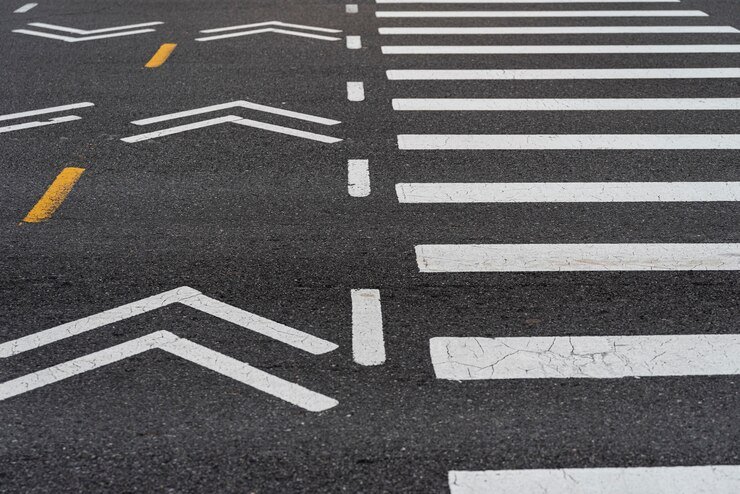
The purpose of road
markings is to provide road users with warnings, orders or useful information. Sometimes,
they are provided in conjunction with signs. They have two key advantages over
signs.
Firstly, they are never
hidden by traffic, which makes it unlikely that a road user will overlook them
or have their view blocked by other vehicles.
Secondly, they can also
be painted in such a way that you receive the message, as you continue driving
or riding.
The most important
markings are those painted along and across the road.
White broken lines
If the lines across the
road in front of you are white and broken, it means that the traffic on the
road that you wish to enter has priority. This means that, where the lines
stop, you should also stop, to take a last look up and down the road, before
joining it.
Sometimes, these lines
will also be used on roundabouts, if the traffic needs to give way to those
vehicles joining the road. When you come across a single, white, broken line,
immediately before a roundabout, you must give priority to traffic coming from the
right.
Single/Double white line
A single white unbroken
line across your half of the road indicates that you that you need to stop and
give way to traffic. This applies at junctions with 'STOP' signs, at swing
bridges or ferries, at level crossings and emergency vehicle access points and
at junctions controlled by traffic lights.
You must also pay
attention to lines painted along the road. These single or double white lines
specify where you can overtake and where you are allowed to park.
If the line nearest to
your vehicle is unbroken, it is against the law to cross it, unless you can be
sure that the road is clear, and you need to do one of the following: pass a
stationary vehicle; overtake a pedal cycle, horse or road maintenance vehicle,
if they are travelling at a speed of 10 mph or less; enter or leave a side road
or entrance positioned on the opposite side of the road.
You should prioritise
your safety and that of other road users, by always waiting until the road is
clear. If the white line nearest to your vehicle is broken, it means that you
can overtake another road user, if it is safe to do so.
If the markings that make
up a single broken line become longer, you should pay special attention because
it indicates that there is a hazard ahead. When you see arrows on the road,
this indicates the direction that you should take, when passing double white
lines or hatch markings. It is against the law to stop or park on a road with
double white lines, even if one is broken.
There are two exceptions:
to drop off or pick up passengers, and to load and unload goods from a vehicle.
Hatch Markings
Hatch markings comprise white diagonal lines
or chevrons, painted on the road's surface. In addition, the tarmac between the
lines may be a different colour. They are intended to separate streams of
traffic, in order to ensure the safety of road users.
For example
You may see hatch
markings used near a sharp bend or when traffic turning right requires
additional protection.
If the boundary line
around these markings is solid, you should never enter, except in an emergency.
If the boundary line is broken, you may drive across the markings, as long as
you can see that it is safe.
Lane Dividers
Finally, you should look
out for lane dividers. These lines, which are short and broken, are used on
wide carriageways, to divide the road into distinct lanes. Unless you are
turning right, overtaking or changing lanes, always keep between the dividers.
6.7 Lanes Designed
for Specific Types of Vehicle
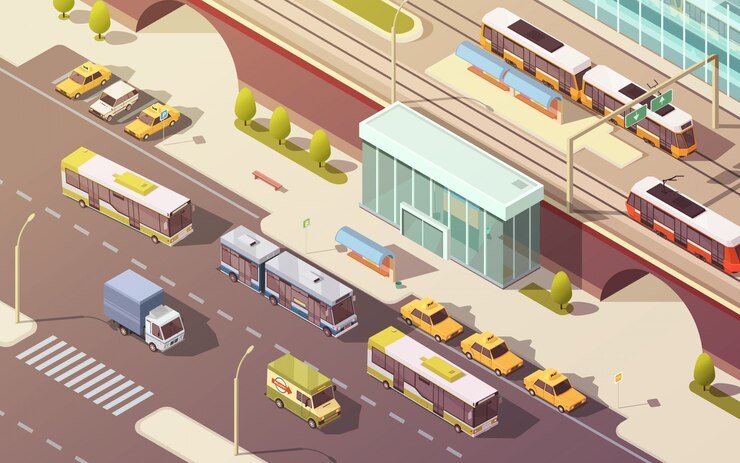
Some roads contain
special lanes, set aside for buses, pedal cycles and high-occupancy vehicles.
Sometimes, vehicles using
these lanes are allowed to travel against the usual flow of traffic. These are
referred to as contraflow lanes. In all cases, you must adhere to instructions
printed on signs or marked on the road surface.
These instructions will
notify you of the times of day during which the lane is in operation.
As a general rule, you
must not drive or park in a lane during its hours of operation, except in an
emergency.
Road Studs
Road studs are designed
to provide road users with clear markers, denoting which side of the road they
are on. They are reflective for better visibility. This makes the roads safer
in low lighting.
*Red road studs mark out
the left-hand side of a road, whereas amber studs mark out the right-hand edge
of a carriageway on motorways and on dual carriageways.
*Green studs mark the
edge of the main carriageway at lay-bys and slip roads.
*White studs mark the
lanes or the middle of the road. If there are roadworks, yellow and green studs
are used to show road users which lanes are still in operation.
6.8 Other Types of
Road Markings
Box junction markings
A box junction is marked
by yellow criss-cross lines. Box junctions are used to ensure that a junction
remains clear, by preventing traffic from stopping or parking in such a way
that obstructs the flow of oncoming traffic.It is illegal to enter a box
junction, unless you can see that the exit road is clear.
You may
enter the junction if you want to make a right turn, and oncoming traffic is
the only reason that prevents you from doing so. You are allowed to enter a
vehicle that is already in the junction and waiting to turn right, as long as
you do not block any oncoming traffic that is already waiting to turn.
Words on the road
You must
follow directions painted on the road surface, such as 'Keep clear' and 'Slow'.
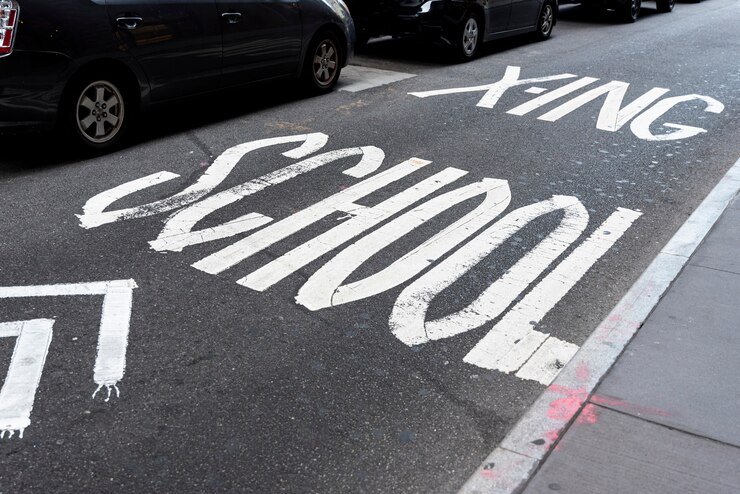
Markings on the road near schools
'School - keep clear' is often painted in
yellow paint, on roads next to
schools. These markings are positioned in such a way that passing drivers and
children walking to and from the school always have a clear view of the area.You
must not park on the markings or stop, to drop off or pick up passengers.
Speed reduction markings
Raised
yellow lines painted across the road leading up to the approach to particular
hazards, reduced speed limits and roundabouts are there to remind drivers to
slow down and reduce their speed.
Destination markings
Road or place names are sometimes painted on
the road, in the run-up to a junction. Along with regular road signs, these
help road users get in the correct lane.
Lane Arrows
Arrows
painted on the road help you get in the right lane, in the run-up to
roundabouts.
On wide
roads, there may be three arrows. Left arrows will be painted in the left-hand
lane, straight arrows denote 'straight ahead', and right arrows are painted in
the right-hand lane, for those who are turning right. Sometimes, arrows may be
combined - this may depend on how busy a junction is and on the width of the
road.
Road humps
Road humps
are elevated portions of the road, designed to slow traffic in built-up areas.
They are typically used on roads that have a speed limit of 30 mph or less.
They usually have vertical markings. Sometimes, they may be accompanied by
warning signs alerting you to their presence.
6.9
Traffic Lights
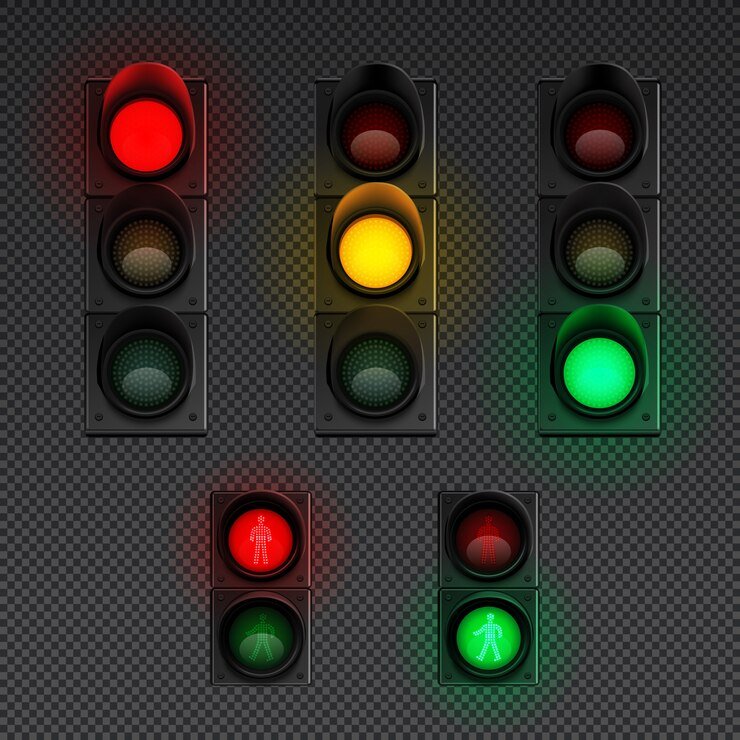
Traffic
lights are based on a three-light system.
· A red light is a command to stop and wait at
the stop line. When red and amber lights flash at the same time, this means
that you have to stop and wait. Do not go, until the green light alone is
showing.
· An amber light indicates that you
must stop, unless you have already crossed the line, or you would cause an
accident, if you were to pull up at the line.
· A green light indicates that you
should proceed, provided that the way forward is clear.
· If there is a green arrow showing, in
addition to the traffic lights, this means that you can proceed in that
direction, even if the red light is showing. If the traffic lights appear to be
broken, you should proceed as though you were using an unmarked junction.
· As you approach a set of traffic
lights, you must use the Mirrors - Signal - Manoeuvre (MSM) routine, together
with Position - Speed - Look (PSL).
· You must look at the lane markings, and ensure
that you are in the right lane, by the time you reach the stop line. As you
approach the traffic lights, you should always be prepared to stop, even if the
light is green.
· Some sets of traffic lights have
advance stop lines, which enable
cyclists to position themselves ahead of other road users. If the
lights are red or amber, you must stop at the first white line. Do not use the
marked area, as this is set aside for cyclists only. If you have moved beyond
the first white line, and then the light turns red, you must stop at the second
white line. If you come across an advanced area for buses, proceed in the same
manner.
· In some instances, you will notice
special kinds of traffic lights.
For example
· A set of traffic lights may be
positioned at a swing bridge or close to a fire station.
· If they follow the usual three-part traffic
light system, you should treat them as you would any other set of traffic
lights. However, if they feature double red flashing lights, you must stop when
the red lights flash.
· Two amber lights flashing in an
alternate pattern, warn road users that there is a school-crossing point ahead.
You should always slow down, when you see this signal, and drive with extra
care and attention.
6.10 Level Crossings
At a level
crossing, the road you are following crosses one or more railway lines.
In order to avoid causing a serious or fatal
accident, it is vital that you heed and follow all signs, markings and warning
lights.
You must
never park your vehicle close to the crossing, stop on or immediately after the
crossing, or drive onto the crossing, unless you can see that the road on the
other side is clear.
The majority
of crossings are protected by barriers - these may cover the whole of the
crossing or just a part of it.
If there is a telephone near a
railway line
You must use
it, to phone the operator and seek permission to cross, if you are herding
animals, driving a slow-moving vehicle or driving a vehicle with limited ground
clearance. You should use the telephone again, to notify the operator, once you
have safely crossed the crossing.
If the crossing is automatic
You must
obey all signs. If there is a steady amber light, followed by flashing red
lights, this means that a train is approaching.
If you see a sign in the shape of a cross with
red borders
This
indicates that a crossing that has no gates or barriers. Some of these
crossings have lights - always use them in accordance with the guidelines given
above. If the crossing does not have any lights, there will be a 'Give way'
sign. Be sure to look both ways, listen and double-check that you cannot see an
oncoming train, before driving over the crossing.
User-operated crossings
These are
relatively rare and can only be used by authorised people and guests. If there
are red and green lights, cross only when the green light is showing. Open the
gates or barriers situated on both sides of the crossing. Make sure that the
green light is still on. Cross as quickly but as safely as possible. Close the
barriers or gates, once you have moved safely beyond the crossing. If the
crossing has no signals, you must telephone the operator, before and after
crossing.
Vehicle breakdown
In the event
that your vehicle breaks down on a crossing, get all passengers out of the
vehicle and away from the crossing, as soon as possible.
Only attempt to move the vehicle if there is
time, and there is no sign that a train is approaching. If an alarm sounds or
an amber light comes on, get clear of the crossing immediately because the
train will have no way of stopping in time.
Tram crossings
You should
apply the same rules outlined in this section to tram crossings. Remember that
they travel quietly, and they have no way of swerving, to avoid you.
 |
.svg)



