
7.1 Why you Need to Know the Basics of Car Maintenance
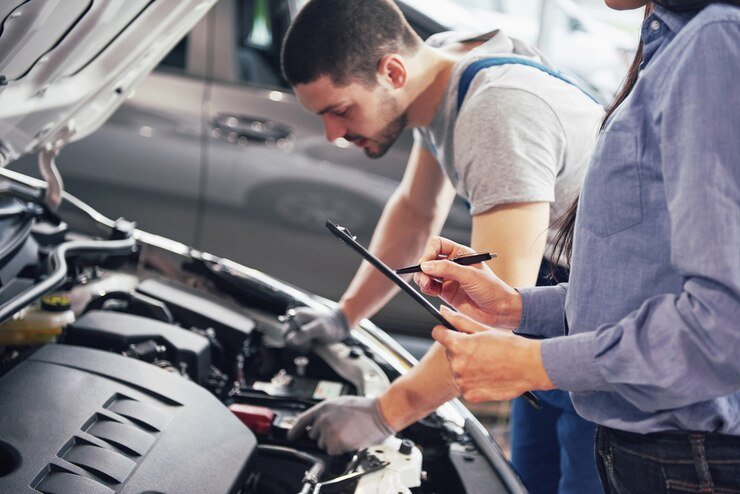
In your
theory test, you may be asked questions about basic car maintenance, and it
will almost certainly come up as a topic in the 'Show me, tell me' part of your
practical test
As you
will learn in the final module, your driving test examiner will want to make
sure that you understand how to safely maintain your vehicle. It is therefore
important that you learn how to ensure that your vehicle is in roadworthy
condition.
Every day
and Periodic checks that you should make on your Vehicle
You
should always make sure that your vehicle is in a roadworthy condition, before
setting out on a journey. Check that the windscreen, windows and mirrors are
all clean. If your vision is obstructed by dirt or grime, you are less able to
spot hazards and, as a result, are more likely to have an accident.
You
should also check that all your lights are working and that any dead or broken
bulbs are replaced as quickly as possible. Finally, it is vital that you never
drive with faulty brakes. Every few weeks, you should make several periodic
checks on your car or bike, to ensure that you can use it safely.
Make sure
that you have enough engine oil, brake fluid and water. You should ensure that
your windscreen and rear window washer bottles contain sufficient levels of
fluid and that your battery is topped up with distilled water, if necessary.
Not all batteries require maintenance. If you are unsure, consult your car's
handbook for guidance.
You
should also make sure that your tyres are in a legal condition. They should be
at the right pressure and free from dangerous defects, such as cuts. They
should also meet minimum tread depth requirements. As a general rule, the more
often you drive, the more often you need to carry out these checks Consult the
handbook, to find out how often you should arrange for your vehicle to be
serviced. This will keep it running efficiently.
Fuel
Before
setting out on a journey, always make sure that you have enough fuel.
Do not
allow the fuel level to run too low, as this can damage the fuel tank and the
engine. It is legal to carry extra fuel, but the container in which it is
carried must be suitable for this purpose. Containers can be purchased at
garages. It is an offence to carry fuel in an unsuitable container.
If you
are driving on a motorway, make sure that you have enough fuel to last you
until the next service station. You should carry more fuel than this amount, in
case the service station is closed or you have to sit in unexpected traffic. Using
unleaded fuel reduces emissions. All modern petrol engines are fitted with
catalytic converters that help reduce emissions, but they require the right
kind of fuel, in order to work correctly.
Diesel
and petrol engines have different requirements never put diesel into a petrol
tank or vice versa. Diesel cars are usually fitted with a device called a
diesel particulate filter (DPF), which reduces harmful exhaust emissions. You
should always refer to the manufacturer's handbook, and maintain your DPF, to
enable it to work correctly.
Electric
cars do not require any kind of fuel. Instead, they are charged from the mains,
either at home or via a public charging point. They have a limited mile range,
so you must make sure that you have enough charge, before setting off on a
journey.
Brakes
You must
make sure that your vehicle's braking system is operational. Comply with the
manufacturer's recommendations, when it comes to servicing the brakes. A
suitably qualified mechanic will be able to check the brakes, adjust them and
replace components, if necessary. Do not be tempted to do this yourself, unless
you are confident in your ability to do so.
You
should regularly test your brakes, and, if they do not feel 'right' or are not
functioning correctly, consult a mechanic, as soon as possible. Always make
sure that your brake fluid levels are at the appropriate level too much or too little fluid can impair the
function of the brakes.
Check
your parking brake (hand brake) for wear and tear. It should move in a smooth
motion, and always lock the vehicle in place. Many vehicles are equipped with a
system whereby a warning light will come on, to indicate a braking fault. If
you see any warning lights, take your car to a garage, as soon as possible.
Steering and suspension
If the
steering wheel is moving excessively or you hear any unusual noises within the
steering or suspension, you should seek professional advice. If the vehicle has
a power assisted steering system, seek assistance, if the steering starts to
feel heavy. To check the vehicle's power assisted steering, start the engine,
or move the ignition switch to the 'on' position, whilst applying gentle
pressure to the steering wheel. If the wheel moves slightly, as the system
warms up, this is a good indication that the steering is working properly. You
can also move the wheel shortly after moving off, and this will show you
whether the system is working properly. Shock absorbers should be checked for
leaks, on a regular basis.
Tyres
Tyres can
become damaged in such a way that you might not even notice, until you lose
control of your vehicle. Tyres need to be in good condition, if they are to
properly grip the road. They must also be properly inflated and be at the
correct pressure. Tyre condition is so important that the law imposes
significant penalties for those driving with faulty tyres. Depending on the
degree of tyre damage and the number of damaged tyres on your vehicle, you
could receive a fine, penalty points on your licence or even be disqualified
from driving.
All tyres
must have a minimum tread depth of 1.6 mm, across the central three-quarters of
the breadth of the tyre, and around the entire outer circumference. To ensure
that the wear and tear on all tyres is as even as possible, make sure that your
suspension, braking, wheel alignment and wheel balance are checked on a regular
basis.
You
should also replace any tyres that show signs of damage, such as bulges and
cuts. If you see any material, such as stones or pieces of glass in the treads,
remove them, before they cause damage to the tyre. You should check the
pressure of your tyres at least once a week. Consult the manufacturer's
handbook, and follow their recommendations regarding the correct pressure
level.
Electrical Systems
In modern
cars, the supplied battery is designed to require no maintenance. Make sure
that the battery terminals are suitably secured, greased and clean. If there is
a filler cap or caps, regularly check the fluid levels. Another electrical
system that requires monitoring is the lighting circuitry.
Every
time you use the vehicle, you should make sure that the front, rear, brake,
indicator and hazard lights are working properly. You can do this by checking
the car's reflection in a window or door. You could also ask someone else to
help you, by indicating whether or not a particular light is working. It is a
good idea to carry a few spare bulbs, so that you can quickly replace one, if
necessary.
Check
that the horn works, by pressing on it, but be sure not to cause an unnecessary
disturbance, whilst doing so. Finally, make sure that the windscreen washers
and wipers are working. Check that there is enough water in the reservoirs, and
replace broken or faulty wiper blades, as soon as possible.
7.2
Breakdowns
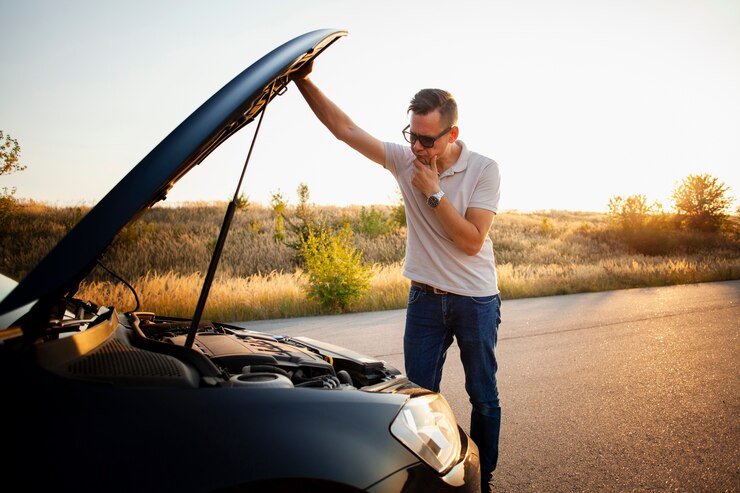
Even the
most careful of drivers will probably experience at least one breakdown, at
some point.
Unforeseen
events, such as a puncture, can quickly culminate in a situation that may become
difficult, if not handled correctly. It is important to make sure that you are
well-prepared, so that you can deal with a breakdown. Many breakdowns are the
result of the driver failing to make the appropriate vehicle checks, overly
harsh use of the vehicle or inadequate vehicle maintenance.
If you
notice a problem with your vehicle, do not continue driving, in the hope that
it will resolve itself. Usually, even relatively minor problems require
attention. Do not run the risk of allowing the situation to worsen, as the
consequences could be serious.
Every driver should carry a basic tool kit in
their vehicle which should include the following items:
·
pliers
·
a plastic
container filled with water
·
a torch
·
vinyl
tape
·
warning triangle
·
spare
bulbs
·
fuses
·
wire
·
a tow
rope
·
jump lead
·
a
reflective waistcoat - helps other road users see you at night
·
a
fluorescent waistcoat - alerts other road users to your presence during the day
You
should use a warning device, to indicate to others that your car has broken
down. However, they must not be used on a motorway, and they cannot be used to
justify leaving your car in an inappropriate or dangerous position.
An
advance warning triangle is a sensible means of alerting other road users. You
should position it on the road, at a reasonable distance from the back of the
car. If you are on a straight road, place it 45 metres (147 feet) behind the
car. If you have broken down on a winding or hilly road, place it so that
drivers will see it, prior to driving around a bend or over a hump. If the road
is very narrow, put the triangle on the nearside verge or footpath.
You can
also use other warning devices, such as traffic cones and traffic posts. If you
are using cones or posts, you should use at least four, placed behind your
vehicle and spaced at regular intervals. You can also put a plastic yellow
sheet marked with a red triangle on the vehicle.
However,
it must not cover the lights, reflectors or number plates. You should consider
joining a breakdown or motoring service or organisation. For an annual fee, you
will receive cover that provides you with a recovery service, in the event of a
breakdown. Not only will most services cover the cost of repairing a vehicle in
your insurance package, but they will also offer options that allow you and
your passengers to be transported home or to your intended destination.
7.3 What
you Should do if you Breakdown
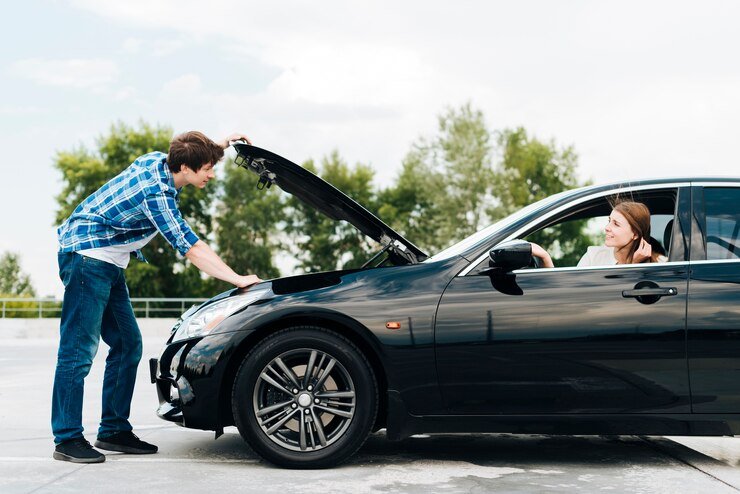
As soon
as you realise that your car is going to break down, gently press the brake,
and come to a stop, as far to the left as possible.
You
should aim to remove your vehicle from the path of oncoming traffic. Sometimes,
the cause of the breakdown may impair your ability to control the car. Should
this occur, avoid braking sharply, and try your best to keep moving in a
straight line, by firmly holding the steering wheel. As the car slows down of
its own accord, steer to the left, avoiding sudden or jerky movements. Aim to
get your car off the road, as soon as possible. Turn on your hazard lights, to
notify other drivers.
If it is
dark or visibility is reduced, keep your sidelights on, if possible. Do not stand
behind your vehicle, if doing so will prevent other road users from seeing your
lights. Use a warning device, and put on high-visibility clothing, if you are
carrying it. If your vehicle is a significant hazard or obstruction, call the
police. You should then call a breakdown service.
It is
unwise to accept a lift from a stranger. If you are driving alone, tell the
breakdown recovery service because they are likely to prioritise your call over
those who are travelling with others. In some instances, someone from a
breakdown service or local garage will be able to fix your vehicle by the side
of the road. You can also ask a friend to tow you, but this is the most
dangerous option and should only be chosen by those with towing experience.
In the
event that you break down on a stretch of road on which road works are taking
place, you may be entitled to free recovery, if one of the following applies:
there are no emergency telephones available, as a result of service suspension,
the standard lane widths have been temporarily reduced, whilst road works are
being carried out, or you have no way of accessing lay-bys or hard shoulders.
Breaking
down on a Dual Carriageway
In the
event that you break down on a dual carriageway, you should firstly aim to move
your car off the road. Preferably, you should use a protected lay-by, but an
unprotected lay-by or grass verge are also acceptable. Note that some roads
have 'Soft verges' warning signs, so take extra care, if this applies. Also
note that long grass can catch fire, from the heat of a catalytic converter.
Use a
warning device, switch on your hazard warning lights, and move all passengers
to a safe place, a good distance from the vehicle. Immediately call for help.
Fact
Every
year, there are more breakdowns on the M1 than on any other UK motorway.
Source:
UK Government
Breaking Down on a Motorway
One of
the most common causes of motorway breakdowns is a lack of fuel, so make sure
that you have enough, before setting out on your journey. If you sense that
your vehicle has developed a fault and that you might break down, do your best
to leave the motorway via the next exit, or pull into a service station. If this
is not possible, move onto the hard shoulder. Keep your vehicle as far away
from the flow of traffic as possible.
After you
have stopped, use your hazard and side lights, as appropriate. Keep animals
inside the vehicle. Lock all the doors, except the front passenger door. You
should make sure that passengers remain near the vehicle but on the embankment,
as opposed to the hard shoulder.
If you
are a driver with a disability, stay in your vehicle. Switch on your hazard
lights, keep your seatbelt fastened, and either display a help pennant or use a
mobile phone, to call the emergency services. Note that, if you are driving and
see a help pennant displayed, it is not a good idea to stop and approach the
vehicle. Instead, note its location, and then stop at a safe place, before
calling the emergency services.
Use the
nearest emergency telephone, to summon help, even if you have a mobile phone.
This is because the emergency telephones notify the service of your exact
location, which means that they are better-placed to quickly provide you with
help. Tell the operator if you are especially vulnerable
For instance
You are
travelling alone or with young children. You should never repair or attempt to
repair a vehicle on the motorway, even if you are suitably knowledgeable or
qualified to do so. In addition, you should never use a warning device on the
carriageway or hard shoulder.
When you
use the emergency telephone, you will be asked to provide the following
information: the number of the telephone, details of what you think has caused
your car to break down, details about your vehicle, such as the make and model,
and your membership details, if you are a member of a national breakdown
service.
If you
cannot get to an emergency telephone and instead have to use a mobile phone,
find a marker post on the side of the hard shoulder, and be ready to provide
this information to the operator.
Activity 1: Your Experience of Breakdowns
Estimated time: 5+ minutes
Have you ever been in a vehicle that has
broken down? How did the driver or rider respond?
Do you
think that they were adequately prepared for the possibility of a breakdown?
Why or why not?
7.4 What
to do at the Scene of an Accident
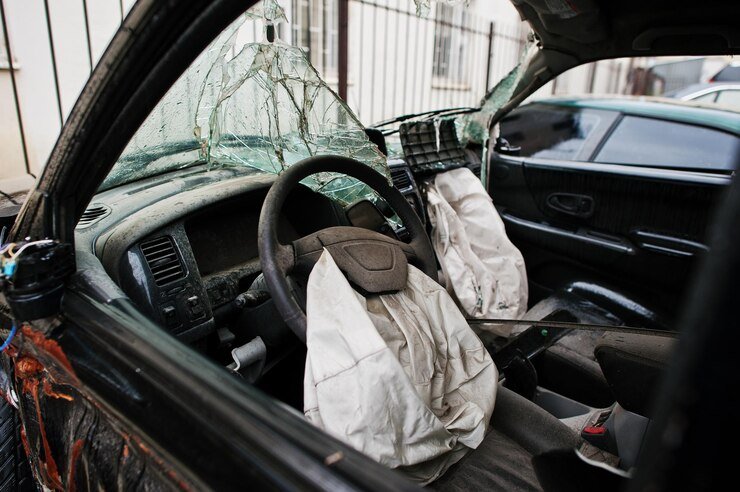
If you
are involved in an accident, the law states that you must stop.
If you
come across the scene of an accident, put your own safety first. There is a
risk of further collisions and of fire. The risk is heightened, if visibility
is poor. When at the scene of an accident, warn other road users, by turning on
your hazard lights. You should make sure that all fire hazards are removed, as
far as possible.
For instance
No-one
should smoke. If appropriate, you should then call the emergency services. If possible, use an emergency telephone, if
the accident has taken place on the motorway. Make sure that you are prepared
to give the exact location and details of any injuries.
If you
come across the scene of an accident and your help is not needed, do not slow
down, to look, and do not allow yourself to become distracted. Uninjured people
should move to a safe place, well away from vehicles involved in the accident. Unless
they are in immediate danger, do not move any causalities who are still inside
a vehicle, as you could worsen their condition. Be prepared to give details to
the emergency services, when they arrive, but do not speculate on a potential
diagnosis.
If one or
more of the vehicles are carrying dangerous goods, such as flammable liquids,
make sure that you notify the emergency services, when you make the call. They
will ask you to describe labels and other markings. If you are involved in any
incident involving damage to another vehicle, other property, a person or an
animal, you must provide certain details to any parties that have reason to
request them.
The information you should give is as follows:
·
your name
·
your
address
·
the name
and address of the vehicle's owner, if different from your own
·
the
registration number.
If you cannot provide this information
immediately, you must contact the police, and report the incident within 24
hours. If the accident took place in Northern Ireland, you have a legal
obligation to immediately report it to the police. In the event that someone
has been injured, you must supply the police with your insurance details. If
you do not have the details on you at the time, you must supply them within a
week of the incident.
You will need to collect some details from the
other driver:
·
their
contact details
·
their
insurance details
·
the
contact details of the vehicle's owner, if applicable
You
should aim to gather as much information about the incident as possible, for
insurance purposes. If there were witnesses to the incident, take down their
contact details. If you have a camera, use it to take photos of the scene. Pay
special attention to vehicle damage, weather conditions, skid marks, road
conditions and the ID numbers of police officers attending the scene.
You
should also draw a map, for your own reference. It does not have to be to
scale, but it should indicate the distances between vehicles, the distances
between vehicles and the edge of the kerb, and the distances between all
vehicles and junctions or signs.
You may
be asked to provide a written statement to the police. You do not have to do
this immediately. It is sensible to wait a few hours, before putting your
statement together.
Always
keep a copy for your own records. Unfortunately, there are a number of
fraudsters who intentionally cause accidents, in order to make personal injury
claims. Therefore, you must try to collect as much information as possible.
Fire and
Electricity
Fire and
electricity are two complicating factors that can make the scene of an accident
even more dangerous. It is a good idea to carry a portable fire extinguisher
with you. However, do not use it, unless you are confident in your ability to
do so. Make sure that you know how to operate the fire extinguisher, before you
find yourself in an emergency situation.
If you
believe that there is a fire in the engine compartment of a vehicle, do not
open the bonnet. Direct the extinguisher through a small gap, if possible. If
in doubt, moveas far away from the vehicle as you can. If you can smell petrol,
be sure to notify the emergency service personnel, when they arrive on the
scene.
Be extremely careful when trying to help
someone leave a vehicle, if you know or suspect that electricity is involved in
an incident
For instance
If a
vehicle has collided with overhead cables.
Never
touch anyone who is still in contact with live electricity, unless you can use
a non-conducting item, such as a plastic sheet or a piece of wood.
An
individual does not have to be touching a source of electricity, in order to be
electrocuted - standing near an overhead cable can be enough to cause an
electric shock.
Incidents
and Tunnels
If you
are involved in an incident inside a tunnel or break down inside a tunnel, call
from the nearest emergency point. Switch off your engine, leave your vehicle,
switch on your hazard warning lights, and give first aid to anyone who is
injured, if required.
In the
event that your vehicle catches fire, only drive it out of the tunnel if it is
relatively safe to do so. If you cannot do so, pull over to the side of the
tunnel, and switch off the engine. Use your own fire extinguisher or an
extinguisher provided in the tunnel, to put out the fire. If this is not
possible, leave the tunnel via the nearest emergency exit.
If you
are behind a vehicle that is on fire, put on your hazard lights, and then
follow the above guidelines. If there are signs advising you what to do in the
event of a breakdown or incident, ensure that you follow them.
Fact
Up to 59% of deaths due to injury can be
prevented, if first aid is administered before the emergency services arrive.
Source:
British Red Cross
Providing First Aid at the scene of an Accident
All car
engines should be switched off, as soon as possible, for the sake of fire
prevention. No-one near the scene should smoke, as this could trigger fires and
explosions.
Collisions
with other vehicles are another hazard. As far as is practicable, all those
able to do so should take care to warn other traffic. This may involve using
hand signals, hazard triangles or any other reasonable precautions, to alert
other road users to the incident.
Unless a
vehicle is on fire or there is another source of danger posing an imminent
risk, an injured person should not be moved. This is because movement may
worsen existing injuries, so it must be left to trained medical personnel.
Unless absolutely necessary, motorcycle helmets should be left on.
It is
common for casualties to suffer from shock. For this reason, they should be
kept warm and dry, with the help of blankets, coats or any other suitable
material. A casualty should not be given anything to eat or drink, as their
injuries (which may not be apparent) may mean that they are at risk of choking.
In addition, those with serious injuries may require surgery, and, in such
circumstances, it is best for them to avoid ingesting more food or liquids than
necessary. If possible, someone should stay with an injured person, at all
times, and give reassurance that help is on its way.
The
Highway Code' advises that bystanders to an accident follow the DRABC code:
D stands
for 'Danger'. Specifically, it is important to safeguard your own wellbeing
first and not attempt to help, if doing so would put you at risk.
R stands
for 'Response'. At this stage, you should establish whether the individual is
capable of communication and is willing to engage verbally. The best way to do
this is to gently shake or move the person's shoulder, and ask them simple
questions.
A stands
for 'Airway'. This step entails moving the person's chin up and forwards, if
they seem incapable of talking. Doing so will help clear their airway. If this
does not work, tilt their head back.
B stands
for 'Breathing'. Once you have cleared the person's airway, their breathing
should be regular.
C stands
for 'Compressions'. If there is no sign of breathing or a pulse, the next step
is to administer chest compressions.
To administer chest compressions, link your
hands together, and position them just below the breastbone. Then give 30
compressions, at a steady rate, followed by two rescue breaths.
It is a
good idea to carry a first aid kit in your car. Undertaking some first aid
training will also help you to feel prepared, so that you can provide
assistance, in the event of an emergency. The British Red Cross Society and the
St John's Ambulance both run courses, on a regular basis.
Activity
2: How Would you Help Casualties at the Scene of an Accident?
Estimated
time: 5-10 minutes
Before
you read more about how to offer first aid to those involved in an incident,
consider what you already know.
Imagine
that you are the first to arrive at the scene of a collision - a car has
crashed into a tree. The driver appears dazed and has not left their vehicle.
What would you do?
.svg)



