
6.1 Introduction

There are patterns of behaviour that exist throughout the development of a human being. Some of these patterns are only found within certain age groups. Observations of these patterns were the foundation of developmental psychology - a branch of psychology that has played an important role in the understanding of human behaviour and growth.
This module will help to develop an understanding of this topic, by providing a background and definition of this discipline, including the history of its progression over time and several short biographies of its contributors. These sections will be followed by a more in-depth discussion on the theories of developmental psychology and three different life stage concepts. The module will conclude by noting the methodologies used in the application of developmental psychology.
6.2 What is Developmental Psychology?
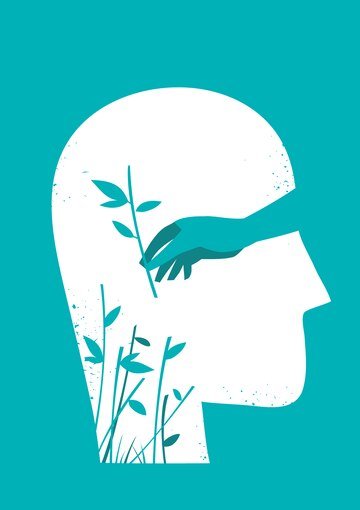
Developmental psychology is the study of change in human beings throughout their lifespan, including the how and why behind these changes. The scientific approach is applied to understand and track human development in terms of their growth, changes, and consistencies over the course of a lifetime. These studies also seek to understand how behaviours, thoughts and feelings can both develop and change over time. In the early stages of developmental psychology, the focus was on the changes in infants and children. However, over time, the field has broadened to include the life stages that follow early childhood, such as the teen years, adulthood, and aging, more generally. This has led to the understanding of how the average human changes and develops as they age.
Aside from developing an understanding of how the various life stages influence an individual, this field also looks are a number of other dimensions, which include the physical, cognitive, and socioemotional development. Developmental psychology examines the debate on nature and nurture in relation to the influence of human development, as well.
6.3 The History of Developmental Psychology

The history of developmental psychology began quite early on, yet held a slow progression. This was the result of both the popularity of other branches of psychology, as well as the need to expand the scope of the developmental field. This section will provide a basic timeline of the history of developmental psychology.
The early years
Developmental psychology is founded in much of the same way as four other disciplines that were covered in previous modules. This means, it, too, was established by philosophical origins. But outside of this philosophical approach, interesting research was taking place, although on a very informal basis.
Throughout the 17 and 1800s, parents were known to document what is now commonly referred to as a 'baby biography.' This describes detailed noted about a child, that although usually held a biased perspective, offered insight into the development and changes of a particular child. These are believed to be the earliest records within this field.
From there, the development of lifespan psychology took place, beginning in the late 1700s. This covered the behavioural changes of childhood and adolescence, until it was expanded to include the remaining stages of life until death. Interestingly, much of this research remained without publicity until the 1920s and 30s.
The child study movement
Between the late 19th and early 20th centuries, a focus on childhood advocacy began to emerge. This largely contributed to the popularity of developmental psychology in the United States, to start, and then sparked the same interest throughout Europe as well. What began as a desire to understand the impact of child welfare, quickly expanded to cover other topics related to the wellbeing of young people. The result of this movement was the development of child labour laws and the introduction of compulsory education for children.
This was an important outcome, as they have both helped to shape the rights and development of childhood, while also gaining a better understanding of how behaviours are affected by positive or negative environments and structure.
The popularisation of developmental psychology
Mainstream developmental psychology did not emerge until the 1930s, after a series of texts were published. Along with the popularisation of this discipline, came the introduction of many of the approaches still in use today. Preceding this popularity, was the expansion of numerous institutions and societies which aimed to focus on the behaviours and changes of childhood development, amongst other related areas within the realm of developmental psychology. This provided a space for research to be conducted, which has led to the development of a wider understanding of the field.
Much of this discipline's history revolves around the attempt to understand the whole picture, in terms of life stages and the changes in behaviour that arise throughout these periods. In today's research, the focus has moved away from these larger, all-encompassing theories, and has, instead, begun to place its attention on smaller pieces of these wider understandings. Additionally, the emphasis on the need to understand all ages, as opposed to solely focusing on the earlier years is now common practice.
6.4 Founding Fathers
Understanding the history of developmental psychology and the steps taken to achieve what is known today is only one component of the discipline's foundation. Those who have contributed to the field are equally important. Some of these influencers will be introduced within this section.
Jean-Jacques Rousseau
Philosopher Jean-Jacques Rousseau (1712-1778) is the first contributor to be discussed. He is known for two things related to the field of developmental psychology - his studies on the theory of the natural human, and his contribution to the stages of human development. In regard to the latter, his focus was mostly on the impact of education on childhood development. He had a particular interest in the influence of emotions and impulses on childhood behaviour, as well as a child's ability to reason.
Erik Erikson
Erik Erikson (1902-1994), is a well-known contributor to developmental psychology. Influenced by the work of Sigmund Freud, Erikson created the theory of psychosocial development, including the life stages associated with this topic. These life stages will be outlined in detail later in this module.
As
As an ego psychologist, Erikson focused his research on the role of culture and society in terms of the internal conflicts that can manifest within an individual.
John Bowlby
The next contributor is John Bowlby (1907-1990). He is responsible for the development of attachment theory. This contribution was the result of his earlier work at a hospital in London, where he worked as a psychoanalyst. Bowlby became interested in childhood development after he began to observe patterns related to how the behaviour of infants was affected by their attachment to a caregiver. He believed that attachment was the dominant means of an infant to present their inherent survival instincts, or behaviours. Bowlby also pulled from concepts used within evolutionary psychology and animal behavioural science to develop his understanding of attachment.
Urie Bronfenbrenner
Urie Bronfenbrenner (1917-2005) is best known for generating the ecological systems theory of childhood development - a theory that will be explored in the following section. His research changed the understanding of developmental psychology by showing how different environments and social influences could impact childhood development. One of his greatest achievements within this research, was his contribution to the development of the Head Start program - a government- funded programme that provides early education, and health and nutrition information to low- income families in the United States).
Lawrence Kohlberg
Next is Lawrence Kohlberg (1927-1987). Kohlberg focused his career on moral development. He conducted studies that showed how children reacted to specific situation, using moral reasoning. These studies provided a better understanding of when children develop these skills, which had not been widely covered before Kohlberg took interest. These same studies helped to establish a curriculum within the education system on the topic of moral development.
Michael Commons
Lastly, Michael Commons (1939- ) is the man known for developing the model of hierarchical complexity. This is the mathematical equation which is used to score the complexity of a particular behaviour. Commons was able to achieve this through his interest in the quantitative analysis of psychology in the field of life spans. He is also the cofounder of several behaviour-related societies, including the Society for Quantitative Analysis of Behaviour.
6.5 Developmental Theories

The theories used within developmental psychology are applied to various scenarios in an attempt to better understand the changes over time in human behaviour. Three of these theories will be explored below, starting with a brief summary of the constructivism, which was covered previously in Module 4. Attachment theory and the ecological systems theory will also be outlined.
Constructivism
The purpose behind constructivism is to understand the learning processes of an individual and how that same individual interprets their surroundings. Some of the influences that shape these interpretations include past experiences and newfound knowledge. It works by having the individual compare new information with the knowledge they have previously acquired. As was noted in Module 4, this comparative process leads to two possible outcomes: a revision of what the individual believes to be true, or a disregard for the newly presented information.
The theory of constructivism is useful in developmental psychology because it shows researchers how an individual applies what they learned to new situations, and the critical thinking skills that may present themselves at the time they receive the new information.
Attachment theory
The second developmental theory is that of attachment. This focuses on how an individual relates to another and the importance of intimate and emotional relationships. The term 'attachment' is often used to describe a biological urge that is rooted in the survival instincts of an infant. This is manifested in one of four relationships - secure, anxious-avoidant, anxious-resistant, and disorganised. It is important to first define the term 'caregiver.' A caregiver in terms of attachment theory is anyone that is caring for the child.
This role is most often filled by the infant's parents, be they biological or adoptive. However, a caregiver can also be a non-parental individual, as well, such as a nanny or childcare practitioner. Below are the definitions of each of the four types of attachment.
Secure
A secure relationship as defined within the context of attachment theory is the healthiest of the four possibilities. It is best characterised by trust, and is the result of a healthy relationship between the infant and caregiver. This means the child feels safe when in the presence of the caregiver.
Anxious-avoidant
An infant that displays an anxious-avoidant relationship is one that feels some level of insecurity towards the caregiver. The bond between the infant and caregiver has not been fully formed to the point of reaching a healthy, and safe degree of attachment. This type of attachment is most frequently characterised by the infant's display of unresponsiveness towards the caregiver.
Anxious-resistant
The next type of attachment is that of anxious-resistant. This is a type of attachment that indicates some level of distress when the infant is separated and reunited with the caregiver. This insecure attachment can be displayed by manifestations of sadness or upset at the time of separation, while more severe reactions, such as anger, can occur at the time of reunion.
Disorganised attachment
Disorganised attachment is one that appears inconsistent. The patterns of security, or the infant's reaction to be separated and returned to their caregiver, changes from one day to the next. This means, at times, the infant may display positive reactions at either the time of separation or when the caregiver is reunited with the child. It also means, that alternative, negative reactions can take place, but that there will be no consistency to how the infant will react.
Activity 1: The Essential Bond
Estimated time: 10 minutes
Attachment theory teaches us four types of bonds between an infant and its caregiver. These show how these bonds arise, and the challenges that may be faced when these relationships display signs of insecurity. This activity is intended to further develop this understanding by looking at several needs that an infant requires to have satisfied, and how they relate to relationship building with their caregiver.
To start, have a look at the list of basic needs provided below. For each one, write down why these needs are important to the health and development of the infant. Consider what role they play in the development of the infant-caregiver bond. After you have completed this task, rank the order of importance for each item in terms of the infant's wellbeing.
Being held by the caregiver
Blanket
Clothing
Entertainment from a television
Food
Playtime
Stuffed animal or another toy
Sleep
Think about how each of these impacts the infant's sense of security:
How do each of these help to create the bond that exists between an infant and caregiver?
Are there any that you think would lead to the more extreme types of attachment insecurities than others if they were not present? Why do you think this?
What criteria did you use for ranking the needs?
Were there some needs that were harder to rank than others?
How did you decide between those you considered equally important?
6.6 Ecological Systems Theory

Ecological systems theory relates to the nesting environments of any human, at any point of their lives. These nesting environments describe the role in which the child βits within their family, society, or other group, as well as where this relationship takes place. There are four environmental systems used to explain the ecological systems theory: microsystems, mesosystems, exosystems and macrosystems. Each of these will be brieβly outlined below.
Microsystem
A microsystem is an immediate environment in an individual's life. These environments are those that have a direct impact on one's life. Examples of microsystems include an individual's home, school and/or environment. It is possible for someone to have multiple microsystems throughout their lifetime.
Mesosystem
Mesosystems are environments that are connected to those noted as microsystems. This means a relationship exists between two or more microsystems.
An example of a mesosystem is:
How a family participates in extracurricular activities or immediate community events. An individual's family is considered to be one microsystem, and a school or neighbourhood are two others.
Exosystem
An exosystem is a wider society or community. Within an exosystem there is no role which a child must fulfil. These are indirect relationships that have some influence over the development of a child, but that do not directly require the child to participate. The wider school system, or a parent's job are both examples of an exosystem.
Macrosystem
Finally, a macrosystem is the environment in which things such as social customs, values, and even the rules, or laws, of a society are categorised. These are cultural influences that effect a child's development. An example of this would be the role of religion, or the type of government structure the child is exposed to.
6.7 Life Stages of Development Psychology
One of the most important components of developmental psychology is the identification of the life stages that occur as an individual grows and ages. Of course, it is not as easy as simply naming each stage, as there are different types of development to consider. This section will look at three different types of life stages, starting from the most basic - the life stages of developmental psychology, and then progressing to describe two other types of development - moral and psychosocial. The life stages of developmental psychology consider all of the aspects of growth, from the time spent developing in the womb, until death.
This set of life stages consists of seven stages:
Prenatal
Infancy/Toddlerhood
Childhood Adolescence
Early adulthood
Middle adulthood
Old age
Each of these stages represents a different set of ages, as well as skills development and other learnings that are required to live out a full life. All seven of these life stages will be outlined within this subsection in the order they occur.
Prenatal
The first life stage happens before a baby is even born. The prenatal stage happens within the womb and plays a crucial role in the development of a healthy baby. The baby develops over three trimesters - or the full term of a pregnancy. It is also within this time frame that the five senses (sight, smell, sound, taste and touch) start to develop, starting with touch, which begins between 5-8 weeks.
The second trimester is where the majority of this sensory development takes place. Between 13 and 24 weeks, sight and sound will be fully developed and by the end of the second trimester - no more than 26 weeks - the remainder of the senses will have begun developing. It is also within this life stage that the mother's environment can have a major influence.
For example:
If the mother is a drug addict, there is a high potential for developmental challenges to arise from this behaviour.
Infancy
The period between birth and the end of the first year of life is known as infancy. Numerous skills are developed within this time frame, including the further development of the five senses - also referred to as perception - language recognition, and motor skills. It is worth noting that around six months of age an infant can begin to recognise certain patterns within speech. Infancy is also when six states usually manifest.
These states are made up of three pairs which include:
quiet and active sleep - the type of sleep the infant is experiencing
quiet and active waking - how the infant wakes from sleep
fussing and crying - an important line of communication when the infant is in distress or needing nourishment or a diaper change
Fact
The most common prenatal developmental problem is Down Syndrome. This is caused by the presence of three chromosomes, instead of two,
Source: Very Well 2017
Childhood
After infancy comes childhood. Childhood is usually divided into three different sub-stages: early childhood (2 1⁄2 to 3 years), play age (3 to 5 years), and school age (5 to 12 years). In the play age, the child is still dependent on others to meet their basic needs. This is also the stage where the child's motor skills further develop, so they are able to freely move around.
School age brings about numerous developments. These include the beginning of school attendance, developing the skills required to βit into society, development of friendships, a display of concern for others over selfishness, and less dependence on family members to meet their basic needs.
Adolescence
Adolescence can sometimes overlap with school age childhood. This is the life stage when puberty begins until early adulthood, usually between the ages of 9 and 18. This is also the point when an individual seeks to learn more about themselves and how they fit into the world around them. Considerations about potential careers also begin to emerge during adolescence.
Fact
Criminal activity amongst teenage boys peaks at age 17, although these behaviours tend to start at around age 13.
Source: BBC 2014
The next three life stages are all considered to be adulthood, although they are broken up to show how development continues, even after the typical development stages have passed.
Early adulthood
The first stage of adulthood is early adulthood. This begins at the age of 18, and is mainly focused on building on and securing one's sense of identity. Maintaining relationships and building meaningful, intimate relationships generally begin to happen at this life stage. It is for this reason that early adulthood usually brings about thoughts and considerations about beginning a family of their own.
Middle adulthood
Middle adulthood takes place between 25 and 69 years of age. Within these years an individual may gain a sense of purpose within themselves, and within their communities, or society. They may, however, also experience times where they question their purpose, or even lose their sense of purpose altogether. During the latter part of middle adulthood, signs of deteriorating physical health may arise.
Old age
The final life stage, and stage of adulthood, is old age. This can begin as early as 65, but is different from person to person. It is characterised as the final stage before death, although death is not necessarily near once a person has reached this stage. Physical health will continue to deteriorate, and other health-related issues may also begin to emerge. Cognitive, or mental, health issues may become more frequent within this life stage, with forms of dementia or Alzheimer's being most likely.
6.8 Life Stages of Moral Development

There is more to the development of a human than just growth and physical changes. The life stages of moral development show how moral reasoning is developed over the course of three levels. Moral development refers to an individual's sense of right or wrong. The three moral stages to be discussed within this subsection are: pre-conventional, conventional, and post- conventional.
Pre-conventional
Pre-conventional moral reasoning is the stage most often associated with children. This is the time when reasoning is based on a system of punishments and rewards, when trying to enforce a specific desired outcome, action, or behaviour. The development of this beginner moral reasoning is key to living within society, and maintaining an otherwise normal life. As children are not born with an innate sense of right or wrong, this is a particularly important stage of learning.
Conventional
Once the pre-conventional stage has been established, usually around late childhood or early adolescence, it is time for the development of conventional moral reasoning. It is at this point when an individual understands right from wrong in terms of the rules of a society. The individual's ability to reason their actions with the potential outcomes is further developed at this point, which enables them to make the correct decision based on how society tells them they should be reacting to a particular situation.
Post-conventional
The final moral stage of development is that of post-conventional moral reasoning. When an individual can think critically and make a decision for themselves, they have achieved this level of moral reasoning. This does not mean they will disregard the rules and regulations set out by a society, but rather the individual will develop the agency to understand the societal norms, and respond in a subjective way. It is at this stage that an individual no longer sees society as authoritative, but rather as a set of guidelines to live by.
6.9 Life Stages of Psychosocial Development

The life stages of psychosocial development relate to the stages within a lifespan when various social-psychological skills are learned, challenged, and adopted. Erik Erikson created the eight stages of psychosocial development as means of determining when certain traits began to manifest. Each of these eight stages will be outlined below.
Trust versus mistrust
The first psychosocial stage is known as 'trust versus mistrust.' This usually begins in infancy, and is when a child's sense of hope is first developed. The concepts of trust and mistrust align well with attachment theory, as this is when the child will begin to determine when they can feel safe and secure, and when their survival instincts will kick in.
Autonomy versus shame
Next is 'autonomy versus shame.' This stage, which begins in early childhood, can also include doubt along with the aspect of shame. Determining their will is the best outcome of this stage, as the child will begin to learn how to be independent. When the child is successful in this development, they will better display autonomy, whereas if they struggle with this concept, they are more likely to acquire a sense of doubt or shame.
It is important to note that both can, and most likely, will be learned, but the degree to which they hold on to either autonomy or shame will depend on their level of achievement. The more capable they discover they are, the more independent they will become.
Initiative versus guilt
The third stage is 'initiative versus guilt.' During the play age, a child will begin to develop a sense of purpose. This will arise from their natural curiosity about others, which will be strengthened by interactions with other children. This is also the stage when a child begins to ask questions about the world around them. The result of all of these interactions and questions is the development of their own awareness about learning. If the learning component is slower, they will associate this with guilt.
Industry versus inferiority
'Industry versus inferiority' is the life stage when the concept of competency is learned. Industry in this context refers to competency. This is displayed when a child of school age tries to gain the approval of those in their peer groups as a means of fitting in. It is also at this stage when a child recognises their accomplishments and the need to reinforce this behaviour. Identity versus role confusion
The fifth stage of psychosocial development is 'identity versus role confusion.' This can easily be seen within the adolescence stage of the developmental psychological life stages. Loyalty, commitment and dependability are all learning outcomes of this stage. This is derived from the individual's ability to identify themselves with their society, consider what they may want to do for a career, and even which gender or sexual preferences they identify with.
Intimacy versus isolation
'Intimacy versus isolation' is the life stage that takes place in early adulthood. It is characterised by the development of love, which is shown through an individual's engagement with intimate and emotional relationships. It is usually at this stage when an individual begins to think about who they want to share their life with, or when other romantic relationships begin to develop.
Generativity versus stagnation
The seventh stage is 'generativity versus stagnation.' This stage mimics middle adulthood, as this is the time when many people become financially and emotionally stable. They begin to purchase houses, co-habitat or marry, and even start to raise a family of their own. This is also typically the time within one's life that they begin to give back to their community or other causes they may be interested in.
Ego integrity versus despair
Lastly, the 'ego integrity versus despair' is the final stage within a lifespan. This is when an individual displays wisdom when reflecting on their life. When an individual nears the end of their life, they tend to look at their life in terms of successes or failures. This contemplation of life can sometimes aid an individual in the acceptance of their inevitable death, by providing them with closure.
Activity 2: Milestone Timeline
Estimated time: 10 minutes
On a blank piece of paper, draw a timeline that runs from birth to death. Begin to brainstorm and place the various milestones that happen in between these two life stages, along with approximately when they take place. Any of the life stages can be used (developmental, moral or psychosocial), and can even be mixed.
Upon completion of the timeline, take a few minutes to determine what type of milestone each noted indicator represents (emotional, social, physical or a combination of one or all). Once you have completed this activity take some time to consider the objectives of this exercise, by reflecting on a few questions:
Are there any stages that have more significant milestones than others?
Why do you think this is?
How do the types of milestones change over time (physical, social and emotional)?
Did you find most of the milestones fell into only one type or combinations of milestones?
Why do you think this is?
How does this change over time?
6.9 Developmental Psychology Applied

Developmental psychology covers a lot of ground in the realm of research, as well as understanding how humans grow and change over the course of their lifetime. Conducting research takes place in a number of difference ways, but primarily related to topics concerning cognitive, socioemotional, and physical development. Studying memory in relation to this field is also frequently researched. But, conducting this research is not just about finding a topic and exploring it; it involves the development of a study, which includes selecting the best methodology to highlight the results.
The methodologies typically used in developmental psychology include clinical studies, ethnography, self- reporting, and other forms of observation. The first three of these methodologies will be briefly described below.
Clinical, or case, studies are a practical means of uncovering new information. They use a more formal method than others used employed within this field. The study may take an in-depth look at an individual, or a group of individuals, depending on the topic and purpose of the research. Ethnographic research relates to the study of the cultural or customary actions and behaviours of an individual or society. To conduct this type of research, the researcher observes the targeted subject by participating in the culture of the participant. This is said to provide a first-hand account of what an individual or group experiences.
Self-reporting is a type of survey where a participant, or group of participants submits regular correspondence in the form of questionnaires or surveys over a pre-determined length of time. The success of these studies depends heavily on the cooperation and follow-through of the participants.
MODULE SUMMARY
This module on developmental psychology concludes the introduction of the psychological branches included within this course.
It began like other modules by introducing a deinition of the discipline, along with a brief history and the basics of the contributions of several of the field's influencers. The history section highlighted the child study movement in the late 19th and early 20th centuries, while the key contributors were noted as, Jean-Jacques Rousseau, Erik Erikson, John Bowlby, Urie Bronfenbrenner, Lawrence Kohlberg, and Michael Commons.
Following these foundational topics, the theories of developmental psychology were outlined, including constructivism, attachment theory (consisting of secure, anxious-avoidant, anxious- resistant, and disorganised manifestations of attachment), and ecological systems theory (described as micro-, meso-, exo-, and macrosystems).
Three different life stage concepts were then explored in detail. These life stages included developmental psychology (prenatal, infancy, childhood, adolescence, and adulthood), moral development (pre-conventional, conventional, and post-conventional), and the eight life stages that make up Erikson's psychosocial life stages.
The module concluded by identifying clinical studies, ethnography, self-reporting, and other method of observation as the main methodologies applied to developmental psychology. Upon completion of this module, a foundational level of knowledge on this topic should have been acquired.
.svg)



