
4.1 Introduction

Education is the backbone of modern society, when considering the development of a child. Understanding how an individual learns is also the focus of many aspects of psychology. Educational psychology is the branch of psychology that seeks to understand how this happens and the best practices for doing so.
This module will cover several topics regarding educational psychology including a definition of this branch of psychology, the history of the discipline, as well as its important influencers. The four perspectives of educational psychology will also be outlined, followed by several theories and concepts used within the field. Some of the more relevant controversies of educational psychology will also be explored before the module concludes by briefly discussing the methodologies used to put educational research into application.
4.2 What is Educational Psychology?
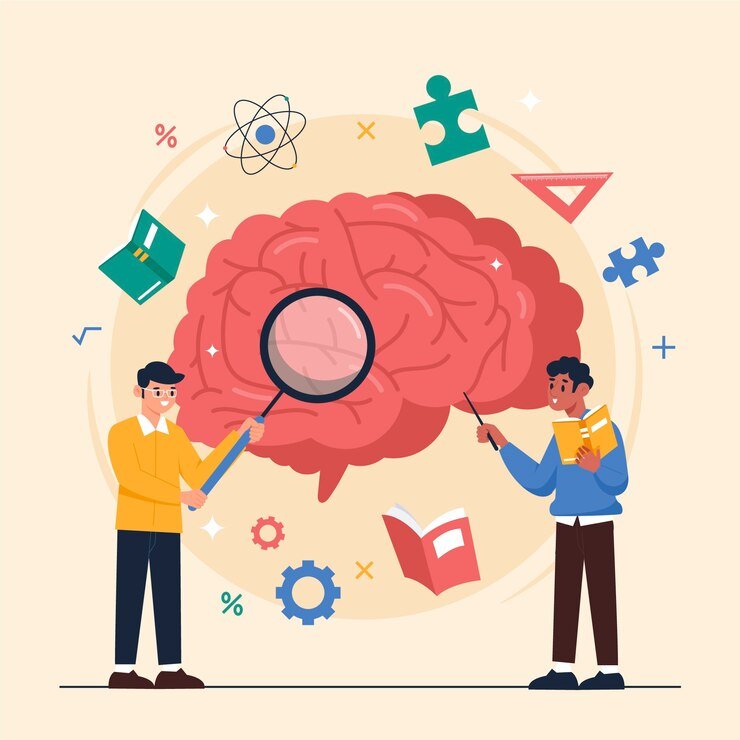
When most people think of educational psychology, they often confuse it with developmental psychology. This is another branch of psychology, which will be covered in Module 6. This is because most associate educational psychology with child development. While this is not necessarily wrong, it does somewhat limit what this branch of psychology is really all about.
Educational psychology is focused on human learning of all ages. More specifically, it is the scientific study and understanding of the learning processes, including both cognitive and behavioural aspects of learning. Therefore, it is not just about children, but how humans learn over the course of their lifetime.
It is about how an individual, or even a group of individuals, learns information and retains that knowledge. The basis of these studies, and their findings, usually involves the employment of methods using memory and cognitive processes to better understand how the learning process works. There are aspects of educational psychology that do mainly handle research surrounding how students learn and how teachers influence their ability to learn, but this is only one component of the discipline.
Other topics frequently researched within educational psychology include student outcomes and success rates, learning differences between one individual and another, the instructional process, and learners viewed as either having a learning disability or who are considered as gifted. Psychologists working in the field of educational psychological research tend to focus their studies on the social, emotional and cognitive processes that are involved in understanding and developing the learning processes. The findings from studies within this branch of psychology are usually geared towards trying to find better methods to improve learning and knowledge retention.
4.3 The History of Educational Psychology

Like the other psychologies covered in this course, educational psychology began from philosophical concepts debated over centuries.
These philosophical figures included Aristotle and Plato, John Locke and several others. However, the history of educational psychology is somewhat sparse. This is partly because most of its historical significance is intertwined with the other branches of psychology; especially that of cognitive psychology.
The golden era
The years between 1890 and 1920 are considered to be the Golden Era of educational psychology. The reason for this is that not long before 1890, and continuing through to the 1920s, approximately 37 million people moved to the United States of America. As a result, there was a dramatic need to provide education to the children of these newly immigrated families. There was also a considerable need to build schools, as well.
With the emphasis on providing education to so many people in a historically short period of time, researchers began to understand and test the best ways to provide education. Curriculum development was considered, as well as how the student-teacher relationship influenced the success of the students. Thus, began the formal beginnings of educational psychology. It was also during this time that the scientific method first made an appearance within the application of the studies conducted in education development, and educational psychology.
This meant that studies could be carried out within a classroom, rather than in a lab, as had previously been the case. However, it is important to note that other researchers had used classroom studies to develop this discipline prior to the Golden Era; they just were not as widely applied.
After the golden era
As a direct result of the Golden Era's emphasis on improving the learning process, the number of people that were on the receiving end of a high school diploma and higher rose signiifcantly. This was especially true between the 1920s and 60s. Part of the reason for this, was the low employment rate for young people. Because of this difficulty in finding employment, education became an alternative to work. The rest of educational psychology follows along with that of the cognitive branch. As much of educational psychology's theories and research processes use similar methodologies and cognitive understandings to develop, it makes sense that these two psychologies would work almost in collaboration with each other.
Fact
A 2012 study indicated that in the United Kingdom, one in two 15-19 year olds no longer attends school, yet one in two young women holds at least one university degree.
Source: OECD 2014
4.4 Key Founders
When it comes to educational psychology, and particularly its history, it is interesting how little seems to be thought of as part of it. Much of the research and questions about learning processes and attitudes were looked at in great detail well before the Golden Era occurred. This section will look at several of these important figures to educational psychology.
Johann Herbart
Dating back all the way to the 18th century, Johann Herbart (1776-1841) is the founding father of educational psychology. He believed that learning was influenced by the students' interest of a given topic, as well as how the teacher delivered the material. Herbart also believed that teachers needed to build on what a student already knew. In other words, introducing new material that built from their previous teachings, rather than skipping the details from one concept to the next.
Alfred Binet
Alfred Binet (1857-1911) was the first to really apply experimental research methods in both the laboratory and within a classroom. Binet used these studies to understand how children with developmental issues could be distinguished from the other students. A study in 1904 is frequently referenced in developmental studies related to educational psychology. Binet also felt it was important to study the differences in learning uptake between and within age groups. He also stressed that teachers were accountable for identifying and teaching to the individual learning strengths of their students.
John Dewey
John Dewey (1859-1952) is widely recognised for his practical and social beliefs surrounding education. He was a proponent for curriculum that was practical in nature, and for which could be employed outside of the traditional school setting. He strongly believed that a classroom was a tool to help prepare students to become good citizens outside of school, while also facilitating a space for creative intelligence. To Dewey, education was about bringing people together through the social experiences within the classroom.
B.F. Skinner
Another influencer of educational psychology is B.F. Skinner (1904-1999). His contributions are linked throughout several branches of psychology, including that of educational. He spent most of his career studying behaviourism, and was frequently referred to as a radical behaviourist. His works included research on operant conditioning and schedules of reinforcement. But related more specifically to educational psychology, he was a firm believer that human actions were not individual in nature, but rather that they were directly related to human conditioning.
Benjamin Bloom
Benjamin Bloom (1913-1999) is the father of the educational taxonomy. This is a web of concepts that indicates the various educational objectives, using three primary domains - affective (emotions), cognitive (how an individual thinks), and psychomotor (the development of motor skills, as well as coordination and movement). The taxonomy works much like that of species taxonomy, only it relates to educational processes and learning outcomes. In addition to this taxonomy, Bloom was known for his belief that all students - therefore all humans - can learn.
Jerome Bruner
The final educational psychologist to be discussed in this module is Jerome Bruner (1915-2016). He believed that the structure of a subject and content delivery was more important in relation to a student's ability to learn He felt that was the primary objective of a teacher - to structure the curriculum in such a way that their students can easily learn and retain the information taught. Bruner was also an advocate for discover learning. This concept encourages a learning environment filled with problem solving opportunities that emphasises the students' capacity to question what they are being taught through exploration and experimentation.
4.5 The Four Perspectives

Within educational psychology there are four dominant perspectives that are used when applying research findings to the development of better learning outcomes. These perspectives shape the four viewpoints of how learning occurs. Each of these perspectives - behavioural, cognitive, constructivist, and developmental - will be explored below.
Behavioural
The behavioural perspective is based on applied behavioural analysis. It posits that all human behaviours are learned through processes of conditioning. This is the same belief that B.F. Skinner put forward, as was noted in the previous section. Operant conditioning, which will be outlined in the following section, is one of the basic principles within the behavioural perspective. It is a research-based scientific approach to understanding learning behaviours, which looks at the influence of reward over motivation.
For example:
A teacher who uses a reward system, such as gold stars, or stickers to track good behaviour, is an example of this perspective. Under the behavioural perspective, the teacher will be successful at altering their students' behaviour using this reward system, as the students will become focused on performing the desired action to receive the reward. This aspect of reward-based learning has been challenged over time. Those who oppose this methodology argue that the intrinsic motivation - or the natural desire to perform well - is increased when a reward is used to alter a behaviour. The belief is that when the reward is removed, the students may not actually follow through with the desired, new behaviour since they are no longer being rewarded. Several studies have been conducted showing the beneβits of both perspectives, although none prove that one is necessarily better than the other.
Cognitive
The contrasting perspective to behavioural is that of the cognitive. This second perspective is also better regarded when compared with the previous one. The cognitive perspective works by using the cognitive processes involved with learning. It uses related mental constructs, such as an individual's beliefs, emotions, memory, motivations, and other traits to develop the best learning platform for that same individual, or age group.
As noted in the previous module on cognitive psychology, memory is often used to understand how information is funnelled into the brain. This involves how an individual might perceive the given information, how they process and store it, and how this same knowledge is either retrieved at a later time or is ultimately forgotten. This perspective formulates the basis of the spaced learning effect, which was also mentioned in Module 3. This is the concept that learning is best when information is provided to an individual over a specific length of time, rather than receiving all the information at once.
Aside from memory, the cognitive perspective stresses that problem solving is fundamental to the learning process. It states that the inclusion of problem solving within curriculum helps to build the capacity to learn throughout life, including outside of a formal education institution.
Fact
The number of neurons a child has increases when they engage in play-activities with blocks.
Source: The Wisdom of Play, 2016
Constructivist
The next perspective is the constructivist perspective. This is one of the most recently developed theories related to learning. This perspective focuses on how children, or learners more generally, develop their understanding of the world around them. In the constructivist perspective, there is an emphasis placed on the agency and prior knowledge of the learner. It uses their previous experiences
to build knowledge of a particular topic. The work of Johann Herbart stressed this same ideology.
The constructivist perspective also focuses heavily on the social and cultural aspects of the learning process. It looks at how these determinants influence how the student learns. When this has been established it is possible to apply these learnings to the ways in which material is taught to specific groups that identify within the targeted groups.
Developmental
The developmental perspective is the fourth and final of the educational psychological perspectives. It seeks to understand how a person changes - or learns, in this case - over their individual lifetime. It also indicates how new skills and knowledge are obtained by a student, typically a child, throughout their developmental stages. This perspective mixes well with theories found within the developmental branch of psychology, which will be the focus of Module 6.
4.6 The Main Theories and Concepts of Educational Psychology

There are many theories and concepts that are applied to educational psychology. This section will focus on the five most prominent. A few of these theories, such as constructivism and information processing have been mentioned previously, either within this module or the previous ones. But there is also functionalism, operant conditioning, and structuralism, which will also be examined throughout this section.
Constructivism
Constructivism is the concept that follows under the constructivist perspective. It helps to understand how people learn, and how they construct their individual interpretation of a certain topic, or the world around them. It is about how a person experiences something and their reflections of those same experiences. As noted in the previous section, the constructivist perspective is about how an individual creates their own knowledge base about their surrounding environment.
This approach works by tapping into the brain processes that reconcile new information with pre- existing knowledge or experiences. This process of reconciliation, between the new and the old, results in one of two outcomes - changing what was previously thought to be the truth, or discarding the newly discovered information altogether, since the learner believes this new information is irrelevant to their understanding of the world.
Teachers who use the constructivist methodology task their students with accessing the purpose and/or benefit of course material. In other words, students must critique how a particular activity is helping them to learn or gain a new awareness of the same topic.
Functionalism
Functionalism is a psychological philosophy that looks at the link between one's mental and behavioural processes in relation to the active variation of the individual's surroundings. It posits that mental states - beliefs, desires, and any other ideologies about their environment - are established by their functional role. These mental states are affected by other mental states, such as sensory or behavioural outputs, which infuences an individual's ability to learn. Functionalism fundamentally opposes structuralism, which will be touched on later in this section.
Information processing
Information processing is the second concept which has been previously explored in relation to another branch of psychology. It works within the school of cognitive psychology, which is partly based off a computer processing methodology. It suggests that the human brain functions in the same way as a computer mainframe. The human-computer analogy works by noting that computers receive input (data or other information), processes it, and then delivers an output in the same way that the human brain does.
The concept of information processing as it relates to educational psychology focuses on memory processes and retrieval, and acts as a mechanism that boosts the learning processes. Information processing also opposes the behaviourist model. This is because information processing seeks to understand how an individual learns through motivation, or other influencing factors, whereas the behaviourist perspective argues that one does not learn, but only responds to a situation based on the reward association or societal conditioning.
Operant conditioning
Operant conditioning, another concept put forth by B.F. Skinner, is the study of consequence-based behavioural change. It looks at how consequences affect how an individual will behave, or change their behaviour, over a specific time period. The main thought process behind this theory is that depending on the severity of the consequence, the desired behavioural outcome will be applied more readily than if the potential penalty were to be less severe.
An example of operant conditioning:
Training a house pet, such as a dog, to project certain behaviours. This is a relevant example, as operant conditioning was not originally tested on humans, but rather on animals.
Activity 1: Understanding Operant Conditioning
Estimated time: 1 hour
To complete this activity, you will need to gather a group of people (minimum of 5 people, excluding yourself). Once you have your group in place, select two group members and ask them to leave the room. It is important that they are unable to overhear the discussion that will follow between you and the remaining group members.
When the two individuals have left, you will begin to explain to the group that each of the two people will return to the room, one at a time, and must perform a specific task using either positive or negative reinforcement to get them to complete the task. This can be any action or activity, but for ease of activity and time considerations, it may be best to have the individuals move to a certain part of the room, which will be predetermined before they return to the group.
The first person to come back will only be able to rely on positive reinforcement. Clapping works best for this portion of the activity. The second person will be instructed using negative reinforcement, such as booing. It is important to note that no verbal instructions may be given to either of the returning group members.
Following the activity, have a discussion with the group about the exercise. Questions that could be used to start the discussion include:
Did the clapping or booing garner more efficient results?
Why do you think that is?
What was the most difficult aspect of completing the task?
How do you think the removal of verbal instruction impacted the ability of either person to complete the task?
What other examples can you provide to show how this is used in everyday life?
Structuralism
Lastly we look at the theory that is most opposite of functionalism - structuralism. The theory behind structuralism is that structure, itself, is more important than function. It uses a method of interpretation and analysis that attempts to understand the influence of human cognition, behaviour, and culture in the context of an individual's experiences. Structuralism is focused on the contrasting relationships related to conceptual systems. In other words, the structure of learning, or the way in which information is passed from teacher to student is more significant to learning uptake, than the functional role of learning.
4.7 Controversies in Educational Psychology

One of the interesting facets of educational psychology, is that there are a number of aspects that are continually under scrutiny by practicing psychologists. This section will cover five of the most commonly challenged views of learning processes within the discipline, including ability differences, the expectations of educators, the best way to learn to read, the necessity of testing, and the meaning of intelligence.
Ability differences
Dealing with below average students has been a controversial component of the education system. There are two schools of thought concerning this topic. The first is that students should be kept with their peer group, regardless of performance. The second argues that students that do not meet the standards set out for a particular grade level should be held back until they successfully complete the curriculum.
The arguments for both sides of this debate have their strengths and weaknesses. On the one hand students tend to perform better when they are with their age group. On the other hand, students that are falling behind can sometimes hinder the performance of top, or even average, level students. To date, there is no conclusive evidence that one is better than the other. This debate continues to be argued.
Expectations of educators and the profession
This controversy relates mostly to the ever-changing influence of newly discovered or adapted technologies. While most do help in the learning process, it places a lot of unwanted pressure on those employed within the profession. Keeping up with these new technologies can be challenging, and expensive. Just like ability differences, there is no fully agreed upon decision about the best practices of technology advancement as a function of educational psychology.
Learning to read
Learning to read is one of the first things children are taught within the formalised education system. There are different methods of teaching this skill, but two tend to be at the forefront of the debate on this topic; code-based and meaning-based. The code-based approach uses skills such as phonetics to relate specific letters to a sound. Those sounds are then matched to a word, which is the basis of how this approach teaches children to read.
The opposing approach, meaning-based, uses the meaning of a text to teach reading skills. Other names for the latter approach include whole-language, emergent literacy, or literature-based learning. Of these two schools of thought, it is believed that whole language, or the meaning-based approach, is the best method for teaching students in the preschool and nursery ages.
The argument for this belief is that it helps to improve the child's interest, and therefore their motivation, to learn how to read. The application of meaning-based learning methods helps the child to understand the purpose of reading. Phonetic learning, alternatively, is believed to be the best method for teaching older students to read. It is also thought that awareness of phonetics in younger years is a predicative tool used to identify the student's literacy rate later in life.
Activity 2: Understanding Constructivism Through Compound Reading
Estimated time: 30 minutes
Place the words found within the list below onto index cards, or any other type of paper, so that the first half of the word is on one card, and the other half is on a second card. An additional card with the word 'CONJURE' should be placed within the pile of cards. When all the cards have been prepared, gather a small group of children (approximately, but no less than 3).
Deal out all the cards (which should have been shuffled before time of play) to the children. Each child should look at their cards and attempt to match the ones they can. After all the initial matching cards have been removed from each of the children's hands, select one
child to start (the shortest, youngest, etc.), by selecting a card from the hand of the person to their right. If the selected card matches one of their existing cards, they may put it down; otherwise it must remain in their hand.
Then the player to the right takes a card from the person on their right, and this continues until the only remaining card is the one that reads “CONJURE”. The person that is left with this card, must then either provide the meaning of the words they havematched, or put these compounds into sentences.
After the activity - reflect on how it went:
Were some words easier than others?
Did any patterns emerge?
How do you think this could be done differently?
How did this activity change the way you viewed code-based versus meaning-based applications of learning to read?
Note: If no children are available you could alternatively test this out on adults, it just will not have the same learning significance.
Word bank:
Snowflake Treehouse Downstairs Sidewalk
Cookbook Background Upstairs Baseball
Playground Flowerpot Watermelon Candlestick
Dollhouse Railroad Cupboard
The necessity of testing
Another controversy that seems to reappear over time is surrounding the topic of testing; particularly that of standardised testing. Those in favour of testing students as a determinant of knowledge retention argue that the information provided through testing is useful, even if the success rate is not high. This same way of thinking suggests that testing is the best way to determine if teaching is an effective method of evaluating whether students have learned the curriculum outcomes or not.
The opposing argument in this debate is that standardised testing does not provide an accurate portrayal of student learning. This is believed to be the result of the many factors that can influence an individual's performance, such as weather, personal issues, and even test anxiety. There is also an argument that formalised testing is not applicable in the real world, therefore it is a redundant exercise.
However, the greatest critique is that standardised testing asks students to answer questions about things they may not have been taught within their curriculum for one reason or another. When this takes place, it cannot accurately measure the level of knowledge retention.
The meaning of 'intelligence'
Perhaps the biggest controversy within the realm of educational psychology is the debate over what, exactly, intelligence refers to. Over the years, this debate has been restricted to three criterions for assessing intelligence. These three measures include, the ability of an individual to adapt to new situations and environments, the capacity to learn, and the overall knowledge acquired by an individual.
Bookbag Farmhouse Storybook
Bedroom Birdhouse Doghouse
Driveway Backyard Ladybird
4.7 Educational Psychology Methodologies
.jpg)
Conducting research within educational psychology is somewhat limiting in terms of the methodologies that can be applied. This is because theoretical studies do not always provide accurate findings, but also, the ease of conducting practical research is far more applicable in educational psychology than in other branches.
With this in mind, there are two widely used methodologies within this field of research - quantitative and observation. A lesser used one, which was used more readily in the earlier stages of educational psychology, was lab testing.
Quantitative research methods involve measurable findings. These findings can be acquired through numerous methods, such as surveys, and other forms of numerical analysis. In other words, the evidence that stems from quantitative findings must be tangible in nature. Observation, similarly, is the process of obtaining data by witnessing a data set - in this case a classroom - to understand a problem or research topic.
MODULE SUMMARY
The module covered the educational branch of psychology. It began by providing a definition of the discipline, which answered questions about what it is, how it works, and the typical areas of research conducted within the field. It then briefly covered the history of educational psychology, with a focus on the Golden Era, which was followed by a section that covered the key influencers of this discipline.
Later, the four perspectives of psychology - behavioural, cognitive, constructivist, and developmental - were outlined, which provided an understanding of the main ideologies behind educational psychology. Five theories where then explored, including constructivism, functionalism, information processing, operant conditioning and structuralism.
Several of the current controversies within this practice were then provided with details on the various sides to each debate. The module concluded by examining the two most widely used methodologies for conducting educational research - quantitative and observation, as well as a third lesser used one, namely lab testing.
The completion of this module should provide a working understanding of educational psychology, how it differs from the previous two forms covered, and how it is applied. The controversies outlined should also be readily understood to gain an understanding about the challenges facing this important field of study.
.svg)



