
3.1 Introduction

Understanding how the human brain functions has been at the basis of countless research studies.
Until recently, uncovering this phenomenon has been relatively unknown, making it even more
inviting to expand knowledge in this ϐield. Cognitive psychology is the branch of psychology that deals with these brain functions, and is the focus of Module 3.
Providing a definition of cognitive psychology will open this module before delving into such topics as the history and key contributors of the discipline, the processes involved in cognitive functions, the strengths and weaknesses of this area, and how it is applied in the real world.
3.2 What is Cognitive Psychology?

Cognitive psychology is the scientific practice of understanding how
the mind processes information.
This branch of psychology is often compared to computer processing, as a means of understanding specific brain functions. It uses information processes - or mental processes - to understand
behaviours and how the brain works.
Some of these mental processes are perception, memory, reasoning and problem solving. These
processes will be explored in more detail later in the module.
Cognitive psychology employs a reductionist approach to its research. This means that all human behaviours can be reduced to a single cognitive process. By using cognitive psychology to
understand these processes, it becomes easier to identify how they work and how humans are
impacted by them.
There are several assumptions in cognitive psychological research. These assumptions include: that information from and/or about a surrounding environment is processed using several processing systems; these same systems convert this information in various systemic ways; and behaviour is controlled by an individual's thought processes, not genetic factors and is explained through how one responds to external stimuli.
Fact
Short-term memory only lasts between 15 to 30 seconds
Source: Peterson and Peterson 1959
3.3 The Origins of Cognitive Psychology/History

The evolution of cognitive psychology is quite different from that of social psychology, covered in the previous module.
With other disciplines taking the spotlight away from cognitive psychology, it made its promotion and research difficult, at times, for practitioners.
This section will cover the history of this branch of psychology in four sections: pre-Revolution, the Cognitive Revolution, post-Revolution, and modern contributions.
Pre-revolution
Just as in social psychology, Plato plays a role in the development of cognitive psychology, as well. In 387 BCE, he implied that mental processes were formed within the brain. This was followed by
philosopher, René Descartes, in 1637 that humans were born with intrinsic thoughts, which led to much debate between other philosophers until the latter part of the 19th century.
The history of cognitive psychology is fairly limited after that, until the Cognitive Revolution. This was due to the emphasis on behaviourism (the study of observable versus objective behaviours,
without concern of the mental processes involved). This period ran from the 1920s to the 1950s.
But in 1948, two individuals added to the discipline:
Norbert Wiener (who introduced the concept of
input and output), and Edward Tolman (who conducted studies related to cognitive maps, usually involving rats as a means of explaining animal behaviour).
The cognitive revolution
The cognitive revolution is the period, which began in the 1950s, that brought about the focus on cognitive processes in terms of psychology. Numerous researchers from differing research
backgrounds came together to develop theories that were based on computer-type processes and complex representations.
Aside from this meeting collaboration between disciplines, it is believed there are threefactors that influenced the change in focus from behaviourism to cognitive psychology,which include:
The need to understand how humans would perform during WWII following the introduction of new warfare technology
The development of the field of computer science
A critique of behaviourism towards the end of the 1950s, which was led by Noam Chomsky (1928- )
Even with these inϐluencing factors, there is still some debate over who is the official Father of
cognitive psychology. This debate posits that either George Miller (1920-2012) or Ulric Neisser (1929-2012) is the founding father, because of their works related to cognitive psychology, which were
popular at the time of the revolution. Miller and Neisser's names have been put forth due to the
works they have contributed to the field. Miller is best known for uncovering the “7 Plus, Minus 2” understanding of cognitive approaches, which make up the basis of his 1956 text.
Neisser, on the other hand, published a text over a decade later, in 1967, entitled “Cognitive Psychology” and was widely regarded for his advocacy work related to the importance of applying ecological approaches within cognitive research. However, in modern texts, it appears that Neisser is more readily
recognised than Miller.
Post-revolution
Following the immediate period after the Revolution, several contributions were put forth within the discipline.
In 1960, with the support of Jerome Bruner, Miller founded the Centre for Cognitive Studies at
Harvard University. This was the ϐirst research centre of the sort for cognitive psychology.
Interestingly, this is not often recognised as part of the bid to see Miller as the founder of the
cognitive psychology.
Allen Newell (1927-1992) and Herbert Simon (1916-2001) are also notable contributors to the history of cognitive psychology.
In 1960, they were credited with the development of the General Problem
Solver. This was a form of artiϐicial intelligence (AI) that was developed with the sole purpose of
becoming the ϐirst universal problem solver. While this was not made possible, the AI was
able to solve simpler, formula-based problems. Solving real-world problems, however, was not a
successful outcome of the project. But, this was an important contribution, as it helped to develop the understanding the link between human problem solving processes and that of computer
programming.
Modern contributions
There have been several studies since the most recent run of the century which have contributed to the ϐield of cognitive psychology. The most notable of these works is a study conducted in 2006 by Jonathan Haidt on the topic of intuition and reasoning as a dual process of cognition. This study has been carried forward by Daniel Kahneman in 2011.
3.4 Key Founders
There are many recognised significant contributors to the field of cognitive psychology.Some of these individuals have been mentioned in the previous section. This section will highlight some of the others.
Paul Broca and Carl Wernicke
Paul Broca (1824-1880) and Carl Wernicke (1848-1905) have largely contributed to the area of
language.
Broca is the individual responsible for discovering the part of the brain that is responsible for
language production. This discovery was realised within his extensive research on the frontal lobe of the brain. His influence in this area is so significant, that this area of the brain has been named after him.
Wernicke's research, on the other hand, focused on language comprehension, as he is regarded as the person that discovered this brain function.
Wilhelm Wundt and Edward Titchener
Wilhelm Wundt (1832-1920) spent most of his career studying human cognition. He is widely
recognised for identifying the foundational understanding of the conscious experience within the human brain. He used introspection under what he deemed to be controlled conditions. His main focus was attempting to understand the importance of how the mind is structured, and the higher cognitive processes that happen within it. He emphasised controlled observation within cognitive psychological research.
Under the supervision of Wundt, Edward Titchener (1867-1927) helped to build this research on
structuralism. The combined research was later challenged throughout the 20th century, but is still believed to be a significant contribution to the field of study. Titchener is also known for his studies in empathy and introspection.
Hermann Ebbinghaus
It is difficult to narrow down one thing that Hermann Ebbinghaus (1850-1909) has contributed to cognitive psychology.
Ebbinghaus is regarded as the pioneer of the experimental study of memory.
His main discoveries include the forgetting curve - how memory retention declines over time - and the spacing effect - the theory that learning outcomes are improved when spaced out over a period of time. He is also recognised as the first person to write about the learning curve.
Jean Piaget
The final contributor to be noted is Jean Piaget (1896-1980). Piaget played a significant role from the 1920s to 50s. He thoroughly studied human thoughts and language. He is also recognised for his contributions to the understanding of both adult and child intelligence.
3.5.The Processes of Cognitive Psychology

Cognitive psychology works by understanding the mental processes that retrieve, identify and act upon information obtained within a speciϐic context.
There are numerous information processes that help to explain these behaviours. This section will focus on these mental processes in more detail, including attention, consciousness, language,
learning, memory, metacognition, perception, problem solving, reasoning and thinking/concept
formation.
Attention
In cognitive psychological terms, attention refers to the process of selecting one set of information over others to focus on. Everyday people are overwhelmed by massive amounts of information - from marketing campaigns, to news stories, and everything in between. Attention helps to lessen the
burden of information overload, by focusing on one, or a specific, more limited, selection of
information. The processes that help to limit this information focus on relevant data. When more than one data set is within the focal point of an individual, this is called divided attention.
Attention can be both visual and auditory.
Concept formation
Also referred to as thinking, concept formation is about how an individual organises information, such as perceptions or experiences, into relevant categories. Concepts at the specific categories that have been developed to offer input related to how to react under certain circumstances over others. Each concept presents a general idea about the event or item in question. They also create relational ties between other events or ideas, which are used to decipher how each concept should be read or
handled.
Consciousness
Consciousness refers to an awareness of things such as thoughts, feelings, and even memories. They tend to be ever-changing, which has been the focal point of research in this area. However, despite this constantly shifting awareness, these passing thoughts, feelings and memories are ϐluid to the point that one rarely notices when they change; meaning without the detailed awareness to register when things begin to change from one thought to another, for example.
Language
Noting 'language' as a mental process in cognitive psychology is fairly broad in scope. More often than not, within this discipline, language refers more specifically to the acquisition of language, or language processing. This means the processes that are required for an individual to grasp and
eventually utilize a language.
Research in this area began as early as 1870, but cognitive
psychologists continue to study these processes.
The older an individual, the more difficult it becomes for them to learn a new language. This is
generally the basis for emphasising the importance of teaching languages to children of an early age. This is because the mental processes that are required to obtain all information required to
learn a new language are at their highest during childhood development.
Fact
There are more than 7000 languages spoken all over the world and more than half have no written form.
Source: Kaplan International 2016
Learning
Learning - as a function of cognitive psychology - is exactly as it sounds. It is the process by which an individual obtains new information, as well as how they use said information. Studies in this ϐield focus more so on how information is obtained and the circumstances for which the information was acquired. This helps to understand how an individual learns, and what conditions are required for ideal learning opportunities. It is through studies surrounding this mental process, that different
learning preferences have been identified. These differences include hands-on, visual, and auditory approaches.
Memory
Recalling a specific event or happenstance is what is known as memory. The study of memory
involves identifying how information is obtained, stored, and then later retrieved within the brain. There are two forms of memory - working memory and long-term memory.
Working memory is often referred to as short-term memory. It is the process of recalling details of recent happenings, and in the presence of distraction. Most of what is studied in cognitive
psychology as it pertains to memory is focused on working memory.
Long term memory, on the other hand, is stored information related to events that have taken place longer than the immediate. There are three subcategories of long-term memory: procedural
(memories related to the performance of a specific action), semantic (recall of facts and figures, or statistics), and episodic (autobiographical events).
Activity 1: Test your short-term memory
Estimated time: 5 minutes
Below you will find a list of 25 words. Spend two minutes observing and memorising them. When the two minutes are up, hide the list and write down all the words you can remember. After you have completed the exercise, take a few moments to reflect on the activity. How many were you able to remember?
If you were to repeat the activity having only 1 minute, 5 minutes and 10 minutes, do you think the results would be different?
Was there a theme for the words you could remember?
Pants Blue Rabbit Mug Five
Metacognition
Metacognition are the thoughts related to one's own thoughts. They consist of five different
manifestations - cryptomnesia, déjà vu, false-fame effect, imagination inϐlation, and the validity
effect.
Cryptomnesia is the phenomenon of generating seemingly unique thoughts that are nothing more than the recall of a past memory.
This is often referred to as unconscious plagiarism.
Déjà vu occurs when an individual believes that a current experience has already been lived. It
literally translates from French as already seen which explains this feeling of a repeated scenario.
The occurrence of the false fame effect happens when a non-famous name is made to be one that is famous. It is caused when a name sounds familiar, even if the individual does not know (of) the
individual in question. Older names are more likely to fall victim to the false fame effect, than others.
Activity 2:
False-fame Effect
Estimated time: 15 minutes
To complete this activity, you will need to find a partner.
Write down the names of famous people and non-famous people (preferably that the individual does Dog Yellow Two Fork
Spoon Three Blouse Cat
Seven Socks Knife Orange
Pink Snake One Underwear
Sweater Plate Black Turtle
not know). Present each of the names so that the participant can view them all.
The names of famous people should only appear once within this activity, whereas the non-famous names can be shown once, four times, or if you choose, never. Once you have gone through enough names, 'end' the
activity.
You can then choose to start a conversation on something unrelated or have them come back to the activity at another time. Ideally giving a full day works best. No matter the time you give between the initial activity and the test, have the participant come back. Show the names again, including any you had not shown previously.
If done correctly, they are likely to identify names that only appeared once as being more famous than those who were not shown at all or those that were shown four times.
Following the activity,spend a few moments to reϐlect on what took place.
Were they successful?
Did they figure out any patterns along the way?
How do you think you could have done it differently, if at all?
Are you able to see how the false-fame effect can happen in real-life?
Can you recall a time that you may have been affected?
Imagination inϐlation
Imagination inϐlation happens when an individual believes that an event has taken place, when it, in fact, has not.
The more the individual believes they are correct, the more confidence they appear to have that it did. This is manifested frequently when adults attempt to recall an event from their
childhood; usually born out of a pressure to fit in with a group of people.
Similar to imagination inflation, the validity effect occurs when a statement is repeated frequently enough that the individual hearing it begins to believe it is true.
This manifestation validates a claim based solely on the number of times a person has heard a statement that holds no truth. This is made possible because humans tend to believe things they hear repeatedly, even when there is no factual evidence to support it. If the individual does not inquire further into the actual validity of the
statement, their opinion about it will remain unchanged.
Perception
Perception is the act of constructing subjective interpretations of a particular situation or
environment. It encompasses the five senses (sight, sound, smell, taste and touch), as well as one's own perception of how they relate within the context of their surroundings. Simply put, perception is about how one identifies within their physical surroundings.
Recent studies within the realm of perception as a function of cognitive psychology relates to how the senses affect behaviour.
Problem solving
Cognitive psychology deals a lot with problem solving. This is because it is always trying to discover answers, or justiϐications, to a particular action or behaviour. Just like the formation of many studies within this discipline, problem solving as a mental process also seeks to complete a specific task, or to meet an identified goal. In the ϐield of cognitive psychology, the study of problem solving refers to gaining an understanding of the how and why behind human goal-directed behaviours. Using many of the other mental processes, problem solving moves step-by-step from the formation of a goal to its completion.
Reasoning
Reasoning is essentially the study of logic, or at least how an individual ϐinds logic within a situation, or throughout a decision-making process. It is about how an individual assesses a situation, and using their problem-solving skills, decides how to proceed.
The four forms of reasoning in cognitive psychology
There are four forms of reasoning in cognitive psychology: inductive, deductive, abductive and
syllogism.
Inductive reasoning uses broad generalisations to identify the problem, and therefore the solution.
Deductive reasoning begins with an assumption, and through the process of reasoning, rules out the assumptions until there is a valid rationalisation or reason behind the situation or solution.
Abductive reasoning uses the information available to test and develop the evidence made available to the individual as a means of uncovering the truth - or what most closely resembles the truth based on the information available.
Finally, syllogism is a deductive process that requires two statements, which are used to draw a
logical conclusion.
3.6 Strengths and Limitations of Cognitive Psychology

Cognitive psychology has been useful in terms of understanding the many internal processes of everyone.
The development of this discipline has enabled researchers to better grasp how an individual
interacts with the world around them, and what helps to shape certain behaviours. This, of course, presents challenges to the concepts noted throughout this module, but it also has provided
numerous benefits, as well. This section will outline the strengths and weaknesses of cognitive
psychology.
Strengths of cognitive psychology
Cognitive psychology is highly scientific and can easily be combined with other psychological
approaches. These aspects, in conjunction with the many empirical studies which support the
ϐindings of research conducted within this ϐield, only strengthen the discoveries of cognitive
processes.
Aside from the research-applicable components of cognitive psychology, another of its strengths is how applicable it can be in the real-world application. Cognitive psychologists can take on various career paths, such as therapists, child development, and information processing, to name a few. All of this is testimony that cognitive psychology is both well tested and practical.
Limitations of cognitive psychology
Even though the benefits of cognitive psychology noted above are truly positive, there are some
debates over the validity of the discipline's findings. For starters, it is said to ignore biology, not
unlike that of social psychology. Part of this belief is that many of the experiments conducted in this field have a low ecological input, making claims of legitimacy difficult. And although it does boast a scientific approach, the humanist approach frequently rejects the scientific method.
Another challenge to cognitive psychology as it relates to the validity of experimentation is that it is based on behaviourism. While this is not necessarily wrong, it does make it difficult to remain
objective when conducting such studies. This is especially true since unobservable behaviours are usually quite subjective - an aspect that usually strengthens a claim.
3.7 Cognitive Psychology
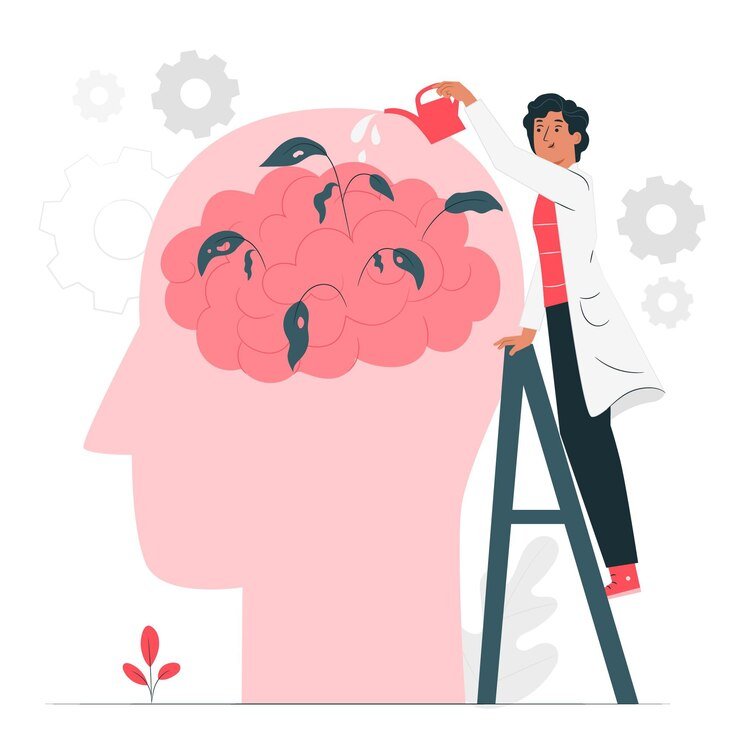
Applied
Now that an overview of cognitive psychology has taken place, and the internal processes have been identified, it is important to understand how this
discipline is applied.
Conducting research in this field relies on several types of research.
These methodologies include the use of case studies and lab experiments.
Lab experiments in
cognitive psychological research have been questioned - as was noted previously - given the
dififculty in validating the findings in the absence of low ecological exposure. Interviews,
observations, and computer modelling are some of the other methods of developing research within this field, as is the employment of memory psychology and introspection (the use of one's own
mental and emotional observations). Knowing how subjective these applications are makes it difϐicultto validate - but not impossible!
MODULE SUMMARY
This module covered the basics of cognitive psychology. This branch of psychology is focused on speciϐic brain functions in relation to human behaviour, including attention and problem-solving, among others. Aside from deϐining cognitive psychology, this module covered the evolution of this discipline, including a list of key contributors.
The Cognitive Revolution was outlined, along with how behaviourism took the focus away for
cognitive psychology.
The debate over who is the actual “father of cognitive psychology” was
touched on citing that Uric Neisser is more widely recognised than George Miller, despite his earlier contributions to the discipline. The processes of cognitive psychology were also outlined, which
included activities which were used to exemplify how a few of these processes - short-term memory and the false-fame effect - worked.
The module concluded by providing a basic understanding of the strengths and weaknesses of the discipline, as well as a brief discussion about research methodologies used within this speciϐic ϐield. Upon completion of this module, a foundational-level of understanding about the origins and theories of cognitive psychology should have been achieved. You should be able to know the differences
between cognitive and social psychology, as well as each of the processes that are used to test this branch of psychology.
.svg)



