
9.1 Introduction
Many people view dyslexia as a
disability, and, in many cases, it can be. However, the great majority of
people who have dyslexia are also quite creative, and some of the best artists,
actors, and writers in the history of the world were/are dyslexic.
In fact, there is such a
connection between dyslexia and creativity that one of the leading universities
in the world, Yale University in the United States, has a Centre for Dyslexia
& Creativity.
Research shows that children who
have dyslexia do not actually think in words, but, instead, they think in
pictures. Thus, often the greatest strength that these students have is their
creative ability. When compared to the average person without dyslexia, most
individuals, but obviously not everyone with this condition, have visual skills
that are quite strong. They have an imagination that is vivid and they have an
intelligence level that is above average. All of this together is what actually
makes a person creative. Additionally, a dyslexic student is generally more apt
to have a better appreciation for tone, colour, and texture and they have a
better grasp of dimension in art. These are people who find it easier to
visualise art before reaching for a paint brush and, since it helps them with
expression, they can write in a way that makes them stand out from the crowd,
even though they may struggle.
This module will focus on the
connection between dyslexia and creativity and how researchers, doctors, and
scientists have come together to make that connection.
9.2 Dyslexia, Creativity, and the Brain
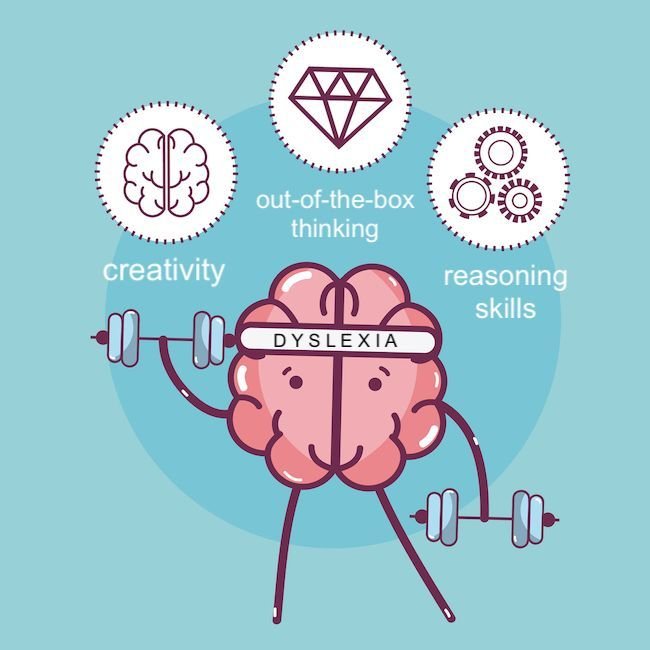
It has been mentioned in this
course that dyslexic students often have difficulties with tasks that are
controlled by the left brain which controls reading, writing and spelling.
However, the right brain of
dyslexic individuals tends to work even better which could be some sort of
over-compensation, according to some researchers. As this side of the brain is
working overtime and it controls creativity, those with dyslexia tend to be
more creative. However, this creates an imbalance in dyslexics.
There is also research that
indicates that some dyslexics have a smaller left side of the brain than right side.
In fact, Albert Einstein, who was
reportedly dyslexic, had a smaller neuron to glia ratio in the left frontal
lobe of his brain, and the right parietal lobes of his brain were 15% wider
than they should have been.
The neurons and glia cells should
be relatively close, but, with Einstein, this was not the case. Given this and
the makeup of his brain, it has been hypothesised that this is why Einstein did
not speak until he was three years old and why he had issues with word
retrieval, a common issue with dyslexics.
To further this point, it is
important to look at diseases that affect the brain, such as aphasia. This is a
neurological disease that affects the left side of the brain and, over time,
erodes the language and speech functions of the brain. What is so interesting
about this is that those who have aphasia often develop new abilities in art
and music or, at the very least, develop more visual-spatial abilities.
There is also a connection
between the back of the brain and creativity. When a person suffers damage to
this part of the brain, they often lose their visual artistic skills. However,
with dyslexia, this area of the brain could be more defined which means that
those who have literacy problems should be encouraged to develop artistic
pursuits, according to some researchers.
Of course, this is an alternative
to over-emphasising the study of reading, maths, and writing, which can cause a
dislike of school and the loss of self-esteem. This theory is a popular one,
and even the Arts Dyslexia Trust, a UK-based charity, suggests that students
known to have dyslexia wait longer to start reading, maths and spelling,
compared to other students, and this is further supported by the British
Dyslexia Association.
FACT
Many children with dyslexia are
highly creative. At the RCA – the world's number one art and design university
– 29 per cent of current students identify themselves as dyslexic, compared to
5–10 percent of the overall population.
Source: Royal College of Art
9.3 Art and Dyslexia
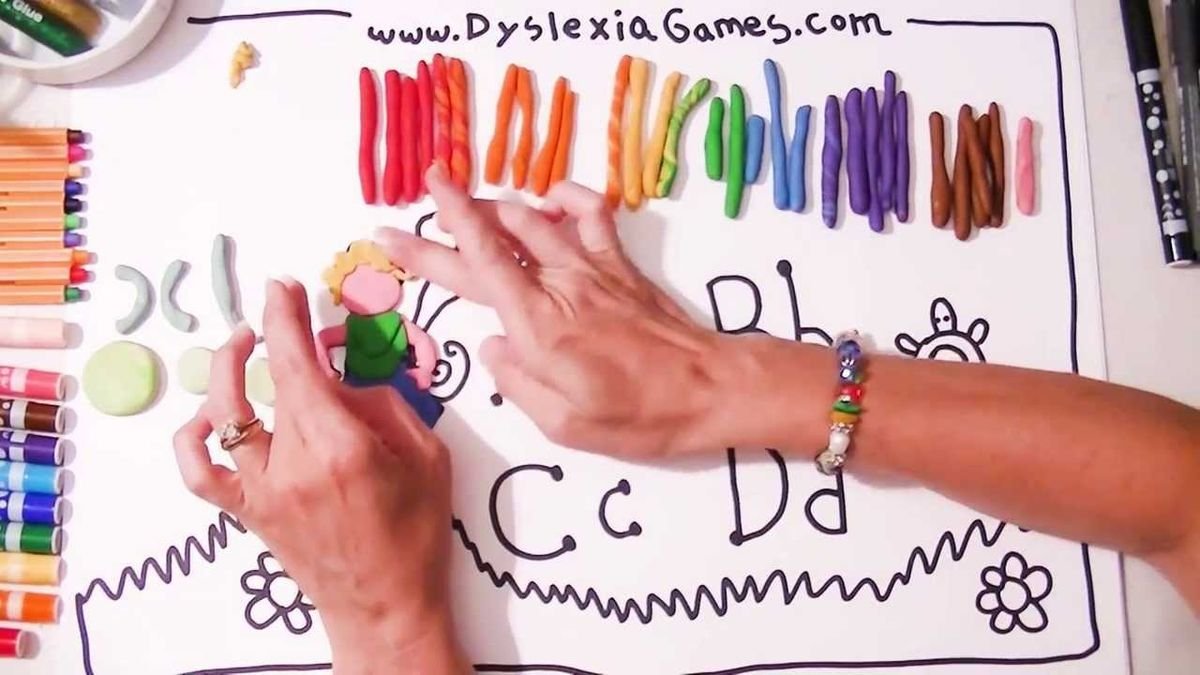
It is not uncommon to meet a
person who struggles with reading, but, when they have a paintbrush or pencil
in their hands, they can create beautiful things.
Similarly, those with dyslexia
often make great architects, as they tend to be able to create and see things
in three-dimensional ways which is something that people without dyslexia
struggle with.
To many people's surprise, you
might also find dyslexics in certain medical fields, such as orthopaedics or
plastic surgery, because they can often picture and see the shape of the bones
and structures of the human body in a different way to others.
This, of course, is similar to
how artists create. It is all to do with the same areas of the brain.
Essentially, it comes down to the way that people visualise the world around
them, and those with dyslexia tend to do this in a different way.
9.4 Music and Dyslexia
Music is another creative
pursuit, but, unlike art, those who have dyslexia may struggle with music due
to its notation. With music, there is a lot of information within a very small
space.
This means that dyslexic people
can become overwhelmed, and it can take them a lot of time to read scores,
especially when reading it for the first time. However, when someone with
dyslexia learns music in other ways, such as composing music or playing by ear,
they can be extremely talented musicians.
However, this can be problematic
in music education as sight-reading is usually part of the grading criteria,
and often examining boards do not want to change the current standards used.
Schools have to change the way in which they teach music to dyslexic students,
and teachers and administrators may work individually with music students and
must take it slow when teaching the reading of music.
There are some things that can
help a dyslexic student learn to read music, even if they have struggled in the
past:
Make the Music Larger
One thing that can help is to
make the music composition larger than it usually is. Just like a dyslexic
person can read words on a page more easily when they are larger, so they can
read notes on a score more easily when they are larger.
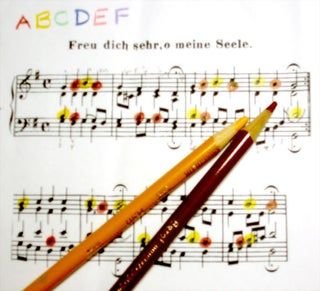
Colour Code the Lines
It can help if the lines of music
are coded with corresponding colours at both the beginning and the end of the
lines. For instance, a music teacher may choose to put a green-coloured mark at
the end of one line and at the beginning of the next, and then alternate that
with a blue-coloured mark. This will help the eye to find the next line.
Create a Readable Stave
Some music students with dyslexia
have difficulty reading the music because there is a lot going on in terms of
lines, spaces, clefs and notes. However, they are easier to see when some parts
of the stave are darker than others. For instance, darkening the mid-line of
the stave can make the eye view the stave more easily and tell exactly where
the note is within the stave. Sometimes, the music itself is illegible, so
doing things like ensuring that the stems are all going in the same direction
can help a dyslexic musician to read the music much more easily.
Make the Music Proportional
It is also important to make sure
that the music to which the dyslexic musician has access is proportional. For
instance, this means making sure that a half note takes up twice as much of the
space as a quarter note. This helps the dyslexic musician to read how the
rhythm should go.
Make Practice Easier
Finally, as the student practises
and learns new things, the instructor should keep the lessons as simple as
possible, even when approaching the advanced syllabus. One way in which to do
this is to go slow and to take each line bar by bar.
There is another issue when it
comes to music and dyslexia. In studies, it was shown that dyslexic musicians
have as good an auditory perception as their non-dyslexic peers, but, when it
comes to auditory memory, they struggle. Auditory memory is the ability to
remember a sound for a very short time, usually only seconds, and those who had
a more serious case of dyslexia had the worst results when they were tested for
auditory memory.
Research like this also tells us
something else. For the decades during which dyslexia has been studied, most
research has been focused on the language centres of the brain, but the results
of these studies show us that researchers should take a closer look at the
areas of the brain connected with memory, especially short-term memory. This
makes a lot of sense as language is connected with sounds, and memory is part
of the process of language.
For instance
If a dyslexic child is learning a
new word, and they cannot remember the sound of the word that they just heard,
they cannot make a connection between the sound, the word and the object about
which they are learning.
9.5 Dyslexia and Creative Writing
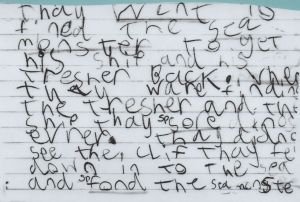
Most people understand that those
with dyslexia will struggle with writing and spelling which are
two traits required to be a successful creative writer.
However, there are many
well-known creative writers who are also known to be dyslexic. The reason for
this is that those who are dyslexic can often see events in a different way to
those who do not have the condition.
For instance
They are able to vividly remember
sensory details which can greatly enhance the written word. However, the
biggest challenge that people with dyslexia have with regards to creative
writing is sequencing.
For instance, in a story,
sequencing is extremely important, and it is the typical order of events that
one would expect to see when reading a story. A dyslexic writer who wants to
write a story can often come up with an excellent idea for the story, but, when
they start to write, they have difficulty writing the events in order. For
instance, the writer knows that they want to write about a woman who makes a
shopping list and goes to the store, but, when he writes it, he might start
with her putting groceries in cabinets and then write about her making the
list. Of course, this can be very difficult for a reader to understand.
Fortunately, there are a number
of ways that a teacher, parents or other instructor can help someone with
dyslexia learn to write better:
Encourage Emotional Engagement
One way to help a student who
struggles with creative writing is to help them to become emotionally engaged.
This way, the instructor is ensured that the child has a strong interest in the
work, and they will see in their mind a full colour, moving picture of what
they are creating. They should also care about the characters that they create.
Writing is also seen as difficult
for a dyslexic person as it goes beyond sequencing and spelling. For instance,
it can be difficult physically, as it requires fine motor skills and
coordination between the eyes and the hand. It is also a task that requires
organisation, something with which many dyslexic people have difficulty.
It is also a meticulous process,
and, as you may remember from this course, many people with dyslexia also have
conditions such as ADHD. This can cause a lack of concentration or focus. Most
people with dyslexia are excellent oral storytellers, but they must be
encouraged to focus on their writing, and, to do this, they should be
encouraged to emotionally connect with it.
Reward the Writer as they Go
Along
Motivating the writer can also
help, and rewards are an excellent way in which to do this. Remember, for many
people with dyslexia, it is extremely difficult to get their ideas on paper so
rewarding them for a job well done can certainly help.
There are systems available that
are specifically tailored to reward a person who writes, and these can be a
good investment for schools or writing centres that teach multiple students.
Consider Dictation
As those individuals with
dyslexia are often great at coming up with ideas but not as strong when it
comes to writing them down, dictating ideas can work well. This can be done by
dictating to someone else or using a computer programme.
Do not Initially Focus on
Spelling or Grammar
When encouraging a dyslexic
person to engage in creative writing, it is important that they get their ideas
down first and then deal with the grammar and spelling; unless, of course, they
have someone working with them as they write.
As mentioned previously in this
course, when teaching concepts to those individuals who are dyslexic, it is
best to take small steps and not overload the individual with rules. Instead,
it is best to focus efforts on creating the story and then deal with the
mechanics. Once the ideas are down on paper/in a computer, the work can then go
through the editing process.
Allow the Use of Computers
Using a computer to type the
story instead of using a pen or pencil and paper is usually much easier for a
person with dyslexia. This takes some pressure off the individual, especially
if they can learn to be a fast typist. For those who have issues with
sequencing, learning about computer programming can help, and it is an
interesting concept for those with dyslexia, as they often like to know how
things work.
Colours and Illustrations
Using colours and illustrations
during the creative writing process can help someone with dyslexia. For
instance, the writer can look online to find models for characters, objects,
settings or other important parts of their story. Additionally, the writer
might want to create their own illustrations, as we know that many people with
dyslexia are good artists. These illustrations should be easily accessible by
the writer, and, anytime they require help with getting back to a writing task,
they should look at these objects.
Add Music to the Scene
Another way to keep a person with
dyslexia focused on their creative writing is to allow them to play music
whilst they write. However, the music should be appropriate for what they are
writing. For instance, if they are writing a sad love scene, a sentimental love
song is perfect. If they are writing about a villain, they should listen to
music such as the Darth Vader theme from the Star Wars movies. Film-writers do
this all the time so why shouldn't story-writers?
Stop When Tired
When a dyslexic writer begins to
get tired, it is best that they stop. Pushing the writer to create when their
mind is exhausted will only cause them to shut down. Instead, when they get
tired, it is best for them to rest for a
while. Take a walk, draw or collect photos or music for inspiration.
Consider Pairing Up
It can help a dyslexic writer
when they know that someone else knows how they feel. So, if a teacher or
instructor is working with more than one dyslexic student, they may want to
consider partnering up students in pairs and allowing them to work together.
One can take on the burden of writing, and then they can switch roles.
Break it Up
Finally, dyslexic writers should
break up large writing tasks into small, easy to handle tasks. For instance, if
the writer needs to write a story, they should start by making an outline of
points for the plot or create an overview of a character. Alternatively, if a
writer has to write a certain number of words, such as 2000 words, break that
up into 500 word sections. When they have written 500 words, they should take a
short break then go back to it, write another 500 words and so on.
Assignment
Dyslexia and Creativity
Time: 25+ minutes
Now it is time to put what you
have learnt in this Module to the test. Work your way through this worksheet
and do your best to fully participate in every activity set.
Conclusion
Many people who have dyslexia
have a natural leaning towards creative pursuits, due to the strength of the
right side of their brains.
This is the case even when these
creative pursuits, such as music, are more difficult for them. Some types of
art and creativity, such as drawing, come easily to those individuals with
dyslexia, but other pursuits are a bit more difficult, such as creative
writing. However, no matter what creative route a dyslexic person tries to take,
they will find that there are methods, tips and tricks to make learning these
activities much easier.
.svg)



