
7.1 Introduction
As mentioned in a previous
module, although people with dyslexia have trouble with words, there is also
the possibility that they will have trouble with maths.
This condition, which is known as
dyscalculia, is a similar condition to dyslexia but, instead of having severe
difficulties with reading, writing and spelling, these individuals have issues
with maths. Many people, however, still call it maths dyslexia. This module
will give an overview of dyscalculia and explain what treatments and
interventions are in place to improve the condition.
7.2 What is Dyscalculia?

Dyscalculia is a condition that
originates in the brain and makes it difficult for those with the condition to
make sense of maths concepts.
Some people with this condition
cannot grasp the basic concept of numbers, and others can understand the logic
of maths but cannot understand how to apply the knowledge that they have.
Parents who notice that their
children are struggling with maths might be confused, as most children with
dyscalculia do well in other subjects and have no other issue with schoolwork.
Like with dyslexia, dyscalculia
is a lifelong condition, but there are interventions that help to ensure that
children with the condition can live a successful life.
7.3 Difficulties associated with
Dyscalculia
There are a number of
difficulties that are associated with dyscalculia, and different children have
different challenges, the most common of which is referred to as 'number
sense'.
This is defined as the intuitive
understanding of the way in which numbers work, and studies show that even
babies have a sense of numbers. Most researchers believe that number sense is
the core of learning maths, and, if a child does not understand how these
numbers work, learning maths can be frustrating.
Another issue that is associated
with dyscalculia is 'number blindness'. This is when an individual has
difficulty associating numbers with real life situations. In other words, they
cannot understand that the concept of 'four biscuits' is the same number as
'four apples' or 'four tarts'.
7.4 The Commonality of Dyscalculia
Most people have not heard of the
term 'dyscalculia', which may lead to the belief that it is not a common issue.
However, research shows that is
it probably almost as common as dyslexia, and many children with dyslexia also
have dyscalculia. It is thought that it could affect 3-6% of the UK population.
However, researchers have not yet
determined how many people have dyscalculia, and this is generally due to the
fact that there are different criteria used for determining this condition.
Additionally, there is no data bank or grouping of data that researchers can
use.
7.5 The Possible Causes of Dyscalculia
As with dyslexia, researchers do
not know the exact cause of dyscalculia, but they have been able to identify
certain factors; here are some of them:
-Heredity and genes Brain development Environment
- Brain injury
7.6 The Symptoms of Dyscalculia
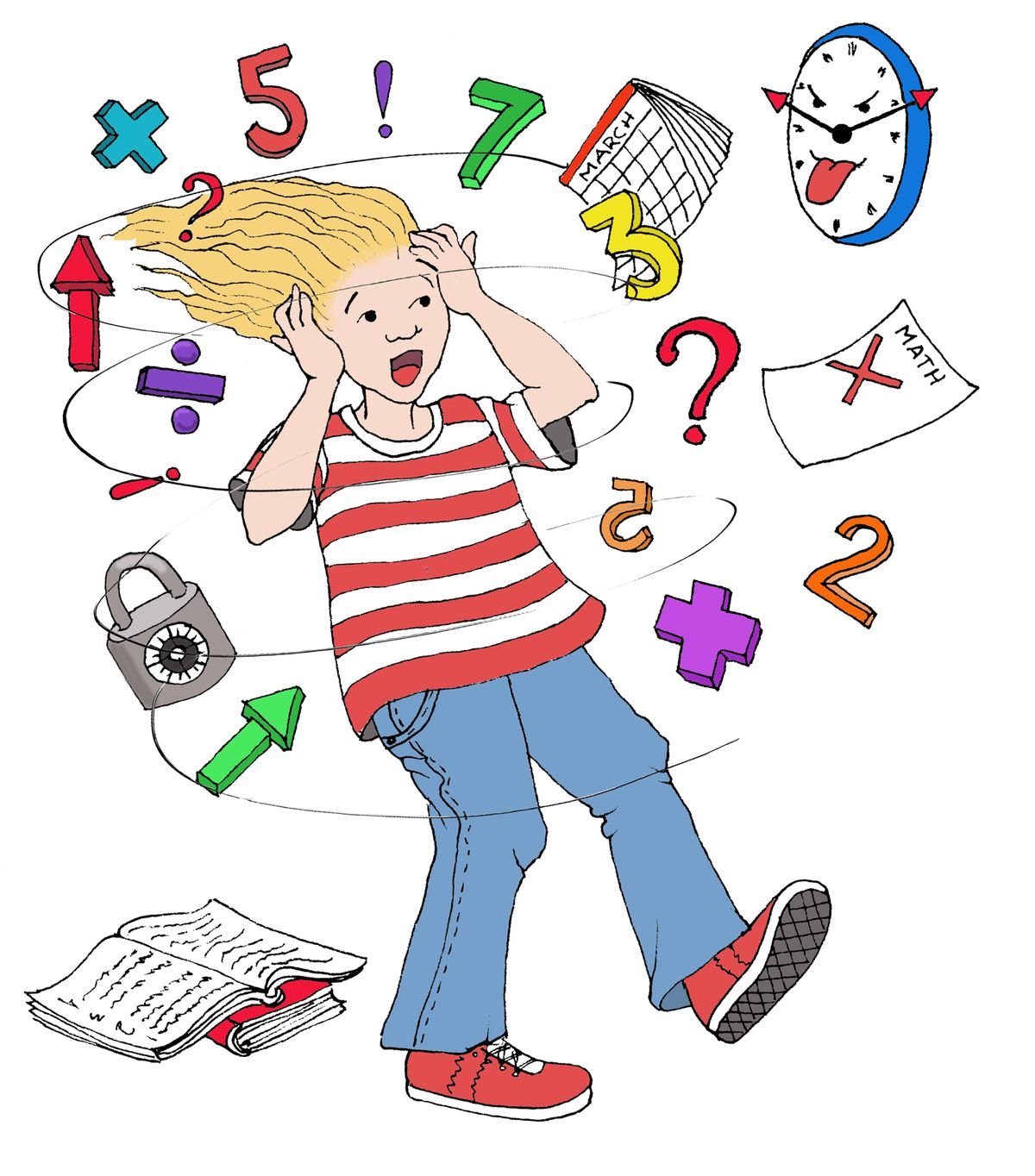
There are many symptoms of
dyscalculia, but people with this condition do not always experience every
symptom and what one person might experience, another person will not.
Additionally, the signs of
dyscalculia differ based on age, and it tends to become more pronounced as a
child gets older. Here are some of the warning signs based on age:
Signs of Dyscalculia in
Preschool/Nursery School/Kindergarten
-Difficulty learning to count
-Difficulty recognising number symbols and
connecting words and numbers, such as '6' and 'six'
-Difficulty associating a number with real
life, such as understanding that the number '3' applies to any group that has
three objects, such as 3 cars, 3 apples or 3 cups
-Difficulty understanding 'place value'
-Difficulty remembering numbers or skipping
numbers when counting
-Difficulty
recognising patterns with numbers
numbers, maths or counting
Signs of Dyscalculia in Primary
School
-Difficulty recalling simple equations, such as
2+3 = 5 Struggling to identify signs,
such as '+' and '-'
-Using fingers to count
-Difficulty writing numbers
-Difficulty coming up with a strategy to solve
maths problems Poor sense of direction
-Unable to remember numerical facts, such as
addresses, postal codes or telephone numbers
Difficulty telling the time
Signs of Dyscalculia in Secondary
School
-Struggling to apply basic maths concepts to
everyday life, such as estimating a cost or giving change
-Difficulty measuring, such as when cooking or
engaged in crafts Getting lost or
struggling with directions
-Difficulty reading charts or graphs
-Struggling to find strategies with which to
solve maths problems
-Lacking in confidence in activities that
require estimating, such as playing a sport or driving
7.7 How Dyscalculia affects Certain Skills

Dyscalculia causes many more
problems than just within the classroom, and most people do not realise how
much we use maths in our everyday lives.
People with dyscalculia will also
be affected in the following ways:
Socially
Having difficulty with maths can
make people have low self-esteem which could affect their social life. Those
people with low self-esteem often have difficulties making friends and living
life to their full potential.
Sense of Direction
Many people with dyscalculia have
difficulty knowing their left from their right, therefore they may have
difficulty reading a map or following directions.
Physical Coordination
Dyscalculia may also affect how
the eyes and brain work together and this could lead to difficulty when judging
distance between objects. This can make a person with this condition clumsier
than other people.
Money Management
Those people with dyscalculia may
find it difficult to budget their money, balance a cheque book or estimate a
cost. The condition may also make it difficult for them to calculate tips and
give change.
Time Management
Dyscalculia may affect a person's
ability to measure time. For instance, they might have difficulty estimating a
minute of time or understanding how much time has passed. They also tend to
have difficulty sticking to a schedule.
7.8 Diagnosing Dyscalculia

Almost all cases of dyscalculia
are diagnosed in early childhood, but since there is less research done on this
condition than with other learning disabilities, it makes identifying the issue
more difficult.
Fortunately, parents and teachers
can make the diagnosis process easier by doing things such as taking notes on
the child's challenges and sharing this information with a doctor or
specialist. There is no specific test that is done for dyscalculia, and,
instead, a diagnosis often involves several steps. These are laid out below:
Step 1 - A Medical Examination
The first step in the diagnosis
of dyscalculia is to see a GP and get an examination for the child, as problems
with maths can indicate other conditions, in addition to dyscalculia.
For instance
It might simply be that the child
was born too early, as premature babies often grow up with learning
disabilities. Additionally, people with ADHD often have issues with maths. If a
doctor can rule out other conditions, the quest to diagnose dyscalculia will
continue.
Step 2 - See a Professional in
Maths Skills
After getting the all-clear from
a GP, the next step is to see a professional who has training in maths skills, such as an Educational
Psychologist. A GP will generally refer children with suspected dyscalculia to
a psychologist; it may be an Educational Psychologist at the local education
authority, at the child's school or a private psychologist.
This person will generally talk
to the parent about the child's challenges and then look at both the school and
medical records.
Additionally, they might ask the
child to do the following:
Count Objects - Asking a child to count
objects, such as dots, will help to gain insight about their number sense.
Count Backwards - A frequent test for
dyscalculia is to ask children to count backwards and to count whilst talking
or writing. This helps the professional to see the association between the way
in which a child uses numbers and how they use words.
Drawing - There are also screening tools that
use drawing to see how a child understands shapes. For instance, if a child is
given a book in the shape of a rectangle but cannot pick out the same book on a
card from a different angle, they could have issues with their visual-spatial
skills.
Observation -The professional will want to
observe the child in the classroom. This is done to see how the child copes
with maths, and their behaviour when working on other subjects. They will also
see how they interact with their classmates.
Before the child sees a
professional, the parents should prepare them for it. The parent should explain
that this is a doctor who will play games with them and that they will not be
graded as 'good' or 'bad'. Explaining a school visit will be trickier, but
there are other methods that the GP and the child's teacher will use, to
comfortably bring the professional into the classroom to make their
observations.
Step 3 - Putting it All Together
After the examinations, tests and
visits have been completed, it is time to put together all of the findings. The
psychologist and the GP will take a look at the information that they have
gleaned and will come up with a diagnosis. They will go over the results with
the parents, and, if the child is found to have dyscalculia, will work with the
school to create an educational plan that will work with the child's strengths
and weaknesses.
7.9 Conditions That Are Related to
Dyscalculia

It is not uncommon for children
who are diagnosed with dyscalculia to have a diagnosis of an additional, related medical
condition.
Some of the conditions that could
be related to dyscalculia include the following:
Dyslexia - Although people often call
dyscalculia 'maths dyslexia', it is actually a different condition. However,
true dyslexia is often seen with dyscalculia, and approximately 43% to 65% of
all children with dyscalculia also have a form of dyslexia.
ADHD - It is common for children with
dyscalculia to also have ADHD. However, some maths issues are only due to ADHD,
so it is up to the experts to decide if the child's maths issues are due to
this condition or actually due to dyscalculia. If a child has maths issues due
to ADHD, they often disappear once the ADHD is under control.
Maths anxiety - Those who have dyscalculia may
also have maths anxiety which is a type of nervousness or fear about maths
tests.
Genetic disorders - There are some genetic
disorders that may appear with dyscalculia. These include Autism, Gerstmann
syndrome, fragile X syndrome, and Turner syndrome.
7.10 Who Can Help With Dyscalculia?

Dyscalculia is a condition that
is not as well-known as other learning issues, so parents might have to be more
persistent with professionals, in order to get a diagnosis.
Teachers
If a child has been identified as
having dyscalculia, and they are eligible for special education courses, there
might be a plan in place that can help with the child's dyscalculia.
Some of the things that can be
done include:
Intervention programmes - Some schools have
intervention programmes in place that help to keep students from falling
behind. These include using routine screenings and small group and individual
instruction.
Informal support - There are also strategies
that teachers use in the classroom to help those children who struggle. It is
important that teachers and parents work together to share concerns and
information about how children respond to maths-related activities.
Parents
To help children who have
dyscalculia, there are things that parents can do at home; these include:
Using examples to connect maths to real life,
such as sorting familiar objects by number. This helps to strengthen the child's
number sense.
Using visual aids to help the child solve
maths problems. For instance, if a child is adding 2 + 3, a parent can use two
apples, or other objects, then add three apples.
Assigning maths work that is manageable for
the child, as they should not feel overwhelmed.
Reviewing recently learnt concepts, before moving on to other concepts.
Supervising and encouraging children to talk
through the maths-solving process. This can ensure that they are using the
right formulae and rules.
Breaking down large lessons into smaller parts
which would make learning easier for most children with dyscalculia.
Offering graph paper, to help children line up
their numbers correctly when writing.
Using extra paper to cover up other maths
problems, to allow them to just focus on one problem at a time.
Playing maths games that are fun yet help them
to learn.
Coming up with a long-term written plan that
outlines several goals that the child should meet.
Talking to teachers about accommodating the
child in the classroom. These include more time for taking tests, recording
lessons, allowing the child to use a calculator and creating tests with fewer
questions.
Tutors
A tutor can work with a child,
either one-on-one or in a small group. This person can help a child master the
basics of maths, and then practise these skills. Tutors might also come up with
other ways to help a child use maths concepts.
GP
A GP is a good person to confer
with when helping a child cope with dyscalculia, especially if the child has a
low self-esteem due to their condition. Anxiety and depression are common with
this condition so a GP may refer the
child to a psychologist.
Parent Advocacy Groups
Parent advocacy groups are
available throughout the UK, and these groups can be a great resource for
parents who have children with dyscalculia.
7.11 Treating Dyscalculia at Home

It can be a challenge for parents
of children with dyscalculia to help their children, especially if they are not
confident about their own skills in maths.
Below are several ways in which
parents can work with their children, in order to improve their maths skills,
raise their self-esteem and boost their confidence in maths.
Parents should remember that not
all of these strategies will work with every child, but a combination of these
interventions can usually help.
Here are some of the things a parent
should try:
Learn what the child knows - Parents should
try to learn when the child is learning which can help them to help their
child. Parents should also let their child know what they are going through
because they are going through a similar thing to learn this material. Parents
should also tell their children that they do not believe that they are
unintelligent, lazy or unmotivated. This will help to encourage the child, and
it can reduce feelings of anxiety and inferiority.
Play maths games - Playing maths games with
the child can help a child at home and these games can help the child to
improve their skills and reduce anxiety. Using household objects such as toys,
fruit or other items help to connect maths to everyday activities.
Create a space for homework - It will also
help the child to be more productive if there is a space in the home that is
only for homework. This should be a quiet place, free of distractions, with
easy access to the parent for help, if necessary.
Use a calculator - For those who have issues
remembering basic maths facts, allowing a child to use a calculator can help
with problem solving and reasoning. These are skills that will be highly valued
in the workplace when the child gets older and it is appropriate to use calculators.
Boost confidence - Parents should do what they
can to boost the confidence of the child; they can do this by identifying the
child's strengths and using them to improve upon the child's weaknesses. It can
also help to identify the interests of the child and then use these interests
to improve their maths skills.
Help with time - Setting an alarm or having a
system in place to help a child who has difficulties with time will show them
when to start their next activity when doing maths work.
Remain upbeat - Parents should remain upbeat
with their children when they work on maths problems. For instance, using
praise can help the child to feel supported and loved. It will also give
children the confidence to stay motivated to try different maths concepts.
Conclusion
Dyslexia and mathematics can go
hand in hand, or a child might have one condition or the other.
Many children who have dyslexia
also have dyscalculia or even conditions such as ADHD. There are a number of interventions
and treatments that parents and teachers can implement, in order to help a
child to improve their maths skills, including boosting self-esteem, creating
fun ways to learn maths concepts and offering personalised instruction.
However, most importantly, it is best for parents and teachers to remain
patient with these children, as frustration with maths can easily set them
back.
.svg)



