
9.1 Introduction

Busy in the shuffle of daily lives, often juggling family and career needs, women tend to neglect themselves with respect to nutrition. Add to this the social and media pressure to look a certain way and most women have a tough time consuming the right levels of nutrition. The truth is that eating healthy foods can help boost your energy, minimise mood swings, reduce discomfort during menstrual cycles, promote wellbeing during pregnancy and lactation, and much more.
Iron and calcium are extremely important minerals for women. Iron helps maintain oxygen flow through the body and prevents fatigue and weakness. Calcium is required in order to build optimal bone density, and to prevent bone weakness and brittleness after menopause. Women, in general, are more vulnerable to bone loss in later years as their bones tend to be more fragile and light compared to male bones.
A woman's nutritional status plays an important in determining fertility as well as her body's ability to support a healthy pregnancy. Excess fat or inadequate fat tissues, for example, can adversely affect health during pregnancy. The body stores nutrients for use after delivery. Breastfeeding mothers should eat normal, balanced meals that provide proteins, carbohydrates, fats, vitamins and minerals. During the βirst four months after birth, they may consider consuming roughly 500 kcal in addition to their daily consumption. The additional calories can be reduced once the weaning process begins.
Menopause refers to the cessation of the menstrual cycle and women require healthy nutrition in order to offset menopausal discomfort. In particular, women need to increase consumption of calcium and vitamin D as reduced levels of oestrogen result in increased risk of weak bones (osteoporosis), cardiovascular disease and stroke.
9.2 Important Information Regarding Nutrition for Women

Regardless of age, occupation and other factors, good nutrition can help women live their best lives and look and feel good themselves. Although nutrition is extremely important for both men and women, nutritional needs of women are different due to hormonal factors. Women also need different nutrients to satisfy physiological needs during menstruation, pregnancy and lactation and so on.
Until the age of puberty, the nutritional needs of boys and girls are similar. Once puberty sets in, girls' bodies release hormones and they need to take care that they eat healthy foods to avoid weakness and vulnerability to deficiency diseases. During this time, iron is a very important nutrient as it helps stave off iron-deficiency anaemia that may be caused due to loss of blood during menstruation. Heavy menstrual bleeding (also known as menorrhoea) can cause health problems, as iron helps transport oxygen through the bloodstream. When the body lacks iron, you do not have adequate oxygen in the body for metabolic and physiological processes.
Iron deficiency is characterised by fatigue, general weakness, irritability, low energy levels, tingling feeling at the extremities, strange cravings (like wanting to chew mud or clay) and general lethargy. Women need to consume about 18 mg of iron daily and you can get the required iron from foods including red meat, dark green and leafy vegetables like spinach, beetroots, apples, dried beans, egg yolks, tomatoes, flaxseeds and hemp. You should also ensure that you include foods that contain vitamin C such as citrus fruits (oranges, pears, kiwi fruit, guava and green peppers) so that the iron is better absorbed in the body.
Calcium
Women need more calcium during younger years in order to build optimal bone density. During teenage years, your body stores reserves of calcium that is used in later years to maintain healthy bones. It is extremely important to consume adequate levels of calcium because when the body does not get enough calcium from food, it takes it from the only source that it can access: the bones. Lack of adequate calcium or poor absorption of calcium (please remember to consume vitamin D for improved absorption of calcium) often leads to osteoporosis in later years.
Osteoporosis is typically characterised by weak and brittle bones, and is associated with an increased risk of fractures. Girls and teenagers should aim to consume about 1300mg of calcium in a day (each cup of yoghurt or 8-ounce glass of milk contains roughly 300mg of calcium). Older women should consider consuming roughly 1200mg per day. Please note that skimmed milk or yoghurt contain the same level of calcium. Fortified dairy products may contain higher doses of calcium.
If you happen to be lactose intolerant (allergic to lactose), you can opt for consuming soy or almond milk; you can also try consuming smaller amounts of dairy products at a time. If you happen to consume calcium supplements, try to restrict the dosage to 500mg at one time; the body is able to absorb 500mg of calcium at one time. Multivitamin supplements often contain very low amounts of calcium.
In general, women tend to experience a higher rate of bone loss after menopause when oestrogen levels in the body begin to decline. Oestrogen is a hormone that improves calcium absorption and also inhibits its excretion. As we grow older, the stomach also produces less acid which also reduces calcium absorption. Women also tend to have lighter bone density characteristics compared to men and 3% to 5% of calcium loss occurs every year.
In general, women are prone to neglecting their health and nutrition due to the shuffle of their daily lives. Low nutrition can result in irritability, crankiness (especially if you are on an extreme diet) and mood swings accompanied by other deficiency symptoms. Nutritional requirements may vary from one woman to another and it is a good idea to build your diet choices based on your life requirements.
9.3 Nutritional Requirements during Pregnancy and Lactation
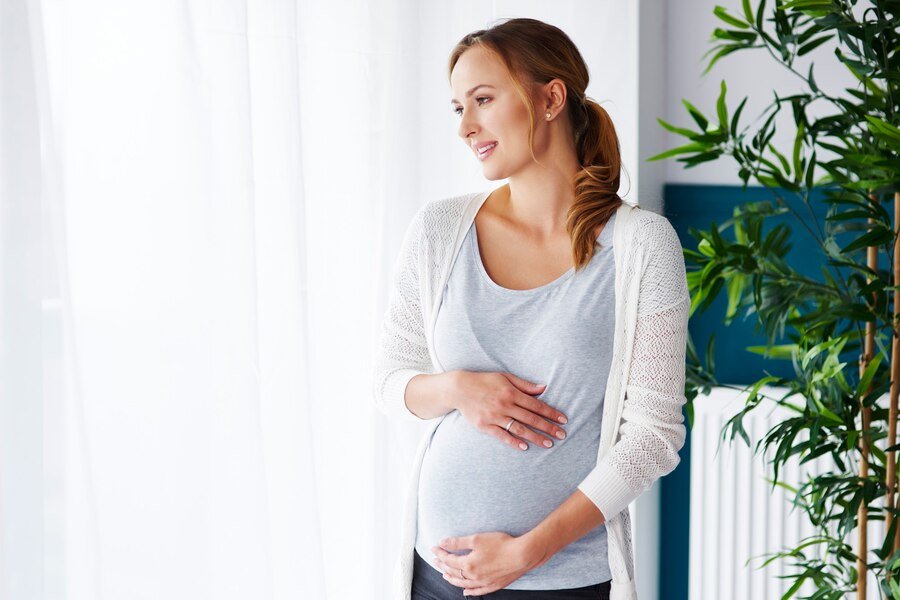
During pregnancy, there is a significant weight increase (generally, women tend to gain roughly about 12.5 kg weight) accompanied by increases in fat tissue and blood volume. This implies that women need to consume increased nutrition during pregnancy for their own health as well as for the health of the foetus. The mother needs extra nutrition in order to build additional fat tissues and also because the body is preparing itself for lactation.
Research studies also show that lack of nutrition during pregnancy can lead to the development of disease in later life (for the infant).
The nutritional status during conception depends on the nutritional health and lifestyle before pregnancy. A girl who has been well-nourished during her childhood and teenage years is more likely to experience a healthy pregnancy.
Pre-pregnancy diets can impact health in different ways:
-Vitamin D deficiency may result in difficult delivery due to bone malformation. However, this is rare in the UK.
-Dietary deficiency in vitamin B12 could increase the risks of infertility
-Lack of folate could result in Neural Tube Defects (NTD) in the foetus
-If the woman has had a history of poor eating or eating disorders such as anorexia nervosa or bulimia, her body may experience low reserves of nutrients and she may experience poor nutritional status
-Excessively low fat stores in the body may lead to the onset of amenorrhoea as well as increase the risk of infertility; this is because the body needs a minimum ratio of fat to lean mass in order to be able to support a healthy pregnancy
-Women who suffer from obesity (or excess fat in the body) may experience adverse changes in
sex hormones and insulin secretion, which may lower the chances of a healthy pregnancy
Right from the stage where the ovaries produce ova (eggs), the nutritional environment is extremely important for maintaining hormonal balance. This may require adequate consumption and stores of proteins, iodine, magnesium and zinc, as all these nutrients help bind hormones to their site receptors. Diet and nutrition before conception play crucial roles in determining health during pregnancy and has long-term implications in later years too.
Fact
The National Health Service, UK (NHS) recommends that men should consume 2500 calories/day while for women, the count should ideally be 2,000 cal/day. The difference is due to the fact that (in general) women tend to be smaller in size and their bodies also have a higher percentage of fats.
Source: www.nutritionist-resource.org.uk
9.4 Nutrition after Conception

The first few weeks after conception are extremely important for the foetus as the major organs and systems develop during the first eight weeks. During this time, the foetus needs nutrients, which it derives from the mother through the lining of the womb. The placenta has not yet formed during the initial stages hence there is no biological mechanism to protect the developing foetus from nutritional deficiencies.
First and most importantly, the Department of Health in the UK advises British women to consume at least 400 μg of folate daily.
Excess consumption of alcohol can lead to malformation of the foetus and it is considered a teratogenic agent (harmful to foetal development). Women who consume very low-fat foods during pregnancy tend to give birth to low weight babies. A woman's body undergoes many changes during pregnancy; the fat tissues, red blood cell mass, increasing weight and mass of the foetus and increased
plasma volume examples of changes that occur during pregnancy.
A woman's body adapts itself in multiple ways to adjust to pregnancy.
The adaptive mechanisms can manifest itself in different ways:
-Increase in food intake
-Mobilising fat stores or keeping aside fat stores for future use
-An increase or decrease in base metabolic rate depending on other factors
-Reduction in physical activity
The body adjusts itself in various ways in order to support the developing foetus. The adjustments centre around balancing energy needs, intake and output. In addition to adaptations to accommodate energy changes, the body also undergoes transformation in order to optimise nutritional beneβits to the foetus as well as to the mother.
For example
There is decreased oxidation of amino acids in the liver so that at a later stage, the protein will simply be made available from tissues. In addition, the mother uses lipids for her own energy needs while glucose is directed towards the use of the foetus. One of the most important hormones involved in this process is insulin.
Adaptations in intestinal muscles also ensure that food is digested over a longer time, thus increasing the efficiency of absorption. The slow action of the intestine results in heartburn and gastric reflux (common problems experienced by many women during pregnancy). Constipation is also fairly common due to the slow gut movement.
Activity
Estimated time: 5 minutes
Why do you think it is important for a woman to be well-nourished before conception?
9.5 Important Nutrition Tips during Pregnancy
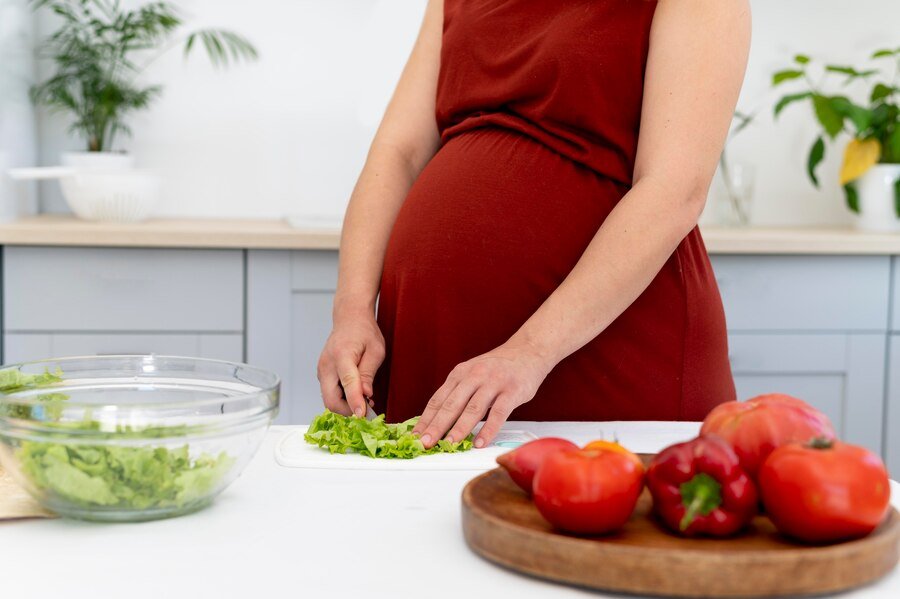
Eat well but do not 'eat for two' as the old adage goes. You will only end up gaining excessive weight, thus increasing the risks for gestational diabetes, preeclampsia or delivery an overly large baby. Include a lot of whole grains like brown rice, wheat pasta, brown/whole grain bread and cereals. Also include a lot of fresh fruits and vegetables (avoid sweetened versions) and remember to minimise salt. Whole grains are good sources of B-vitamins and fresh fruits and vegetables contain a lot of fibre, so they help βill the stomach and keep you feeling satiated for longer times.
Consume a lot of lean protein from fish, meat, poultry and eggs. In addition, you can eat beans, legumes, tofu, enriched cereals and leafy vegetables. You can include low-fat or fat-free dairy products like milk, cheese and yoghurt, as these foods will provide a large proportion of your calcium needs.
Foods to avoid during pregnancy would include:
-Caffeine (you can limit caffeine - it is not necessary to avoid it)
-Alcohol
-High-mercury fish (swordfish, marlin and shark)
-Saturated fats and sugars
-Milk that has not been pasteurised
Non-pasteurised products are associated with higher levels of 'Listeria' bacteria known to cause food poisoning. Moreover, food poisoning infections can be passed on to the foetus too. Undercooked food may also contain salmonella bacteria known to cause stomach infections and even miscarriages. Please increase your intake of low-mercury fish (make it a point to consume at least 12-ounces every week) such as shrimp, tilapia, and salmon. They contain important omega-3 fatty acids essential for development of the foetus.
Women who suffer from morning sickness (nausea and vomiting which may occur at any time during the day) should consider eating smaller meals at more frequent intervals. In general, spicy, oily, fatty or acidic foods may often trigger nausea. Smells can trigger nausea so you may wish to stick to cold foods. Nibble on a light snack like dry toast before you get out of bed. Add cut lemon to iced water and sip it slowly; remember to stay hydrated. You can also try sipping ginger tea or syrup as ginger is known to reduce nausea. Contrary to popular notion, you do not need to eat extra during pregnancy (unless you live off ready- to-eat meals and fast foods - which you may like to minimise). During the last trimester, your body needs about 200 calories extra per day. You can satisfy this additional nutritional requirement by eating say one toasted whole wheat bread slice topped with hummus or one small toast with baked beans.
Food cravings are common during pregnancy due to sudden hormonal changes; you may crave foods that you never used to enjoy and avoid foods that you used to eat regularly. This is because the sensations of smell and taste undergo changes. Experts also suggest that this could be the body's way of signalling deficiency in a specific nutrient. Tea and coffee intake should be limited as these beverages contain polyphenols and tannin which inhibits iron absorption. You can eat a vegetarian diet as long as you include adequate quantities of proteins (tofu, dairy products, lentils, legumes) and carbohydrates.
Other important food sources containing vitamins and minerals include:
-Skinless chicken/wholegrain bread (contains chromium required for blood sugar control and tissue development in the foetus)
-Cashews, green lentils provide copper which helps develop nerves, heart, bones and arteries in the foetus
-Brussel sprouts, bran βlakes and granary bread help provide folic acid for development of the circulatory system and brain function in the foetus
-Beef sirloin (100g), cooked chick peas (1.5g), baked beans provide the iron required for transport of oxygen as well as promoting foetal growth
-Eat regular meals and avoid skipping meals during pregnancy. Since the womb (uterus) tends to expand and exert pressure on the stomach, it may be simpler to split your meals into smaller, more frequent meals.
In general, younger mothers (especially teenage girls who are pregnant) are at higher risk because their own bodies are still developing, and they have their own nutritional needs in addition to the baby's requirements. Many times, they may also live in poor conditions or may succumb to social pressures like maintaining a thin body. The UK government has initiated the 'Healthy Start' program to help provide nutrition for young or lactating mothers from lower income groups; they are provided with vouchers that they can exchange for food.
9.6 Nutrition during Lactation

Lactating mothers do not need to consume a different diet as such. However, you must remember that what you eat affects the infant's short-term as well as long-term health. Milk is produced in the breast by mammary glands and the hormone prolactin synthesises the secretion of milk. The fats in breast milk that contain short chain fatty acids are synthesised from the body, but long chain fatty acids are derived from the food that the mother consumes.
Breast milk consists of both glucose and galactose out of which glucose is derived from food while galactose is derived from the body. Although there is no special diet that the breastfeeding mother needs to consume, nutrients play an important role during the first 4-6 months after birth until weaning takes place. Lactating mothers produce anywhere between 620 to 820 ml of breast milk per day and in order to produce this amount, she must ensure that she consumes a balanced diet replete with nutrients.
Intensive exercising may also increase levels of lactic acid in the body (due to muscle fatigue) which impacts the taste of breast milk. In the event of inadequate food consumption, breast milk will still be produced but the nutritional quality of the milk may suffer. In general, during the phase of lactation, breastfeeding mothers require an additional 500 Kcal of energy to meet nutritional requirements. When the weaning process begins, you can cut down on the additional calorie intake.
Similarly, newborn infants may be affected by caffeine in milk so limit your intake during early months after delivery. Alcohol consumption should be eliminated or severely limited; infants have man immature liver and cannot metabolise alcohol at the same rate as adults. Some healthy foods during lactation could include salmon (helps stabilise blood sugar and staves off cravings), strawberries (contain vitamin C, magnesium, folate and manganese), Greek yoghurt (provides healthy bacteria to improve digestion for the mother as well as for the infant), milk (excellent source of calcium and vitamin D), almonds and almond butter (good source of polyunsaturated fats, phytosterols and B-vitamins) and dark green, leafy vegetables (contain iron, calcium, vitamins and minerals). Also keep in mind that foods that contain food colour or are naturally coloured (like pumpkins, for example) may colour the breast milk. Consumption of foods containing soy, wheat, certain fish and nuts could trigger food allergies in the infant resulting in diarrhoea.
Activity
Estimated time: 5 minutes
Why do think that mothers from low income groups and young mothers are at higher risk during pregnancies compared to other women?
9.7 Healthy Eating during the Menopausal Phase
.jpg)
Menopause is the cessation of menstrual cycles and it may happen anytime from the mid- forties to fifties. The body undergoes significant hormonal changes during this time and oestrogen and progesterone levels reduce. By understanding what happens in the body during this time, it is easier to make the right nutritional choices that can battle the negative effects of these changes. Lower levels of oestrogen results in increased risks for osteoporosis, weight gain as well as breast cancer.
Tips to help you include nourishing foods in your diet
It is a good idea to increase your intake of calcium and vitamin D to help reduce the likelihood of developing osteoporosis. You can increase consumption of low-fat dairy products as well as vitamin D-fortified foods like cereals. In addition, you can opt to consume dried figs, kale, watercress, eggs and fish with bones.
Decrease consumption of saturated fats and increase the proportion of unsaturated fats in your diet. Similarly, you can consider reducing sugar and salts and increasing the number of fruits and vegetables in your diet. Keep the salt intake at less than 6g per day and avoid adding table salt to food. Those who live indoors or in areas where sunlight is low may consider consuming supplements containing vitamin D. Women of darker skin tones are more vulnerable to vitamin D deficiency and may need higher doses to help increase vitamin D.
Excess intake of vitamin A (in the form of supplements, liver or liver products) can impact bone health adversely so avoid consuming more than 1.5 mg of vitamin A daily. Increasing your intake of B-vitamins and omega-3 fatty acids can help battle mood swings, irritability and depression. Foods you could consider consuming include lentils, nuts, oily fish and whole grains. Eating a Mediterranean diet (fruits, vegetables, olive oil) accompanied by reduced intake of saturated fats help reduce hot flashes. This is believed to be due to the fact that high fibre diets balance oestrogen levels. Diets that are high in sugars and fats are known to increase menopausal discomfort.
Women are at higher risk for weight gain during the post-menopausal phase and this in turn increases the risks for heart disease and type 2 diabetes. Hence, it is a good idea to get a lot of exercise and keep your weight under control by controlling consumption of excess fats. Recent research indicates that consumption of phytoestrogens may help replace the loss of natural oestrogen in the body. Phytoestrogens are plant-based compounds that are similar in composition and function to oestrogen produced in the human endocrine system. They contain substances like isoflavones and lignans that may prove to reduce menopausal discomfort. Foods such as soy, lentils, legumes, chick peas and linseeds contain high levels of phytoestrogens. However, more evidence is required regarding safety
and efficacy of phytoestrogens.
According to the UK government, the nutritional recommendations for women are described as shown below:
Energy requirement per day: 2,000 calories
Fat: Avoid exceeding 78 g per day (out of this, saturated fats should not exceed 24g)
Carbohydrates: Ideally consumption should be around 267 g
Free sugars (that you add to your tea, coffee etc): Not to exceed 27 g per day
Protein: 45 g recommended per day
Fibre: 30 g per day
Salt: Not more than 6g per day
Fact
According to the National Diet and Nutrition Survey reports, older adults above the age of 65 consume about 7.2 g of salt a day.
The reports also suggest that 30% of adults and 34% of older adults consumed the recommended 5 portions of vegetables and fruits per day. 23% of women and 46% of girls consumed lower intakes of iron.
Source: www.gov.uk
9.8 How to Read Food Labels

Food labels often contain an overload of information and it can be daunting identify important points. In the UK, food labels often follow the traffic lights colour coding system which means that red usually stands for saturated fats, sugars and salt while amber and green stand for moderate and low amounts of fats, sugars and salts. The higher the number of 'greens' on a label, the healthier the food is.
Saturates is simply another word for 'saturated fats'. Similarly, many food labels may say sodium instead of salt. In order to calculate the amount of salt, simply multiply the amount of sodium by 2.5 to get the corresponding salt amount. Recommended Daily Amount (RDA) has been replaced by Recommended Intake (RI) and is a useful source for gauging ideal recommended amounts of each nutrient. In the serving or portion size, the pack may contain amounts of nutrient per 100 g of product. You should be careful in understanding this as you may exceed recommended intake portions if you exceed the portion amount.
MODULE SUMMARY
Women often fall short of nutritional guidelines due to various reasons. They usually have a tendency to put the family's needs first or are too busy to ensure that they consume adequate nutrition. Nutrients like iron, vitamin C and calcium play crucial roles in women's nutrition as they help in the transport of oxygen, prevent weakness during menstruation and help build optimal bone health. Consuming adequate quantities of calcium helps prevent osteoporosis in later years. A woman's nutritional status before pregnancy determines the likelihood of having a healthy pregnancy and delivery.
Women need different nutrients during different stages in their lives given the complex interplay of hormones. They are susceptible to depression, mood swings and physical health problems when they consume inadequate levels of nutrition. The right nutrition helps boost wellbeing during puberty, pregnancy as well as during menopause.
Mindful eating helps promote positive dietary and lifestyle choices. Whether you are looking to boost your energy and mood, improve fertility, reduce the stressful symptoms of pre-menstrual stress and ease the discomfort of menopause, healthy nutrition can help you lead a more vibrant, stronger and fitter life.
.svg)



