
1.1 Introduction
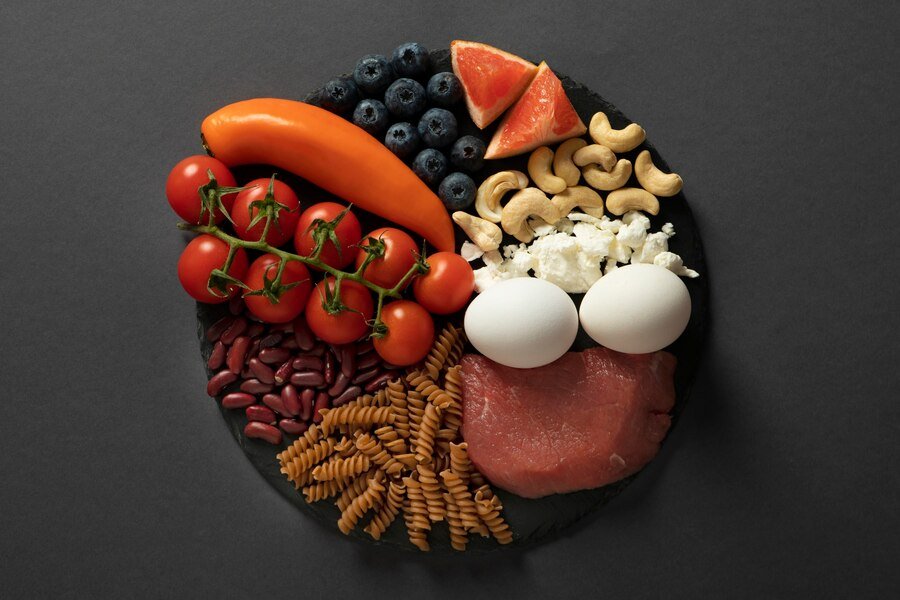
Good nutrition is vital for optimal wellbeing and health. Foods provide our bodies with crucial nutrients like carbohydrates, fats and proteins and so on. We need the right nutrition in order to gain energy, keep warm and go about our daily lives in a healthy manner. Similarly, nutrition is also important in protecting us from diseases and building up immunity.
Although there have been many studies and research into nutrition and its multiple benefits, there has been little reduction in nutrient deΫiciency and nutrition related diseases. Studying nutrition in depth can provide important insights into what people eat, why they eat the foods that they do and how they can change their food habits in order to provide better nutrition. While health, wellbeing and nutrition should ideally play the most crucial roles, marketing and commercial considerations have been dominating the food sector in developed countries. The increased emphasis on proΫits and costs has often overshadowed more important considerations. As a result of over-processed, rich foods Ϋlooding the British markets, there has been an increase in diseases including obesity, heart disease, diabetes, osteoporosis and cancer.
Nutrition can be studied at several levels and from different perspectives. While it can be defined and examined at the cellular level, the best place to begin is to understand eating behaviours and preferences for certain food choices. Eating patterns and behaviours in the UK have undergone significant changes in the last two to three decades and this in turn has had a significant impact on nutrition. The importance of studying nutrition cannot be emphasised enough.
Today's fad diets have gained in popularity (unfortunately) because people wish to achieve weight loss using any means at hand. These diets restrict nutrition and our health eventually suffers in the long run. It is important to include a range of different foods so that there is less likelihood of nutritional deficiency.
Fact
According to a news report in the Guardian, approximately 184,528 beds a year were taken up by patients who had to be hospitalised due to malnutrition. Each bed costs the NHS roughly £400 per day.
Source: www.theguardian.com
1.2 What is Nutrition and why is it Important?

In simple terms, nutrition is defined as the process of nourishing the body by providing the right foods required for growth, good health and overall wellbeing. In fact, food and nutrition define human growth and development and drive physical and mental health. The quality and level of nutrition lays the foundation for susceptibility to disease and has become a source of interest to consumers as well as to medical and health professionals. Detailed knowledge and application of nutritional information can help provide relief to an overburdened
healthcare industry already struggling to meet the needs of the British population.
Better nutrition can help improve overall health, reduce the likelihood of developing disease and help people live happier and healthier lives. Fortunately, awareness of nutrition and its importance has led to increased emphasis on the right nutrients being supplied through food. Knowledge of nutrition is not only important for weight management but also for young children, patients and elderly people in the UK. Detailed insights into nutrition can help us plan suitable meals that help people sustain stamina and enjoy enhanced wellbeing. Commercial and marketing considerations have led to several companies making false claims about their food products and their associated benefits.
For example
Supermarkets select foods based on colour, visual appeal and shelf life rather than nutritional content. In-depth understanding regarding nutrition and what our bodies really need helps us choose the right foods that are suited to our health requirements. We are constantly bombarded with advertisements that promote soft drinks, pizzas, fast foods and desserts. The constant overload of the wrong kind of information often keeps us from looking closely at our diets and the nutrients that we are consuming on a daily basis.
The preparation of a nutritious meal involves knowing which foods are right for your body, how those nutrients function and making the right choices. A comprehensive study of nutrition involves a combination of biology, biochemistry, physiology, immunology and psychology. In very basic terms, nutrition is usually perceived as food intake either to ward off hunger pangs or to enjoy a pleasurable eating experience. The truth lies somewhere between the extremes of 'eating to live' and 'living to eat'. However, eating is a far more complex process that involves different factors such as our state of mind, physiological needs, genetic blueprint and intuitive preferences ,economic and social status.
In general, nutrition can be defined as an evidence-based science and nutritional experts are always using results of prior research studies to advance our knowledge of nutrition. As a result, the βield of nutrition is constantly being updated with new research, trials and studies. In
modern Britain, the general population is affected by problems such as overeating, not eating the right nutrients or eating 'on the go' (which means most of us eat too fast) which are all contributing to various health problems. By learning about nutrition, you can help people eat well and enjoy improved levels of wellbeing. Remember that your ability to wake up, go to work or school, communicate with others, earn a living and do household chores depends on only one thing: your health.
Good nutrition helps lay the foundation for good health. Good health is crucial because it is only when we enjoy wellbeing that we can achieve our goals. The food that we eat affects every aspect of our health (both physical and mental) and this in turn impacts other areas of our life. In fact, when our physical and mental health is affected, our relationships with others are also impacted. We are unable to function at our best.
In the twenty-first century, the emphasis has shifted to encouraging people to eat balanced diets that provide optimal nutrition. However, influencing people's food intake is a complex task because eating behaviours are adversely impacted by different factors.
Keeping these facts in mind, we can deβine nutrition in two other ways:
1. Nutrition can be defined as the study of nutrients that promote growth, development and wellbeing as well as supporting reproduction and maintenance of cells.
2. Nutrition can also be defined as the study of the relationship between people and food.
Nutrition definition 1 applies to the process at the cellular level, but definition 2 describes what happens before nutrients reach the cellular level. These multiple external factors play significant roles in the way we make food choices and our eating behaviours. This definition takes a broader perspective into account of why people eat what they do and how these foods then affect our metabolism and other biological processes. The importance of nutrition can be better explained and understood when we examine nutrition at different levels.
Human nutrition is an integrated science that is based on medical research and bioscience. It has different applications that are relevant to consumers and the UK government as well as to medical professionals. There has been a spurt of interest in the subject of nutrition in the last two to three decades and there are several reasons for this.
New foods continue to appear in the British market that people of our grandparents' generation got to eat only once in a while. Many of these foods contain an unbalanced ratio of important nutrients with excessive amounts of some and negligible amounts of others. Similarly, modern processing methods such as irradiation (when foods are exposed to radiation) affect the quality of our food.
Other factors include eating patterns. While traditional family meals were common in earlier days, today family members may often eat at different times. Similarly, the UK has seen the rise of vegetarianism as well as the increasing popularity of organic food. All these factors have affected the study of nutrition. It is easy to become confused with the constant onslaught of information. Therefore, it is very important to gain a clear and detailed understanding about human nutrition so that we are able to disseminate the information better.
Activity
Estimated time: 10 minutes
What are your thoughts about the government's attitude towards public health and nutrition?
Do you think that providing better nutrition can help reduce the onus on the healthcare industry?
How do commercial considerations affect the marketing of food?
1.3 Changing Eating Behaviours and Food Habits in the UK:

Why Good Nutrition is More Important Than Ever Eating is intrinsically linked to nutrition and when we make poor food choices, we lose out on good nutrition. Poor nutrition is the leading cause of sickness and ill-health in the UK, even ahead of other reasons such as smoking. The last twenty years or so has witnessed radical changes in eating patterns and behaviours in the UK and these rather unwelcome changes can be traced to different causes.
Hectic lifestyles and fast-paced routines: rise in the usage of ready-made meals
Most people in Britain experience rushed days as they commute from home to work and back again in the evenings. After a long, exhausting day at work, not many have the energy or the inclination to cook a meal from scratch, especially when you have a family to feed. This has resulted in poor nutrition levels because ready and processed meals are usually devoid of vitamins and minerals. Since most of these foods are typically pre-cooked, a lot of essential nutrients like betalains from beetroot, or water-soluble B vitamins from leafy vegetables, are lost. Longer shelf life is usually inversely proportionate to nutrient density. Moreover, ready-made foods are pumped full of fats, sugars, salts, additives and preservatives - they are designed purely for good taste (so consumers will buy more of it).
For example
Ferrous gluconate is often added to darken the colour of the food and this is responsible for depleting the nutritional value of olives. Most ready-made food labels mention the nutrients in the food but make no mention of the cooking processes. This is why they tend to provide very poor nutrition. Research shows that some microwavable foods contain more sugar than a can of soft drink. Ready-made meat meals are often 'bulked' up with oil, sugar, water and 'meat glue' made from meat powders.
Technological advancements
The widespread usage of appliances such as freezers and fridges encourages people to use frozen foods as well as foods that have been stored for longer periods of time. With rising concerns over costs, and large-sized refrigerators and freezers becoming increasingly popular, we often resort to freezing and reheating food leftovers. Reheating food often depletes nutrient density. Reheating food is okay to do once in a while, but if you do it often enough, you are likely to end up eating nutritionally-deficient food.
Timings are not clearly defined
Families are smaller and there are a significant number of people living alone compared to earlier years. Meal times tend to be erratic.
The British eat out much more than they used to
The availability of affordable, tasty meals at restaurants, cafes, bakeries and hotels has resulted in a preference for eating out much more often than before. Family-cooked homemade meals have taken a back seat to sitting down and lunching or dining at a commercial outlet. The nutrition quotient of such meals cannot be compared to healthy meal prepared at home. In general, outside food tends to be richer, oilier, more sugary and heavier compared to a home-cooked meal. Dining times tend to be longer and we tend to eat more food as a result. Moreover, portions are usually larger than what we normally eat. These factors indicate that consuming the right nutrition has become more important than ever. We need to pay conscious attention to what we eat and how much we eat of the right nutrients.
1.4 Defining and explaining meals: What do we really eat?

Dietary plans and habits vary in accordance with traditional food availability and beliefs about health. A typical British household usually eats three times a day with each meal having a specific food as the staple or the main food. The meal is constructed around the staple and there are very few core foods that act as staples. The core of a meal is usually a food that provides energy and this is usually complemented by secondary foods like proteins that enhance the nutritive value of the meal. There is a third category of foods eaten typically in British households and these peripheral foods include something sweet like biscuits, cake, pastry, sauces and puddings. In earlier years, locally grown foods provided excellent nutritional value to meals because people cooked with the produce available in the season and grown close to home. This prevented loss of nutrition through long distance transport.
Nowadays, however, foods are imported into the UK from all over the world and these foods were made for consumption in other geographical areas with different climate and populations. This has had a serious impact on the traditional English meal. Hence, it is clear that the core and secondary foods must supply a high nutritive value in order to promote good health and wellbeing. Supermarket receipts were collected over a number of months and years in order to assess intake of fats and other forms of nutrition.
In order to study the subject of nutrition, the following things must be taken into consideration:
-Different nutrients, foods and the bioactive components in a diet
-How to apply and establish the nutrient requirements and underpin the principle of a balanced diet
-The functions of each nutrient and its benefits
-The role of nutrition through different stages of our lives including infancy, childhood, teenage, adulthood and old age
-How biochemistry and physiology affect the utilisation of the nutrients present in the food that we consume
-The role of nutrition and diet in disease prevention and epidemiology (branch of medical science that deals with disease prevention and control)
-Understanding the concepts related to energy balance, intake and expenditure and how they relate to body composition
-Nutritional and dietary assessments
Fact
In the UK, data regarding nutrition and food has been collected by the Household Food Consumption and Expenditure Survey and the National Food Survey (now replaced by the Expenditure and Food Survey) since 1940. This has helped provide a sustained surveillance of foods and eating behaviours in the UK
Source: www.gov.uk
1.5 Nutritional Requirements of the Human Body and Introduction to the Concept of a Balanced Diet

Most of us tend to select our foods based on whimsical cravings or moods rather than the nutritional value that it has the potential to provide. The wide variety of choice available also makes it confusing to make the right food selections for our health and wellbeing. It is important to understand terms including 'nutritional density' in order to understand the nutrients that make up a balanced diet. Most modern food labels often use the word 'healthy' indiscriminately and this word is often bandied about in an effort to boost sales.
In fact, before we move onto understand nutritional requirements and balanced diets, let us first understand the term 'nutritional density'. This refers to the density of nutrients per unit energy (usually denoted per 1000 kcal). This differs from the density of nutrients calculated per unit weight. One of the most important reasons to consider studying nutrition is the prevalence of 'fad' diets in the UK. Low fat, low carbohydrates, zero carbohydrates and protein-only diets have gained in popularity due to outrageous marketing claims without any reliable pieces of evidence to indicate that the claims are true.
In fact, it is highly debatable if any of these yo-yo or drastic diets are even healthy in the first place. The desperate craving for weight loss has driven many consumers to try many of these fad diets and this has led to nutritional imbalances that often trigger adverse health consequences. If we are committed to taking care of ourselves as well as loved ones, we need to understand the subject of nutrition in detail.
No foods are 'bad' on their own; more often than not, it is the proportion of the food that is included in the meal that is important. Apples are healthy for us but we cannot eat only apples for our meals. Similarly, there are other foods that provide only a narrow range of nutrients. These foods again, should not constitute a major portion of the meal. In general, eating a range of foods is less likely to
result in nutrient shortages in the body.
Difference between meals and snacks
In today's modern world, lines are often blurred between meals and snacks. People are often in a rush and consume any food that is tasty, filling and easy to cook/buy.
According to the Food Standards Agency, a meal accounts for about one-third of our daily calorie intake - roughly about 600-800 kcal (calories). We will discuss calorie intake and energy in subsequent chapters. A snack, on the other hand, is a single type of food or drink, say a fruit, a glass of milk or biscuits and so on. Meals usually include a staple and a protein and traditionally consisted of three courses (although this has become rare now except on formal dinner occasions). Snacks are usually eaten informally while relaxing or commuting.
Nutritionists in the UK are now concerned that the food habits of the younger generations seem to hinge primarily on 'snacking' as opposed to eating nutritionally balanced meals. Most people eat on the go and consume about 10 small snacks a day, a behaviour commonly known in scientific circles as 'grazing'. Snacks are often deficient in micronutrients and high in fats and sugar. However, some snacks are healthy and supply our bodies with nourishment including fruits, fruit juices, milk or nuts.
A snack is not supposed to be eaten in place of a meal but is eaten to satisfy hunger pangs between meals. When we eat, we make choices not only about the type of foods but also about the quantity that we want to eat and the timing of the meal.
What is a balanced diet?
A balanced diet provides our bodies with the right nutrients in the right proportions for optimal health and wellbeing. A nutritionally balanced diet can be characterised by eating less or more of certain types of foods. Although foods are often labelled as good or bad, this is not quite a reliable way of classifying them. What is the important is the way in which they are combined with other foods in your diet.
However, it is important to note that foods that are typically high in sugars or fats are considered unhealthy because they tend to reduce the overall nutrient density. Incorporating foods that reduce nutrient density proves to be a problem because it becomes challenging to incorporate other micro-nutrient rich foods to compensate for the gap.
For example
Diets for elderly people must contain minimal amounts of low-nutrient-density foods as they will be unable to consume more food to make up the shortage. Alcoholics often consume 2000-3000 calories from alcohol alone, which appears to 'satisfy' hunger pangs; hence, they do not eat well. The fundamental objective of healthy diets is to ensure nutritional balance. The challenge is that a single food may provide multiple nutrients and when you eliminate one food group from the diet, this may prevent the intake of other nutrients too.
For example
If you eliminate dairy foods from your diet (with the objective of reducing fat content), other nutrients including riboβlavin, iron and iodine also automatically get eliminated. It is very important to understand the different nutrients that our bodies need for health and proβile
different foods according to the nutrients that they contain. This is called 'nutrient profiling'.
It is important to note here that a single food or two may be added to the diet to redress an imbalanced diet, but they cannot constitute a diet on their own; you need to include other nutrients (foods) too. Vitamins and minerals are required in small amounts in the body; they cannot correct the adverse effects of a bad diet.
The nutritional requirement of an individual is defined as the amount of each nutrient required on a daily basis in order to promote wellbeing and prevent signs of deficiency. Nutritional requirements vary from person to person. Men, in general, athletes, growing children, pregnant women, and convalescing patients may require additional nutrition for their physiological requirements. Nutritional requirement may also vary depending on our activities for the day.
Nutritional requirements can also be defined in the following ways:
-The intake of nutrients that are required in order to balance the body
-The amounts of nutrients required to reverse a deβiciency state
-The amounts of nutrients needed for optimal biochemical functions
Activity
Estimated time: 10 minutes
Why does nutrition inspire you and how do you hope to use this knowledge?
Why do think that it is important to learn about nutrition?
Does working as nutritionist, home economist or dietician appeal to your interest?
1.6 The Food Pyramid
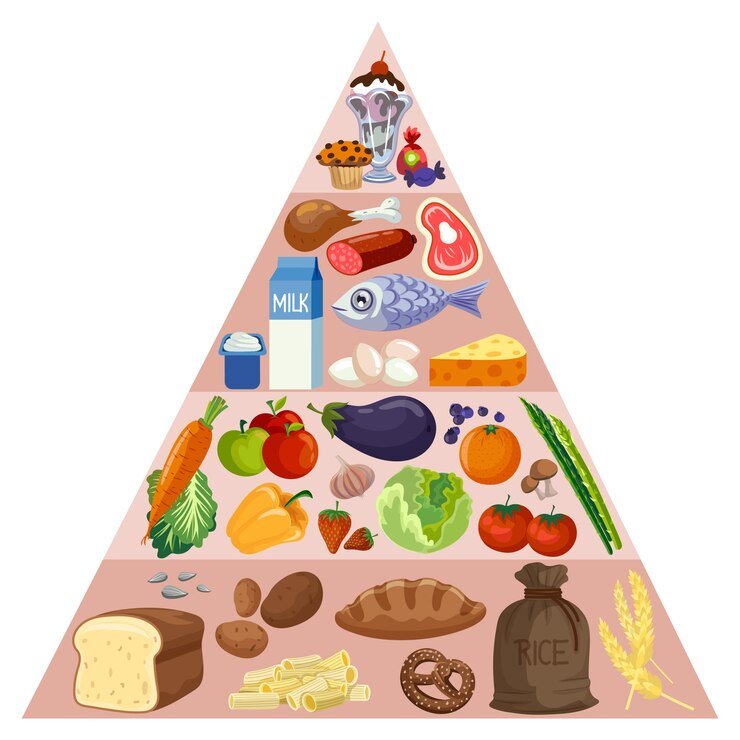
The food pyramid gives a fair idea about the food groups that should be eaten and those that should be eaten in moderation. The bottom layer and the major portion of your diet should consist of breads, cereals and starches followed by fruits and vegetables. The third layer from the base of the pyramid consists of proteins, followed by dairy, finally topped by sugars and fats which should constitute the least portion of our diet.
MODULE SUMMARY
Nutrition is important for providing our bodies with energy, warmth, protection from disease as well as supporting healthy growth. Studying the subject of nutrition helps take care of our families and loved ones as well as ourselves better. Consuming the right nutrition helps reduce the likelihood of developing nutrient-deficiency diseases. Implementation of improved nutrition and healthier diets also helps the UK government reduce massive costs associated with medical care.
Nutrition is important at every level including the home, school, university, offices and nursing homes and so on. Commercial and profit driven marketing has unfortunately relegated nutritive value to second place. It is a matter of growing concern that more hospital beds are occupied by patients suffering from nutrition-related diseases compared to other causes like smoking. People are eating excessive amounts of nutrient-deficient foods and less of nutrient-rich foods. Read-made meals, over-processed foods and fast foods have taken centre-stage in terms of popularity. Food labels list ingredients and nutrients but do not take into account the different processes that strip foods of nutrients. By understanding the importance of nutrition, you can incorporate adequate proportions of the right food groups in your diet. Proper nutrition can help improve health and promote overall wellbeing.
.svg)



