
3.1 Introduction

Proteins, carbohydrates and fats constitute macronutrients and meals should ideally consist of all three macronutrients in desirable proportions. Carbohydrates provide energy while fats keep the body warm and insulate organs from damage. Proteins are essential for growth and tissue repair. A balanced diet should contain higher levels of proteins and carbohydrates and lower amounts of fat.
Proteins are large, complex molecules that are essential for normal body functioning and optimal wellbeing. All proteins are combinations of different types of amino acids, of which there are about 20 in number. Proteins are essential for cell structure as well as for growth and tissue repair. Carbohydrates are made of hydrogen, carbon and oxygen and are responsible for providing energy. They are the main source of direct energy for the brain. Carbohydrates may be simple or complex and can be classified as monosaccharides, disaccharides and polysaccharides based on their structure. For optimal nutrition, it is better to include complex carbohydrates in our diets as opposed to simple sugars.
Glucose is used by the body cells and excess amounts are stored in the liver as glycogen. Glycogen is used to release glucose to the cells in the absence of adequate glucose. Cellulose is not an essential nutrient but is consumed for its ability to add bulk and roughage to food as it passes through the digestive system.
Oligosaccharides are simpler carbohydrates that consist of ten or less simple sugar molecules. They have a slightly sweet taste and pass through the human body almost undigested. They are fermented and partially dissolved in the colon and help improve glucose metabolism, elimination and immunity function of the body. Macronutrients refer to those nutrients of which you need large quantities in order to stay healthy and enjoy optimal wellbeing.
Unlike other macronutrients like carbohydrates and fats, the body does not store protein which means it is unable to draw from a biological internal reservoir naturally.
Fact
According to the recommendations of the British Nutrition Foundation, every adult should consume 0.75g per kg body weight per day. For example, if you weigh 65 Kg, you should make it a point to consume at least 48.7 g of protein per day
Source: www.nutrition.org.uk
3.2 Structure of Proteins and Amino Acids

The word 'protein' is derived from the Greek word 'protos' which means 'taking first place'. Proteins are essential for many reasons including structure, function as well as regulation of tissues and cells. Proteins are made of large, complex molecules that are made up of building blocks called 'amino acids'.
There are millions of animal, plant and human proteins but all of them are built from different combinations of 20 basic amino acids. The number and sequence of amino acid chains in a protein determines its nature and properties. This is the reason that there are several different types of proteins and they are complex in nature.
Proteins are extremely important macronutrients due to the reasons described below:
-Every cell in our bodies is made up of protein. Hair and nails are largely made up of a protein called keratin, which is a non-digestible protein. Chromosomes, which carry genetic information, are made of nucleoproteins.
-Proteins help in growth and regeneration of cells as well as tissue repair.
-Proteins are required to form other important bio-chemicals including enzymes and hormones
-Proteins form a crucial component of muscles, bones, blood and cartilage (a firm, connective tissue found in many parts of the body including joints). Muscle tissue is made up proteins such as myosin, actin and so on. The soft part inside bones called bone marrow is also made up of protein. Blood contains haemoglobin (which is a protein) as well as lipoproteins in the plasma (the liquid part of blood) which transport cholesterol in and out of the blood.
Proteins may exist as immunoproteins, hormonal proteins, structural proteins, transport proteins or enzymes, and they are crucial for good health. Out of the 20 amino acids present, the human body is able to synthesise (assemble) 12. The remaining 8 amino acids (which are called essential for human body growth and function) must be consumed from our diets from either animal or plant sources.
We may consume proteins either from meats or from plants. Amino acids form proteins by means of long chains of molecules that are linked by what is known as 'peptide bonds'. Amino acids termed as 'non-essential' are synthesised by our bodies by means of inbuilt DNA information. There are amino acids considered essential that are not synthesised genetically by the human body - they need to be consumed from our diets. If an individual fails to consume sufficient levels of proteins, the body will begin to break down its own structural proteins to compensate for the shortfall.
In fact, our ability to use our senses: touch, hearing, sight, etc depends on neurotransmitters which in turn are made up of proteins. While the hormone insulin is made up of about 50 amino acids, most proteins in our bodies are extremely complex and made up of at least 200-400 amino acids linked together with peptide bonds. Proteins are broken down to form amino acids during absorption in the digestive process.
Amino acids are made up of hydrogen, oxygen, carbon and nitrogen. Each atom contains an amino group (- NH2) and an acid group (-COOH) and hydrogen (-H). The simplest protein is glycine. The shape of protein molecules may sometimes change due to cooking processes.
For example
A cooked egg looks different from a raw egg because the bonds have become weakened due to heat or pH change. Such proteins are said to be denatured and they are usually non-functional. Proteins are broken down into amino acids by enzymes in the stomach and small intestine from where the amino acids are absorbed into the blood stream.
3.3 Digestion and Absorption of Protein
The digestive process begins with chewing the proteins, which does not change the proteins chemically but breaks them down in order to expose a larger surface area for digestion. Saliva also lubricates the food, helping it to move smoothly down the oesophagus. The chemical breakdown of proteins occurs in the stomach through the action of pepsin, an enzyme that is activated by the acidic conditions (pH is 3 or less) in the stomach due to the secretion of gastric juice. The stomach also helps in the denaturing of the large protein molecules.
Pepsin helps unfold the protein, breaks down collagen tissue and reduces long polypeptide chains to shorter fragments and releases clumps of amino acids. Pepsin is secreted in an inactive form called pepsinogen. The proteins are digested in the stomach for nearly 3 to 4 hours before they are passed to the small intestine. This is one reason why it may not be a good idea to drink lots of water with a protein-rich meal - the water may dilute the gastric juice which then may not be able to activate the enzyme pepsin.
Other enzymes that break down proteins into amino acids include pepsin, protease, trypsin, peptidase and bromelain. The enzyme protease helps break down large, complex protein molecules into amino acids through a process called 'hydrolysis'. Protein digestion continues in the upper part of the small intestine where trypsin and chymotrypsin (enzymes released by the pancreas) further break down amino acids and releases them in the bloodstream. The body has a fairly even balance of amino acids at all times.
Inadequate consumption of high quality proteins can lead to the following side-effects:
-Muscle weakness: Middle-aged men may develop a condition known as 'sarcopenia' that occurs due to natural protein loss due to ageing.
-You may experience swelling in your feet and ankles, a condition known as 'oedema' due to accumulation of fluid in cells. Protein prevents fluid accumulation in tissues.
-Slower heart rate, feeling faint or light-headed: Low intake of proteins means lower amounts of proteins in the blood. This can cause changes in the stickiness and thickness of blood thus leading to a host of other health issues.
- Lack of protein intake can also cause malabsorption of other nutrients including iron, zinc and calcium.
-Constant food cravings may result from low protein intake because proteins help balance blood sugar in the body.
-Slower recovery from injuries because proteins are responsible for repairing damaged tissues.
-Ridges in the nails, thinning hair, unexpected hair fall etc may be attributed to inadequate intake of proteins.
-Frequent bouts of illness may indicate lower immunity which may be caused due to lack of proteins. The cells that provide our bodies with immunity are made up of proteins.
Side-effects of Excessive Intake of Protein
Many people follow high-protein diets and consuming excessive levels of protein, which also causes negative effects on the body (nutritionally rich diets provide nutrients in the right proportion).
Some of these include the following.
Energy levels: Excessive intake of proteins may displace carbohydrates which often results in a midday slump because your energy levels are down.
Concentration: This may also lead to moodiness or inability to concentrate because there is reduced release of serotonin - a mood regulating hormone.
Weight: Over-intake of heavy animal proteins from red meat etc may cause weight gain because this is again an example of an unbalanced diet and thus we consume distorted nutrition. Each gram of protein provides 4 calories of energy. If you eat 100g of protein in a day, you will consume 800 calories out of which the body will only use what it needs. The rest will be stored as fat. If you continue to consume 100g on a daily basis, you may gain as much as 2 pounds per month due to the extra calories being consumed on a daily basis.
Digestion problems: Excessive intake of proteins may also result in digestion problems due to lack of fibre in the diet.
Constant thirst: Feelings of constant thirst may result from consumption of excessive amounts of proteins. This is because the kidneys are working overtime to filter out nitrogen and protein wastes and you may also be prone to frequent urination. Excessive consumption of animal proteins including red meats, poultry and seafood may spike the levels of uric acid and reduces the level of citrate in the body, which in turn may result in the formation of kidney stones. The excessive amount of uric acid also increases the general acidity levels in the body and upsets the pH balance.
Bad breath and body odour: When you eat a protein-heavy diet, your body begins to burn fats to produce ketones which leads to the development of bad breath. Excess protein that we eat is not converted into muscle but is converted to carbohydrates through a process called 'gluconeogenesis'. The by-products of gluconeogenesis consist primarily of ammonia compounds which are secreted through urine (excessive protein intake results in foul-smelling urine) and the rest of it gets expelled through the mouth in the form of bad breath.
Eating bizarre and unhealthy fad diets may lead to protein imbalances in the body.
3.4 What is the Right Amount of Recommended Protein Intake?

According to the RNI (Reference Nutrition Intake), UK adults are advised to consume about 0.75g for every kilo of body weight. Taken on an average, the recommended protein intake for men is about 55g while for women, it is 45g. Pregnant women should ideally consume about 70g per day, depending on your body weight. Children between the ages of 4 to 10 should ideally consume up to 29g per day while children from the age of 11 to 18 should consume anywhere between 45 to 58g per day.
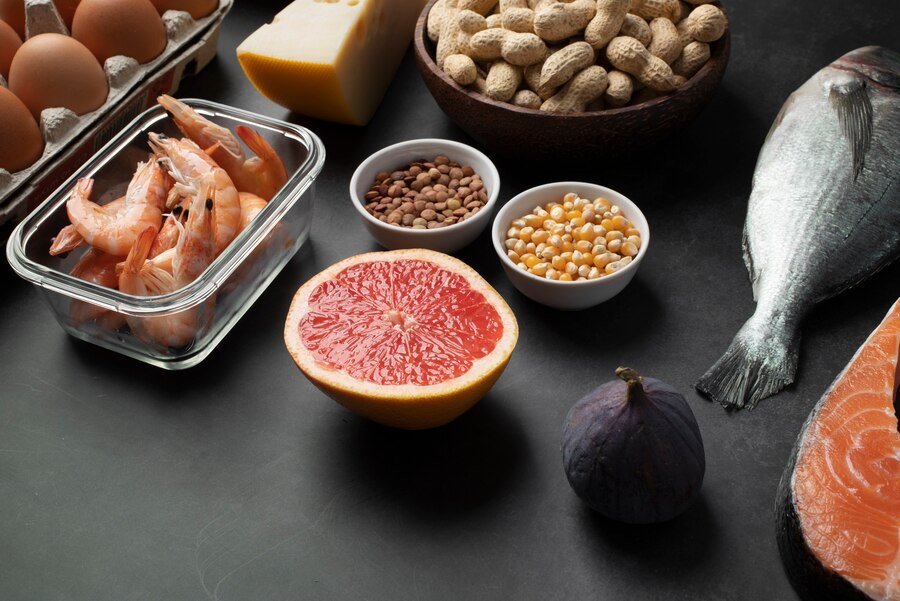
Sources of Plant and Animal Protein
Let's begin with understanding the differences between animal and plant sources of proteins. Animal proteins are usually associated with a complete amino acid proβile compared to plant proteins. Animal amino acid profiles are much more aligned with our natural body proteins which helps them become easily absorbed into the blood stream. A complete amino acid profile means that it contains all the acids that the body needs to function properly. Animal proteins also come with a high amount of fat and cholesterol, unlike plant proteins which are usually lean proteins. Plant proteins come along with higher doses of vitamins and minerals but they do not provide as many proteins as animal sources.
Sources of Plant Protein:
1⁄2 cup of tofu - 14g
1⁄2 cup of legumes - 7g
1-2 ounces of different nuts - 14g
1 slice of wholemeal bread - 4g
1 ounce raw vegetables – 2g
I ounce of soya beans - 10g
I cup peas - 8g
1 cup cooked lentils - 18g
3 tablespoon Hemp seeds - 10g
1⁄2 cup cooked Quinoa - 7 to 9g
1 ounce of cheese - 6 to 7g
(Parmesan cheese is known to have the highest protein content)
1 cup of milk - 24g
50g of almonds - 5g
Sources of Animal Protein:
1 boiled egg - 13g
100g of Greek low fat yoghurt - 10g
100 g of lean meat - 26g
4 ounces of chicken - 36g
100g of cooked salmon - 22g
100g of whole, broiled pork - 27g
Activity
Estimated time: 5 minutes
What do you think are the risks of eating only animal proteins?
Do you think it may be more advisable to eat a mix of plant and animal proteins?
3.5 Carbohydrates

Carbohydrates are compounds that contain carbon, hydrogen and oxygen in the ratio1:2:1. Carbohydrates are responsible for providing our bodies with energy. Carbohydrates also include starches, sugars and fibrous foods. There are three types of carbohydrates or sugars and these are known as monosaccharides, disaccharides and polysaccharides.
In general, carbohydrates are responsible for the following:
-Providing energy to the human body in the form of glucose
-Acting as building blocks of building complex carbohydrates such as glycogen
-They are also components of important molecules such as DNA and RNA
3.6 Monosaccharides
Monosaccharides are simple carbohydrates where each compound has a chain of six carbon atoms, usually bonded in the form of a ring. They act as building blocks of complex carbohydrates called 'polysaccharides'. Monosaccharides with 3 to 10 carbon atoms are called 'oligosaccharides'. The most common examples of monosaccharides include glucose, fructose and galactose. In general, monosaccharides are soluble in water and give a sweet taste after dissolution.
Glucose
Glucose supplies energy required for the body cells to function normally and exists in two forms: D- glucose and L-glucose. Out of these, only D-glucose (also called Dextrose) is used in the human body. Multiple hormones control glucose levels so as to ensure a constant βlow of energy for vital functions. This is the reason that glucose is also described as an 'obligate fuel' or essential under normal circumstances. Glucose is the main source of energy for the brain and is also the precursor for the production of certain proteins and lipid metabolism.
Glucose is also essential for the production of vitamin C. Glucose is found naturally in fruits, juices, vegetables and honey and is also found in substantially higher amounts in soft drinks, desserts, corn syrup and so on. Glucose is converted to glycogen in the liver and stored for use as adipose tissues in muscle cells. Lack of glucose in the diet may impair mental processes like thinking and concentration.
Fructose
Fructose is structurally similar to glucose although it is metabolised differently in the human body. High levels of fructose are bad for us because it gets converted to fat in the liver. It can also cause insulin resistance and increase the level of uric acid. Fructose is found in fruits and vegetables and is added to fruit-juices, drinks etc. It is a popular ingredient for food and drink manufacturers because it is cheaper to produce fructose: Starch is first hydrolysed and then subsequently converted to fructose.
However, fructose is not the preferred source of energy for the brain and body cells (unlike glucose). Also, unlike glucose, a high level of fructose does not result in the release of insulin (as a regulatory mechanism). In recent times, there have been serious concerns regarding the heavy usage of fructose in foodstuffs. Overall, fructose is more lipogenic compared to glucose and behaves more like fats than like a carbohydrate.
Galactose
Galactose is also a simple sugar that is commonly found in milk and yoghurt and is not considered an essential ingredient (it is not necessary for normal functioning). The body is able to convert galactose into glucose. It is made of the same kind and number of atoms as glucose but is structurally different from glucose. Galactose has the same energy output as sucrose, which is roughly 4.1 Kcal/gram. Galactose can bind itself to glucose to make breast milk, to lipids to make glycolipids and to proteins to make glycoproteins. Galactose is also found in cheeses, yoghurt and creams. Other monosaccharides include arabinose and xylose found in beer and white wine as well as fucose in human milk and bran.
3.7 Disaccharides
Disaccharides are molecules that contain two monosaccharides. Monosaccharides and disaccharides are known as simple carbohydrates. Disaccharides are again non- essential nutrients (not crucial to normal functioning of the human body), unlike glucose. Most disaccharides provide energy of roughly four kilocalories per gram. The most common disaccharides are lactose, sucrose and maltose.
Lactose
Lactose is a milk sugar obtained in the milk of mammals and is made of two monosaccharides, namely, glucose and galactose. Lactose that is not hydrolysed in the human body provides energy to colonic bacteria and acts as a dietary fibre. Lactase, a naturally occurring enzyme, is required to digest lactose; if lactase is absent or inadequate, the individual is said to suffer from lactose intolerance and may suffer from bloating or diarrhoea upon consumption of lactose. Lactose is found in higher amounts in dairy products but is also found in processed foods.
Sucrose
Made of fructose and glucose, sucrose is commonly known as table sugar and it is the sugar that we add to milk, desserts and so on to sweeten its taste. Sucrose is obtained from sugar cane and occurs naturally in fruits and vegetables and the sucrose obtained commercially is roughly 10-15% of the weight of the plant. The juice is first extracted, purified and then crystallised to obtain table sugar crystals. Brown sugar, golden syrup and molasses are by-products of the sugar-extraction process. When we consume sucrose, it is broken down its components (glucose and fructose).
Maltose
Maltose is a non-essential nutrient and is a disaccharide consisting of two glucose molecules bonded together. Maltose is commonly found in germinating grains (like wheat or barley) when their store of starch is broken down. In addition, maltose may also be found in biscuits, malted drinks and certain breakfast cereals.
Maltose is broken down by two enzymes, maltase and isomaltase in the small intestine into glucose, which is then absorbed into the bloodstream. It is an interesting fact that the glucose from maltose is digested more easily compared to glucose in its pure form. Certain forms of maltose have a tendency to absorb water from the intestinal wall, so they can trigger diarrhoea if consumed in excess amounts. Common sources of maltose include fermented foods such as breads, crackers, sweet potatoes, pies and energy bars. Since maltose has a
higher glycaemic index compared to glucose, it causes higher spikes in blood sugar.
Fact
According to news reports in the Daily Mail, the UK spends about £1.9 billion on ready-to-eat meals in 2017 and the demand for them has gone up by 44%
Source: www.dailymail.co.uk
3.8 Polysaccharides
Polysaccharides are complex carbohydrates that consist of hundreds of thousands of monosaccharides. Glucose, fructose, galactose and mannose are some common monosaccharides that make up complex polysaccharides. The three main types of polysaccharides are as follows.
Starch
Starch is made up of glucose and is broken down during the process of digestion. The digestion of starch molecules begins in the mouth when starch molecules are coated with saliva that contains the enzyme amylase. This is why a slice of bread starts to taste sweet after we have chewed it for some time. Amylase breaks down starch into simple sugars called maltose (refer above). The digestion of starch (now broken down into maltose) continues in the small intestine. Gastric juices tend to inhibit the functioning of amylase so carbohydrates do not get digested in the stomach.
Similarly, two additional enzymes present in the small intestine called sucrase and lactase act on sucrose and lactose respectively. Sucrose is broken down into glucose by an enzyme called sucrase while lactose is broken down into glucose and galactose by lactase. Once the complex carbohydrates are converted to simple sugars, they are then absorbed into the blood stream.
In the small intestine, the maltose is further acted upon by pancreatic amylase (an enzyme released by the pancreas) and maltase (an enzyme secreted by the small intestine). Maltase breaks down maltose into glucose and this is then absorbed in the blood stream. Since the human body only uses glucose as a source of energy, fructose and galactose is also converted to glucose by the liver. Once the body has used the glucose that it needs, the rest of it is stored as glycogen in the liver.
Starchy foods include bread, pasta, potatoes, rice, peas, corn, oatmeal, breakfast cereals and beans (kidney beans, chick peas, black-eyed beans, lima beans and lentils).
Glycogen
Glycogen is stored in the liver and is broken down into glucose when the body needs a steady source of energy due to blood sugar levels falling. Glycogen is also stored in muscles and in a normal 70kg male adult, about 100g of glycogen is stored in the liver and 250g is stored in the muscles. Storage of glycogen by itself does not add to general weight gain, but for each gram of glycogen, at least 3g of water are also stored. Increased storage of glycogen results in increased water retention which in turn may lead to weight gain.
Cellulose
Cellulose is a polysaccharide made of thousands of glucose molecules and is largely considered indigestible. The human body lacks the enzyme to digest cellulose and therefore it is not an essential nutrient. However, we need cellulose for improved digestion and overall health. Most importantly, it helps in the excretion of metabolic wastes and also the elimination of excess sugars and cholesterol (if we suffer from elevated levels). As cellulose passes through the large intestine, it absorbs water and helps in the process of elimination. It acts as a dietary fibre that helps form roughage or bulk for helping digest other foods. Plant based foods including vegetables and bran are typically high in cellulose content. Although cellulose is not an essential nutrient, the absence can lead to build up of toxic wastes in the
body.
Oligosaccharides
Oligosaccharides are defined as polysaccharides that are made up of ten or less than ten simple sugars. They pass largely undigested through the human digestive system until they reach the colon where they are partially broken down to release short-chain gases. Made of soluble, fermentable fibres, they are associated with a mildly sweet taste and are increasingly used as a substitute for fats and sugars.
Although they are not an essential nutrient, oligosaccharides can prevent bloating, flatulence and constipation as they help move food down the intestines for elimination. Their main function is acting as a substrate to beneβicial bacteria in the intestine that help digest food.Although research is still going on into the possible benefits of oligosaccharides, they are also known to improve glucose metabolism, enhance immunity and lower cholesterol.
Activity
Estimated time: 5 minutes
Is it advisable to eat zero carbohydrates in a bid to induce weight loss?
What amount of starchy foods should you ideally include in your meal?
MODULE SUMMARY
Macronutrients are essential nutrients that should ideally make up the bulk of our meals. The main macronutrients include proteins, carbohydrates and fats. Proteins are considered the building blocks of cells and tissues and their main function includes growth and tissue repair. Proteins are made of hydrogen, carbon, oxygen and nitrogen and they are made of amino acids. The human body is able to synthesise about 12 amino acids and the remaining 8 have to be consumed in the diet. Proteins are broken down in the body by enzymes into amino acids. Enzymes, hormones and neurotransmitters are made up of proteins. Carbohydrates are made of hydrogen, carbon and oxygen and provide energy to the body cells. They are the main source of direct energy to the brain and are classified into monosaccharides, disaccharides and polysaccharides.
Glucose, fructose and galactose are examples of simple sugars while sucrose, maltose and lactose constitute important disaccharides. Oligosaccharides are carbohydrates that consist of ten or less glucose molecules bonded together. Cellulose is a polysaccharide that is indigestible but is consumed to aid digestion and improves elimination of metabolic wastes.
.svg)



