
4.1 Introduction
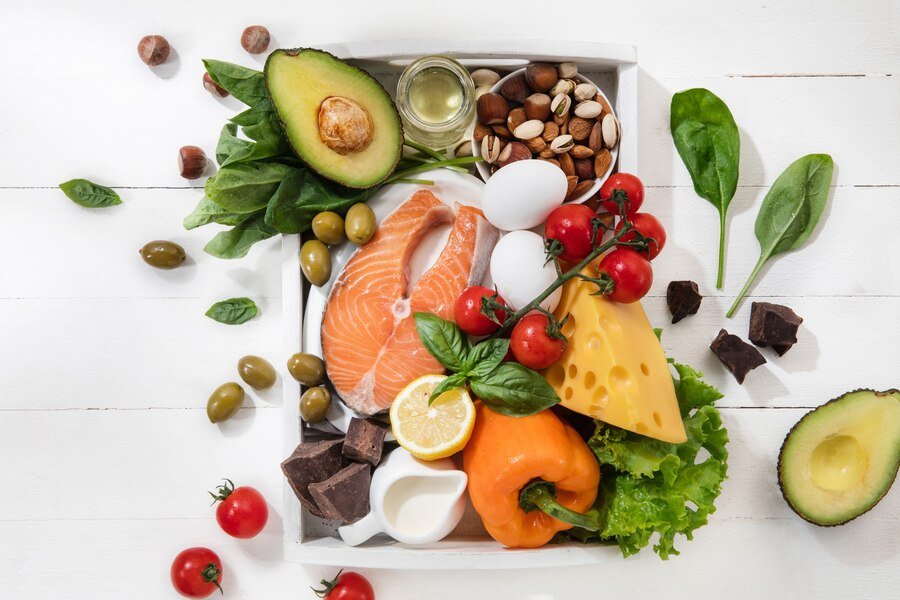
Consuming the correct nutrition involves eating the right amounts of different macronutrients for our requirements. In recent times, low carbohydrates or zero carbohydrate diets have become very popular. Module 4 will explain how inadequate intake or excessive intake of carbohydrates affects our health. Foods that are slower to digest are said to have a low glycaemic index and those that are broken down faster are said to have a higher glycaemic index. In general, foods that have a lower glycaemic index keep us feeling satiated for longer periods of time and this helps to reduce binging and to control food cravings. Refined and processed foods generally have a higher glycaemic index.
Dietary fat is different from body fat and we consume fats from the food we eat. Fats are made up of fatty acids and glycerol and they perform a number of important functions in the body. Fats are essentially classified as saturated, monounsaturated, polyunsaturated and trans fats.
Out of these saturated and trans fats are not good for health, when consumed in excess amounts. They lead to the build-up of bad cholesterol and increase the risk of heart disease. Phospholipids and sterols are different components of fats that performing their own set of important biological functions. Phospholipids are responsible for maintaining the structure of cell membranes and integrity. Module 4 explains the different components and types of fats along with their structure and function.
Fact
According to a news report in the Telegraph, UK, 10.8% of the illnesses in the UK were caused due to poor eating habits as opposed to 10.7% due to smoking. Head of the NHS, Simon Stevens, said that as much as 40% of the resources of the NHS were spent on illnesses associated with eating habits.
Source: www.telegraph.co.uk
4.2 Carbohydrate Intake and Risks of Ketosis

Carbohydrate intake must be sufficient not only for providing energy but also for synthesis of complex molecules. The ideal recommended amount of carbohydrates required per day is 150 - 180g per day, which accounts for about 30% of the energy needs of the human body. Below this range, there is the risk of ketosis.
Ketosis is the process of burning fats for energy when the levels of carbohydrates are low. As a result of this process, the body produces acids known as 'ketones' that are made up of three compounds, namely, acetate, aceto-acetate and beta-hydroxybutyrate. Individuals with advanced ketosis often suffer from bad breath because their breath smells like acetones.
Side-Effects of not Consuming Adequate Carbohydrates
In recent times, there have been several diets that strongly recommend low carbohydrate or even no carbohydrate intake. Our bodies need carbohydrates (you do not have to consume it in excess) for energy. The following side-effects may result from inadequate consumption of carbohydrates.About 50% of the energy in our body comes from carbohydrates: If we do not eat enough carbohydrates, our body will begin to use proteins to produce energy and this protein can then no longer be used for building muscle.
One of the most obvious signs that you are not eating enough carbohydrates is a feeling of sluggishness and exhaustion: You may feel quickly tired out on your walk or jog, and may find it difficult to get through the day feeling upbeat and energetic. The feeling of sluggishness may refuse to get resolved even if you have a good night's sleep.
Most of the weight that is lost by following low carbohydrate diets is the loss of water: The liver will usually try to make up the shortage of sugar by producing it on its own and when blood sugar rises, insulin levels rise too. Insulin is a hormone released by the pancreas that is responsible for controlling sugar levels in the body, but it also stores fat. This is the reason most dieters experience a plateau in their weight loss when they cut out carbohydrates from their diet.
Poor concentration: Carbohydrates supply energy directly to the brain and lack of energy can result in an inability to concentrate. You may also experience headaches.
Hypoglycaemia: Low carbohydrates or zero consumption can also lead to hypoglycaemia (low sugar) which may cause dizziness, shakiness, weakness and confusion. Although this is usually cured by eating sugars, it invariably leads to a swing in sugar levels causing erratic fluctuations in glucose levels in the body.
Many people also feel irritable and stressed when they do not eat enough carbohydrates:This is because your energy levels are low, and consequently you are unable to exert self-control over your emotions and cope with stress. Inadequate consumption of carbohydrates often leads to moodiness and an inability to regulate your emotions.
When the body is not getting its required supply of carbohydrates, the blood sugar levels fall dramatically: The liver then uses its supply of glycogen (please refer to module 2) to produce more glucose and the body also releases hormones like cortisol and adrenaline to induce glycogenesis (production of glucose). These hormones also promote a feeling of excitement and energy that consequently keeps you awake at nights.
Lack of intake of carbohydrates also leads to a feeling of constipation: This is as the thyroid hormone becomes affected, resulting in hypothyroidism. The thyroid hormone is important for helping peristalses in the gut (a wave of contractions and relaxations of muscle that helps move food along). When there is slowing down of the thyroid hormone (commonly known as the T3 hormone), gut motility becomes sluggish thus leading to constipation.
You always feel cold: Low carbohydrate intake usually results in low blood sugar and therefore lower insulin levels. Insulin controls body temperature and when there is inadequate insulin, you may feel cold even on warm days. In general, eating too little of any nutrient is as unhealthy as eating too much. Nutritional balance involves correct consumption of different types of nutrients in the right proportions. Since nutritional balance is achieved by consuming the proper amounts, let us now take a closer look at what happens when you eat a carbohydrate-rich diet.
Effects of Eating Excess Carbohydrates
Once the required carbohydrates are broken down into glucose to release energy, the excess amounts are stored in the liver as glycogen. The pancreas then secretes high levels of insulin in order to control the elevated levels of glucose in the body.
Two adverse effects often arise out of this situation: The body may develop insulin resistance (due to excess levels of insulin produced) and the extra glucose is turned to fatty acid in the liver to be stored as fats.
That's not all - The constant secretion of insulin may also create false feelings of hunger. This becomes a self-perpetuating cycle and it becomes difficult to control food cravings. You may even experience constant cravings for sweets and sugary foods due to the roller coaster glucose levels in the blood. Excessive intake of carbohydrates may also lead to increase in LDL cholesterol level which is associated with increased risk of heart disease.
4.3 A Note on Glycaemic Index and Glycaemic Load

Glycaemic Index
Glycaemic index is a value given to carbohydrates based on the rate at which they spike glucose levels in the blood after consumption.In general, foods with high GI values are digested, then absorbed and finally metabolised quickly in the body. On the other hand, foods with low Glycaemic Index values are digested as well as metabolised slowly; they produce smaller spikes in the body's glucose (and therefore insulin) levels.
Glycaemic index measures foods on a scale of 0 to 100 and low glycaemic foods are recommended for good health and wellbeing. Foods classified as high GI are usually (though not always) highly processed foods containing high levels of fats and sugars. Foods classified as lower GI, on the other hand, are more likely to contain high levels of proteins and fibre.
Please note that you would still need to eat foods from all the food groups for a nutritionally balanced diet. Low GI foods in general keep us feeling satiated for longer periods of time and do not have a dramatic effect on glucose levels in the body. In general, low GI foods are known to decrease cholesterol and glucose levels and improve insulin resistance. We may also lower the GI by eating foods in combination with each other.
Several Factors affect the GI of a Food
Carbohydrate: The type of carbohydrate that is present in the food.
For example
Amylose has a lower GI compared to amylopectin. Amylose molecules form tight clumps and absorb less water, which slows down the rate of ingestion.
Sugar: The type of sugar molecules in question.
For example
Glucose is more rapidly absorbed (higher GI) compared to sucrose. The higher the sugar content, the higher will be the GI.
Physical entrapment: The manner in which the food is encased affects the GI.
For example
The structure of bran is such that is has a physical barrier. This slows down enzymatic activity and slows ingestion in turn. Hence, bran has a low GI (38).
Viscosity of fibre: If the food consists of viscous soluble fibres, it turns into a gel-like substance in the small intestine, which slows down ingestion and absorption. Viscosity slows down the reaction between enzymes and foods.
For instance
Rolled oats and apples are good examples of foods that are made of viscous fibres and which have a low GI in consequence. The GI of an apple is 40 while the GI of rolled oats is 51. Foods that provide high levels of soluble fibre content are associated with higher levels of nutrition.
Foods with fats and proteins: these are slowly emptied into the duodenum (the first part of the small intestine) where digestive enzymes act on them.
For instance
A good example of this type of food is peanuts. Acidity of foods: certain acidic foods such as citrus fruits or vinegar slow stomach emptying and cause a slower rate of digestion. These foods have a lower GI. The cooking processes involved: Research studies show that slow cooking methods like baking and steaming lower the GI of foods. On the other hand, other cooking methods like microwaving or boiling tend to raise the GI of foods. In general, using excessive heat will have a tendency to break apart the grains and hence leave the food open to rapid enzymatic action. Similarly, whole fruits have a lower GI compared to fruit juices because they are slower to digest.
Glycaemic Load
Glycaemic load is a better reference compared to glycaemic index and is measured by multiplying the carbohydrate content of a speciβic food by its glycaemic index and then dividing that number by 100.
For example
A cup of beets has a carbohydrate content of 13 and its GI value is 64. So 13 times 64 = 832, then divided by 100 = 8.3. This is the Glycaemic Load (GL) of the cup of beets. In general, GL values of above 20 are considered to be high and 11 to 19 is considered moderate while values below 10 are low. In general, foods with lower glycaemic loads are considered more nutrient-dense compared to the ones with higher values. High GL values usually (but not always) indicate lower nutrient density as well as higher levels of processing.
Activity
Estimated time: 5 minutes
Most modern-day diets call for low carbohydrate or zero carbohydrate consumption.
Do you think that it is healthy to eliminate a nutrient completely out of the diet?
How can you use glycaemic index to select the right carbohydrates to include in your daily consumption?
4.4 Starches
Refined Starches
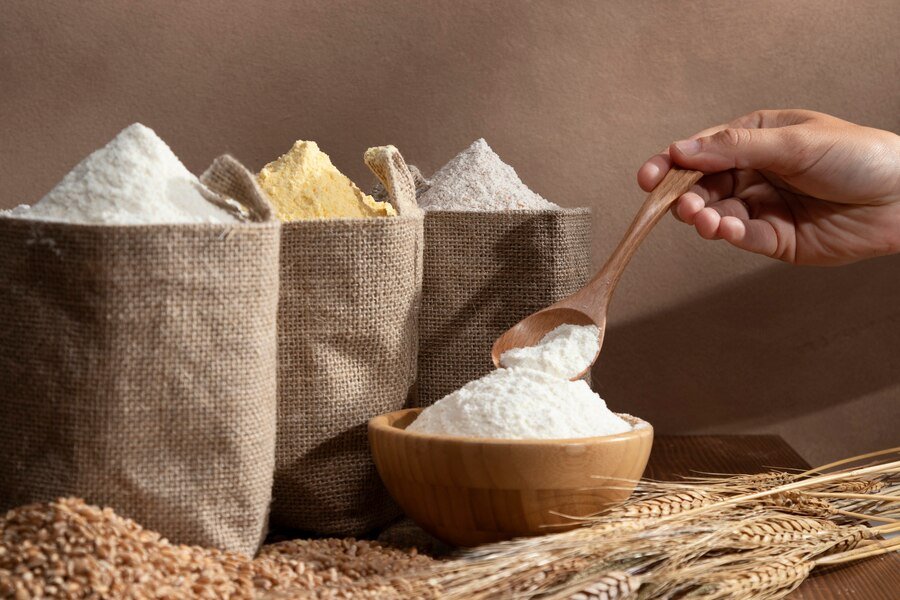
Starches are often refined (ground and powdered) in order to make them more attractive for consumption.
For example
Wheat grains are ground in order to be able to produce foods such as pastries, cakes, biscuits and so on. However, the powdering of starch grains disrupts the structure of the carbohydrate molecules and releases amylose which is easily digested by the human body. Foods containing refined starch do not require prolonged cooking to make them edible (another reason why they are popular) and this is why they are associated with high glycaemic index values.
Retrograded Starch
When starchy foods are first heated and then cooled, the amylose and amylopectin release to form a gel-like substance which passes through the small intestine undigested, and gets fermented in the large intestine. Repeated freeze and thaw cycles may contribute to retrograding starches. Retrograding of starches leads to changes in the nutritional and textural attributes of various foods.
Retrograding is the cause for staling of food, loss of crispiness and changes in flavour. The retrogradation of starch is affected by factors such as storage temperature and general composition (sugar, salt, water etc).
Resistant Starches
There are three ways in which starch can be resistant to enzymatic digestion:
If the starch is surrounded by a layer of fat, digestive breakdown will be slower. Alternately, the starch may be present in large lumps which would make it difficult to break down - this could be due to inadequate chewing. The cell walls in starch granules may be thicker and this is why the starch may prove resistant to breakdown. The cell walls in cereals or legumes often prove to be tougher. Retrograded starches (described above) may also prove to be resistant to digestion and will travel straight to the colon.
According to dietary recommendation reports published by the British Nutrition Foundation, carbohydrates in our daily diets should supply at least 50% of the energy that we need on a day-to- day basis. Sugars should not constitute more than 11% of energy consumption. The remaining energy need should ideally be made up from complex carbohydrates with a low GI and natural sugars such as fruit and milk.
4.5 Fats

Fats are also included in the category of macronutrients and are made up of two components: fatty acids and glycerol. Fats are classified as 'lipids', which is a group of compounds that are not water-soluble (but they may be soluble in other organic solvents such as acetones). If you place a drop of oil in water, you will notice that it floats on top and does not dissolve.
Glycerol is made up of three carbon atoms while fatty acids are made up of long chains of carbon atoms. Fats are said to be formed when one molecule of glycerol joins up with three fatty acids. Most of the fats that exist in our bodies and those that are found in food exist in a form known as 'triglycerides'.
In general fats are greasy, oily or waxy in texture. Fats (such as butter) may be solids at room temperature, but oils are fats that are liquid at room temperature. Although these fats exist in physically different states, they are similar in their chemical properties. More than 95% of the fats that we consume are triglycerides.
100g of fats would typically consist of the following constituents:
Triglycerides 90 - 95g
Phospholipids 4-8g
Glycolipids 1g
Here is an explanation of the terms used in the break-up of fats:
Triglycerides
They consist of three fatty acids and glycerol and are easily broken down and re-synthesised. A fatty acid group can be removed from a triglyceride by de-esterification and replaced by the process of re-esterification. The two processes are able to produce different types of triglycerides to meet the needs of the body. Esterification refers to the reaction between an acid and an alcohol to produce compounds called esters.
Fatty acids with 6 carbon atoms or less are called 'short-term chain fatty acids', those that contain between 6 and 14 carbon atoms are known as 'medium chain fatty acids' and those with more than 14 carbon atoms are called 'long chain fatty acids'. In general, fats provide 9 Kcal per gram - which is almost double the energy output of proteins and carbohydrates.
In general, the human diet mostly consists of long chain fatty acids and fewer of the medium or short chain type. The most commonly occurring carbon numbers are 14 and 16. Triglycerides can be of several different types and their physical properties are determined by the type of triglycerides present in the fat.
For example
A triglyceride made up of short-chain fatty acids is more likely to be hard in structure while another fat consisting of long chain fatty acids is more likely to have a lower melting or boiling point. Fatty acids are similar but minor structural differences can result in distinctive differences in form as well as function. They can be classified as the following main types:
Monounsaturated Fats (MUFAs) Monounsaturated fatty acids are those fatty acids that have one pair of hydrogen atoms missing from their structure and a bend at the single double bond which makes them liquids at room temperature. They are often known as omega-9 fatty acids or 'good' fats and are found in olive oil, canola oil, avocados and peanuts.
Polyunsaturated fats (PUFAs)
Polyunsaturated fats are essential fats because the body needs them but cannot produce them on its own - you need to consume them in your diet. Polyunsaturated fats consist of two or more double bonds and are usually packed less tightly together.
Important polyunsaturated fatty acids include:
Butyric acid
Caproic acid
Caprylic acid
Capric acid
Lauric acid
Myristic acid
They perform a number of crucial functions in the body including formation of coverings for nerves, building cell membranes, blood clotting, muscle movement as well as reduction of inflammation. They also help reduce LDL (harmful) cholesterol and improve the overall cholesterol profile. In addition, they help improve conditions like rheumatoid arthritis and prevent the formation of plaque in the arteries. They contain useful Omega 3 and 6 fatty acids.
Foods containing polyunsaturated fats include:
Sunflower oil
Safflower oil
Walnuts
Flaxseeds
Corn oil
Soy
Oily fish (mackerel, herring, salmon)
Saturated fats
Saturated fats contain as many hydrogen atoms as the carbon chain is able to hold; they are said to be 'saturated' with hydrogen atoms. Hence the name 'saturated fats'. Saturated fats are found in foods such as red meats, full-fat dairy products, butter, coconut and pastries. They are known to raise bad cholesterol (LDL cholesterol) and increase the risk of heart disease; it is a good idea to limit your intake of saturated fats. Ideally, we should include no more than 10% of our total calories as saturated fats.
Trans fats
Trans fats are produced by hydrogenation of healthy oils in order to solidify them at room temperature to increase shelf and prevent them from becoming rancid. Hydrogen is added to the carbon chain by an artificial process and trans fats are usually indicated on food labels as 'partially hydrogenated oil'.
Trans fats are not associated with any known health benefits and they cause several adverse health risks. These include increase in LDL cholesterol levels, increase in risks for diabetes (type II) and stroke, as well as increased insulin resistance. The good news is that increasing awareness about trans fats has led to several major UK food manufacturers eliminating trans fats from their products.
Fact
According to a report in the Guardian, banning trans fats in the UK would help more than 7,200 lives by the year 2020. Several food manufacturers in the UK have already signed up for the Department of Health's responsibility deal that involves voluntary action by the food industry retailers and manufacturers to tackle diet-related sickness
Source: www.theguardian.com
Activity
Estimated time: 10 minutes
Why is it important to be able to distinguish between unsaturated and saturated fats?
How does this help us make correct food choices?
What do you think will happen if all fats are completely eliminated out of the diet?
4.6 Phospholipids

Phospholipids are made up of a phosphate molecule bonded to two fatty acids and have a tendency to arrange themselves in two layers.They consist of a hydrophilic 'head' that is water-soluble, and a hydrophobic tail, which is insoluble in water (they are said to be 'amphipathic' in nature as they attract and repel water at the same time).
Phospholipids are crucial as they make up the structure of cell membranes and they help maintain the internal environment of the cell. The semi-permeable layer of phospholipids supports the process of diffusion of small molecules across the cell membrane. Hence, they are vital to crucial body functions including digestive processes, cardiovascular function, nerve function, cognitive function and liver function. In addition, phospholipids are responsible for transporting vitamins, fat- containing molecules and other nutrients through the body.
Phospholipids are found in foods that contain 'lecithin', component of bile that helps aid the digestive process. Foods rich in lecithin include egg yolk, soy, milk, lightly cooked meats and wheat germ.
4.7 Cholesterol
Cholesterol is a waxy substance (sterols) synthesised in the liver and has a ring structure instead of a chain structure (like other fats).
The amount of cholesterol present in the body is usually about 100g, out of which 7% is found in blood.
Cholesterol performs a number of functions in the body:
-Maintains integrity and structure of cell membranes
-Maintains βluidity of cell membranes
-Facilitates communication and transport across cell membranes
-Controls the loss of sodium and potassium ions across cell membranes
-Helps in the synthesis of bile acids which are used in fat absorption
-Helps in the synthesis of hormones including vitamin D, sex hormones and steroids
Cholesterol is usually found in animal foods and less in vegetarian diets. Plants produce a phytosterols that are known to reduce cholesterol absorption in the body. Cholesterol absorption is influenced by genetic factors, and changes in dietary intake may or may not affect absorption. Cholesterol is transported in the blood by lipoproteins (refer to module 2).
High Density Lipoprotein (HDL) and Low Density Lipoprotein (LDL) are the two primary types of cholesterol present in the human body. HDL is commonly known as 'good' cholesterol because of its ability to transport cholesterol towards the liver for disposal, while LDL is 'bad' because it deposits cholesterol in the arteries, thus increasing the risk of heart disease.
Activity
Estimated time: 5-10 minute
According to surveys and statistical analyses, food trends in the UK have taken a favourable turn. People are increasingly opting for low-fat versions of dairy products and are making a conscious effort to avoid excessive consumption of red meat.
What could be the reason for this?
Do you think the reason may have something to do with health awareness and public education regarding health in general?
MODULE SUMMARY
One of the main concerns of modern, 'faddy' diets is the elimination of food groups with an objective to lose weight. Lack of adequate intake of carbohydrates can cause sluggishness, lack of concentration and also increases cravings for sugary foods. Carbohydrate digestion begins in the mouth when food is chewed and acted upon by salivary amylase. Over-processing of food also leads to the breakdown of starch molecules thus resulting in faster enzymatic action.
Eating foods with a low glycaemic index helps us feel satiated and full for longer periods of time and reduces binging as well as erratic spikes in blood glucose levels. Fats are macronutrients which are considered essential because our body synthesises them from our diet. Each molecule of fat is made up of one molecule of glycerol and three molecules of fatty acids. Saturated fats are compounds that do not contain any carbon-carbon double bonds and contain all the hydrogen atoms they can hold; they are generally considered bad for health if consumed in excess. Food manufacturers in the UK have now consciously made a commendable effort to eliminate trans fats in food processing. Excess consumption of saturated fats may result in a build-up of bad cholesterol which in turn increases the risk of heart disease.
.svg)



