
6.1: Introduction
We read about cellulite all the time and how unsightly it can be, but what exactly IS cellulite?
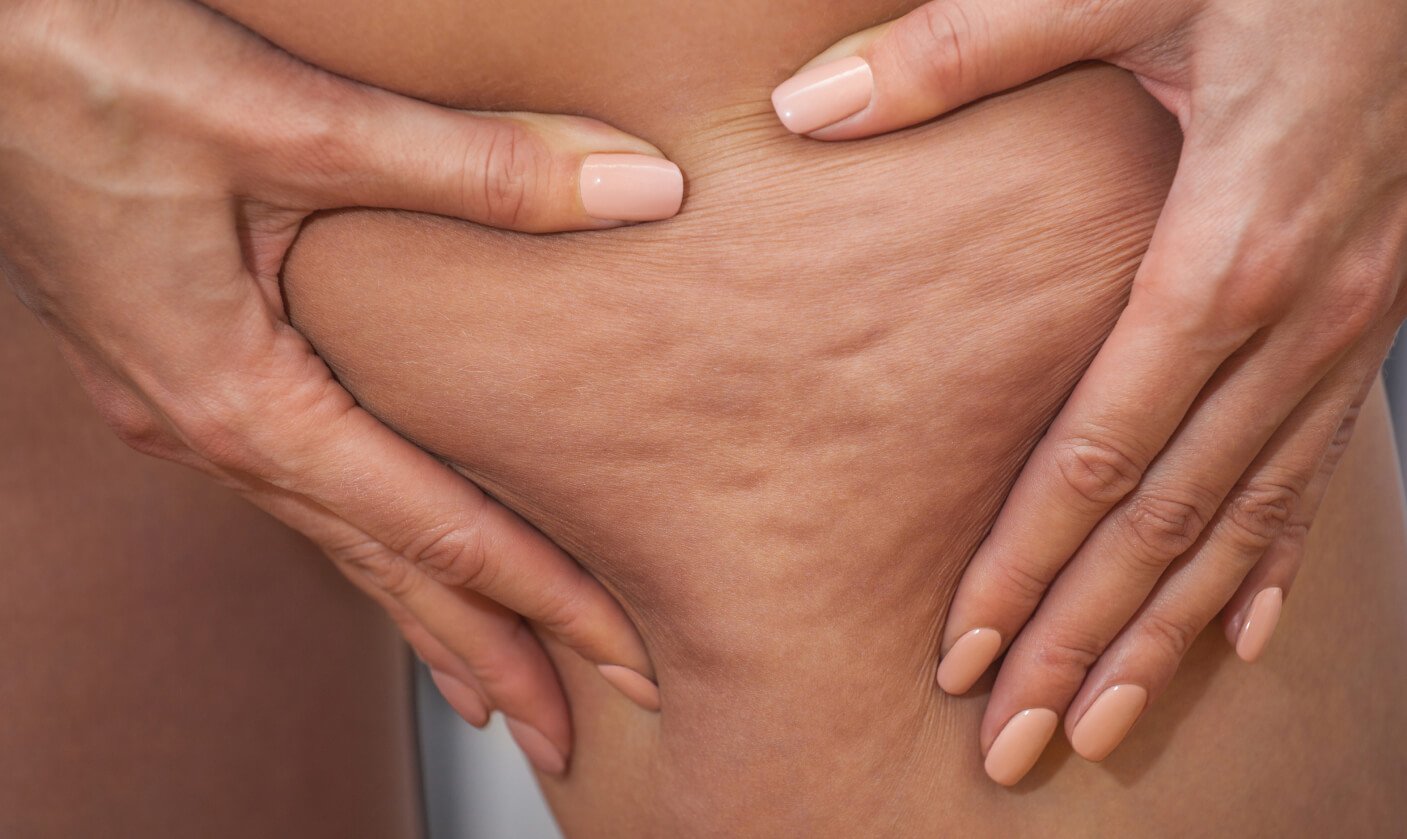
Cellulite has many names including gynoid lipodystrophy or orange peel syndrome. It is caused by the herniation of subcutaneous fat combined with fibrous connective tissue. Cellulite forms on top of the skin and gives it an appearance of dimples and nodularity usually around the buttocks, lower limbs and stomach. Cellulite forms in women after puberty and is quite common. Although cellulite is a form of fat, the cause is not always directly linked with diet and lifestyle choices. The causes can be due to hormones or hereditary. Women find it can affect their confidence in a negative way, the area can become plagued by lymph fluid and toxins around the formation of collagen. Weakened collagen creates a scenario of cellulite formation.
6.2: The History of Understanding Cellulite
The term has been used since the 1920s in health and beauty spas to promote their service. It was appearing in English language publications by the late 1960s and its first ever mention was in Vogue magazine. From then on it was understood as a problem that effected many people but was not considered a health risk or part of an illness.
The Formation of Cellulite
6.3: How Does Anti-cellulite Massage Work?
Anti-cellulite massage treatment is designed to assist in reducing cellulite. It includes different techniques including skin brushing, deep tissue massage and pressure. The idea is to loosen up any fatty tissue underneath the skin in order to smooth out the appearance of the skin. This is often combined with aromatherapy.
FACT
95% of women have cellulite somewhere on their body Source: Dr Ariel Haus
6.4: What Does the Therapy for Cellulite Involve?
Like all other massage therapy sessions one will always offer the client a consultation in person. Follow all of the protocol and ask about their medical history and about their general personal details. What is their reason and aim for booking Anti cellulite massage therapy? When you and the client have agreed on the aim and what the session will involve. Show the client how to get into position and drape them with towel or sheets. They will begin the session lying face down and your first task is to brush the skin with vigorous, energetic strokes covering the calf muscles, hamstrings, glutes and hips. By dry skin brushing it help remove any dead skin cells and toxins that secrete through the pores of your skin. This method also increases blood flow in the area and decreases lymph fluid or build-up of toxins.
Apply necessary oil treatment onto the client's skin using upward strokes on the thighs, buttocks and hip region to warm up the muscles. Then move on to using firmer massage techniques to stimulate and mobilise the detoxification process that is caused by the lymphatic system. Results vary with clients but results from an effective session can be seen instantly and the effects can last up to a few days. You should let clients know that ten sessions is usually what is required for optimal long-lasting results. You can even get testimonials with 'before and after' pictures from willing clients. After the initial ten sessions it is recommended that the client returns for one session per month. All of your sessions should include the consultation and all after advice care that you can possibly offer. The treatment is not suitable for people who have kidney problems, diabetes, circulation problems, sensitive skin or large skin surface areas of broken capillaries.
6.5: Anti-Cellulite Massage Techniques
Before starting anti-cellulite massage therapy, you first have to use oil or lotion to provide lubrication to prevent rubbing and stretching of the skin. Start with applying oil from the feet upwards to stimulate flow through capillaries and veins.
Kneading Technique
The kneading method involves squeezing and lifting cellulite prone areas including upper arms, thighs and calves. First the therapist will knead the areas using his fingers. Then he will use his hands to knead larger skin areas like the buttocks, stomach, hips and stomach and it helps break down stubborn fat deposits and helps release them. Kneading is aimed at bringing more blood to the surface.
Wringing Massage Technique
The therapist will use a wringing motion (similar to wringing out clothes) with his hands. This form of massage movement involves the use of both hands and the therapist will grasp the flesh hard. The firmness of the wringing massage movement helps break down cellulite. The wringing method is especially recommended for fleshy areas like the hips and the thighs.
Knuckle Massage Technique
The therapist uses his knuckles to massage to pummel cellulite-affected areas. Using the knuckles may sound like a painful process but actually, the therapist uses his fists and then uses the knuckles. The repeated pummelling movement helps dissolve stubborn fat deposits and they are eventually flushed away. The 'S' Massage Technique
Place your thumb at right angles to your client's thigh area. Now grasp as much cellulite affected flesh and twist in opposite directions in order form the letter 'S' with your fingers. For best results, use both hands and concentrate on applying firm pressure on the folds of skin on the thighs. Alternate the 'S' massage technique with deep strokes to break down and dislodge fatty deposits.
The Cellulite Brush Technique
The therapist will use a special brush made of firm bristles that will help stimulate blood circulation in the area. The improved blood flow minimises the appearance of unsightly cellulite bumps on the skin surface. Although cellulite brush technique is recommended for use on dry skin, you may wish to apply a few drops of oil to facilitate easy brushing. Cellulite brush manufacturers provide clear instructions on how to use the cellulite brush. But experts recommend that using the cellulite brushing technique over the entire body helps promote overall blood circulation that in turn helps cellulite breakdown. This is a more effective method than simply brushing the targeted area.
How to Reinforce Anti-Cellulite Massage Techniques
Regardless of the number and sequence of the massage techniques used, there are specific steps that help reinforce the effect. These are referred to as 'draining' movements and include movements like stroking and smoothing. Draining strokes are utilised at the beginning and end of every massage session.
Stroking and Smoothing
Stroking is typically done with fingers and is intended to help your client relax; it also has a mild sedative effect. Stroking is followed by smoothing movements. Smoothing is usually done with a talc powder and helps smooth muscles. Both stroking as well as smoothing movements provides a soporific effect and analgesic effect (soporific means the movement will tend to make the client rather sleepy).
This in turn helps the effects of the massage penetrate deeper into the body because the muscles are relaxed. As the anti-cellulite massage effects penetrate deeper, the circulatory and lymphatic systems are able to be better stimulated. As a result, the broken down fatty lumps and deposits are dissolved and washed away thus leading to reduction in cellulite. There is yet another technique called MLD or Manual Lymphatic Drainage which involves rhythmic pumping strokes aimed at stimulating lymphatic flow without increasing blood flow. This innovative technique, developed by Dr Emily Vodder, should be performed about two to three times a week. However, it is recommended that MLD should only be practised after proper training and certification.
6.6: Benefits of Anti-cellulite Massage
Anti-cellulite massage will not cure cellulite but can effectively treat it. You should always encourage clients to live a healthy lifestyle combined with proper nutrition.
Anti-cellulite massage can:
Smooth out the contours of skin around thighs and buttocks
Reduce dimpled look of fatty deposits
Improve appearance and texture by removing dead skin cells
Promote lymphatic drainage, preventing the build-up of toxins
Module Summary
Lessons Learned In this module you have learned the science of Anti-cellulite massage therapy and what causes
cellulite. You know that the problem is more of a concern in women. We have discussed how to give an anti-
cellulite massage. You know the steps that must be taken in consultation and have watched the instructional video on how to prepare clients for an anti-cellulite massage.
.svg)



