
1.1: How to Study this Course
Simply reading this course will not make you a competent therapist. To get the most out of this course you will need to apply what you learn and proceed in a conscientious manner: Find a quiet place to study your course. Distractions will not be conducive to progress. Study the elements at a sensible pace, do not rush, take your time. Read each element carefully and make sure that you understand it before you move on to the next element. Make notes as you go along, underline any paragraphs and sentences which you feel you would like to remember. These are very simple guidelines, but if you follow them then you are sure to get the maximum possible benefit from this course. Apply yourself and you will learn more and enjoy this course more than you ever expected.
1.2: Introduction to Massage Therapy
Massage has been used since thousands of years in different cultures around the world and is one of most ancient healing techniques. History records in China documents suggest the use of massage as far back as 3,000 years ago. Details regarding massage techniques and pressure points were explained in the book called 'Con Fou by Lao Tse'. This book formed the basis of holistic healing therapies like acupressure and massage which are extensively used today. As a matter of fact, the evidence of cavemen drawings shows that massage was used thousands of years ago as a sensual as well as caring activity. Massage was also extensively used in India, Persia, Japan Greece, Rome and Egypt as a form of relaxation as well as for healing various ailments. The Romans, in particular, were well-known for being the earliest to introduce the concept of hot/cold rooms, steam baths and massage rooms. Massage has been used since several centuries as a beauty aid, for general well-being, to boost suppleness and flexibility as well as to promote recovery from illness and injury. Hippocrates had recommended massage as necessary for the 'rubbing of joints and the circulatory system'. He also gained insight into the fact that upward massage was extremely beneficial as it helped stimulate blood flow towards the heart. Unfortunately, although massage continued to flourish in eastern cultures, its usage dwindled in the West. It resurfaced during the period of the renaissance. Massage, as we know the technique today, was referred to conventionally as a 'Swedish massage' and began to emerge in the 18th century. In the UK, the first structured massage proponents were a group of women called 'The Society of Trained Masseuse'. The aim was to establish massage as a healing modality and their services were extensively used during World War 1. Their massage therapy proved very helpful in easing pain and was used in the treatment of nerve damage, shell shock and so on. The Society of Trained Masseuse was transformed later into the 'Chartered Society of Massage and Medical Gymnastics'. Research in Europe at this time indicated that manual pressure and zone therapy (early reflexology) were effective in releasing psychological and physical tension. It was at the same time that researchers became aware of the use of essential oils in massage. Since essential oils were also found to have a soothing effect on stress, essential oils began to be used as a medium in massage therapy. Until the 60's, massage was regarded more of a luxury than a healing treatment.
Today, massage is widely used all over the world and is accepted as a form of alternative or holistic therapy. Several clinics, hospitals and healthcare centres in the UK offer massage as a complementary therapy in the aftermath of surgery and other conventional treatments. Massage is now accepted as an effective healing technique that helps alleviate pain, reduce stress, rehabilitate sports injuries, induce relaxation and promote overall wellness. It's now an integral part of physical rehabilitation programs and is extensively used in the treatment of a wide spectrum of health conditions including back ache, arthritis, fatigue, depression, infertility and diabetes among several others.
1.3: What is Massage Therapy?
In general, massage includes a number of techniques that involve rubbing, kneading, pressing or manipulation of soft tissue and muscular structure. In other words, massage includes touch, movement and re-patterning therapies (collectively referred to as bodywork therapies) that are aimed at affecting structural changes to the body. Similarly, since the technique treats both the mind and body, it's also considered as a 'somatic therapy'. Although massage therapists commonly use fingers and hands, they are also known to use elbows, feet and forearms. Massage therapy utilises somatic therapies that include but may not be limited to tapping, kneading, pressing, rubbing, compression, stroking and rocking friction. There are more than 250 variations of massage therapy techniques. Practitioners provide massage therapy in a variety of settings including clinics, hospitals, healthcare centres, studios, gyms, homes and workplaces. They may use aromatic or essential oils to create a soothing environment. Providing a conducive environment helps maximise the benefits of massage. Massage helps relieve pain associated with occupational and muscular stresses, chronic pain conditions as well as muscular overuse. Massage therapy is used to treat acute and chronic health conditions and is able to work for a wide variety of injury rehabilitation, illness and disability.
Massage is beneficial for the nervous, muscoskeletal, lymphatic and other organ systems in the body. Massage is an effective pain management technique. The 'gate control theory' explains that pain signals do not reach the brain instantaneously from injured or strained muscles. They encounter certain neurological 'gates' before they reach the brain. Massage helps 'close' the gates to pain signals which is the reason why we feel a sensation of relief when we rub or stroke an injured tissue.
1.4: How Does Massage Work?
Massage is responsible for introducing physiological changes in the body through two main types of responses: The relaxation response and the mechanical response. The two responses work together to produce physical as well as mental benefits.
Relaxation Response

A relaxing massage calms down your breathing and slows down your heart beat. This is referred to as a 'relaxation response'. The relaxing sensation in turn boosts the level of a hormone called 'serotonin'. Serotonin has a positive impact on our emotions and feelings. This is why one experiences an overall feeling of wellbeing during and after a massage session. Massage geared towards a relaxation response is called 'relaxation massage'.
Mechanical Response
The manual manipulation in massage therapy has two major effects on the body: It increases blood and lymph circulation: Massage promotes manipulation of soft tissue which in turn boosts blood and lymph flow. This results in improved supply of oxygen and nutrients to the cells. Enhanced cellular health leads to improved functioning of tissues which in turn leads to effective elimination of waste products. In addition, there is reduction of swelling in
soft tissues. Relaxation of soft tissue (which includes tendons, muscles, ligaments and connective tissue). The normalisation of soft tissue also helps release deep connective tissue and nerves. Massage geared towards manipulation of connective tissue is called 'rehabilitative massage'.
Massage therapy helps minimise painful muscular spasms and contractions. It also helps alleviate nerve compression. To explain this further, muscles have a tendency to squeeze the nerves around them when they contract. This is called 'nerve compression'. When nerves are compressed, they are no longer able to transmit messages to the brain in an efficient manner. Once the nerves are relaxed, they are able to transmit messages and consequently, the brain is able to control the organs more effectively. All organs in the body share common neurological pathways that carry 'pain signals'. They share these pathways with other nerves, bones and muscles. Hence, when nerves get compressed, organs often display signs of distress and dysfunction. Massage helps soft tissues find improved alignment and balance.
1.5: Physical and Psychological Benefits of Therapeutic Massage
Massage therapy has a host of benefits to offer. Not only does it help relieve physical symptoms but it is also instrumental in relieving stress.
Stress and Tense Muscles
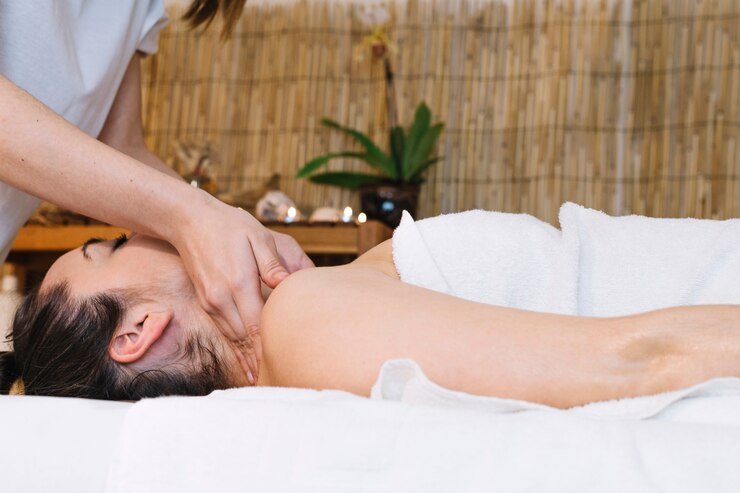
Almost all of us have experienced muscular aches, pains and spasms at some point. Physical and mental stress can both result in muscular tension. For example: We may experience pain after a slip or a fall. Repetitive typing and constantly peering at a computer monitor all day long (all too common these days) can likewise lead to a sore shoulder, neck and back. Such muscular tensions are referred to as 'repetitive stress injuries' or RSIs. Similarly mental stress also leads to tense muscles. When we experience stress, the body reacts immediately with a 'fight or flight' response. The heart beats, faster, your breathing becomes shallower and your muscles become tenser. Your body is gearing you up either to run (as fast as possible) or fight. Once the stress is over, your body's physiological reactions return to normal. However, if you experience prolonged periods of stress, your muscles are subject to excessive 'fight or flight' responses repeatedly. These muscles then begin to experience permanent strain or tension. Even the frown or scowl from worrying over your tax returns can strain the facial muscles and result in a tension headache. Feeling stressed over long traffic queues and craning your neck in the process often leads to neck stiffness. The skeletal muscular system is composed of more than four hundred muscles. Prolonged stress can injure or fatigue any of these leading to pain, tension and stiffness over time. The underlying concept is that a muscle under sustained tension needs alternate relaxation phases in order to maintain its functionality. The lack of a relaxation phase leads to tightness and strain. Massage is extremely beneficial in helping to relieve muscular tension and reducing inflammation. Recent research indicates that massaging tired or injured muscles results in the suppression of chemicals called 'cytokines'. Massaging also stimulates 'mitochondria' or tiny hair-like structures found in cells that convert glucose into energy. The increase in mitochondrial stimulation and suppression of pain pathways helps ease muscular stress. As a matter of fact, massage techniques work in a way quite different from conventional drugs and painkillers. Painkillers suppress muscular pain but not promote internal healing. On the other hand, massage helps relieve pain as well as promote cell recovery. A research study conducted by Cedars Sinai Medical Centre, Los Angeles, indicates that massage results in the decrease of cortisol, a stress hormone. This study actually shows that massage therapy is effective in mitigating the physiological effects of stress. There are several significant benefits associated with therapeutic massage beyond the instant feeling of relaxation and wellbeing.
Here's a look at the overall benefits associated with massage:
1. Massage helps relieve stress by easing muscular tension. If you're sitting in an office chair all day, chances are that your back, neck, shoulders, arms etc are likely to feel sore and stiff. Massage therapy can help relax muscles.
2. Massage encourages relaxation and the effects of a massage last long after the session is over.
3. Massage helps reinforce correct posture and healthy movement. Poor posture causes some sets of muscles to work really hard while others become weak. Slumping, for example, not only looks unsightly but also increases pressure on internal organs and impacts the digestive system. Massage helps ease muscles that are strained due to poor posture. The body is then able to realign itself in a natural way.
4. It helps improve blood circulation and flow. The improved blood circula1tion helps improve body functions and provides tired muscles with the oxygen-rich blood that aids internal healing. The rubbing, kneading and pulling also helps blood to flow through congested areas and flushes out lactic acid from muscles.
5. Research indicates that a consistent massage therapy program can help reduce diastolic and systolic blood pressure. It also lowers urinary and salivary cortisol levels besides alleviating anxiety and stress levels.
6. Massage helps improve range of motion and flexibility. We are more prone to muscle injuries today than say 50 years ago. This is not because we are exercising but because we are leading sedentary lives. Massage therapy works on muscles, tendons, ligaments and connective tissues to improve natural joint lubrication. Regular massages can help keep stave off sports injuries as your flexibility levels improve.
7. Massage boosts deeper, complete and relaxed breathing. According to Ann Williams, Education program Director at Associated Bodywork and Massage Professionals, regular massage can help improve breathing which in turn has a beneficial effect on respiratory conditions including bronchitis, sinus, allergies, and asthma. Massage works to loosen constricted respiratory tissues located at the front and back of the body. Massage techniques like 'tapotement' are known to loosen mucus and ease lung function by promoting airway clearance (more on medical massages in a later module).
8. Massage helps ease headaches. More than 25 million people living in the UK report experiencing frequent headaches. About 8 million British individuals experience migraine. Consistent massage programs help relax trigger points and relax muscles. Massage also helps improve sleep quality and minimises distress symptoms which in turn reduce the occurrence of headaches. The Indian head massage is particularly known as an effective panacea for tension headaches.
9. Massage facilitates post-operative rehabilitation: The aftermath of surgery is an important period for recovery. This is the time when movement is re-learned and range of motion is gradually reinforced. Massage is an effective supplement to standard rehabilitation procedures and can help aid faster recovery. It helps break up scar tissue and keeps muscles supple and flexible. Massage helps increase body heat which in turn promotes internal healing of muscular tissue.
10. Massage therapy boosts the immune system: Regular massage stimulates the body's natural cytotoxic capacity (this is action of the body's natural 'fighter cells'). Massage also helps boost the number of T-cells which act as a first line of defence against disease.
1.6: The Advantages of Massage
The Emotional Benefits
Massage is pleasant. Hardly a revelation, but it's important to remember this when we delving into the medical literature, or into heated debates over the benefits of massage. The good feeling that you get after a massage is hard to test and quantify, but no less real for that. Since it is so difficult to conduct controlled studies of something as personal and subjective as wellbeing, clinical studies will commonly flatten the experience of patients down to something that they can attach a number to. Thus we get indexes of factors like 'anxiety' and 'depression' which give us some information, but scarcely capture the entirety of the benefits of massage. In any case, massage therapy does, it seems, reduce anxiety and depression. It also has some effect on the experience of pain. It can't necessarily reduce the immediate feeling of pain, but over the course of a series of massages patients report lower overall pain.
The Medical Benefits

Medical studies have found that massage therapy does help patients in many ways1. Studies haven't been able to reproduce all the benefits claimed by massage and bodywork practitioners, but they have shown enough to conclude that massage isn't entirely useless.
The Placebo Effect
The most important, and least controversial, benefit, is the placebo effect. This refers to the fact that if you are receiving treatment, you are more likely to get better – even if the treatment does nothing to you. This form of 'mind over body' health improvement (your health improves because you think your health is improving) is powerful, and has been demonstrated in clinical trials. It is particularly significant in areas such as pain relief, where the symptoms experienced are a blend of the physical and psychological. Among other articles, see Moyer et al, 2004, A meta-analysis of massage therapy research. Psychological bulletin 130(1):3-18 So, any form of treatment in which the patient believes can benefit them. But massage probably has advantages beyond this. When we feel pain, our instinct is to touch the affected part of the body – and this seems to bring at least a minimal level of relief. If touch can relieve pain in this context, then why not also in massage.
Neurological Effects
Slightly different again from the psychological effects are the neurological effects. This refers to the effect massage has on the low-level nervous system. Depending on the form of massage used, it can make the nervous system either more or less excitable, leading to greater or lesser responses to stimuli. This can be measured by testing !”Hoffman's sign” - the reflex motion of the thumb when a fingernail is flicked.
Mechanical Effect
Mechanical pressure on muscles increases the flexibility of those muscles, and decreases their stiffness. This is a purely mechanical effect, dependent on the physical structure of the muscles.
The Lymphatic System
Your body drains waste away from muscles and other tissue through the lymphatic system. This is far from perfect, and when it slows down your body can be left feeling (and looking) puffy and unpleasant. This tends to happen overnight, when the entire lymphatic system slows down, and it is also worsened by poor diet. Fortunately, the circulation of lymph can be improved by manual manipulation – that is, by massage.
Circulatory System
Of the physical effects of massage, perhaps the clearest are on the circulatory system. When you touch, squeeze or press any part of your body, you increase the circulation to that area. Massage takes this effect, and systematically applies it. As a result, massage is a good way to deal with minor problems of the circulatory system. Meanwhile, massage will be having other effects on the central circulatory system, reducing blood pressure and heart rate. Why this happens isn't fully understood, but it seems to be a reaction to changing levels of hormones circulating in the body.
Hormonal System
Massage can measurably alter the levels of certain hormones circulating in the body. Cortisol, known as a 'stress hormone', is reduced by a massage. Meanwhile a good massage raises the levels of dopamine and seratonin circulating around the body. Dopamine and seratonin make you feel good – they relax your heart, they reduce your sensitivity to pain, and they reduce blood pressure. In the longer term, low levels of dopamine and seratonin are associated with depression. That doesn't mean massage can cure depression, but it does highlight the link between having a back-rub and feeling good. So, here is one mechanism by which massage makes you feel good. It isn't clear why massage has these effects on the hormones, but that doesn't stop it being a good thing.
Fact
No wonder massage feels so good - There are approximately 5 million touch receptors in our skin Source: Heart Prints Wellness
1.7: A Closer Look at the History of Massage
Many people would argue that massage has been practiced for thousands of years, and that we can find evidence of it in the earliest recorded civilizations. As we will see, there is a large element of truth in this, but perhaps also an element of wishful thinking. We can be fairly sure that in the ancient world – China and India, Greece and Rome –some 'massage-like' activities were known. This doesn't mean that they were doing anything identical to modern massage, and certainly not that they thought of it in the same way.
Egypt
The evidence for massage in Egypt is based on interpretations of Ancient Egyptian art. This is naturally an imperfect science, but there are tomb paintings which appear to show some form of massage in progress. Proponents of reflexology have gone further: on the basis of a painting which shows one Egyptian touching the feet of another, they have claimed that reflexology was practiced in this culture.
India
India is a good example of how massage-like activities can be carried out without being thought of as massage. Ancient Indian traditions held close to what a Roman might call mens sana in corpore sano – a healthy mind in a healthy body. That is to say, the physical and the philosophical were intricately linked. Many philosophies saw the body as a microcosmic reflection of the entire universe, or as a manifestation of a divine or transcendental power, constrained only by unawareness of the true nature of man. Realizing this inner nature would allow for magical powers, or wealth, or escape from the cycle of reincarnation, depending on the wishes of the practitioner. Where does the massage come into this, you might well ask. Well, once you have accepted the human body as linked to the divine, a natural next step is to start manipulating the body to control, or to experience, the divine. This approach bring us to yoga and tantra, both of which contain substantial elements of massage and bodywork. If this explains the prominence of 'religious' massage, India also encountered massage at the other end of the spectrum, in erotic handbooks like the kama sutra. This taught ways of stroking and manipulating the body which seem very massage-like.
China
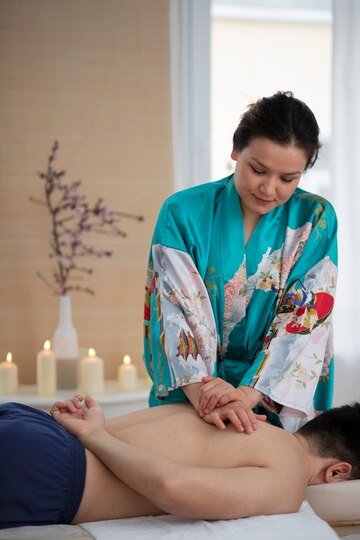
China probably shows the clearest evidence of the practice of massage. Our understanding of the early history of medical and bodywork practice in China remains poor – but whereas in Egypt, Greece and Rome this is because of a shortage of written evidence, with China almost the opposite is true. Scholars of ancient China are buried under the wealth of documents, let alone the range of evidence which can be gleaned from archaeological research across China. On this basis, we believe that massage in China can be dated back as far as the second, or possibly even the third, millennium BC.
These earliest dates, cannot, however, be proved on the basis of written evidence from the time, since writing not developed in China until perhaps 1400BC Because of the continuity of Chinese culture over the millennia, we can also tell something of the nature of ancient practices by looking at what continues to this day. Traditional Chinese Medicine is the form of these ancient practices which is used today, having been codified and condensed under the control of the Chinese Government during the 20th century. This Government control is hardly a new thing. China was the location for what are almost certainly the first massage tests – in around the first century CE! Central to ancient Chinese massage practices was Tui na. Tui na is first mentioned at around 200BC
by the medical writer Zhang Zhongjing in his book "Prescriptions of the golden cabinet" (jing gui yao le). 'Tui na' literally means 'poking and pinching'. In the currently-known form, tui na is very similar to modern Swedish massage. Although this may be partly due to modern influence from other world massage traditions, it is safe to say that many elements of tui na have remained constant for hundreds or thousands of years. Moreover, tui na and related techniques probably had their own influence on Japanese and Korean massage, which in turn influenced the West.
Greece and Rome
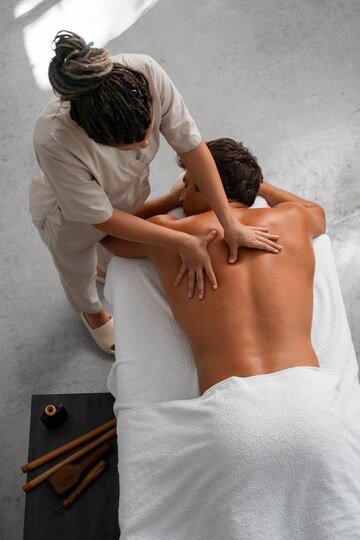
Some of the practices which went on in Roman baths appear quite close to massage, although they do not appear to have been conceptualized in this way. Even Julius Caesar, the man regarded as one of Rome's greatest emperors, after whom are named Kaisers, Czars, and even the month of June, benefited from massage. Caesar probably suffered from epilepsy. According to the ancient historian Pliny, he had himself pinched all over the body on a daily basis – a process which certainly sounds like a basic form of massage. Another eminent ancient proponent of massage was Hippocrates. Hippocrates is regarded as one of the greatest early doctors, and his name lives on in the 'Hippocratic oath' which guides doctors in the ethics of their craft. Hippocrates wrote of the benefits of anatripsis and friction. Frictio gives us the modern word 'friction', while 'anatripsis' literally means 'rubbing up'. Such treatments, Hippocrates writes, brought benefits including relaxing, constricting, thickening, or thinning, depending on the way in which they were conducted. In much the same way as modern massage has found a home in sports medicine, the Greeks would perform massage on athletes.
Swedish Massage
So-called Swedish massage is the massage equivalent of vanilla ice-cream. It's the basic massage, the kind that you're likely to get if nothing else is specified. 'Why Sweden?' you might be wondering. All the other sources of massage seem to be in the Far East or around the ancient Mediterranean. Sweden, beautiful as it may be, doesn't feel like somewhere you would expect to find a massage tradition. It all goes back to 1813. Europe was convulsed by the Napoleonic wars, Britain was completing its conquest of India – and, in Sweden, a man by the name of Per Henrik Ling founded the Royal Central Gymnastic Institute. Ling's 'gymnastics' (also known as the 'Swedish Movement Cure') centered around "clappings, knockings, stroking, kneading, pullings, shakings and vibratings" – the core elements of Swedish massage. Massage was only one part of Ling's program, but it was brought to the fore by later practitioners. In particular a Dutchman, Johan Georg Mezger, expanded on Ling's ideas, and introduced more familiar French terms such as petrissage and tapotement. So, in the work of Ling and his followers we can see the core of 'Swedish massage'. Ling didn't invent all this himself, but for a long time historians have had difficulty untangling his sources. Some of his ideas probably came from Turkey.
1.8: UK Regulation of Massage Therapists
As of 2008 the UK government has enforced a policy of extending public protection by encouraging voluntary regulations for complementary therapy - this also includes massage therapy. The Regulation of massage therapy is a process that can ensure that practitioners will be trained and fully qualified to a proper standard. A register is held for the public to check who qualified therapists are and so that people can make formal complaints if necessary. Registration of therapists is voluntary and people can still practise massage therapy even if they are not registered. If somebody qualified before the new act was out in place, one can demonstrate their skills and prove they are up to date with therapy and still be able to join the register. Guidelines of the MT1 CORE CURRICULUM MASSAGE THERAPY (revised) as of August 2011 The GCMT stands for General Council for Massage Therapies. They aim to ensure that the best practises are upheld within the industry and set out to maintain agreed objectives within the council. They are: Promoting the adoption of the highest standards of practise in all things concerned with massage therapy. Offering members of the public a way to access treatment to the highestpossible standard. Establish a nationwide professionally recognised standard of training and conduct and competence. This is to protect the public.
Act as a unifying body and bring different organisations together, promoting good will between all who engage and represent the teaching of massage therapy. Establish standards that continue to improve overall professional development.
A core curriculum was established by members of the GCMT to help the UK achieve a high standard throughout the industry. The structure of the core curriculum has been based upon and focuses on the principles of the National Occupational Standards for Massage Therapy/ Bodywork. The Prince of Wales Foundation for Integrated Health has also provided much funding towards the GCMT to help keep it up and running. Massage therapy is the systematic use of classic massage and other massage techniques to try and improve physical health and mental wellbeing. Massage therapists should be suitably trained with enough experience to apply this type of therapy.
1.9:Understanding the Social Issues with Massage
Massage therapy may be on the rise, but it still brings with it a complex of social difficulties. Some of these are simply the remnants of past prejudices and misunderstandings, but others represent real and unsolved difficulties in how we integrate massage with our society as a whole. Many of these difficulties cluster around the fact that massage blends into medicine at one end, and into sexuality at the other. Neither is a comfortable fit.
Massage and Sexuality
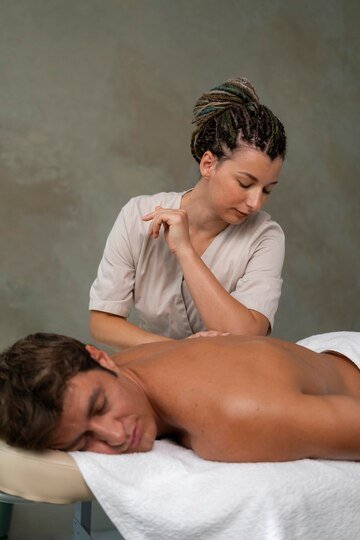
Massage therapists have long faced the difficulty of confusion with 'massage parlors' that use the name as a front for prostitution. This has undoubtedly deterred many clients who would otherwise have sought massage, and has caused a great deal of confusion. It has also made many people think of even genuine massage as somehow 'seedy' or disreputable, slowing the spread of massage through society. But even if we confine ourselves to genuine massage, we will find ourselves confronting serious issues about the boundaries between massage and sexual intimacy. People are likely to be aroused by any close physical contact, such as that involved in massage. This is doubly true when it takes place in a relaxed setting, and when partial nudity is involved. Whatever steps a massage therapist takes to prevent the encounter becoming sexualised, the boundary is likely to be inadvertently crossed at some stage.
The Medical Basis of Massage
Many 'alternative' treatments have met with an extremely hostile reaction from the mainstream medical community. Doctors tend to be concerned that, whereas their own treatments are based on rigorous, painstaking work to identify the causes and possible solutions of health problems, alternative treatments can prosper without even the slightest test of their plausibility or effectiveness. People who dedicate their lives to proving the usefulness of treatment, and who labor under strict regulations, find it galling that the public will accept other treatments on vague recommendations. With this background, there has naturally been some hostility to massage from the medical community. But it is impressive how much medical acceptance there now is of at least basic Swedish massage. Massage, it seems, has expanded beyond the ranks of 'alternative' treatments, and can be regarded by doctors as having real therapeutic value.
One sign of this change is that massage therapy is now covered by some medical insurance policies in the United States (although cynics might say that this just means insurance companies have realised that including massage is a good marketing ploy)
Fact
A 60 minute massage is roughly the same as 7 to 8 hours of sleep for your body Source: Heart Prints Wellness
Module Summary
Lessons Learned: In this module you have learned about the importance of massage therapy and how it can benefit the human body. We have discussed how different types of massage therapy exist and the different techniques that are used. You have learned about the history and origins of different massage therapies from varying countries. understanding the medical basis of techniques. Massage therapy can benefit the human body in different ways, this module has explained to you how each one is positively effected through correct massage therapy techniques.
.svg)



