
4.1: Introduction
What methods there are to perform a massage?
This isn't really a definitive 'how to' guide', as by far the best way to learn massage is by watching somebody else do it, and having them teach you in person. That's why all the different massage technique modules in this course are accompanied by a video tutorial. A little experimentation can be no bad thing, but attempting to teach yourself massage can be confusing and potentially even dangerous. I've tried to indicate which strokes could cause damage if
performed incorrectly Above all: if it hurts, stop! Massage isn't about contorting your body in unnatural ways, and if you're hurting somebody you're probably doing something wrong. With that, on to the techniques
4.2: Massage Strokes
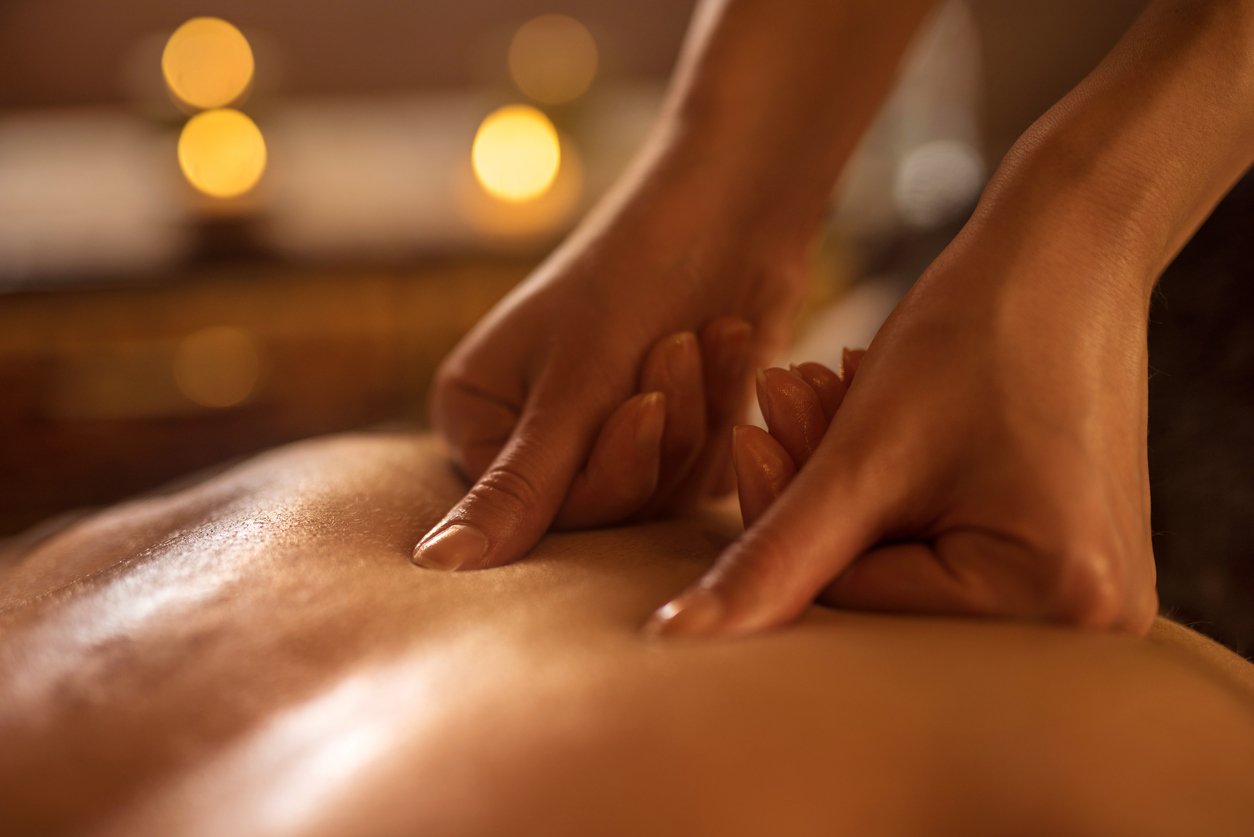
Effleurage
Effleurage is the most common stroke used in massage. It is a gentle sliding of the hands over the skin. For the most part, effleurage strokes are pointed towards the heart. Commonly, effleurage is used at the beginning of a session, to enable the therapist to get a sense of the customer's body: its sensitivity, the placement of the muscles, and so on. It is also used at the end of treatment as a gentle 'wind-down', and as a filler to move between different strokes. Simple as it is, effleurage increases blood flow to the skin and to some muscles. Variants on the basic pattern of effleurage include: Shingles. Otherwise known as 'alternating hand massage'. This uses the gliding of both hands to massage an area of skin, one hand in front of the other Bilateral effleurage. This is a back-rub technique, in which one hand is placed on either side of the back, and both are used for effleurage
Tapotement
Tapotement is a massage by hitting. It's a general term, covering a number of more specific techniques – many of which are described in more detail elsewhere in this text. Tapotement is used particularly heavily in warm-up massage for athletic events, but is generally an important part of Swedish massage. It may draw some of its effects from the way in which air is compressed against the skin by each blow. To keep tapotement comfortable, it is important to make sure that the blows are made at equal strengths and intervals. It can be quite tricky to get the level of force right. Making the blows too heavy can be uncomfortable, and hence cause a 'tensing up' reaction which isn't ideal. However, a certain degree of force seems to be beneficial. Tapotement is best performed on areas of the skin which do not have bones or particularly sensitive spots just underneath. Which areas of the body this includes will depend on the person being massaged – if you are skinny and bony, you may benefit less from tapotement.
Hacking
Hacking isn't a very descriptive term for this technique – put away those images of woodsmen with axes! Hacking is a form of very light, rapid tapotement, in which you hit somebody with the fingers of each hand alternately. The force comes from the wrist rather than from the arm – not least as a protection against accidentally hitting too hard.
Cupping
Cupping is something like slapping with a cupped palm. If the hand is not kept bent enough, the result will be as unpleasant as if you simply slapped the patient.
Beating
Beating lets you use your fists on the patient. Make each hand into a fist and gently beat on the patient's skin with the bottom of each fist alternately. As with other tapotement, the trick is to avoid getting over-enthusiastic and hurting the patient. It may help not to concentrate fully on making contact with the patient. Instead, imagine that you are tugging on ropes or ringing a bell, and think of the impact of your fists on the patient's skin almost as a side-effect.
Pummeling
Pummeling is a 'punching' type of action, done rhythmically and evenly with both hands. Since it can feel more intensive than most massage strokes, it is generally only performed on areas with a good covering of flesh. For the same reason, pummeling isn't usually performed on easily-harmed patients such as children and pregnant women. It is supposedly good for breaking down fatty deposits under the skin.
Petrissage
Petrissage techniques consist of short, circular strokes that pick up and squeeze the muscles. This improves blood flow to the muscles, and can also help the muscles to eliminate their waste products.
Plucking
Plucking involves gently lifting a spot of skin, and then letting it slowly slide back through the fingers. Think of your hand as being like the beak of a bird, opening and closing.
Raking
Raking is a way of massaging the back and sides by following the contours of the ribcage Nerve Strokes As I mentioned above, shiatsu massage places great emphasis on the use of the fingertips. The counterpart to this within Swedish massage is the 'nerve stroke', gently running the fingertips across an area of skin.
C-Bowing
This stroke gets its name because an area of skin is bent into the shape of the letter C. You place your two thumbs next to each other on a patch of skin, and grasp the skin with your fingers. Then you push the thumbs gently into the skin, and pull back with the fingers. The result is that the skin gets distorted into a 'C' shape.
J Stroke
Another stroke named because it makes a shape like a letter. With all these letters, there's a whole world of massage poetry waiting to be explored! Anyway, this stroke is made with the knuckles of a clenched fist, pressing quite deeply into the skin and moving in a J shape.
Friction
Friction is one of the strokes aimed at the muscles, and so the practitioner should ignore the skin itself as much as possible. As well as the usual benefits of increased circulation, friction strokes can break up knots of muscle. Variants of friction can use different parts of the hand, and they are mostly performed quite quickly.
Friction can be performed:
With the palm
With the knuckles
With the fingertips
With the thumbs
4.3: Other Techniques
Ice Massage

The technical term for this is cryomassage – but that doesn't mean anything more than 'cold massage'. The idea is to use ice packs on the body. Ice used in this way has the same effects as it does when you put a bag of frozen peas onto a bruise: it eases pain and reduces inflammation. The idea of using cold in this therapeutic way is hardly new. We believe some form of cryotherapy was used in ancient Greece and Rome, although we would be stretching definitions if we tried to call this a 'massage'. Ice baths came, went, and came again as fads during the nineteenth century. Readers of classic children's book The Secret Garden may recall a particularly unpleasant description of such a treatment being given to an unwilling young boy – hardly the best recommendation for a massage treatment. But modern cryotherapy resists the temptation to leap to extremes. Most therapists will try to avoid anything that feels unpleasant, both for medical reasons and because hurting customers is bad for business!
Aquatic Massage
Conducting a massage in water opens up doors to methods which would be impossible in other circumstances. When we are immersed in water, we are not subject to gravity in the same way, and a massage therapist can have access to our entire body while we float gently. Aquatic massage is particularly suitable for people who have difficulty moving flexibly – people suffering from arthritis, for instance. It is also good for pregnant women.
Stone Massage
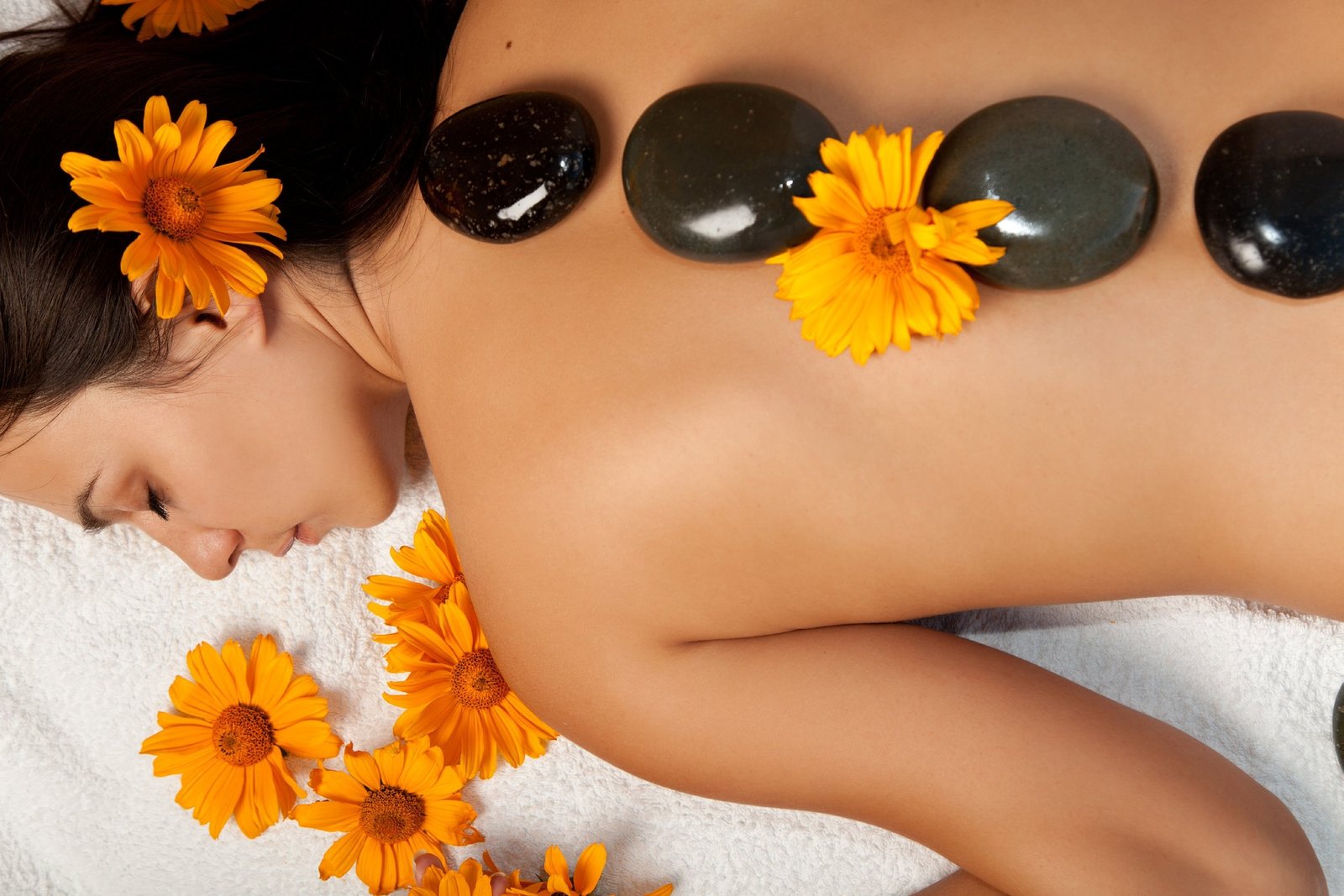
In a stone massage, the therapist will heat basalt stones in water, and then place them onto your body. The warm (not painfully hot!) sensation is pleasant and can also relax muscles.
Acupressure

Acupressure is acupuncture without needles. It uses the same model as acupressure to understand the body, imagining a network of key points with the power to relieve tension. Acupuncture tries to manipulate these points with needles, whereas acupressure uses massage-like pressure from the hands. Compared to other forms of massage, acupressure can be distinguished by its whole-body approach. A problem experienced in one part of the body will not necessarily be cured by acupressure applied to that body part. Instead, the therapist will use her knowledge of the acupressure network in the body to choose a part of the body to work on to solve the problem experienced.
The theoretical basis of acupressure comes from the Taoist idea that qi (life force) flows through the body in a set pattern of 'meridians'. Manipulating the body in the right way can balance these meridians, and thus relieve pain.
Cup Massage
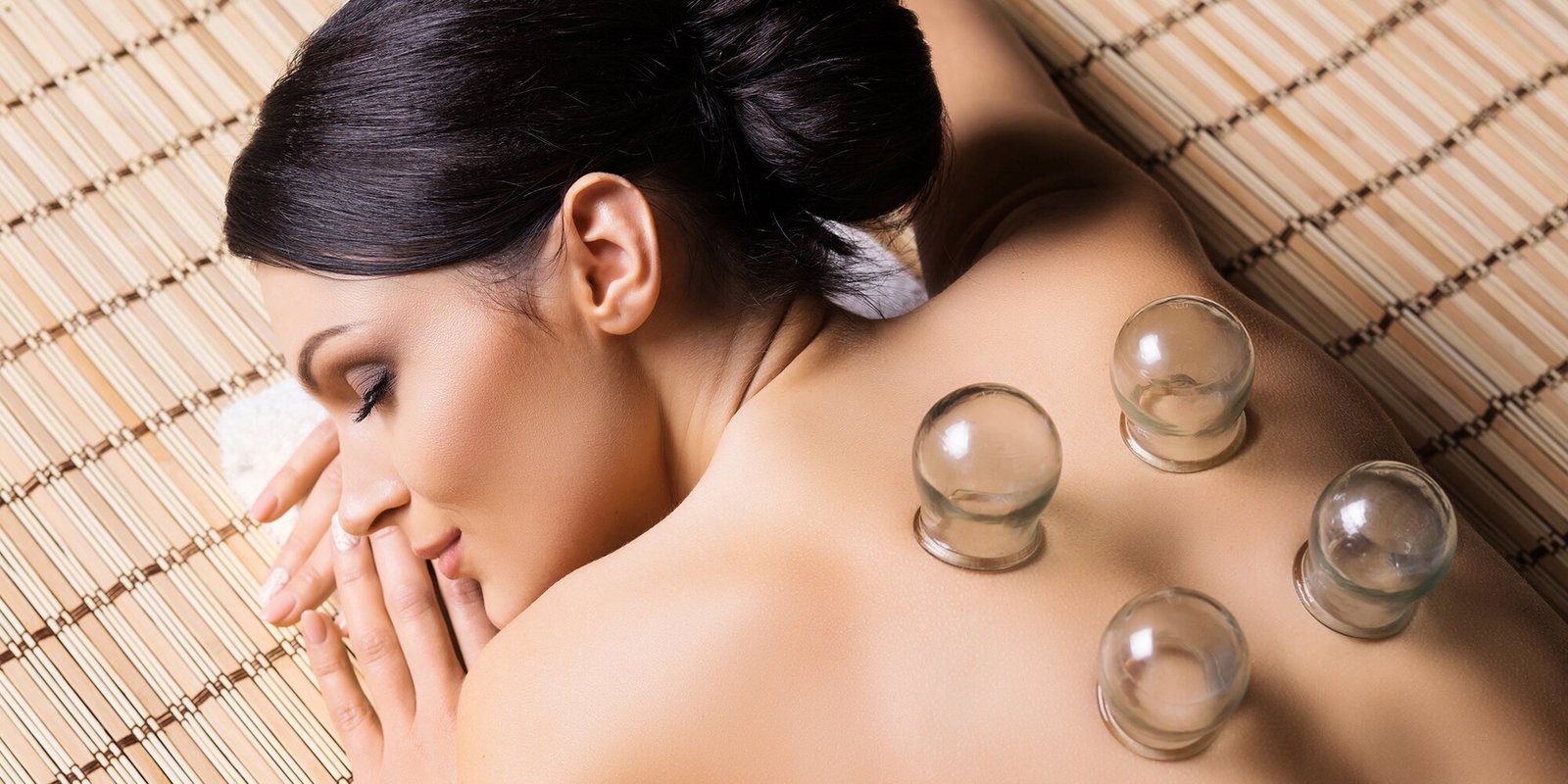
Cup massage needs to be distinguished from the 'cupping' massage technique, which simply involves cupping the hand. Cup massage, by contrast, involves placing vacuum cups on parts of the body. The use of vacuum cups allows the masseur to 'pull up' the skin, something which is very hard to do in other ways. The lower pressure may also improve the circulation

'Finger pressure' isn't a bad description of massage, is it? That's what shiatsu is. The technique, like the words, hails from Japan, although it is in part a synthesis of concepts from elsewhere. Shiatsu was developed in the early part of the last century, by individuals such as Tenpaku Temai (whose 1915 book Shiatsu Ryoho brought us the word shiatsu) and Tokujiro Namikoshi. It was Namikoshi who brought Shiatsu to the attention of the world, giving treatments to people as well- known as Marilyn Monroe, boxer Muhammed Ali, and Japanese Prime Minister Shigeru Yoshida. Shiatsu has spawned many variations. In water shiatsu, often given the ungainly name watsu, the process takes place underwater. This reduces the practical difficulties associated with massage on dry land. One of its chief proponents (who holds a trademark on the name 'watsu') was Harold Dull, a Californian Shiatsu practitioner of recent years.
Ashiatsu
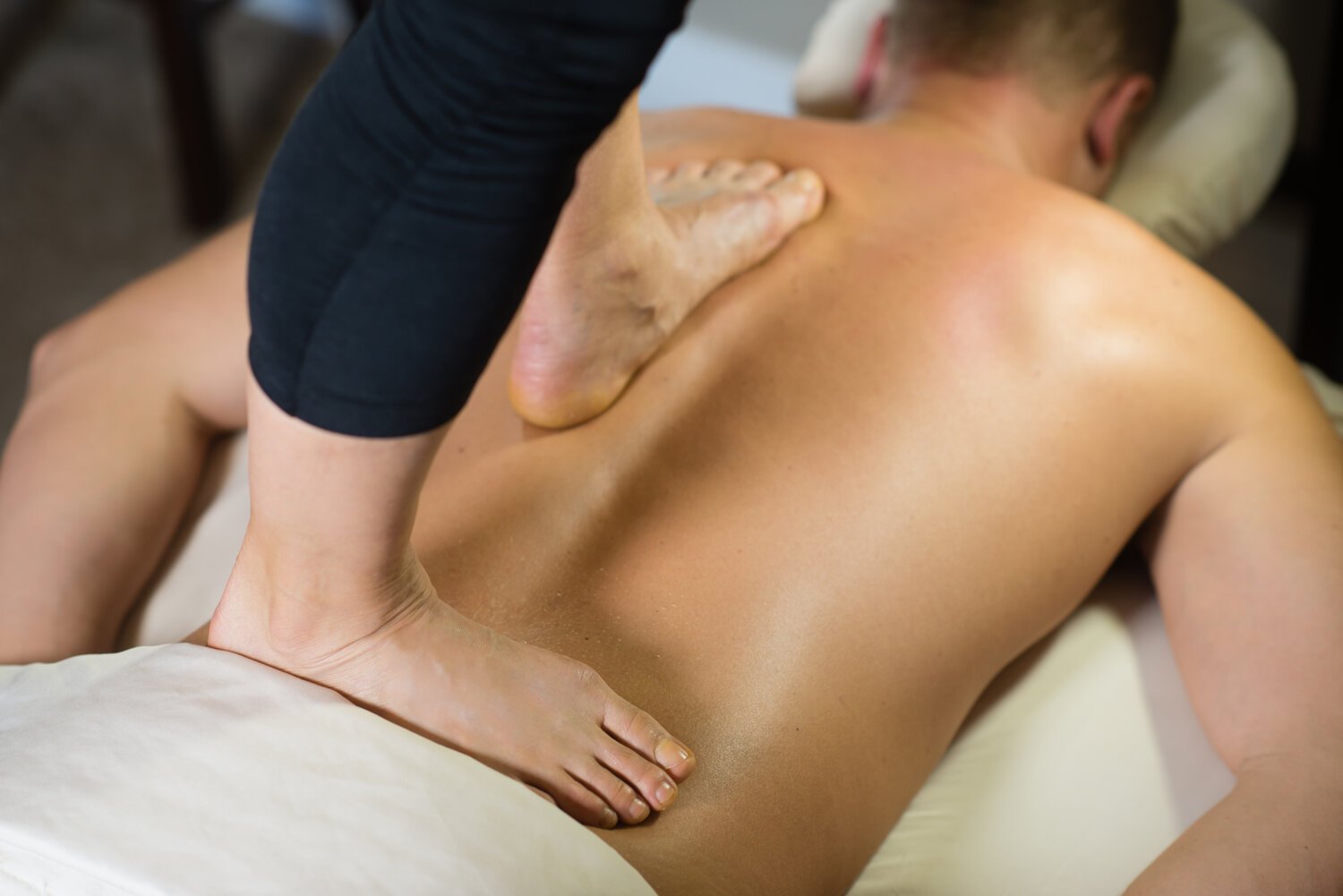
'Ashiatsu' means 'foot pressure': in ashiatsu, the therapist uses his or her feet to massage the patient's back. Since the full weight of a masseur on one's back would be neither pleasant nor safe, the masseur suspends herself from a bar. Hence the full name of the practice: 'Ashiatsu oriental bar massage'. Ashiatsu is one of the more recent additions to the world of Western massage, arriving only in the 1990s.
Chair Massage
.jpg)
A chair massage is performed on somebody when they are seated in a chair, rather than on a massage table as usual. It presents some challenges, and is unlikely to result in as satisfying a massage as is possible using a table. Parts of the body can be hard to reach, and those that can be reached will often be tensed in ways that are hard to loosen with massage. This is true even when the 'chair' is really a stool. With these disadvantages, why would anybody choose a chair massage? The basic reason is convenience. Chair massage can be conducted at your place of work, and some companies will arrange for all or part of their workforce to receive an occasional chair massage.
Chair massage is often conducted without removing any clothing – again, something that is suboptimal in terms of the massage itself, but which makes the massage much more convenient. In short, chair massage brings the possibility of massage to stressed, exhausted, overworked people, who might not otherwise find the time or inclination to get a massage. It isn't just for businessmen, though. The spread of massage to unusual new locations has been driven by chair massage. The 'massage bars' which have become popular in airports generally make use of chair massage. Some conferences and similar events provide on-site massage, and you will read occasional news reports of chair massage being set up in alternative places. The techniques used in chair massage are constrained by the awkward body position and the presence of clothing on the patient. Effleurage isn't a good technique in such situations: it tends to move the clothing over the skin, rather than moving the clothing itself. Percussive techniques are less affected, and so assume a slightly more prominent role. But the real stars of the chair massage are the fingertip-heavy techniques, often derived from Shiatsu.
4.4: Massage as Part of Other Therapies
Many massage therapists work within some wider theoretical context. They understand the pressure and manipulation that they apply not simply on the immediate practical level, but as fitting into a wider framework of how the body works, and how to maximise its potential.
These theories come from the widest backgrounds imaginable – Indian and Chinese mysticism, hard- nosed American science, and everything in between. The following paragraphs summarise some of these schools of thought. We will have to venture a little way beyond massage itself in order to understand them, but the trip should pay for itself by explaining a lot of the background for massage.
4.5: Massage vs. Bodywork
For the purposes of simplicity, we are mostly avoiding the term 'bodywork', but if you read elsewhere you'll probably find it cropping up an awful lot. Essentially, you can think of bodywork being a slightly broader term than massage. Massage is understood by some people in a limited sense, to include only techniques similar to the basic Swedish massage: pressing and manipulating the skin, and so on. Practices such as 'Rolfing' and 'Reiki', which are closer to the New Age movement and further from the pragmatic, nineteenth-century origins of Swedish massage, might not be included. So we have the term 'bodywork' to incorporate this broader context.
The Alexander Technique
The Alexander Technique has its strongest following among actors and dancers. It is named after its creator, Frederick Matthias Alexander, who developed it around the start of the twentieth century as a systematic process for increasing wellbeing by improving posture. Alexander's insight was to concentrate on the damage done to our bodies by unthinking physical habits. When we sit, we slouch. When we lift objects, we exert muscles that are ill-equipped for the task, while we under-use muscles that could do the job better. Practitioners of the Alexander Technique attempt to be continually mindful of the effects of their posture, and to improve it through this constant awareness.
The Feldenkrais Method
Like the Alexander Technique, the Feldenkrais Method is named after its creator. The eponymous Dr. Moshe Feldenkrais began from a background in Judo. He wanted to teach people to know their own bodies, and hence to be able to move in a powerful, flexible way.
Structural Integration
Structural integration is the brainchild of Dr. Ida Pauline Rolf – hence it's alternate name of Rolfing. It is based around the idea that muscles become restricted by 'fascia' (connective tissue), and that this fascia can be loosened through massage. Such treatment, which takes place over ten sessions, is believed to 'unlock' the body Breema Bodywork From the Kurdish culture of southern Turkey comes Breema bodywork. It takes its name from the village if Breemava, in which it was practiced before being brought to America by a certain Jon Schreiber
Turkish massage techniques were one of the original sources for what has come to be known as 'Swedish massage', so it is hardly surprising that Turkey has something to tell us about massage. But the Kurdish culture, while connected to Turkey, is quite distinct. The Kurds, who have their own languages and live separately in mountainous regions, have produced a form of massage which emphasises harmony with nature.
The 'Breema center' (a Californian organisation which claims trademark control over the word Breema) lists nine principles of this harmony:
Body comfortable
No extra
Firmness and gentleness
Full participation
Mutual support
No judgement
Single moment/single activity
No hurry/no pause
No force
These gnomic phrases need some explanation from a Breema teacher to be understood. But even just reading them gives an idea of the Breema approach: emphasising rhythm, continuity, and balance.
Reflexology
Some massage therapists will base their foot massage on the theory of reflexology. Reflexology holds that there exists a connection between each area of the foot and a particular part of the body. Hence, reflexologists believe that it is possible to treat ailments of the body by manipulating the appropriate part of the foot.
FACT
65% of patients reported that reflexology helped with the symptoms of migraines and tension headaches Brendstrup & Launse (1997) Reflexology was introduced to the West in the first half of the twentieth century, primarily by
William Fitzgerald and Eunice Ingham. Here are some of the connections claimed by reflexologists. Note that different reflexologists will propose different links between the foot and the body. Also be aware that neither the points on the foot nor the parts of the body correspond exactly to the common understanding of them, but are tied in to mystical understandings of anatomy.
Top of head – toenails
Pituitary gland – knuckle of the big toe
Temporal area – side of big toe
Thyroid glands – ball of the foot
Manual Lymphatic Drainage
Manual lymphatic drainage is an example of massage tailored to the treatment of a specific group of medical problems. It aims to improve the operation of the lymphatic system. This system of ducts across the body is responsible for removing fluid from parts of the body where it is not needed, for transporting fat around the body, and for producing immune cells. In the 1930s Dr. Emil Vodder developed a massage-related technique to treat immune problems.
4.6: Areas of the Body
The following sections describe how massage can be applied to particular parts of the body. Massage techniques for different parts of the body have much more in common than they have apart, and much of the time it is enough to be guided by personal intuition as to which techniques are best suited for each person and for each situation.
Feet

The foot massage has evolved its own style and foibles. It is often performed as part of a manicure. The alternative treatment of reflexology (see above) has attempted to expand foot massage into a therapy for the entire body. But foot massage can be very beneficial, without using reflexology at all. It might include: Stretching the toes, by pressing them backwards or upwards Effleurage on the surface of the feet. This is best done by expanding the massage beyond the foot itself, and incorporating the lower leg into the effleurage strokes. Massaging the ankles. This can be particularly soothing after somebody has exhausted their feet by walking, and can also help with circulation problems
Face
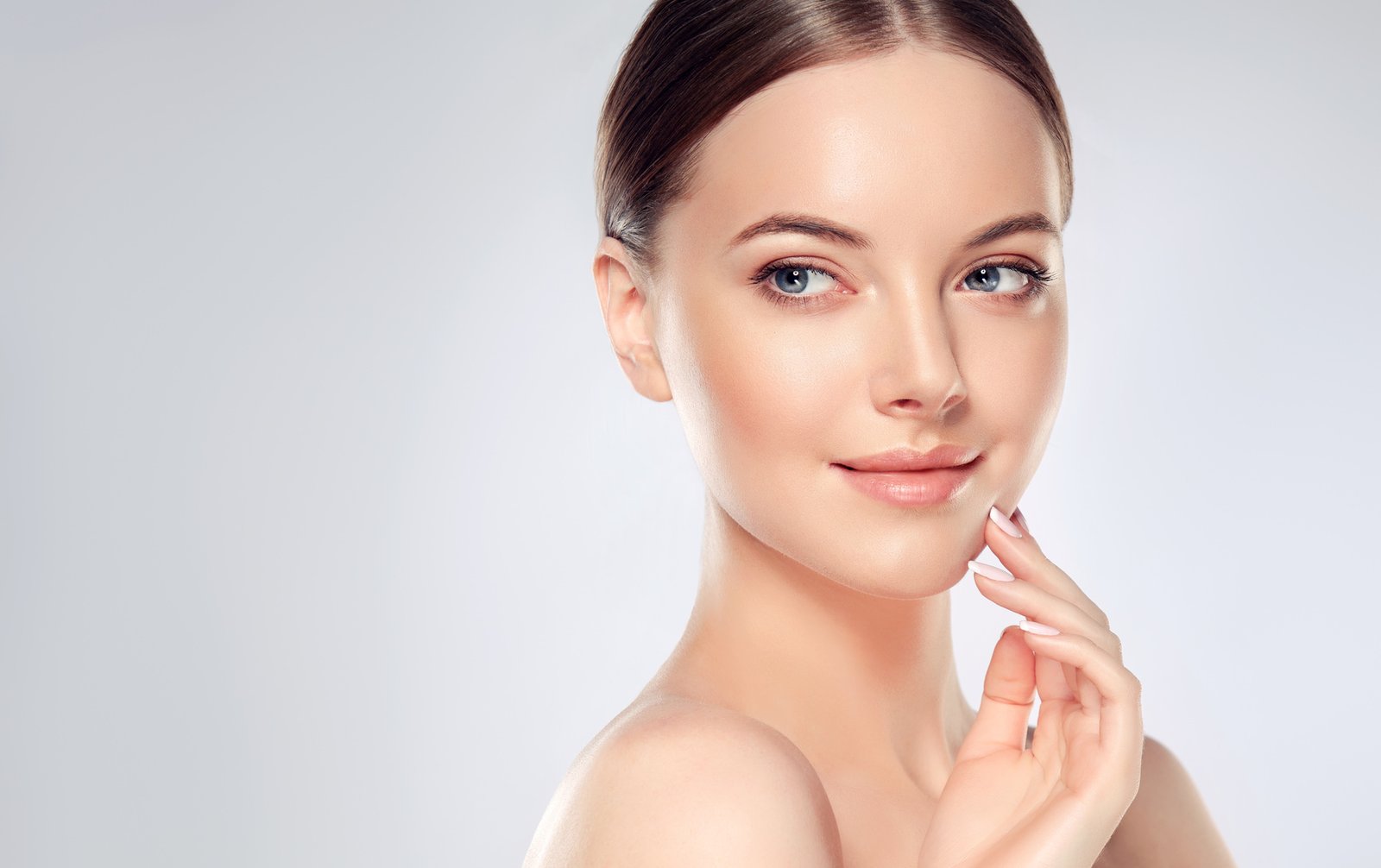
A belavi facial massage combines a standard massage with beauty treatments intended to improve the health and appearance of the facial skin. The linkage between massage and beauty is a sensible one in the case of the face. When your face looks puffy and pale, the lymphatic system is likely to blame. If the lymph ducts do not remove waste products from the face quickly enough, they will remain under the skin and give a puffy appearance. Facial massage can stimulate the lymphatic system, enabling it to remove this waste and make the face look much more vibrant. Facial massage also can be a good way of relieving conditions such as a blocked nose, combining the usual psychological benefits of massage with an unblocking effect.
Particular considerations when giving a facial massage are: The muscles in the face are particularly fragile and close to the surface, and they need to be treated with a delicate touch. Similarly, percussive massage is not generally a good idea with the face. Concentrate on effleurage, and on shiatsu-like finger work. Facial massage should usually be done mainly with the fingers. The area of skin concerned is too small, and too crowded with other features, to make much use of palms or fists Mind the eyes and the mouth. Be aware not just of where you are putting your fingers, but of any massage oil you are using. Use only oils and lotions which are harmless if they get into the eyes or the mouth. Use only limited quantities, and apply them in such a way that they will not drip into the eyes or mouth. Don't forget the neck! If you are giving a facial massage, it is often best to combine it with a neck massage. The neck is full of lymph nodes, many of them connected to the face. Therefore a massage which improves lymph circulation in the neck will also improve lymph circulation in the face.
Head
A head massage can build on a facial massage, combining it with massage of the scalp. This can relieve some of the symptoms of a headache. It can also be very soothing and relaxing, especially when you are tired. The scalp can be massaged somewhat more vigorously than the face itself, but again effleurage should be the main technique used.
Back
The back is one of the easier parts of the body to massage, and is a good place for beginners to start learning. Here are some of the peculiarities of that part of the body, to watch for: It is generally possible to press quite hard during a back massage, as the back is fairly robust and hard to damage The exception to this is the spine. The spine is normally quite resistant, but special care is needed because the effects of damaging the spine are so catastrophic. Make sure you know of any back problems that your customer has experienced, and avoid the spine if you are worried about it. If you are massaging one side of the back, stand on the other side of the customer.
Use effleurage at the start of a back massage, both to get a feel for the locations of the muscles and to ease your patient gently into the massage. Try raking of the ribcage, but watch to see how your customer reacts. Some people find raking an uncomfortable experience.
Module Summary
Lessons Learned In this module you have learned about the different kind of massage therapies available. Many clients will have different needs and you can attract a wider clientele if you know a good range of different techniques. Massage technique is the foundation of therapy and if you do not master it you will not be able to give clients what they want. This module has identified the different types of therapies you can use to assist your massage techniques, you now also understand how to treat different areas of the body with proper form.
.svg)



