
Care for older people
Older people living in care homes are three times more likely to fall than older people living in the community.
25% of older people who fall in care homes suffer serious injuries.
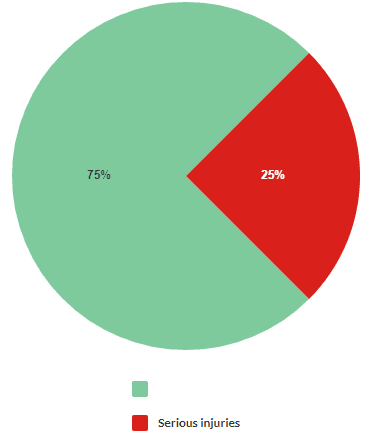
What do you think the percentage is of people admitted to hospital from care homes after a fall?
40%
Older people are more at risk as they may be suffering from one or more of the following conditions:
- Poor balance or muscle weakness
- Infections like UTIs that can cause dizziness and confusion
Postural hypotension – can cause a drop in blood pressure resulting in dizzinessPoor vision resulting in people not being able to see slip or trip hazards
For some individuals, simply the fear of falling may result in them mobilising less.
This can cause them to be weaker and more unsteady when they do need to move.
Care and support for people with learning disabilities
As mentioned before, falls are the leading cause of injury, including fractures, in people with learning disabilities.
People with a learning disability may suffer from one or more of the following conditions:
As we have mentioned the challenge of osteoporosis in both older people and people with learning disabilities, it is worth spending a moment to understand this condition.
Essentially, it is a disease that causes thinning of the bones. It causes the bones to become weak and brittle. Older women who are past menopause are at the highest risk although it can also affect men and younger people. Osteoporosis increases the likelihood of a fracture or breaking a bone when someone falls.
This short video (1:53) features Dr Sarah Jarvis explaining what osteoporosis is and what can increase the risk of osteoporosis.
Other causes of falls
Expand each of the points on the picture to identify other potential causes of falls in care settings…

Worn by the people we support.
Badly fitting, loose or worn footwear can cause falls.
Be aware of slippers and slipper socks as these can be a slip hazard.
Loose laces or people walking with their heel on the back of their shoe are also causes.
Check people’s footwear regularly.
We need to understand the risks to people who have conditions that may cause them to fall as well as know how to safely carry out our work.
Lack of staff awareness in areas such as slips, trips and falls, manual handling and the specific needs of the people they are supporting.
Obstacles, such as equipment in the way.
Think about where equipment like wheelchairs, hoists and walking frames are left.
Are they in anyone’s way?
.svg)



