
11. Demonstrate how to move and assist people and objects safely
Symbol for peace
Before
carrying out any moving task, you must read the risk assessment and then do a
pre-handling assessment.
An ergonomic
approach looks at manual handling as a whole. It takes into
account a range of relevant factors, including the nature of the task, the
individual, the load, the working environment and any equipment required. There are a couple of acronyms used in social care to
help you remember the checklist in your pre-handling assessment.
The
acronym PEACE is sometimes used. This acronym stands for:
= | Person |
E = | Environment |
A = | Activity |
C = | Care |
E = | Equipment |
Another acronym commonly used is TILEO. This
acronym stands for:
T-Task
I-Individual
L-Load
E-Environment
O-Other factors
You can see the
items are similar. It doesn’t matter which one you are taught as long as you
cover all the elements. We are going to focus on TILEO. These are the questions
TILEO is designed to help you to remember:
Task

· What is the purpose of the
task – do you definitely need to do it?
·
Could the object or load stay where it is?
·
Can you use lifting aids?
·
How long will it take?
·
Where will it start and end?
·
Are there any obstructions that need moving?
·
Does the task require any sudden movements or
pushing, pulling, bending or twisting?
Individual
· Have you been trained to
make the necessary move?
·
Do you have experience of previously making
this move?
·
Do you know how to use the equipment
confidently?
·
Are you wearing the right clothing and
footwear?
·
Are you fit enough to do the task?
·
Do you have plenty of energy or are you
tired?
·
Do you have a history of back trouble?
·
Are you pregnant or suffering from health
problems?
Load
· What is the size, shape,
temperature, condition and nature of the load?
·
Are you clear about where you are going from
and to?
·
Are you lifting from the floor?
·
Are you able to hold it firmly?
·
Can you keep the load close to your torso?
·
What is the load’s weight? How can it be
safely distributed? Do you need help?
·
Is the load hot, cold, sharp or difficult to
handle?
Environment
·
I Is it safe to lift?
·
Are there any distractions or obstructions that
need moving?
·
Is the lighting good enough?
·
Is the temperature ok?
·
What are the floor levels like?
·
Is there enough space?
Other factors
· Do you need Personal
Protective Equipment (PPE)?
·
Do you have the required PPE?
·
Does PPE get in the way?
·
What equipment are you using?
·
Is equipment correct for the task and in good
working order?

Health and safety regulations require you to:
Avoid-Hazardous manual handling, where possible
Assess-Identify risks of injury
Reduce-Reduce the risks
Good handling techniques for lifting objects are:
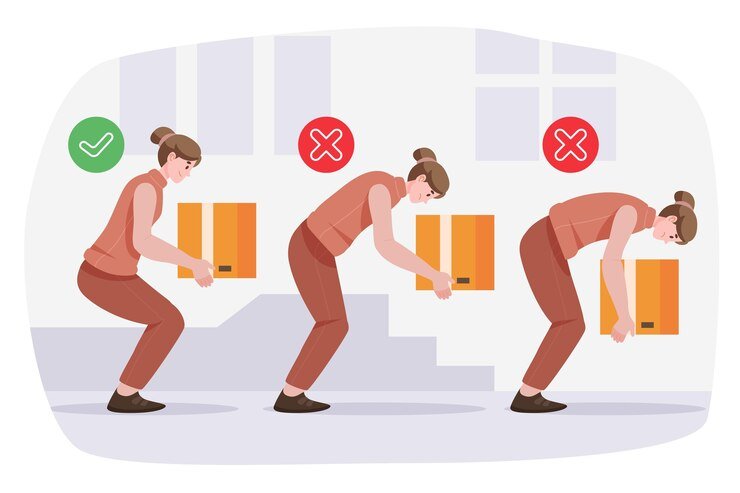
the lift – Can you use equipment to help you? Know where the load is going. Will you need help? Remove obstructions. Rest along the way. Change your grip, if necessary. |
Get a |
Adopt |
Maintain |
Do not |
Avoid |
Keep |
Move |
Do not |
Put it |
different challenges to consider when you are moving and assisting people. Especially
when you are working with someone who has dementia or a learning disability.

These could be:
·
Disorientation
·
Communication challenges
·
Unable to give consent
·
Anxieties
·
Memory loss
When you are supporting people, make sure you give
particular attention to:
Communicate-Use good, clear communication
Reassurance-Offer lots of reassurance and praise
Preparation-Prepare the area slowly and sensitively
Inform-Let the individual know what you are doing
Follow-Follow the care plan and risk assessment
Manufacturers-Follow manufacturers’ equipment instructions
Review-Check daily notes for concerns or changes
.svg)



