
Materials and equipment that could assist in administering medication are:
Gloves must be worn and hands washed before and after touching medication and individuals.
Asthma spacers are tube-like devices that attach to inhalers to support a person taking asthma medicine.
A spray is placed into a chamber at the base of a mask, a fine mist of the medication is released into the mask and the individual inhales.
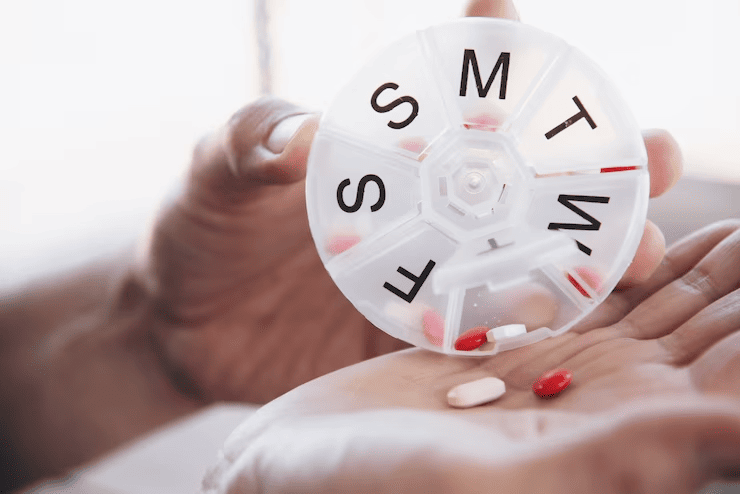
Individuals can be independent by using a compliance aid.
These should be considered if packs and bottles are difficult to open, or if the person has difficulty remembering whether he or she has taken medicines. Compliance aids will show carers and individuals if medication has or has not been taken.

Pharmacists may supply tablets in a “Monitored Dosage System” or MDS.
These are designed to simplify the administration of solid oral dose medication.
For example, an MDS may contain a 7 day supply of medication with space to take tablets 4 times each day with 28 compartments in total.
There many different types of MDS. They are sometimes known as blister packs.
The Pharmacist would carry out a review of an individual’s needs to see which MDS is appropriate.
The Pharmacist will:
.svg)



