
MODULE 7
Foundations & Groundwork: Building the Base for Structural Integrity
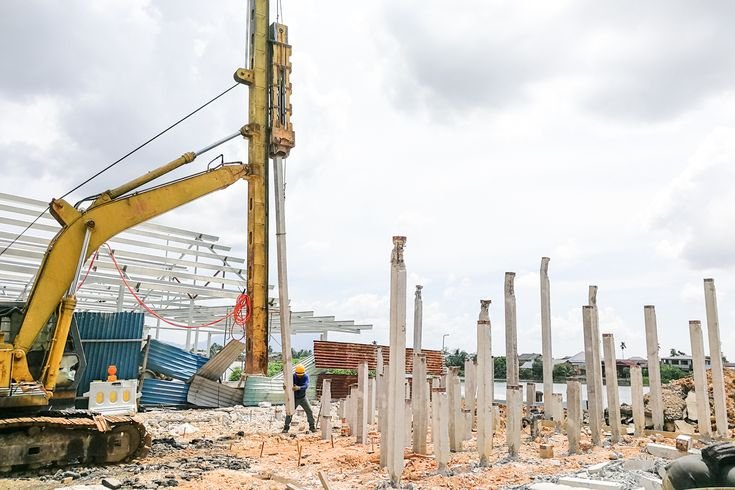
A structure’s longevity and stability depend on properly executed site preparation and foundation work, which ensure the building can withstand loads, settlement, and environmental forces. This module covers two critical phases: site preparation (excavation and leveling) and foundation construction (trenching, footings, and slabs).
1. Site Preparation: Excavation and Leveling
Before construction begins, the site must be carefully prepared to create a stable base. Excavation involves removing topsoil, debris, and unstable earth to reach undisturbed, load-bearing soil (subgrade). Heavy machinery like bulldozers, backhoes, and excavators is used to dig to the required depth, while geotechnical surveys determine soil composition and bearing capacity. Leveling ensures the ground is even, using laser-guided equipment or manual grading tools to establish a uniform surface. Proper sloping and drainage are also implemented to prevent water accumulation, which can weaken foundations over time.
2. Foundation Construction: Trenching, Footings, and Slabs
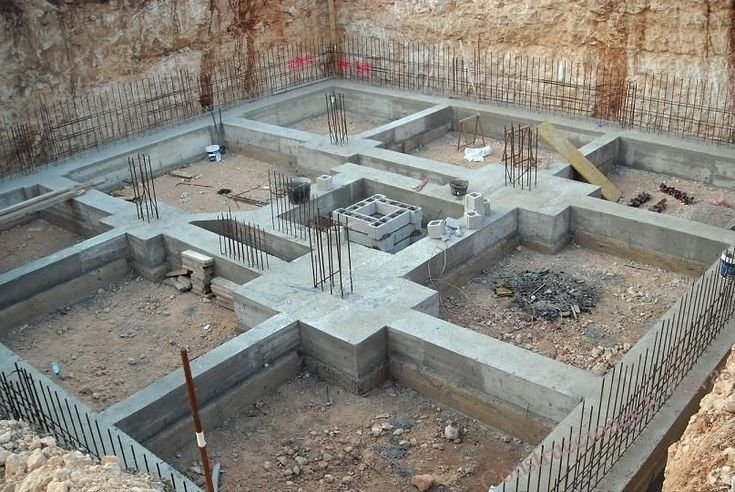
Foundations transfer the building’s weight to the ground, preventing settling or shifting. The type of foundation depends on soil conditions, climate, and structural requirements.
Trenching & Footings
Trench excavation outlines the foundation perimeter, dug deeper than the frost line in cold climates to prevent frost heave.
Footings, typically made of reinforced concrete, distribute the load over a wider area. They are poured into trenches and must be level to ensure even weight distribution.
Reinforcement (rebar) is added to footings to enhance tensile strength and prevent cracking.
Slab Foundations
Slab-on-grade is common in warmer climates, where a single layer of concrete is poured over a compacted gravel base and moisture barrier.
Post-tensioned slabs use steel cables within the concrete to reduce cracking and increase load capacity.
Frost-protected shallow foundations (FPSF) use insulation to prevent freezing in moderate climates.
Key Considerations for Quality Foundations
Soil Testing: Ensures the ground can support the structure.
Waterproofing & Drainage: Prevents moisture infiltration (e.g., French drains, vapor barriers).
Curing Time: Concrete must cure properly (typically 7+ days) to achieve full strength.
Inspections: Local building codes often require checks before pouring concrete.
Conclusion
A well-constructed foundation is the backbone of any building, preventing future structural failures. By mastering site prep, excavation, and foundation techniques, construction professionals ensure stability, durability, and compliance with engineering standards.
.svg)



