
MODULE 6
Construction Drawings & Plans: Interpreting Blueprints for Effective Building
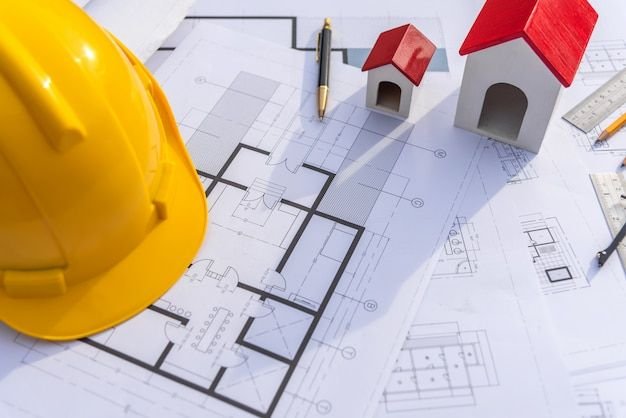
Construction drawings and plans serve as the universal language of the building industry, providing detailed visual instructions for architects, engineers, and tradespeople. This module equips learners with essential skills for reading blueprints and schematics, covering three core competencies: understanding scales, interpreting symbols, and analyzing dimensions.
1. Reading Basic Blueprints and Schematics
Blueprints are technical drawings that represent a building’s design in plan, elevation, and section views. Floor plans show the layout of rooms, walls, and doors from a top-down perspective, while elevation drawings depict the exterior or interior walls in a vertical view. Section drawings cut through a structure to reveal hidden details like foundation depth or roof framing. Schematics, commonly used in electrical and plumbing plans, illustrate system layouts with simplified diagrams rather than scaled representations. Learners will practice extracting key information from these documents, such as room dimensions, window placements, and structural elements.
2. Understanding Scales
Since full-size building drawings are impractical, blueprints use reduction scales to maintain accurate proportions. Common architectural scales include:
1/4" = 1'-0" (for floor plans and elevations)
1/8" = 1'-0" (for site plans)
- 1:50 or 1:100 (metric scales)Students will use scale rulers to translate drawn measurements into real-world distances and identify discrepancies between plans and actual construction. Exercises include scaling a simple floor plan and verifying door/window openings against stated dimensions.
3. Deciphering Symbols and Annotations

Standardized symbols streamline blueprint reading:
Architectural symbols (e.g., doors, windows, stairs)
Electrical symbols (outlets, switches, lighting fixtures)
Plumbing symbols (drains, vents, water lines)
- Material notations (hatch patterns for concrete, brick, or insulation)Annotations (callouts, abbreviations like "CL" for centerline) provide additional context. Learners will memorize frequently used symbols and analyze legend sheets to decode specialized markings.
4. Analyzing Dimensions and Tolerances
Dimensions on blueprints specify exact measurements for construction, including:
Overall building dimensions (length, width, height)
Room sizes (wall-to-wall distances)
- Clearances (space around fixtures or structural elements)Tolerances (e.g., ±1/8") indicate allowable deviations. Misinterpreting dimensions can lead to costly errors, so students will practice verifying measurements and identifying critical reference points (like grid lines or benchmarks).
Practical Application
The module includes hands-on activities:
Sketching a simple blueprint using proper scales and symbols.
Identifying errors in sample drawings (e.g., missing dimensions or mislabeled symbols).
Walking a job site with plans to compare drawn vs. built conditions.
Conclusion
Mastering construction drawings ensures accurate communication across trades, reduces rework, and upholds project timelines. This module bridges theory and practice, empowering students to confidently navigate blueprints—a skill foundational to every construction career path.
.svg)



