
8.1 Introduction
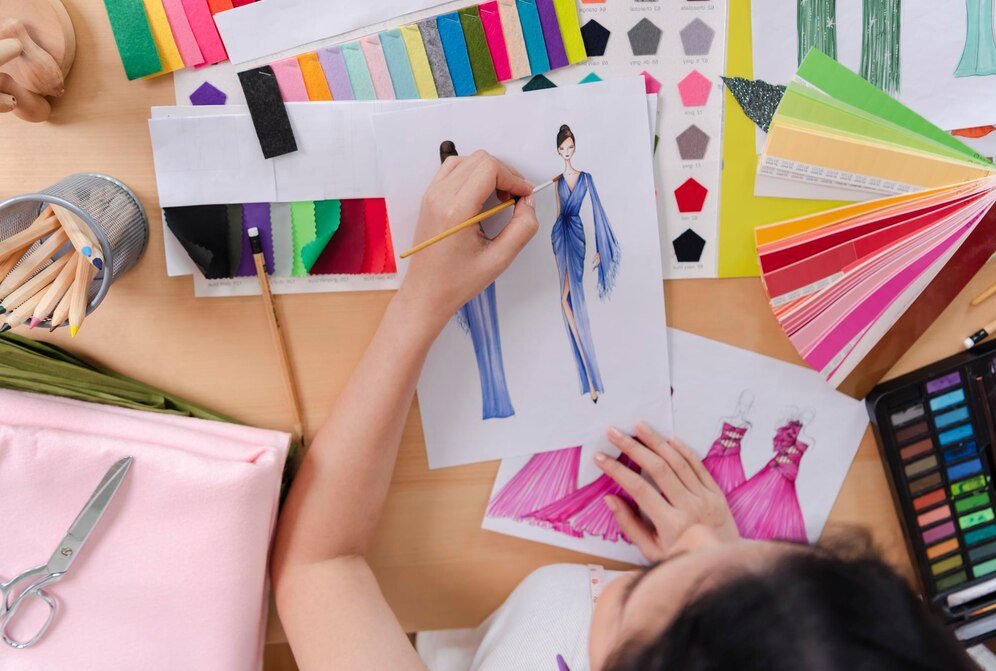
In the previous module, you learned how to construct garments, so you are now ready to advance towards applying the finishing touches to your designs. Although you now have a garment in hand, it is merely a completed shell. While it might lay nicely on the body, it does not contain any structure to support, βlow upon, and complement the body's natural curves.
This next module is written to guide you in learning how to add structure and support to your garments. You will also learn how to add shoulder pads, boning, and lining, which will help piece apparel together and complement the apparel. Also, you will learn how to finish your design by adding last-minute trimmings and buttons, which will provide you with an opportunity to step back and prepare for the next phase of design. Once you complete this, you will advance your skills and learn how to make a tech pack; this important document will guide you as you prepare for mass production of your clothing line.
8.2 Garment Support and Structure
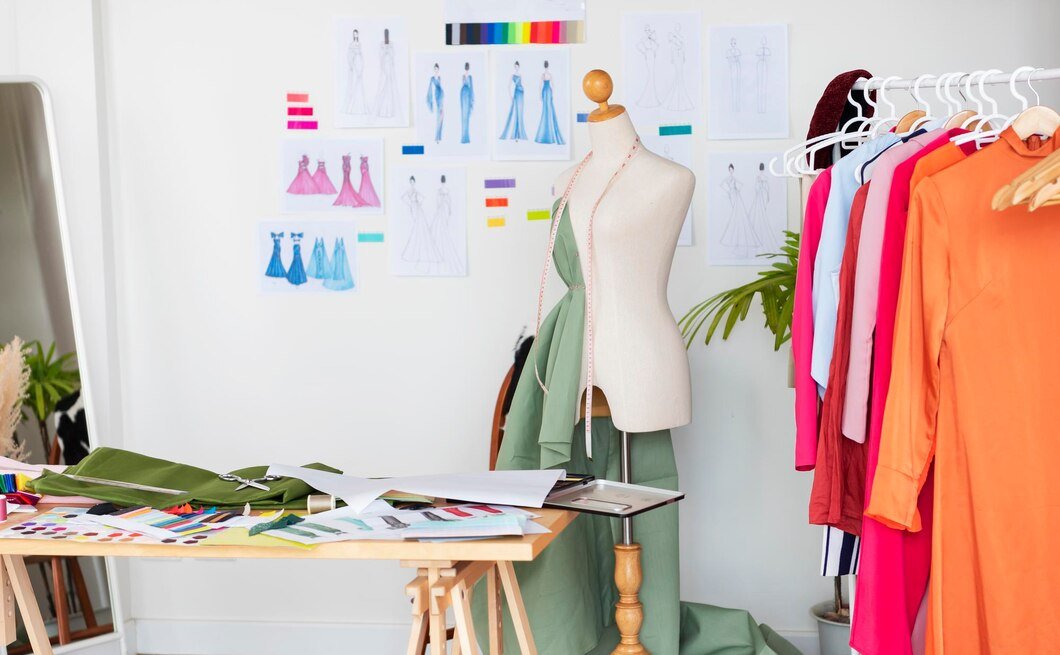
With your completed garment in hand, you are now well on your way to launching your designs and seeing your unique creations on a live model in no time. One thing that is important to consider at this stage is the garment support and structure. Thus far, you have created a shell, with fabric that usually hangs downwards depending on the thickness, weight, and stretch.
However, if you want to create a structured look that supports and aligns to the body's shape, there are a few things you need to add. Adding structure to a garment is one of the more challenging aspects of garment construction. So, one of the best ways to learn this technique is to look to history.
8.2 The History of Supported and Structured Garments
Tailors and dressmakers have been working hard throughout history to achieve a particular body shape. Since humans began wearing clothing, structured and supportive garments have been utilised and modified. Initially, these were used for shelter and protection, but over time, interest in formal garments grew to accentuate certain parts of the body.
Near the end of the 19th century, fashion evolved and women started wearing tight corsets and abandoned the heavily draped bustle. It was during this time that the Edwardian corset was introduced and women were characterised with an s-bend figure and a larger bosom. The signature Edwardian silhouette was changed by one Paul Poiret, who was the first designer to build a fashion empire. Poiret replaced the strong boned corset with a softer version and created empire lines.
Later in the 1930s, women preferred softly sculpted clothing with more feminine contours, which is something that was heavily influenced by Hollywood films. Another change that happened in that year is the introduction of corseted crinolines and modified bustles, which put royal dressmaker Norman Hartnell on the map. By the 1970s, the corset was only used in bras or underskirts for evening wear, and the same holds true today. However, there are several different ways in which you can support a garment.
8.3 Supportive Materials

There are a wide variety of supportive materials that you can use when preparing to add shape to your garments. The most commonly used technique is boning, which supports underskirts and corsetry. You can also create thickness and add bulk to a garment through a process known as wadding. This technique adds an extra layer of fabric to the apparel. You can also add different netting or weights under a garment to add lift or bulk.
For example
A wedding dress with layers of tulle. Another way to add shape and volume, while emphasising parts of the body, is through a process
called padding. This technique adds definition to a garment and can be used to create insulation and structure.
Netting
Net is a transparent, open mesh fabric and is one of the oldest materials around. You can find netting in a variety of man-made and natural fibres, textures, and colours including silk, rayon, polyester, and nylon. There are also finer versions of netting, which feature a hexagon pattern, and are called tulle.Netting is used primarily for support, but you can also use it to make an underskirt or a petticoat. The amount of net applied to a garment depends on the volume that you want to add. When working with netting, keep in mind that the fabric has no grain line so that it will have more give in the width and length.
Padding
If you are looking to emphasise parts of the body and add support and shape, you can apply a padding technique. Padding is also ideal for creating hemlines, shape, and to add weight. The process involves creating a tunnel, which is then stuffed with polyester fleece, lamb's wool, ammo wool, or cotton batting.
Shoulder Pads
Shoulder pads are added to accentuate the shoulder area and were very popular in the eighties. Although they are less popular now, they are still used in some garments to create a smooth appearance over the collarbone and shoulder. Pads are added between the garment fabric and the lining, or you can add covered pads, which can be used inside the clothing and on the shoulder. There are also pads available for raglan sleeves, which have a much smoother appearance, and an oval shape.
Fusing/Interlining
If you would like to add body or stability to certain areas of your garment, you can interline/fuse at certain parts of the fabric. There are some critical points of a garment that sometimes need reinforcement.
A waistband on a skirt needs to be strong to withhold the movement experienced around this area. Cuffs, collars, buttons, and buttonholes also need to stand up and look the same after several washings. Fusing will ensure that these key points will remain intact.
However, you should keep the following points in mind when you are fusing/interlining:
-The heat of your fusing machine or iron needs to be compatible with the adhesive of the interlining and the fabric.
-If the pressure is too low, the fusing might not attach.
The time has to be set correctly. If too little time is set, the adhesive might not melt to the fabric.
-Non-fusible, sewn in interlining achieves similar effects to the fusible variety, but should be interlaced with organza or muslin.
Corsetry
A corset is a close-fitting bodice that is stiffened with boning and is made to shape the body in a fashionable silhouette. Corsets have been used in the fashion industry since the 17th century, but have become more common in the 19th century and have been replaced with the word 'corps'. In this century, corsets are used to control and shape the bust, waist, and hips.
Boning
The thick material inside of the corset is known as boning and was originally made of whalebone. However, today corsets are constructed from plastic like Ridgeline O or metal. Metal boning requires a special casing process and plastic boning can be stitched onto the foundation. Boning can be placed from the hip to the waist and around the bust, or it can be stitched on the wrong side of the outer fabric to create a design effect. The placement of boning on a corset depends on the style and function of the garment you are creating.
8.4 Adding Volume to a Garment
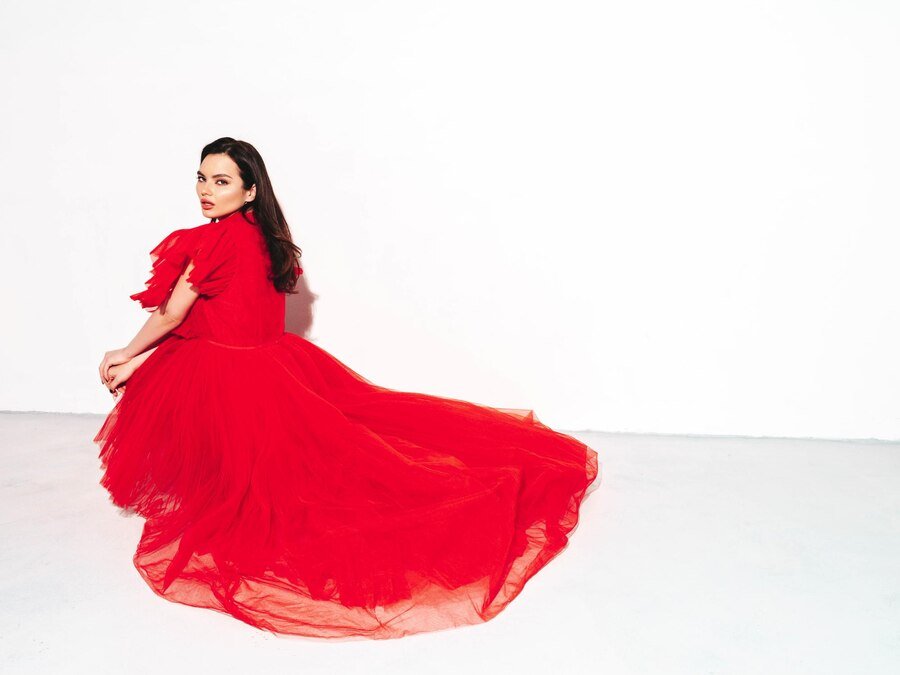
There are several different ways to add volume to a garment, which includes gathers, darts, drapes, and pleats. You may want to add volume to your garments to create a larger silhouette or change the dimensions. Whatever your reasons, you can create volume using one of these techniques.
Adding volume with drapes
Different draping techniques can be employed to achieve a softer look with added volume. A drape is simply added fabric with draping, or excess fabric falling from one or more anchor points. One of the more popular drapes that works well in creating volume is the cowl drape, which works well on tops, skirts, and sleeves. You can also create irregular and uncontrolled drapes on a mannequin.
Adding volume with flare
A flared garment is usually fitted at one point, for example, the waist, and will gradually widen to another point in the garment like the skirt or hemline. Flare is a loose swinging element that is not controlled through gathers or pleats. You can use a simple slash and spread technique to add flare to your garment.
Adding volume with fabric
Selecting the right fabric for your garment is crucial, as it should be designed to come off the body shape. If your garment achieves more volume through pleats or gathers, then more fabric needs to be added. Alternatively, if you can add volume with your cut and construction, then selecting fabric for its texture, density and weight is more important.
8.5 Finishes, Buttons and Trimmings

Your garment is well on its way to completion, and you can now prepare yourself for the production phases. Of course, if you prefer you can enter custom fashion design, in which case, you would work one-on- one with clients. Regardless of your career choice, you should be familiar with each phase so that every option is available to you.
You now have a completed garment with support and structure, which you designed from a sketch. Now you need to apply the finishing touches that will take your apparel to the next level. As a designer, you can always trademark your own finishing touches, or you can use what is standard in the industry.
For example
Levi's - who uses back pocket stitching as a signature.
If you do choose to stick with the standard finishes, buttons, and trims, here are some of the most common finishing touches you might want to apply.
Lining
You can add lining to a garment for several reasons. Linings can add to the overall design, retain warmth, and help hide any internal construction. You can work lining into your whole garment or use a partial lining. Usually, coats, jackets, trousers, and skirts are lined.
Facings
A facing is typically added to the armholes and necklines of sleeveless garments to finish any raw edges on the garment.
Fastenings
A fastening is a functional item that you will need to add to most of your garments because it will keep your garment closed. If you prefer, you can keep them hidden or make them a focal point. There are several types of fastenings, which include zippers, hook and eye enclosures, magnets, buttons, and Velcro.
8.5 Finding a Clothing Manufacturer for Your Line

As a budding fashion entrepreneur, it is probably both exciting and overwhelming to have a completed garment in hand. Many times, designers are unsure where to go next after completing their design, but it is important not to reach a stalemate during the production process.
If you want to thrive in the fashion industry, it is important to focus on getting your designs through the production process and to do that, you need to find a clothing manufacturer. Whether you are hand making custom designs or starting an entire line of accessories, selecting the right factory can make or break you in this business.
Up until this point, your mind has been occupied with mood boards, designs, colours, and fabrics. However, now is the time when you need to switch gears and put your business hat on, which means that you have to think logistically. To nail your production process down, there are a few tips to help find the right factory for you. Work out beforehand what you want out of a factory - Compile a checklist of what you expect out of your manufacturer.
For example, would you like your manufacturer to create a pattern, source materials, and assemble a garment using your sketch as a guide? If so, then you should select a manufacturer that specialises in cut-measure-trim garments. Do thorough research - Before committing to any manufacturer, make sure you shop around and do your research. Ask other designers, shop around, search the internet.
You can also visit manufacturing websites, like the UK-based, Let's Make it Here, which allows you to search by location, keyword, and category. Visit the factories first - After you have found a few promising factories and narrowed down the list, the next step is to visit the locations. This is a vital step that you should not skip. When you visit the manufacturer in person, you will get a better idea of how they operate. Also, don't be afraid to ask for a visit, almost all designers request a tour of the facility.
Activity 1
Estimated Time: 25-30 minutes
In this activity, you will practise making a checklist of what you expect from your manufacturer. You might be undecided about your career path, but if you know the kinds of clothing that you would like to design, it will help you to narrow down your selections.
Another thing you should do is visit the website mentioned in this module and scroll thorough the clothing manufacturers to see the different options that are available in your area.
What did you notice in your search?
Are there any factories that will suit your design needs perfectly?
After creating your checklist, did you βind that there are some things that you need from a factory?
8.5 Creating a Garment Tech Pack

Once you have narrowed down your selections and done your due diligence, you should have selected a professional manufacturer that works best for your business. At this point, you can now prepare your garment tech pack. A garment tech pack is a critical portion of the production process that takes lots of planning and preparation.
The production process can be the most challenging part of launching your designs, but your garment tech pack, if done correctly will streamline the process. Think back on every stage of your design and all the hard work; each of the steps was an integral part of making your collection unique. Now that you are turning over your designs for production, it is very important that every seam, grain line, pleat and detail is included.
Your garment tech pack is a means of communication that will ensure that these details will transfer over to production. It gives detailed specifications of your designs, and the clearer you are, the less likely you will have mistakes. A garment tech pack is broken into several sections, which you should learn and understand.
Cover Page
Your cover page features sketches of the front and back of your design and should include a transparent or white fill. You can choose hand drawn, computer generated sketches, or photographs. The images you place here should be proportional and clean.
Inspiration Page
The inspiration page will contain any image that helped you create your original style. You only need to add this page if the factory is going to create your pattern. These inspiration images are here to help the manufacturer reach the designer's vision.
Callouts Page
The callouts page is used to express the design details and the type of construction that you would like used for your garment. Make sure you use arrows and clearly mark what kind of construction you want to be used and where.
Print-Fabric Replacement Page
On this page, you will indicate exactly where you want your fabrics or prints. For example, you can use a colour key to distinguish where you want each type of fabric.
Colourway Page
The colourway page will show where you want each colour to be used in your design and indicates colour name, numbers, and swatches.
Fact
Approximately 90% of the clothing sold in the UK is manufactured abroad.
Source: Dailymail.co.uk
8.6 Bill of Materials Page

This section is also referred to as the BOM and is where you will include all the materials that were used to construct the garment. The following main sections should be included in this tab: trims, labels, fabrics, and packaging. In each section, you should include all pertinent information related to the category.
For instance
In the materials section, you should include fibre content, material substance, and identification numbers.
Fold Page
The fold page should include how you want your garment to be packed and folded after it is shipped to the desired destination. On this page, you can include sketches with step-by-step instructions of the folding process.
Label Placement Page
The label placement page simply offers instructions on what type of label should be used on your product and where you want it to be placed.
Proto Specs Page
After your first sample is created, the manufacturer will need measurements for fitting, which is where the proto specs page comes in.
This page should contain the following key points:
-The point of measure
-A description of how and what needs to be measured
-The actual measurements that the garment should be measured to
-The tolerance level, which indicates the most a measurement can veer over or under the requested measurement
1st Fit Specs Page
This page holds all the information about the first fit sample of development and should contain all the columns from your proto specs. You should also add two columns: one for actual measurements, and one for revised measurements after the specs are requested.
2nd Fit Specs Page
This page is identical to your 1st βit specs page, but is used after the 2nd fitting.
1st and 2nd Fit Comment Pages
The construction and fit of the product need to be reviewed and commented on during each phase of production so that you can send it for final revisions Thus, you will need to add a comment page after your 1st and 2nd fit spec pages.
Graded Specs Page
Once your designs have been finalised and will be pushed through production, the factory will need measurements for each size. These measurements will be placed here on the graded specs page, which is the last page on your garment tech pack.
8.7 Preparing to Produce Your Line

If you were thorough in researching a manufacturer and took your time to create a detailed garment tech pack, then you should be well on your way to successful production. However, many designers still consider the βinal production to be a big step. Fortunately, there are a few things that you can do to ensure that your garments are manufactured smoothly and everything goes accordingly.
Create a Detailed Tech Pack
We reviewed the basics of creating a tech pack, but it just covered what it takes to create one. If you want to ensure that everything goes smoothly and according to the production schedule, you can always go above and beyond the call of duty. This means going overboard with construction details. When it comes to your tech pack, think of it as a blueprint and remember, no detail is too small.
Request a Sample Before Going to Production
Before you commit to mass production, request a proto sample so you can review that everything is done according to your design specifications. The chances are good that you will be charged for this extra step, but in the end, you could be saving money and your reputation against costly and embarrassing mistakes.
Iron out the Details with Manufacturers
When you are selecting a factory, there are four important factors that you should iron out and get in writing. In the beginning, when you are getting quotes, you need to find out the manufacturers delivery dates, minimums, payment terms, and pricing. Once you have these details, make sure you evaluate them against your demands.
For instance
It might be more advantageous for you to pay a higher price and purchase smaller quantities.
Create a Development Calendar with Your Factory
Manufacturers are very busy and as such, have to plan each phase of production very carefully. Make sure that you plan a production calendar with detailed reminders and deadlines for each phase of the process. Also, follow up on any deadlines or outstanding reminders that you have on your calendar.
Track all Comments and Revisions in Your Tech Pack
As you move through production, think of your samples and your tech pack comments as a tracking system or a master log. It is important that you hold on to all the input that you logged from the beginning so you can reference these changes later.
Activity 2
Estimated Time: 25-30 minutes
At this point in the course, you should have plenty of sketches and design ideas from previous activities. For this activity, you will need to bring out those old sketches and practise creating a garment tech pack using the tips you have learned in the module. Pretend that you are sending your sketch off to the manufacturer and do your best to communicate all your design ideas in detail. You should include every page mentioned in this course.
MODULE SUMMARY
This module wrapped up what you learned in the previous module by adding the Finishing touches to your completed garment. You began with a lesson on support and structure, which covered the history of different bodices and corsets. This module also introduced you to different linings, paddings, and materials that you can use to add volume to garments.
You should have also learned about finishes, buttons, and trimmings, which is the final aspect you will need to complete your garment. The module also introduced you to the pre-production process, beginning with how to select a manufacturer to produce your garments. Additionally, you learned how to create a garment tech pack, which is an essential communication tool between you and the factory that you choose to do business with.
Finally, this module covered some more essential pre-production information, which included a checklist that every designer should run through before sending off their designs. As you prepare to enter the fashion industry, you should keep this information in the back of your mind to ensure success in these crucial stages of production.
.svg)



