
1.1 Introduction
If you enjoy following the hottest design trends, have a passion for clothing and a creative eye, then a career in fashion design might be right up your alley. If you do have a love for fashion and would like to become a designer, this course will set you on the right path to achieving your dreams.
The world of fashion is constantly growing and very competitive, so before you embark on a new career, it is crucial that you understand the business. The fashion industry in the United Kingdom is worth billions of pounds, making it the largest creative industry, and the most significant employment opportunity within that sector. This course is designed to help individuals break into the fashion and design industry, and to prepare for a career as a fashion designer.
The course will begin with some basic fashion knowledge, then cover the daily skills and qualifications that every fashion designer should possess. As you continue to work your way through the module, you will advance your skills and learn about the different types of fashion designs, and cover terminology that you will need to know throughout your career.
Upon completion of this course, you will have gained the knowledge necessary to succeed in a career in this highly sought after profession. This first module will begin with the basics, and after you have completed it, there is a convenient question and answer worksheet available for you to practise what you learned.
1.2 What is Fashion Design?
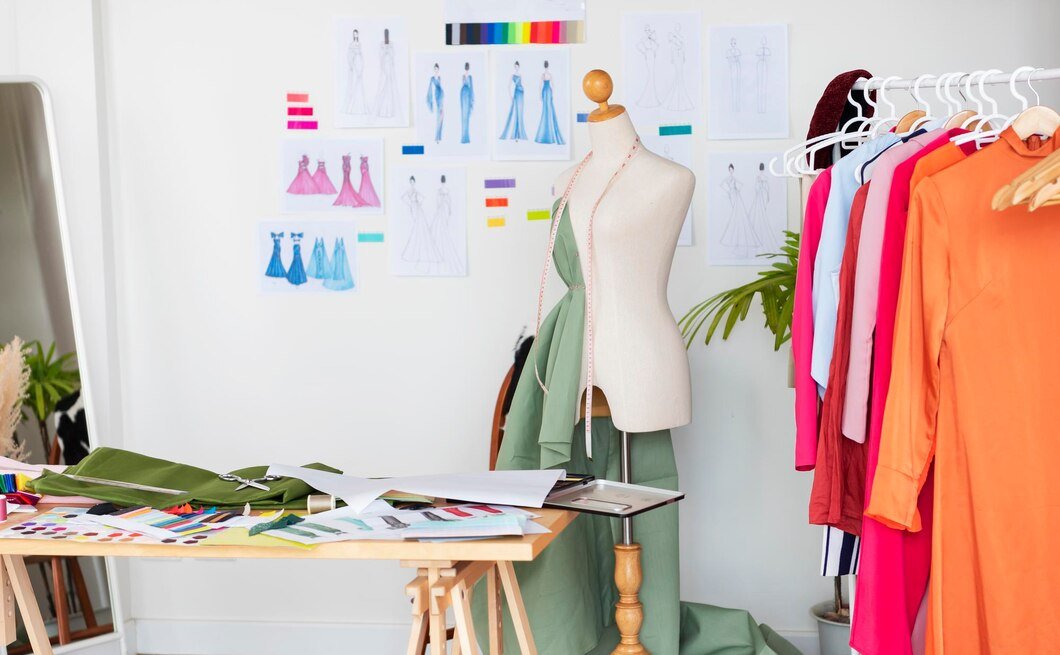
Before we delve into fashion design as a career, it is important to understand the basics, beginning with the meaning of fashion design. The concept of design in any arena is the act of taking an idea, concept, or drawing and using it to produce or build materials that have never before been created. So, fashion design utilises the same concepts and ideas to create clothing and accessories for everyday wear.
Who Invented It?
Before fashion design, clothing was fashioned by a local seamstress or an anonymous dressmaker. During that time in the 19th century, fashion standards were copied from royalty. Then, a local seamster, by the name of Charles Frederick Worth, came along and changed fashion standards altogether.
This Course will explore the history of fashion in a future model at length, but it is important to note that Charles worth set up the first fashion house in Paris and become the first designer to dictate style And design to customers
1.3 What Does a Fashion Designer Do?
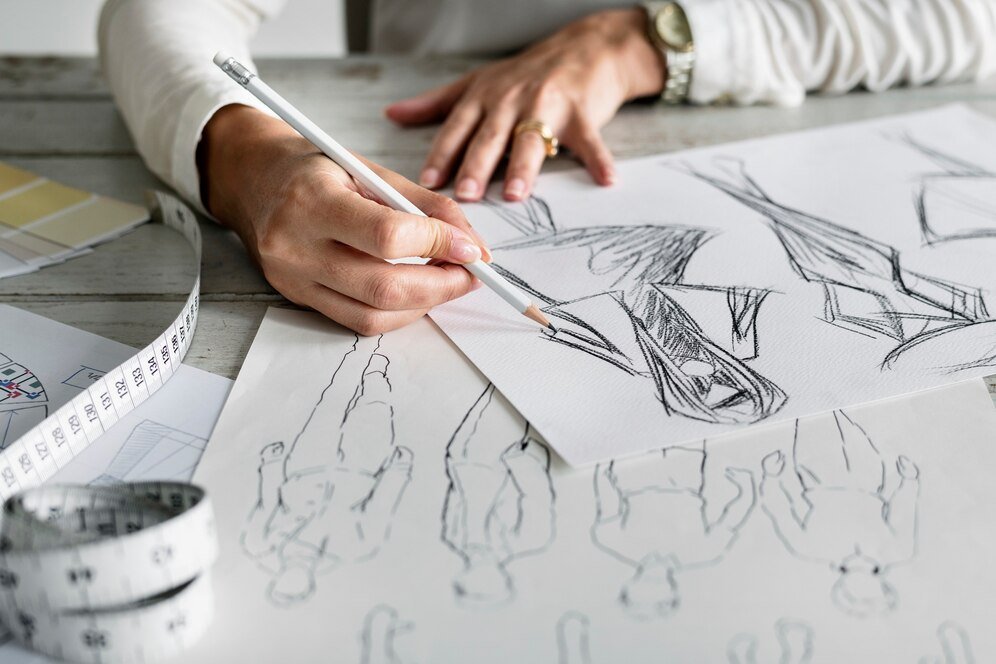
If you are interested in a career in fashion design, you should possess a love for fashion and have a certain amount of creative ability. Fashion design is a broad career with many different sub-careers, so, a fully trained designer can choose to enter into a variety of specialities.
Regardless of the speciality , each fashion designer performs the following essential functions:
• Researches fashion trends and makes predictions
• Visits manufacturers or trade shows to acquire samples of fabrics
• Creates storyboards using Sketches and designs
• Utilises computer aided designs to bring visions to life
• Makes technical patterns, sews , weaves and knits
• Selected colours
• Works with models to help fit designs
• Attends and arranges fashion shows.
• Oversees the production of sample garments
• Modifies and approves completed garments
Fashion designers can work in a wide variety of settings, including retail stores, large fashion forms, or in costume design. Some areas of fashion can require long and unpredictable hours, which can vary the scope of the designer's workload.
For example
A fashion designer working at a big design firm might be required to supervise the entire design process from beginning to end. Alternatively, a designer working in a single costume department would only be responsible for overseeing costume design for their department only.
1.4 Types of Fashion Design
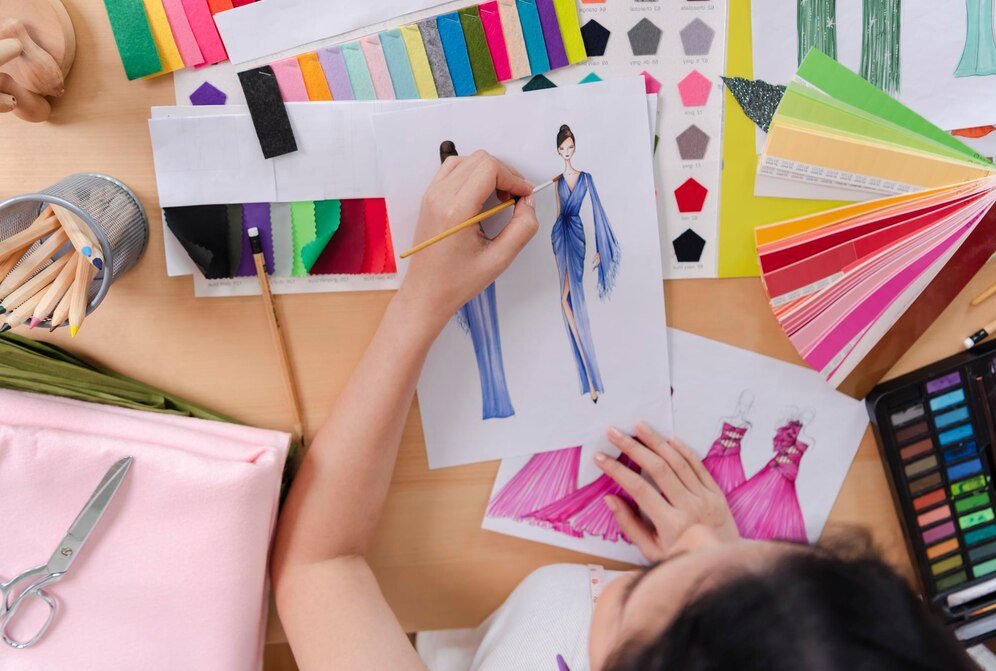
Now that you have a general idea of the core daily tasks and functions of a fashion designer, it is important to look deeper into the different types of fashion design. As we previously mentioned, there are also several sub-types of design that you could invest your time into. You could design accessories, footwear, or children's clothing, among many other options.
Each speciality of design, whether is it accessories, clothing, scarves, or hats, fits into one of three main sectors. As a fashion designer, you should be familiar with these areas as you could be working for some or all of them throughout your career
1.5 Mass Market
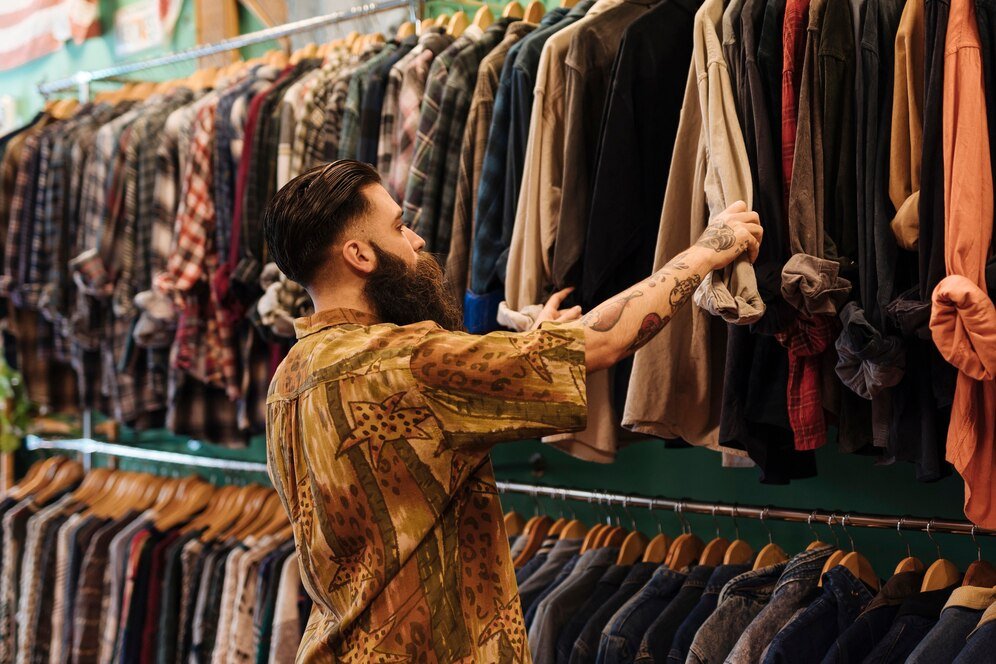
The first sector of design involves the most straightforward and accessible form of clothing, which is the mass market. Clothing that is designed for this area is ready to wear and available in mass quantities at standard measurements. Since this is the most affordable fashion production, the most inexpensive fabrics and materials are used to create designs.
For example
A mass market store would be Harrods, Marks and Spencer, and Argos.
Ready-to-Wear
If you want to create clothes that are a little bit more high-end and exclusive, ready-to-wear garments are a great fashion type. These garments are also referred to as prêt-a-porter, and there are a couple of benefits to the designer. They are sold in smaller amounts and bear the designer's name on the label, but they are often more expensive. The term ready-to-wear is also often referred to as 'off the rack', and many haute couture designers will sell select pieces in both sectors.
Haute Couture
You might remember earlier in the module learning about Charles Frederick Worth, who was the first fashion designer. Worth also established the first haute couture house in Paris in 1858, which is a fashion style used by designers like Versace, Yves Saint Laurent, and Christian Dior.
As a designer, haute couture is considered the pinnacle of fashion and a style type that you will want to remember, but it isn't one that you can learn in any book. Designers who specialise in this sector work on crafting original creations that cost thousands of pounds. Most of the time, the designer will work directly with clients and arrange custom fittings and alterations. This form of design requires a great deal of skill and the garment takes twice the amount of time to make. If you choose to open an exclusive design house and would like to have your firm represented under this label, you will need to adhere to some strict requirements
The following guidelines are set forth by The Fédération Françoise de la Couture and The French Ministry of Industry, and they must be followed by designers who wish to carry the haute couture label.
• Create custom made to fit clothing for private clients and provide personal fittings
•They must own an atelier in Paris with at least fifteen full-time employees
•They also must own a workshop in Paris that employs no less than twenty staff
•The fashion house must present a collection of both daytime and evening wear to the Paris press twice a year for review
Activity 1
Estimated Time: 25-30 minutes
This module discusses the three types or sectors of fashion design. Now that you have a basic idea of what is available, you should explore each market further to determine the type of designer you might like to be.
For this activity, you will be exploring the top designers in every sector. So, you should plan on researching the internet, visiting stores and exploring fashion magazines. Begin with mass market fashion design, which will be the easiest sector for you to observe. Unless you purchase haute couture or ready-to-wear designer clothing, you purchase mass market clothing yourself.
Next, you should flip through a fashion magazine or visit the designer section of your local department store and take note of the ready-to-wear designs. What are the notable differences between the mass market and ready-to-wear designs? Are there any advantages or disadvantages that you experienced as a shopper?
Finally, explore the elite world of haute couture, what sets these fashions apart among the rest?
1.6 Is a Career in Fashion Design for You?
To work as a fashion designer, you should have a passion for clothing, accessories, or the fashion industry. Since fashion design is a form of art, it would also help if you are artistic or have a creative eye, although it is not necessarily a requirement. The fashion industry is very competitive and constantly growing, so while there are some skills you can learn, an aspiring designer should possess some or all the same skills as seasoned professionals.
Communication Skills
As you go throughout your day, you communicate verbally and non-verbally more than you realise. Some people are naturally excellent communicators, and some people need to work at it. Since there can be several people working together to create a garment, a fashion designer should be skilled in communicating with clients, employees, models, and other designers. It is always important to remember that anytime you are providing work where you will be offering a service to a client, miscommunication can always be a factor.
Knowledge of Current Fashion Trends
One of the most important skills that you should have as a fashion designer is a knowledge of fashion trends. A fashion designer is not only passionate about fashion; they study the runway and predict industry changes.
Fashion is a constantly evolving industry and what is hot one minute, will change the next. Many times, a look from other eras will come back full-force, and a designer must be ready to take, and embrace the change.
Computer Experience
Many designers will work with sketch books and storyboards, which means you should have some experience with drawing and artistry. However, modern day influences have brought technology into the world of fashion. Over the decades, CAD, or Computer-Aided Design, has changed the process. Now, designers can sketch drawings by hand, transfer them onto the computer, and view their designs on virtual
models.
Knowledge of Materials
A fashion designer will work with a variety of fabrics, fibres, materials, and patterns, which means you should have an eye for the many different materials. This includes the origin and production of different fibres and nylons as well as textiles and yarns.
For Example
A Perfect fashion trend could include polka dots , combination of colours and textures , or the 1980s Style of dress.
Strong Sewing Skills
Any design that you create, you can sew on your own to quickly view on a model or mannequin, which means you should possess strong sewing skills. Sewing is a learned skill, so it is not a mandatory requirement; however, you should know which material works best for what you are creating.
Drawing and Sketching Skills
Once you have decided which sector you will be working in, you will want to begin sketching an idea and creating a garment. For this to work, a designer will need to have strong drawing skills, which enables them to sketch their design on a storyboard. This is the first step in bringing your vision to life. Before making any decisions, you should look at the advantages and disadvantages of working in the fashion industry.
To begin, we will look at the advantages:
If you entered the fashion industry as a designer, the chances are good that you are an artistic soul who loves creating clothing or accessories. With that being said, once you have completed design, it is very satisfying to see your work worn on other people. In this industry, you can harness your creative side, have fun, and reap benefits in the form of fame and fortune. Fashion design is one of the few jobs that offers a good paying, consistent income for your expression. Also, fashion design awards you the opportunity to start your own small business.
Now that you are aware of the advantages, you should review the disadvantages of the career:
As a fashion designer, you will be required to work long hard hours to meet your demands, especially during peak times like Fashion Week. The job can also be very demanding when meeting deadlines and harsh criticisms. Additionally, some clients can be difficult to please, and it may take some time to build up your reputation. Also, the fashion industry is exhaustingly competitive, and fashion trends are always changing.
1.7 Fashion Terminology
In the fashion industry, there is a wealth of terms that you will hear, so you should be prepared with an understanding of some of the most basic terms. As you advance further into your career, these and others will become like second nature.
Fashion
At the beginning of the module, we defined fashion design, but what is fashion? When you hear the term fashion, it is referring to a type of clothing, accessory, or shoe that is favoured by a large segment of the population at any given time.
Apparel
As you get more comfortable in the industry, you will hear this term quite often. Apparel refers to any and all clothing that you will design and create in your career.
Garment
Once you have created apparel, such as a dress, coat, sweater, or an evening gown, it is most often referred to as a garment or an item of clothing. You will also hear the term garment components, which refer to the sleeves, collars, and cuffs of the apparel.
Silhouette
This is a term that you will hear most frequently when you are sketching, and it is used to reference the shape of a clothing style. A silhouette forms the line of a dress and is used to flatter different body shapes.
For example
A perfect fashion trend could include polka dots, combinations of colours and textures, or the 1980s style of dress.
In your career , you will find that Silhouettes are constantly changing in fashion. Usually , whichever Direction a Silhouette takes , whether is is wider , shorter , or narrow , is the direction the fashion trend is following
Although silhouettes have changed a great deal throughout history, the straight, bell, and bustle silhouettes continue to emerge and re-emerge throughout history.
Avant Garde
You may have heard this term already associated with the arts, architecture, or other cultures. The term avant garde comes from the French term 'advance guard', or 'vanguard', to represent individuals or works that are unorthodox. In the world of fashion, avant garde represents the most daring, unconventional and wild designs.
There are several avant garde themed designs that hit Paris Fashion Week every year including hyper construction dresses and foam headwear.
Fad
As a fashion designer, you will spend lots of time analysing fashion trends and making predictions. In doing that, it is crucial that you can recognise a fad, which is a passing fashion trend that becomes popular quickly and dies out fast.
Classics
Another important piece of clothing in the world of fashion design are the classics. These are the garments that are always acceptable and remain popular, regardless of fashion trends. If you have a pair of blue jeans, a dark business suit, or a white dress shirt in your closet, then you own a few classic pieces yourself.
Fashion Year
When it comes to the world of fashion, things operate on an entirely different calendar, so you need to become familiar with the 'fashion year'. For starters, the two most important seasons in the fashion year are spring/summer and autumn/winter.
During August-September, fashion designers are very busy with International Fashion Week, which is when designers showcase their collections. UK fashion has a unique spirit and energy that ignites the imagination of the world. From its cutting-edge trailblazers to the refined craftsmanship of its star designers, the originality and professionalism found in the UK make it one of the most influential fashion hubs in the world.
1.8 The Fashion Cycle
As you have learned throughout this module, fashion is a constantly changing industry, and a designer must stay current with the ebbs and flows of the different fashions. One thing that remains consistent in the industry is the fashion cycle, which you will need to know
and understand in your career.
So, what is a fashion cycle?
If you have ever seen really bad fashion trends or fads, then you know first-hand that fashions do not always survive from year to year. The ones that do not survive have cycled through the five stages of the fashion cycle. As a designer, if you create a garment, it will pass through the very same process.
A fashion cycle is a term used to describe a process or period of time that fashion goes through. There are five stages in a fashion cycle, and they all act as an uninterrupted flow, which determines what styles and designs will be introduced in the new season.
It helps to think of the cycle of fashion as rolling waves in the sea. As one wave of fashion gains popularity, another style is forming close behind it. To truly understand the cycle, you must familiarise yourself with the following five stages:
Introduction Phase
Many people visualise the fashion cycle illustrated in a bell curve, and if you are a visual learner, it might help you as well. On a bell curve, the first point, or the first stage in the cycle of fashion is the introductory phase. In this first phase, new designs, styles, colours, and textures are introduced at the highest prices and produced in small amounts. These designs are then previewed during Fashion Week by major designers.
Rise Stage
The second stage in the fashion cycle is known as the rise stage, which is when manufacturers will copy designer clothing using inexpensive fabrics. At this time, the bell curve rises slowly as fashion becomes more accepted by people.
Peak Stage
The peak stage is at the very top of the bell curve representing the peak of popularity, also known as the acceptance phase. During this time, the fashion is at its most popular and in such high demand that more manufacturers reproduce the design at varying price levels.
Decline Stage
In the fourth stage, we begin to go down the slope as consumer demand begins to decrease. This is called the decline stage, which occurs after so many copies of a design are mass produced. After a while, people get tired of that look and start looking for something different, so the design trend begins to lose its appeal.
Obsolescence Stage
The fifth and final stage finds you at the end of the bell curve, completing the cyclic wave. At this stage of the design, consumers are no longer interested and they are looking for new styles.
Activity 2
Estimated Time: 25-30 minutes
The cycle of fashion flows much like a wave and helps designers to predict the ebbs and flows of design. As you know, there are five stages in this cycle, which will determine whether a design will survive through a season of mass production. Take some time to review the five seasons in the cycle, then select a few of your favourite fashion designs throughout the years. Select two designs from any era, which you have either worn or find appealing as an aspiring designer. Once you have selected a fashion, study the design and explain how the garment fits into each stage in the fashion cycle.
For example, early 1960s, fashion around the world was inspired by Jackie Kennedy, which brought an introduction of well fitted tailored suits, white pearls, and large top buttons. The look was mass produced, but after Kennedy's assassination, women turned to 1960s fashion icon Bridget Bardot, and a new look was created.
MODULE SUMMARY
This first module introduced you to fashion and offered you a basic overview of what a fashion designer does on a daily basis. This module began with a basic definition of fashion design and introducing who invented it. You also learned many of the useful skills that a fashion designer should possess in order to be successful in this industry. Additionally, this module covered the advantages and disadvantages of choosing this career.
You should have also learned some important fashion terminology, which will help you as you continue your studies. Some of the terms you learned touched on phrases you will use throughout your entire fashion career. The module also covered the fashion cycle and explained how it affects the design process. Finally, you should have learned the five different stages within the fashion cycle, the characteristics of each stage, and how it affects the design process.
Now that you have completed this module, you know some basic fashion concepts and are prepared to move on in the course. In the next module, we will focus on the history of fashion and how it has evolved over the years. However, before you do move on, there are some convenient question and answer activities for you to work your way through.
.svg)



