
5.1 Introduction
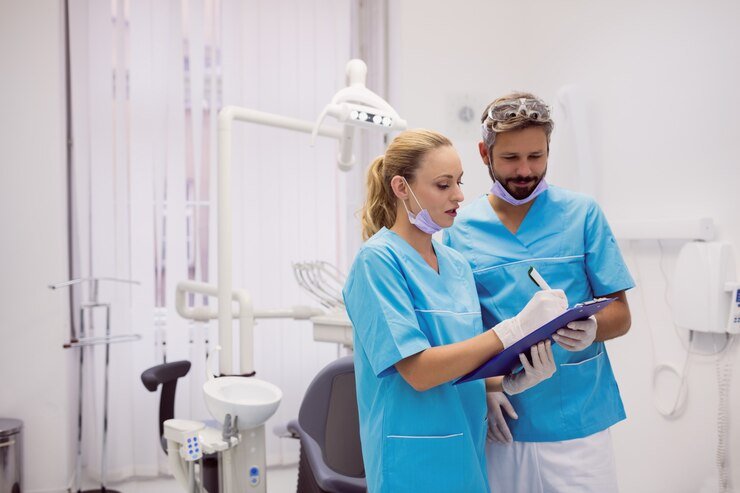
Dental assistants
play a crucial role in preventative dentistry and help patients by educating
them on different techniques.At the heart of preventative
dentistry is the strong belief that prevention can help stave off the
likelihood of dental issues. Preventative techniques can help to prevent dental
and gum decay, as well as periodontal disease.
One of the most common causes of
tooth decay and tooth loss is the formation of plaque. Plaque is a sticky film
that forms over tooth surfaces, after feeding. Bacteria in the mouth feed on
the food particles and release lactic acid. If allowed to accumulate, plaque
can harden into tartar within 48 hours and may become home to millions of
bacteria.
Plaque is often the primary
causative factor for periodontal disease (gum disease) and caries (tooth
cavities).
A disclosing is a special
formulation that reveals formations of plaque in different locations of the
mouth. This makes it easy to identify areas where the patient needs to brush
and floss more vigorously or that the dentist needs to treat with special care.
Disclosing agents are available as tablets and solutions and dental assistants
are usually responsible for application in the treatment room.
Every patient group requires
different motivation based on their needs. Effective motivation reduces
instances of non-compliance with recommended preventative measures. Motivation
can include any measures that help improve understanding, comprehension,
ability to listen and a change in health behaviours.
Disabled patients require dental
care, just like every other individual. However, dental teams need to ensure
that they are able to understand the patient's unique needs, before providing
treatment. An accurate and comprehensive medical history and the assistance of
a caregiver or parent invariably proves to be extremely useful. Patients may be
physically or mentally challenged and it is important to communicate with the
family doctor.
5.2 Preventative Dentistry

Prevention
is always better than cure and this universal truth can help to stave off the
onset of dental and gum issues, as well as periodontal disease. The way that you care for your
teeth today can have a significant effect on your dental health in the long
run. In fact, it would be fair to say that preventative dentistry can save
patients thousands of pounds in restorative processes in later life. What many
people are unaware of is that vigilant dental home care is only a portion of
what you need to do in order to preserve and enhance dental health.
Oral hygiene and patient dental
education should begin at the childhood level, once milk teeth begin to emerge.
As a dental assistant, your duties would involve educating the patient
regarding different preventative measures, after evaluating their requirements.
For example
It is important to possess
background knowledge of fluoride, its benefits and effects.
Lack of oral hygiene and neglect
of dental health often results in an increasing number of visits to the dentist
and leads to major issues that could have been prevented with appropriate
dental care.
Preventative dentistry involves
brushing techniques, flossing, diet, injury protection, routine dental visits
and knowledge of fluoride. The objective of preventative dentistry involves
maintenance of optimal oral health, in order to get on top of any potential
dental problems that may cause anxiety and hassles in the future.
Please note that it is important
for dental assistants to care for their own teeth first, before educating
patients. An assistant with uncared for teeth cannot be expected to inspire
confidence in patients.
The main aspects of preventative
dentistry include:-
*Brushing and flossing to remove
plaque and bacteria from the teeth (the techniques will be explained in
detail).
*The individual must use
disclosing agents periodically, in order to evaluate the effects of brushing
and flossing.
*Follow a fluoride programme, in
order to promote the growth of strong and decay-resistant teeth.
*Pay regular visits to the dental
office and obtain a professional evaluation of dental health.
*Oral and dental hygiene
techniques for patients with heart disease, cancer and disabilities.
5.3 Plaque Formation

Plaque is a
sticky mass or film containing millions of bacteria, which is formed on teeth.
In the absence of regular brushing and flossing, plaque can cause gum disease
and tooth decay.
When we eat, bacteria in the
mouth feed on sugars in food and produce bacterial wastes (acids with a Ph
value of less than 4) that eat away teeth enamel.
The major acid produced as a
result of bacterial waste is lactic acid.
This is referred to as
“demineralisation of teeth” and involves leaching away of minerals such as
phosphorous and calcium. These bacteria are referred to as “cariogenic
bacteria” or cavity-causing bacteria. Plaque causing bacteria start
producing acid wastes within minutes of feeding on sugars. This is especially
true of direct sugars, such as sweets, chocolates and so on, as the bacteria is
able to feed directly on sucrose.
Complex starches, on the other
hand, have to be first converted to sugars, before the bacteria can act. This
is why it is common to experience a slightly sour sensation in the mouth within
10 to 20 minutes after eating sugary foods.
The dental cavities (caries)
equation can be summarised as:-
Sugar + Plaque = Acid + Tooth =
Decay
It is common for patients with
orthodontic appliances to have plaque formation on teeth that are covered by
the brackets. This usually appears as a whitish, chalky patch, which appears
because the plaque was not properly removed around the brackets. The dentist
may then try to re-mineralise the area with special care tips, or may opt to
restore the tooth in order to prevent tooth decay. Dental cavities caused due
to acid erosion of teeth are called “caries” in dental terms.
The erosion of tooth enamel
eventually leads to the formation of a cavity. A cavity is permanent and
dentists use fillings to repair the cavity.
Plaque forms on tooth surfaces
and grows downwards towards the gum line and covers dental fixtures. It is
impossible to prevent the formation of plaque, but it is possible to remove it
with correct brushing and flossing. If left untreated, it may harden at a later
stage into tartar, which is a hard substance that gives bacteria a place to
thrive. Tartar cannot be removed at home with brushing and flossing, it can
only be removed in a dental office.
Untreated plaque forms along the
gum line and leads to red and swollen gums - this condition is called
“gingivitis”. Advanced gingivitis can result in periodontal disease
(periodontis) that attacks ligaments and tissues surrounding the teeth.
Activity 1
Estimated time: 10 minutes
Would you agree that plaque
formation lies at the root of most tooth problems?
counselling patients in order to help them guard against plaque?
5.4 Dental Disclosing Agents

Plaque is
colourless and can often be lodged on surfaces that you are unable to see with
the naked eye. Disclosing agents help reveal
locations where plaque has formed. They are available in the form of tablets,
swabs, or lotions. They will usually colour the dentition in areas where plaque
formation has occurred. Two-tone disclosing agents colour plaque formation in
dual colours, in order to highlight old and new formations of plaque.
Your mouth, tongue and lips may
be stained in a bright colour, but this will wear off after a few hours at
most. Disclosing agents can be particularly helpful for children as well as
adults at higher risk of gum disease. They are also useful for patients wearing
dental fixtures or appliances where you are unable to reach certain parts of
the mouth. You can concentrate on brushing
or flossing the areas exposed by the disclosing agent and check to verify if
the plaque has reduced.
How to Apply Disclosing Agents
The dental assistant is
responsible for the application of disclosing agents. Once the plaque locations
are identified, the means of removal are then discussed.
Equipment required:-
*Mouth mirror
*cotton pliers
*swabs and gauze sponges
*petroleum jelly (lubricant)
*dappen dish
*disclosing agent
*plaque chart, or software program
Procedure:-
*Seat the patient comfortably.
Discuss the patient's medical and dental history, after making the patient
comfortable.
*Wash your hands and wear
protective equipment, such as masks, gloves and glasses. Now request the
patient to gently open their mouth wide and examine the oral cavity.
*The assistant needs to then apply
the agent onto the patient's lips. Some dentists recommend that tooth-coloured
restorations should be coated with lubricant, to prevent staining.
*Dip the cotton-tipped applicator
in the dappen dish containing the disclosing agent and apply to all tooth
surfaces.
*If you are giving the patient the
disclosing agent in tablet form, then let the patient chew and swish for about
15 minutes.
*Whilst the patient uses a hand
mirror to see the plaque, the assistant uses a mouth mirror and air-water
syringe to identify the plaque.
*The assistant should then record
the plaque on a chart, or request someone else to do it since he/she would be
wearing treatment gloves.
*The next step involves the
removal of gloves, in order to demonstrate the correct ways to brush and floss
for plaque removal.
As a dental assistant you can
help patients to minimise the likelihood of cavities and tooth decay:-
Preventative measures are as
follows:
*Regular brushing and flossing
(twice a day) helps to prevent bacteria from forming plaque.
*Avoid eating an excess of sugary
foods - substitute natural sugars with equivalent artificial sweeteners, where
possible.
*Use specific mouth rinses etc, to
discourage the growth of bacteria.
*Regular rinsing of mouth after
meals.
*Do not linger and keep sugary
foods in your mouth for too long.
*Usage of fluorides to inhibit
bacteria that produce lactic acid and protect from decay.
*Avoid eating sugary foods before
bedtime, as there is inadequate saliva in the mouth during sleep times. As a
result, the tooth has reduced ability to find the acid that forms in the mouth.
Dental sealants are effective at
covering the surfaces of teeth and prevent food particles from getting stuck in
the grooves. Patients can consider talking to dentists about getting sealants
inserted, in order to reduce the likelihood of developing cavities. Cavities
often begin to develop in the back teeth or molars (dental anatomy will be
explained in detail).
5.5 Patient Motivation for
Preventative Dentistry

The dental assistant must take initiative to motivate the
patients to adopt preventative measures, in order to improve dental health and
reduce the likelihood of problems.
Each patient is unique and has
his or her own set of beliefs, attitudes, values and assumptions. Moreover, the
parameters may vary significantly across cultures, so it is important to first
pay careful attention to the patient and listen to their fears and limitations,
as well as their approach towards dental hygiene.
Once you have evaluated the
requirements, you can motivate them in a suitable manner. Communication will
vary, depending on various factors such as age groups, educational, economic
and cultural backgrounds.
Patient Motivation for Infants
You may need to show parents how
to lay infants down or seat them in a chair, whilst using an infant toothbrush
or cloth to clean plaque off teeth.
Patient Motivation for Preschool
children
Preschool children respond best
to visual aids, including colourful toothbrushes and puppets and so on. You can
explain to parents that positive reinforcement of dental hygiene will be
implemented if they use short, interactive sessions to demonstrate brushing to
the child. Keep the sessions at the dental office fun and pleasant.
Preschool children may require
help holding the toothbrush.
5-8 years of age
By this age, children have
normally acquired improved dexterity and are able to hold the toothbrush well.
This is a good time for the dental assistant to demonstrate different brushing
techniques. You can also consider showing short cartoon videos (under 10
minutes) to children regarding the correct way to hold toothbrushes. You can
also consider designing or purchasing dental drawings for children, where they
have to identify dental items (toothpaste, brushes, floss and so on) and colour
the drawing.
9-12 years of age
During this age, children love
imitating their peers, so you may like to conduct group hygiene sessions and
show pictures of children who have achieved good oral hygiene. It is also
important to remember that children of this age have mixed dentition (including
milk and permanent teeth) and require additional dental care.
13-15 years of age
At the adolescent stage, patients
tend to be extremely influenced by peer pressure and they are motivated by
attention to appearance.
This is the age where dental
fixtures are commonly used (braces, etc), in order to improve teeth alignment
and so on.
Diet also tends to be poor at
this stage, with snacking being a common problem - poor diets often accelerate
the rate of dental decay. Dental assistants may wish to communicate with each
patient separately and practice positive reinforcement.
16 - 19 years of age
This is the age when children
gradually start to accept responsibility for their wellbeing and health,
although nutrition and time management may still be problems to contend with.
Again, they will tend to be motivated to maintain a good appearance, so the
dental assistant can try explaining the connection of poor oral hygiene with
bad breath. By this stage of growth, dentition is nearly complete and you can
demonstrate the correct ways to floss and brush the teeth.
19-60 years of age
This is the adult age group and
the dental assistant should communicate and educate according to each patient's
requirements. This process may often involve unlearning facts and helping the
patient to establish a healthy dental care routine. During this age, patients
have to be specifically informed regarding gum disease (red and swollen gums)
and periodontal disease.
60 + years of age - Geriatric
Dentistry
Geriatric care is a critical part
of dentistry and elderly patients should be treated with patience and
compassion. As a dental assistant, you must consider the patient's physical and
psychological ability to comply with instructions.
For example
Arthritis may cripple the
fingers, thus making it difficult to hold a toothbrush.
One must also appreciate that you
cannot group everyone over the age of 60 into a single bracket. This is thirty
to forty years and each person has had different experiences. One of the
benefits of the modern age is that longevity has improved and thanks to
excellent dental care, elderly British individuals can look forward to enjoying
superior dental health. Physical fitness levels may vary significantly across
patients. You may come across a seventy year old who is fitter than a sixty
year old. Please do not refer to elderly patients as “old patients”
For example
It is best to address them by
name, as many senior citizens do not like being referred to in a way that makes
them appear frail, dependent and weak.
It is also common to come across
geriatric patients are who are initially sceptical about modern dental
techniques. It is the task of the dental team to help build a relationship of
trust with the patient. Lack of trust may result in higher chances of
non-compliance and avoidance of dental visits.
Through gentle and consistent
reasoning, you can explain to elderly patients that regular dental care can
prevent complications and irreversible procedures in the long run. Similarly,
you may find that geriatric patients harbour strong cultural or religious
beliefs that may come in the way of adopting proactive dental hygiene measures.
Treating elderly patients is quite different from treating standard adult
patients.
Elderly patients may be taking
other medications and this may also affect oral health. Some medications may
result in a dry mouth or a reduction of saliva that helps to fight plaque.
It may take longer to create
dentures or provide other forms of treatment. At such times, it is important to
remember that whilst the dental team may spend time making the appliances, it
is the patient who has to wear them all day and feel comfortable. Another
important point involves the treatment of edentulous patients (patients without
teeth). The patients may usually belong to advanced age groups, but still
require dental care with respect to gums and oral diseases.
Fact
Brushing keeps plaque
awayBrushing keeps plaque away, by cleaning up to 60% of the tooth surface.
Source: The Daily Mail UK
5.6 Dental Requirements for
Disabled Patients

Whilst each individual needs dental care, people with special needs
need to have dental care provided to them.
The care provided by the dental
team needs to take different criteria into consideration.
For example
A physically challenged patient
may find it difficult to get into the dental chair or into the surgery room.
Similarly, a patient who suffers
from a mental health condition may feel extremely apprehensive at the prospect
of visiting the dentist. They may need additional reassurance before treatment
and diagnosis. Dental team members need to take all of these factors into
account, when providing dental care.
In such cases, the dental team
members need to be aware of the medical history of the patient (in some cases,
the patient may be unable to communicate) and recent operations, allergies and
medications and so on. In fact, it would be fair to say that the dentist would
require a comprehensive, up to date and accurate medical history for treatment
planning and diagnosis. In some cases, the dental team may need to contact the
family doctor or hospital for additional information. In many cases,
consultation with a caregiver or relative may greatly assist the team in
assessing the needs of the patient and can help them prepare for an
appointment.
For example
Patients suffering from cerebral
palsy should not be administered with relative analgesia (a mixture of nitrous
oxide and oxygen).
RA is usually administered
commonly to other patients to help them relax. Similarly, intravenous sedation
patients relax whilst being able to talk to the dental team at the same time.
However, this form of sedation cannot be provided without ascertaining medical
history.
Excessive dental anxiety can
often result in resistant behaviours that may interfere with the safe delivery
of dental care.
For example
The special needs patient may
tend to flail his arms and legs during dental procedures, thus increasing the
likelihood of injury.
However, by enlisting the
assistance of the caregiver or parent etc, the patient can be made to feel more
comfortable and relaxed in the dental office. It is necessary to implement
proper stabilisation in such cases where conventional behaviour guidance may
not be adequate or relevant.
Similarly, competent dental
assisting can help to provide education to the caregiver or parent, in order to
ensure that proper oral hygiene techniques are followed at home. For patients
who may swallow dental rinses (please remember that you are dealing with
patients whose mental or physical limitations may inhibit comprehension), you
may wish to apply oral medicines with the aid of a toothbrush.
Dental assistants can provide
invaluable help for the management of special needs patients inside and outside
the patient room.
You can help patients with
special needs in the following ways:-
*Collect full and complete
information regarding medical history, family doctor and recent
hospitalizations.
*Communicate with the caregiver or
parent and request their assistance during dental treatment.
*Provide assistance to the dentist
in managing the patient in the treatment room.
The following aids can go a long
way in helping patients with special needs:-
*Retractors and mouth props are
extremely useful for patients who suffer from involuntary mouth movements or
are unable to keep their mouths open for a long time.
*Medical immobilisation devices
can help during examinations, as they are useful for almost any portion of the
body. They are particularly useful for patients who experience ambulatory
issues.
*The dental assistant can also
consider placing rolled towels under the knees, for additional comfort and
support.
Sedation: Sedation dentistry is
particularly helpful for special needs patients who suffer from Parkinson's
disease, Down's syndrome, cerebral palsy and autism.
5.7 Home Dental Care

At the end of the
day, patients are responsible for following dental care regimes at home and ensuring
high quality of oral hygiene. The home care regimes will vary
across patients and if they are following your recommendations, you should then
encourage them and praise their efforts.
For instance
When patients first begin a more
vigorous brushing programme, their gums may bleed because the gums are weak.
However, this will stop over time
and you should explain that they should not be alarmed at the sight of bleeding
gums. In the absence of information, the patient may get nervous and
discontinue the brushing programme. After a few days of following the correct
brushing techniques, the gum tissue will start to firm up and it will stop
bleeding.
Activity 2
Estimated time: 15 minutes
Geriatric and disabled patients
require special care and attention. As a dental assistant, what additional
steps would you take to motivate them?
Module Summary
Regular preventative care can
help to delay or eliminate the likelihood of dental and oral disease. Instead
of neglecting oral health and putting off regular visits to the dentist, it is
a much better idea to pay regular visits to the dentist to prevent the onset of
more complicated dental issues. In other words, preventative care is an
extremely important investment in the long run - patients are likely to save
themselves pounds, as well as anxiety.
Dental assistants are usually
responsible for providing information and educating patients on the subject of
preventative dentistry. The assistant will need to listen carefully to the
patient, evaluate their requirements and recommend suitable preventative
measures that will help to promote oral hygiene. Dental assisting involves
explaining the different oral hygiene techniques that will help to capture
potential problems and the patient may require minimally invasive procedures to
resolve the problem. It is important for dental assistants to be able to
motivate patients to adhere to oral and dental hygiene regimens.
Motivation can help improve
several consequences, including listening and comprehension ability, as well as
improvement of health behaviours. Most dental education is in the form of
advice and recommendations and most advice is provided in the form of
knowledge.
Preventative measures can
discourage the formation of plaque - a thin, filmy coating that forms on the
teeth due to the concentration of bacteria. In the absence of regular brushing
and flossing, plaque can harden into tartar, which can then cause bad breath
and house millions of bacteria. Plaque eventually results in gum disease and
tooth decay, due to the constant erosion of tooth enamel.
Disabled patients must be looked
after by dental teams, by providing special services and attention to their
needs. It is important to have access to a complete, accurate and updated
medical history and it is also a good idea to request the help of the caregiver
or parent. This helps the patient to feel relaxed and comfortable and it
becomes easier to provide the dental care that they require.
.svg)



