
4.1 Introduction

The duties of a
dental assistant consist of a blend of clinical and administrative tasks.
The duties can involve tasks
related to insurance, records, stocks, or front office management. The dental
assistant acts as an important link between the front office and the clinical
parts of the office and helps to coordinate activities between the two
sections.
Patients have always had a
tendency to regard dentistry as an agitating and apprehensive experience.
Modern dental offices are striving to dispel the notion, by creating warm,
comfortable and relaxing ambiences. In addition to colourful aesthetics and
comfortable couches, warm and friendly staff members form an important part of
the environment.
Effective communication and
telephone answering skills can convert an increasing number of customers into
patients. Unfortunately, many dental office
assistants give little or no thought to how they come across to patients. At
the fundamental level, the job of a dental assistant is to ensure the overall
smooth running of the dental office.
The objective of dental team
members should be to reassure patients that dentistry services will be offered
to them on their terms and convenience. Early visits to the dental office can
be draining for patients and you may wish to offer maximum comfort and
reassurance to help them overcome their nervousness.
The reality of how patients
regard the practice after a telephone conversation is often different from what
we assume. Telephone calls are often regarded as interruptions and
frustrations, whilst in actuality, patients are the fundamental reason why the
practice exists in the first place.
4.2 Dental Assisting: Duties,
Skills and Qualifications

A dental assistant is an essential part of the dental team,
helping to ensure that the patient is well cared for. Duties are manifold and include
clinical as well as administrative aspects.
Clinical duties
Dental assistants assist the
dentist in providing efficient dental treatment.
This includes the following
duties:
*Sterilization of dental
instruments and equipment and preparation of the patient room.
*Preparation and handing over
materials required during dental procedures.
*Placing materials and fixtures in
the patient's mouth at appropriate times (such as rubber dams, dental cement
and so on).
*Provision of diagnostic
information, including oral impressions, exposing radiographic slides, pouring,
polishing and trimming of dental moulds.
*Preparation of composite trays
containing mouth mirrors, cotton pliers, periodontal tubes, spoon excavator and
bonding agent, amongst others
*Dental assistants should also be
familiar with preparing an anaesthesia kit, which includes topical anaesthetic,
cotton swabs, syringes and needles
*It will be your job to position
instruments in such a way that the dentist is able to gain easy access to them,
whilst concentrating on performing the procedure
*Operating certain equipment and
instruments, such as the air-water syringe or the evacuator. Similarly, the
suction device removes excess water from the patient's mouth.
(Dental instruments and equipment
will be explained in detail)
Administrative duties
A dental assistant is also
expected to perform administrative duties, including greeting the patients,
scheduling appointments, seating patients and showing them into the treatment
room, showing them out of the treatment room to the front office area,
preparation and maintenance of dental records, ordering of supplies and
overseeing the maintenance of dental equipment. You will also have to develop
familiarity (and expertise, over time) with computer and database systems,
documents, forms and insurance procedures.
In larger dental offices,
administrative functions are usually performed by front office staff. However,
the dental assistant's duties usually involve coordinating the activities of
the front office and the treatment and laboratory areas.
For example
The dental assistant will keep
the dentist informed of the patients who have arrived.
In addition, you will be expected
to pull out the patient's dental charts, learn basic accounting and respond to
emails and telephone calls. Other duties would include opening and closing the
dental office door, according to protocol, posting the day's schedule in each
room of the office, handling patient complaints, explaining office policies to
patients, making follow-up appointments and explaining payment plans to
patients.
Records management
Dental assistants are responsible
for the maintenance and upkeep of patient records.
These duties include the
following:
*Store records securely and
maintain confidentiality at all times.
*Select records, charts, x-rays
and so on for the next day's appointments.
*Monitor and track patient cases
involving referrals to and from other doctors.
*Insert changes and updates to
patient records, after ensuring that the changes/updates are initialed or
signed by the dentist.
*Provide copies of records to
patients who have requested for them.
Insurance Management
Dental insurance is a form of
health insurance designed to pay a portion of the costs associated with dental
care. Patients' records must be properly maintained.
These duties are as follows:
*Keep each patient's insurance
information updated at all times.
*Submit proposed treatment plans
for pre-determination of patient benefits.
*Preparation of claim forms for
patients who have purchased dental insurance.
*Electronic submission of claim
forms to insurance providers.
*Problem resolution with regard to
insurance claims.
Inventory Management
Effective inventory management is
essential for ensuring the smooth running of the dental practice.
These duties include the
following:
*Ensuring that all dental and
office equipment is working at maximum efficiency.
*Ordering supplies and stocks of
dental materials, etc.
*Overseeing payment to suppliers
and retailers.
*Troubleshooting faulty equipment.
Accounts Management
This is the collection, storage
and processing of patient data, financial and accounting data.
These duties include the
following:
*Enter patient financial activity
into the computer system.
*Prepare bank deposits and
cheques.
*Maintenance of accounts
receivable activity.
*Telephone patients with overdue
payments.
*Arrange payment schedules with
patients.
*Prepare and email/mail overdue
payment letters to patients.
*Post cheques received on a daily
basis.
Additional duties of a dental
assistant include sending out patient correspondence, including ongoing care
letters and thank you letters and participating in office meetings. Dental
assisting may also involve the preparation of promotional and advertising material
and recruitment of staff members. You will also ensure that the premises are
clean and orderly and ensure that other staff members are carrying out their
duties. The dental assistant also keeps a careful eye on administrative costs
and monitors wastage of office resources, etc.
Activity 1
Estimated time: 10 - 15 minutes
Take some time to think about how
you would want to divide your work day and hours in order to manage your
various duties.
4.3 Dental Office Management
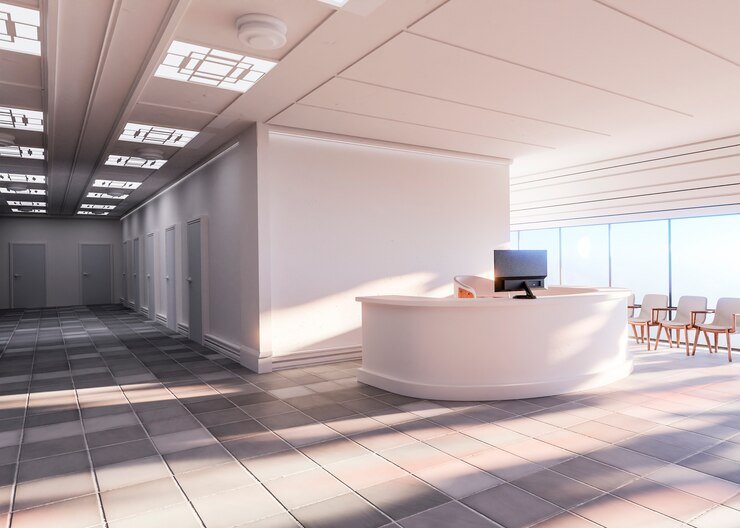
Patients
have always regarded dentistry with a feeling of apprehension and even dread.
Amidst the typical jokes
surrounding a visit to the dentist, there is a sliver of truth that people
usually dislike visiting the dentist. Modern dental offices and clinics are
seeking to dispel this myth and are striving to create a warm and inviting
atmosphere, where patients feel relaxed and welcome.
The Front Office
Dental assistants should welcome
the patient and ensure that patients are seated comfortably. Families may like
to be seated together, whilst others may prefer their space. Please ensure that
there are current magazines and periodicals for patients to read. In the past,
dentists' offices were notorious for having ancient magazines in the reception
area - this indicates indifference towards patients. Dental assistants are often in
charge of ensuring that the reception area is clean, warm and comfortable. They will also be responsible for
placement of advertising and promotional materials for patients to view.
Meeting and Greeting an
Apprehensive Patient
The thoughtful use of language
can help ease nervousness in a subtle, but powerful, manner. As with any
interaction, the first few minutes play a crucial role in establishing a
relationship. Walk up to the patient and introduce yourself to them - this
reduces the awkwardness, almost immediately. Make eye contact, smile and then
escort them to the waiting area. If you are dealing with an elderly patient,
help them be seated.
Most patients may be accompanied
by a family member. Make sure that you greet them and make them feel welcome
too. You may wish to use last names to address patients, unless they request
you to address them by the first name.
Here is an example of a conversation:-
“Good morning Mr Johnson, my name
is Jane and I am the dental assistant to Dr. Seale. Isn't it a warm day today?
Please allow me to welcome you to our clinic”.
Please keep in mind that whilst
eye contact demonstrates consistency, staring may cause the patient to feel
uncomfortable. It is also a good idea to explain how the patient will feel
during and after treatment. Most procedures are now painless in modern
dentistry and it is important to explain this to the patient. Most nervousness
is caused due to fear of the unknown and apprehension of pain.
Similarly, make sure that the
patient is escorted in a respectful and friendly manner, to and from the
treatment area. This way, they feel supported at all times.
For example
Patients are given numbing
injections before extractions. Therefore, it is important to explain to the
patient that they will feel no pain or indeed anything at all, because the
injection will numb the gums and oral section.
You can also try explaining that
they will feel much better once the treatment is complete. Helping the patient
to understand the procedures and providing useful information helps to
eliminate fear.
Reassuring Patients in the
Treatment Room
A constant stream of reassuring
talk helps to calm very apprehensive patients and distracts them from their
fear. This also allows the dentist to focus on completing the procedure. The
mutual respect between the dentist and the assistant can bolster the confidence
of the patient, because the efficient teamwork reinforces trust.
Sometimes, a gentle touch on the
shoulder can be very helpful - however, when you do it for the first time
observe the patient to see if the non-verbal touch feels comfortable to
him/her. Similarly, in the treatment room, think before you speak. Sometimes,
using technical jargon can convey alarming connotations to the patient and can
sound extremely intimidating.
For example
If a patient has come in for an
extraction of the upper molars, do not ask the dentist if he needs the bayonet
forceps - instead, discreetly hand them to him when he needs them.
As the treatment progresses, make
sure that you smile at the patient and ensure their comfort. Keep your tone of
voice calm and even and avoid speaking in a squeaky and high-pitched tone, as
this may increase agitation levels. Ensure that your body posture and gestures
match your words and tone.
For example
Do not ask patients how they feel
whilst glancing out of the window - this indicates disinterest and contradicts
your words.
Dental instruments and paraphernalia
lying around can also appear intimidating to patients. Dental assistants should
ensure that all instruments are tidied up and then neatly placed out of sight.
Telephone Skills in Dental
Assisting
A telephone call is often the
first contact with the patient and the interaction sets the stage for future
communications. The patient gets a clear idea of the care and respect that they
can expect from telephonic interaction. People often assume (correctly) that
the quality of telephone communication indicates the quality of dental care
that they can expect at the clinic.
The following key points help to
summarise the crucial strategies for answering and responding to telephone
calls:-
*Answer the telephone within two
to three rings and do not eat or drink whilst talking on the telephone. Answer
the telephone personally and do not allow patients to enter the nightmarish
spiral of telephone menus. Dental and other healthcare services are personal in
nature and every patient would like to be treated respectfully.
*Research shows that an unanswered
telephone or putting the patient through to voice mail reinforces what is
called the “avoidance reflex”. Consequently, the patient may avoid calling back
or worse, is likely to look for dental services at competing offices.
*Speak at a moderate speed - the
recommended speech rate for clear communication is between 140 and 180 words
per minute. If the caller is a non-English speaking individual, slow down your
speech, so that they are able to understand you clearly.
*If the patient does not give
their name, you may wish to ask, “Whom do I have the pleasure of speaking
with?”
*Attitude, moods and personality
are clearly transmitted through telephone calls, so make sure that you have a
smile on your face when you answer the telephone.
*Ensure that you possess full
information regarding the procedures offered at the clinic. If you have any
doubts, assure the patient that you will get back to them and make sure that
you revert with the information that they required.
*Rephrase the conversation, in
order to ensure that you have understood what the patient requires.
*Avoid putting patients on hold
for more than a few seconds - what may seem like seconds to you may seem like
an eternity to the patient.
*Refrain from having side
conversations or being distracted whilst speaking on the telephone - no patient
likes to feel that they are second priority.
*Greetings should be polite and
courteous, without being overly informal. For example, please avoid greeting a
patient on the telephone with, “Hey, what's up?” (Regardless of whether you
know the caller, or not).
Effective telephone skills can
help to convert increasing numbers of customers into patients. It is important
to remember that patients are not interruptions to our work - they are the
reason that the dental office exists in the first place. The first telephone
call to the dental office can decide if the customer is going to schedule a
subsequent visit to the clinic.
Communication statistics indicate
that first impressions are formed between five to ten seconds of the telephone
call.
It is a good idea for assistants
to maintain an office manual, which provides guidance on telephone answering
etiquette. This will ensure consistency of telephone skills and will explain
any unique requirements that are specific to the office (phone etiquette and
response may vary across dental practices). Similarly, you may consider
printing out copies of FAQ sheets and placing them discreetly near the
reception area, so that new staff members are able to respond to customer
queries with the help of reliable and consistent information.
Collecting contact information is
extremely important, in case the telephone call gets disconnected for some
reason.
For example
You must ascertain (this can only
be done with correct listening) the purpose and nature of the call. If the
patient wishes to clarify a billing issue, you can note down the details and
offer to call back after researching the issue and collecting the required
information. This way, you are able to help the patient, as well as avoiding
keeping others waiting.
Sometimes, patients may wish to
speak with the dentist directly. However, the dentist may not wish to be
disturbed during chair side treatment for another patient (constantly
interrupting treatment with telephone calls is not fair to the patient in the treatment
room). It is a good idea to offer to help the patient or to take down a
telephone number whereby the dentist can call back later.
Give the patient an idea of when
he can expect the dentist to return the call. Sometimes, the dentist may accept
calls from other dentists or laboratory professionals. Please familiarise
yourself with the dental office's preferred policies with respect to telephone
calls. It is the dental assistant's job to ensure that the doctor's time is
used efficiently and wisely.
Activity 2
Estimated time: 10 minutes
An angry patient is calling and
demanding to speak to the dentist. How will you respond to them and handle the
situation?
4.4 Dental Office Technology and
Business Systems

Most modern dental offices are equipped with the latest
technology, in order to streamline processes and ensure a smooth experience for
patients and workers. It would be fair to suggest that
computer technology has become central to the efficient operation of a dental
office.
From an administrative point of
view, computers are used to maintain patient records and information, store
information regarding financial transactions and insurance, accounts receivable
and payments etc, as well as stock information. The clinical use of computers
extends to multiple areas, including taking intraoral photographs and
radiographs and so on.
As a dental assistant, you should
be proficient in using computers for administrative and clinical purposes
(within the limits of your competency and under the supervision of the
dentist).
In general, a dental office will
contain computers, printers, scanners, speakers, headphones, fax and copy
machines and answering machines. The dental assistant will enter and retrieve
patient information using the keyboard and mouse and will use the printer to
print copies of records and charts and so on. The computer can also be used to
print out invoices and receipts for payment. Usage of headphones for answering
the telephone leaves your hands free to type on the keyboard.
There are several modern dental
software packages that offer the comprehensive features required to perform the
different functions in a dental office. The most common software packages used
for administrative purposes in the dental office include:-
Word processing
The assistant will need to
possess familiarity with word processing, in order to be able to type letters
to other dentists, doctors, clinics, insurance providers and patients. The word
processing package can also be used to print out envelopes and office documents
and forms. If you happen to be new to word processing, you can consider using
the manuals that accompany the software package. The assistant should be aware
of how to type letters, inserting the address, name and date in the correct
place, as well as providing suitable spacing between words and sentences.
Spreadsheets
The dental assistant will find
spreadsheets very useful in tracking metrics such as petty cash purchases,
payments, inventories, or accounts receivable. Spreadsheets are designed to
manage information that you need to transform into a chart or diagrammatic
format. Dental assistants can also use
spreadsheets to project expenses, manage budgets, track the number of new
patients and calculate profits and so on.
Email
Email has several uses in dental
offices. Assistants can use email to confirm or cancel appointments, send out
appointment and payment reminders, transmit the results of tests etc, as well
as send dental data to other dentists for referrals and so on. Email is also
crucial in order to communicate with insurance companies.
All data should be backed up to external
hard disks in a secure manner, to prevent third party access. The frequency of
backups depends on the size of the office and the number of patients. Larger
offices may back up their data on a daily basis, whilst smaller clinics may opt
for weekly backups. The general principle is that if data is lost before the
next backup, you should be able to re-enter the data using the previous backup.
Fact
In general, the
UK spends £5.8 billion on dental treatments, on an annual basis.
Source: National Smile Month 2017
4.5 Clinical Applications of
Software

Whilst the assistant need not be
familiar with intricate laboratory computer technology, she will need to
possess knowledge of the digital camera to take dental x-rays and so on. Once
the x-ray has been taken, you must also know how to email, print, fax, or
transmit it to patients or insurance providers and so on. The assistant should
be aware of the limitations and benefits of x-ray and intraoral cameras and
should be able to troubleshoot if required to do so.
Digital imaging software allows
the user to link images to charts, as well as to include notes. Digital imaging
software also protects images from automatic alteration or deletion.
Dental Charting
The process of dental charting is
almost totally computerised nowadays. The dentition of a patient is clearly
indicated on a dental chart and you can view pending dental work (usually shown
in red), along with completed dental work (usually shown in blue). Extracted
teeth are marked with “X”, whilst teeth requiring root canal have a line
running through them.
It is important for a dental
assistant to able to read and interpret dental charts and integrate them with
patient records. A dental chart is an extremely useful graphical tool, which
contains organised information regarding teeth and gums.
An updated dental chart is
crucial to a dentist, as he will frequently refer to it during the course of
patient treatment and diagnosis. Dental charts help to keep an accurate account
of treatment progress and help to compare the status of oral hygiene with
previous visits. Modern dental charting software allows the assistant to drag
and drop charting symbols onto the chart.
Patient Education
The computer is an extremely
useful tool, in order to print or email information pertaining to patient
education. Many dental offices in the UK provide discs and graphics etc, along
with prepared treatment plans, in order to educate the patient. Similarly, the
computer can be used to print educational pamphlets, flyers and so on, which
provide details regarding different treatments.
Dental assistants should consider
following the guidelines below, whilst using a computer:-
*Do not leave patient information
open on the screen, if you are not at your seat
*Each employee should have a
separate login and password.
*Dental team workers should have
different levels of access. For example, not all staff members should be
allowed to cancel charges, change payment information and so on.
*If one team member is signed in,
wait until that person signs out, before using the computer.
*Enter patient information
accurately and carefully, to avoid mix-ups and confusion.
Module Summary
The success and efficiency of a
dental practice depends on the ability to meet patient expectations, whilst
working together in a spirit of mutual cooperation. The patient begins to form
impressions of trust (or apprehension) right from the start, so it is extremely
important for dental team staff members to put the patient at ease and allay
their fears.
The dentist has to pay close
attention to the procedure and it is the dental assistant who provides the
chair-side support and comforts a nervous patient. As an assistant, it is your
duty to keep a careful eye on the patient and inform the dentist if you observe
any signs of discomfort or pain.
When we work in an environment on
a daily basis, we can become blind to its workings. It is a good idea to enter
the dental office and view the office from the perspective of a patient.
Ask yourself if the office
appears unfriendly, unwelcoming, or cluttered. Reach out to patients, listen to
their fears and apprehensions and be willing to go the extra mile to help them.
This will help to establish a relationship of trust and mutual respect.
Poor telephonic skills can put
patients off, because the type of interaction that they experience can
determine their perception of the dental care that is offered at the clinic. In
fact, dental offices may lose patients and thousands of pounds of business, due
to poor telephonic skills. Dental office technology includes computers, digital
imaging, charting software, fax and copy machines, headphones, scanners and
printers, amongst others. Modern dental office use computer and digital
technology to streamline operations and improve efficiency.
.svg)



