
2.1 Introduction

The GDC or General
Dental Council of the UK is responsible for regulating the dental profession in
the UK. They regulate not only dentists,
but also dental assistants, technicians, nurses, hygienists and orthodontic and
dental therapists. The Code of Ethics has been formulated by keeping in mind
the interests of the public, patients, policy makers, national interests and
the welfare of dental professionals.
One of the most important
priorities is to make patient requirements the top priority. All business and
financial requirements should be secondary to patient requirements. As a dental
assistant, you should communicate full information to patients regarding
treatment, options, costs, time duration and so on. The patient must also have
the time and space to ask questions and clear doubts.
Modern dental offices in the UK
provide services to patients across different age groups, ethnicities, race and
religion. A non-judgmental, helpful and positive attitude goes a long way in
making patients feel comfortable and maximising communication.Non-English speaking patients
should be encouraged to bring an interpreter. The mode of communication will
vary across age groups and types of patients.
When the patient is seated in the
dental chair, they will often have a removable appliance in the mouth to help
hold the mouth open. In such a situation, many patients will be unable to speak
to convey discomfort or pain. The dental assistant should be observant of any
facial expressions or gestures that indicate negative reactions like anxiety,
fear, or discomfort. Dental assistants should be attentive when they
communicate with children and should create a fun, relaxing and interactive
environment.
Patients like to be treated as
individuals, as opposed to numbers. Every member of the dental team must
demonstrate the valuable qualities of empathy, understanding and care.
Listening and learning are integral parts of the patient communication process.
The tone of the relationship is established on first contact and thus, it is
important that the patient should feel valued and respected from the very
beginning. This helps to foster a sense of autonomy and competence, whereby the
patient is able to participate in the treatment plan.
2.2 The General Dental Council

The GDC
or General Dental Council is responsible for regulating the dental profession
in the UK. The organisation sets standards,
formulates policies, regulates quality assurance and investigates complaints.
All dental professionals, including dentists, nurses, technicians, assistants
and hygienists and so on must register with the GDC.
The main objectives of the GDC
include:-
*Protection of patients.
*Promotion of confidence in the
dental care profession.
*To set high standards of dental
care, performance and conduct.
*To promote ongoing education and
training, in order to reinforce standards of dental care.
Ethical Principles of Practice
We will now take a closer and
more detailed look at the nine standards or codes of ethics that govern the
dental profession in the UK. Please note that the Standards of Practice apply
to all members of the dental team. All principles are equally important. Dental
team members must make it a point to follow the principles at all times and
must demonstrate insights during the course of dental practice. Failure to
adhere to the standards of practice may result in removal from the GDC
register.
Putting the Interests of Patients
First
Patients expect to be treated
with respect, to be listened to and have their cultures and values respected.
All members of the dental team should make it a point to uphold honesty and
integrity, at all times. Every patient should receive equal treatment in clean,
safe and hygienic surroundings. The dental team should also prioritise patient
welfare over business and financial interests. Any adverse effects arising from
dental treatment should be redressed and patients should be provided with the
highest quality of dental care. Every member of the dental team
should be familiar with the laws and regulations that govern the practice.
Patients must always be given the
opportunity to ask questions and clear doubts regarding their treatment. For
the best communication with patients, you may wish to pay special consideration
to your body language and tone. Each patient has unique requirements and
preferences and as a valued member of the dental team, you must make it a point
to treat every patient with kindness and compassion.
It is important for every member
of the dental team to justify the trust of the public. Any promotional
material, such as advertisements, must be in accordance with the guidance
issued by the GDC with regard to ethical advertising. The information should
not be misleading in any way. The dental team should take a holistic approach
that takes into account the patient's physical, psychological and social needs.
As a dental assistant, you should explain the risks, benefits and other aspects
of the dental treatment, in order to help patients make decisions.
It is advisable to gain
familiarity with the regulations that govern radiology, disposal of clinical
waste, decontamination and medical devices.It is extremely important to
treat all patients equally and without discrimination on the basis of colour,
race, ethnicity, religion, age, gender, sexual orientation, or disability. Your
own beliefs and perceptions should not cloud your professional judgement or
interfere with your duty towards patients.
If you happen to work for a
dental practice that offers both NHS as well as private treatment, you must
provide clear information to the patient regarding which treatments can be
availed under the NHS and which ones under private practice. This is where
conflicts of interest often arise. Patients who are entitled to dental care
under the NHS scheme should not be coerced into taking private treatment.
Business, corporate and financial interests should never be prioritised over patient
welfare. Similarly, when a patient is referred to another dental practice, it
should be in the best interests of the patient.
For example
A patient should not be referred
to another dental practice only on the basis of an incentive scheme.
If, for some reason, the patient
makes a complaint against the practice, this should not impact any continuity
in dental care. Assistants are usually responsible for communicating with
insurance providers and filing insurance documents. The practice should have adequate
insurance to allow patients to claim compensation in case of any harm that
arises due to dental treatment. Insurance providers should be contacted
immediately, to maximise the likelihood of claiming insurance.
Activity 1
Estimated time: 10 minutes
A patient needs dental implants,
but the treatment is not covered by the insurance provider. When and how should
you discuss payment options with the patient?
2.3 Communicating Effectively
with Patients

Patients should receive complete, clear and accurate information,
before, during and after treatments, to enable them to make informed decisions
regarding their treatment. They should also be informed
about the costs and duration of treatment, as well as the outcome that they can
expect from the dental treatment. All of this information must be communicated
in such a way that the patient is able to understand. Listening and understanding the
patient's requirements forms a crucial part of the communication between the
dental team and the patient.
For example
You may be explaining the
treatment to the patient. The patient may then remark that all she wants is the
front teeth to be corrected. This may indicate to you that appearance is
important to the patient.
If you ask the right questions,
you may discover that the patient plans to attend a job interview or wishes to
go to a wedding event. Understanding the patient's needs will help you to plan
the treatment accordingly.
Research indicates that effective
soft skills help dental patients repose trust in the practice and increase the
likelihood of success and value of care. When patients have a positive
experience, they are more likely to return for ongoing treatment and care.
Fact
Additional patients 1.4 million
additional patients visit an NHS dentist on a daily basis, compared to 2010.
Source: England NHS
2.4 Benefits of Improved Patient
Communication

There are three main benefits of improved patient communication.
Increased patient satisfaction
Research indicates that a
positive interaction and clear communication helps to improve overall patient
satisfaction levels. The team's ability to communicate and empathise with the
patient has a significant impact on the patient's experience and outcomes.
Reduced instances of complaints
Open and consistent communication
helps to reduce the instances of complaints and grievances against the
practice. Transparent dialogue helps to improve patient retention.
Improved efficiency
Encouraging patients to voice
their doubts and complaints results in reduced instances of missed opportunity
to gather information. Concerns can be dealt with in a timely manner and this,
in turn, reduces the likelihood of last minute confusions and miscommunication.
2.5 Patient Care

Every patient has certain
perceptions and expectations (both are states of the mind).
The dental team must take these
factors into consideration, in order to help achieve success. In general,
patient care is determined by the following equation:-
Patient Satisfaction = Perception
- Expectation
Whilst there are multiple needs
of patients, the most ones are listed below:-
Friendliness: The assistant and
other staff should demonstrate courtesy, warmth, politeness and caring.
Empathy: The patients should feel
that the dental team understands their needs, circumstances and concerns and
they should receive personal attention.
Efficiency and punctuality: The
practice should respect the patient's time and demonstrate efficiency and
promptitude.
Control: Patients prefer being involved
in their own treatment plans and decision making.
Alternatives and options: The
dental assistant should explain all of the options and alternatives to the
patient and allow the patient to make an informed decision. Explain treatment
options from the least complex to the most, along with the benefits and effects
of each. Avoid making judgements on the patient's choice of treatment.
When you provide information to
patients, give them time to process and interpret the information without
rushing or pressurising them. As a dental assistant, you will come across
different types of patients, spanning different age groups. Thus, it helps to
develop a deeper understanding of each generation, although individual
behaviour will manifest itself within each generation.
For example
You may need to communicate
patiently when dealing with elderly patients. They may ask repetitive
questions, but your non-verbal communication (including body posture, gestures
and facial expressions) cues should not indicate impatience or boredom.
On the other hand, if you are
dealing with youngsters, they may prefer digitalised communication and may
request you to scan and send dental x-ray images by text or email. The mode of
communication may vary, depending on the age group of the patient. When a
patient is undergoing dental treatment, their speech may be unclear due to
fixed or removable appliances in the mouth. At such times, you should be able
to gauge non-verbal communication accurately. Posture and position indicate
patient's feelings at any given point during treatment or consultation.
Tight arms and legs may indicate
stress, legs and arms crossed may indicate resistance and loose arms and legs
may indicate a relaxed and receptive attitude.
For example
Tightening of their hands or
wincing may indicate discomfort or pain.
Dental assistants should keep a
careful eye on patients during dental procedures, in order to ensure that they
are comfortable. Eyebrows and eyes are powerful non-verbal tools of
communication. Slightly raised eyebrows can indicate puzzlement or surprise,
whilst slightly lowered eyebrows can hint at suspicion. Furrowed eyebrows may
indicate displeasure.
Every patient wishes to be
treated as an individual and not as a number. Patients should never be regarded
as an interruption to work. They are the reason that the practice exists, in
the first place. Learn to listen to the patient (they are right in their own
eyes) and do what it takes to make them happy. Assistants should remember to
discuss financial matters only after explaining treatment options - “Do you
have insurance?” must never be the first enquiry.
Every patient will also have
their own territoriality and personal space requirements. If you have to
perform a procedure that involves moving closer to the patient, inform them
about this fact. As far as possible, work from the side - this is often
perceived as non-threatening. Standing over the patient may be perceived as
threatening. Whilst speaking to patients, lean slightly towards them, smile
slightly and make eye contact. The patient is likely to feel valued, respected
and listened to.
The following tips help to
improve communication with the patient, from the moment they enter the office
to the time that they leave:-
Welcome and greet the patient by
name and shake their hand. Inform them of the waiting time if possible. “Dr.
__________ will see you in 15 minutes”. Introduce yourself, so that the patient
understands your role in their treatment.
Escort the patient to the
doctor's room and help them with handbags, files, etc. Whilst walking them to
the treatment room, reconfirm the treatment that they are booked for.
Once you have seated the patient
in the chair, talk to them in a comfortable manner. Ask him/her if there has
been any change in the medical history since the last time that he/she was
there.
Here is a sample dialogue between
a dental assistant and a patient waiting for the dentist:-
“We will be fitting a crown on
the lower left side of your mouth today. There appears to be a huge cavity
below the tooth, so I am glad we are going to be taking off the tooth before it
causes more problems for you. We will also be taking impressions of the tooth,
for the laboratory to make a natural crown. The entire process will take about
one hour today. Do you have any questions regarding the procedure? I will also
give you care instructions after the procedure”.
Once the dentist enters the
treatment room, you can consider communicating the patient's fears and
anxieties to the dentist. “Dr ____________ is excellent at getting the oral
area numb, so you will not feel any pain during the procedure”.
Once treatment is complete,
please ensure that you provide the patient with a written sheet of
instructions, in addition to providing oral instructions. If there are
financial arrangements to be made, request the front desk to get it ready
before the patient reaches the front office. The office should consider
processing payments quickly, as patients will usually be anxious to get home -
especially after complex procedures.
Review patient information with
the front office and tell the patient that they were great during the
procedure. If they have to return for a follow-up appointment, remind them to
come in.
Remember to communicate in a way
that the patient is able to understand. Avoid using professional jargon and
allow non-English speaking patients to bring along interpreters to help them
understand instructions.
It is a good idea to summarise
treatment for patients and request them to sign the treatment plan to indicate
acceptance. Always keep a copy of the treatment plan, costs and so on in the
patient file. You can also consider creating a price list and displaying it in
the reception area. The price list should contain costs of simple procedures,
such as fillings, cleaning and extraction. The list could contain a range of
costs for each treatment.
Dental assistants must also
develop perception skills. Assistants are often the common point of contact
between the reception and the clinical area and they will need to interpret
gestures, postures and non-verbal cues.
For example
Many patients may be anxious
about procedures, but may be embarrassed to admit it. In such cases, perceiving
anxiety or stress can help you to understand the patient's requirements better.
Communication skills are not only
necessary, they are crucial during procedures.
For example
A patient may find it difficult
to breathe if the mouth is filled with dental fluid and the nose is blocked.
The assistant should be immediately able to recognise that the patient needs
help.
Similarly, a patient may need to
answer a call of nature urgently. The dentist will be focused on the procedure
and it is up to the dental assistant to watch out for signs.
2.6 How to Communicate with
Children

General dental offices and pediatric clinics cater to the dental needs
of children and adolescents.
To begin with, create a warm and
friendly atmosphere. Greet the child and talk about other things such as
school, music or football, to allow the child (and parents) to relax. If
possible, allow the first session to be a familiarisation session for the child
to get to know all of the members of the dental team.
The child is far more likely to
be relaxed when he is familiar with the team. Introduce yourself and each
member of the staff, as well as what each one does. Show an interest in the
child and establish a relaxed and friendly relationship. Converse directly with the child
and ask the reason for the dental visit. Give the child your full attention and
show empathy. Introduce the child to the dental chair and explain the different
functions.
Explain why you and the dentist
have to wear a mask and gloves - some children may feel intimidated by the
appearance of unfamiliar clothing. During treatment, do not be forceful or
dictatorial to the child if you find him fidgeting or anxious. At the same
time, avoid being overly permissive, as this will put the child in control.
Once the treatment is complete,
explain the benefits to the child and praise the efforts of the child. At rare times, the dental team
may decide to end a professional relationship with a client. Such circumstances
may arise due to non-payment, or other issues. In such cases, ensure that your
decision is fair and just and that you are able to provide logical evidence for
your decision.
The first encounter often sets
the tone for future interactions and therefore, it is crucial to establish a
friendly relationship right from the beginning.
Activity 2
Estimated time: 10 minutes
A child has a dental procedure
scheduled, but is petrified. As an assistant, you discover that the parents
have always threatened the child with a dental visit as a punishment when he
has been naughty.
How will you make the child feel
comfortable and how will you counsel the parents?
2.7 How to Discuss Fees, Costs
and Insurance
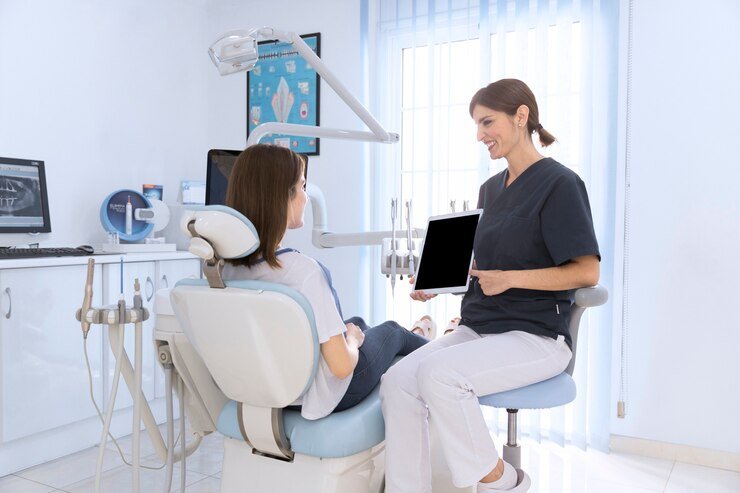
Many patients are reluctant or embarrassed to ask regarding costs and
insurance. Dental staff members must make it
a point to discuss fees, costs and insurance openly and honestly. You should
pay special attention to some spoken or unspoken questions that the patient may
have regarding costs.
Explain cost breakdown in detail
and offer payment options, so that the patient feels empowered to make the
right decision.When treatment is concluded, do
not walk away from the patient and leave the room abruptly. Help the patient
out of the chair if you need to and ask how they are feeling. Escort the
patient to the front office and inform them that they should feel free to call
back with any questions or doubts. This makes the patient feel comfortable to
reach out if they need to.
Dental assistants must possess
competency in communicating in the English language and this should include
both verbal and written communication. In addition, you must ensure that the
patient provides authorised consent at every stage of the treatment. It is also
important to ensure that the patient has understood the decisions that he or
she is being asked to make. Accordingly, the patient should be provided with
sufficient and adequate time in order to make a decision. In addition, please
ensure that the information is provided in a format that they can easily
understand.
Similarly, please explain the
extent of any guarantees - for example, you may need to inform the patient that
oral hygiene is necessary in order to preserve the effectiveness of the
treatment.
Module Summary
The dental profession in the UK
has shown remarkable progress and takes pride in addressing the oral hygiene
requirements of the population. The GDC or General Dental Council is a
regulatory body that is responsible for maintaining high standards in the field
of dentistry. The dental profession is governed by a set of codes of ethics or
laws that help to integrate the requirements of patients, the public and dental
professionals. The standards help to ensure adherence to quality and protect
the interests of patients.
The profile of patients has
evolved in the last two decades. Dental assistants now greet and communicate
with different types of patients belonging to different age groups, multiple
nationalities, ethnicities and races. Your style of communication will change with
the type of patients that you are dealing with. In all cases, communication
should be clear, friendly and consistent. Ensure that the patient is fully
informed with regard to costs, duration and options. The dental team should
also clarify if the treatment will be covered by insurance, or if the patient
has to make a partial or full payment. It is important to balance a patient's
psychological and emotional needs with their oral hygiene requirements.
Once the patient is seated in the
chair, they may be unable to communicate verbally, due to removable fixtures in
the mouth. The assistant should position themselves at the side of the patient
and observe facial expressions and gestures for indication of pain or
discomfort. Similarly, assistants working in general or paediatric dental
offices must communicate with children in a fun and relaxed manner, to help put
the child and their parents at ease. Body language, gestures, posture and other
non-verbal cues play a crucial role in communication.
Listening and learning form the
most important component of patient communication. As dental staff, you may
possess more knowledge regarding dental procedures, etc, but it is the patient
who will know about how the dental care regime will fit into their lives. Each patient harbours their own
set of beliefs, perceptions and attitude and it is only by listening that you
can hope to balance their social, psychological and emotional needs with oral
hygiene.
.svg)



