
1.1 Introduction

Dentistry is an ancient profession
and the earliest dental tools were made of powdered bones, egg shells and
honey.
Modern dentistry began developing
around the 17th century and is now an organised sector that has shown
remarkable improvement in the last two or three decades. In the UK, the
objectives include the prevention of oral and dental disease, improvement in dental
literacy and education, as well as equalising opportunities for dental
treatment.
There are different types of
dentists who specialise in offering specific treatments. Whilst general dental
practitioners usually cater to biannual check-ups and so on, specialists,
including endodontists, cosmetic dentists, periodontists and oral and
maxillofacial dentists, provide complex treatments for different dental
conditions.
As a dental assistant, you can
work in a community dental office, a private one, or a hospital department.
Hospital dentistry departments are likely to have longer hours of work and a
higher complexity of tasks that need to be carried out. Similarly, your duties
and responsibilities will vary depending on the size of the office, the number of
services offered and so on.
Dental teams generally consist of
the dentist(s), assistants, receptionist(s), technicians, hygienists and
therapists. The number of staff members employed will again depend on the
nature and size of the practice. In recent times, there is an increasing
overlap of roles and responsibilities between assistants, nurses and
administrative assistants.
Dental teams perform best when
they coordinate with each other and encourage other members of the team. Each
member should appreciate the role of other team members. Members should be
encouraged to raise concerns when patient care is impacted due to the health,
behaviour, or professional competence levels of fellow members of the dental
team.
1.2 Dental Professionals

Dental professionals
evaluate, diagnose, prevent and treat conditions related to the oral cavity,
including mouth and tooth tissues.
This includes surgical and
non-surgical treatments of the oral cavity, as well as associated structures.
Most importantly, all dental professionals in the UK are expected to offer
treatments and interventions in accordance with the principles and code of
ethics and UK law.
Dentists are also responsible for
the removal of decay, filling cavities, repairing fractured teeth, placing
plastic sealants on children's teeth and performing corrective surgery on
supporting bones and gums. In addition, dentists also extract teeth, examine
dental x-rays, take measurements and make models for dentures, in order to
replace missing teeth.
Dental teams will also provide
guidance and instruction on brushing and flossing teeth, diet and the use of
fluorides. In addition, dentistry involves the administering of an aesthetics
and prescribing antibiotics, when necessary.
Dental offices use a variety of
equipment and devices, including drill machines, x-ray machines and instruments
such as mouth mirrors, forceps, probes, scalpels and brushes. Modern dentistry
also involves the use of lasers, digital scanners and other computer
technologies.
Members of the dental team,
including nurses and assistants, wear protective gear such as masks, gloves and
safety glasses, in order to protect themselves and patients from infectious
diseases.
1.3 Brief History of Dentistry

Human
beings have always suffered from dental problems from ancient times and
dentistry is an old profession.
Over time, various dental tools
have been tried and used to repair and clean teeth. During 300 to 100 BC, a
number of dental powders were formulated from crushed bones, oysters and egg
shells and mixed with honey to make a paste. It was in the 17th century that a
French dentist called Pierre Fauchard organised all dental information into a
detailed manuscript called “Le Chirurgien Dentiste”. The manuscript contained
step by step instructions and clear pictures.
This was the first time that
teeth were restored, rather than simply extracted. Dental tools were often made
from tools used by goldsmiths, barbers and jewellers. In the UK, John Hunter
first published the “Natural History of Human Teeth”. This book was one of the
first to give a scientific identity to dental anatomy. The Dental Hospital of London was
first opened in 1858 and in 1921, the Dentists Act permitted only registered
dentists to practice in Britain.
There is increasing emphasis on
“socially inclusive dentistry”. This means that marginalised sections of
society, such as sex workers, immigrant workers, the homeless and traveller
communities can now expect to receive dental treatment on par with others.
Fact
than 1 million patients visit NHS commissioned dental offices each week.
Source: England NHS
1.4 General Dental Practitioners
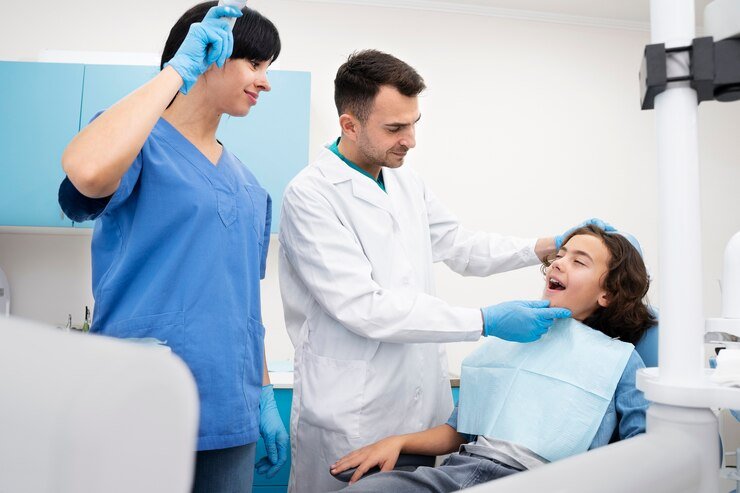
Most
dentists are general practitioners and provide a variety of services and
treatments, including cosmetic dentistry, dental cleaning, extractions, root
canals, fillings, dentures and crowns.
They are the “family dentists”
and look after the dental requirements of individuals and families, from
children to the elderly. They can be compared to general medical practitioners
(GPs) and patients visit a general dental practitioner for their twice yearly
check-ups. For those who require special treatment, general dental
practitioners may recommend a specialist.
There are 10 main types of dental
specialists.
Dental public health specialists
Dental public health specialists
help to promote good dental health and work towards the prevention of disease.
Public dental health programmes are implemented by the UK government, to ensure
that rural and underprivileged communities gain access to dental treatments. A
public dental health clinic works to prevent the pain and discomfort caused due
to poor oral health. The goal is to maximise oral health by promoting disease
prevention and dental health.
Endodontists
An endodontist is a dental
professional who provides treatments that are related to the internal workings
(soft tissues) of teeth, including pulp, roots and tissue surrounding the
roots. Endodontists perform root canals and repair damaged teeth. They perform
dental procedures that involve the removal of nerves and blood supply from
teeth. Endodontists are trained to treat damaged and diseased teeth that have
been knocked out of their sockets for various reasons.
Orthodontist
An orthodontist deals with
problems associated with the teeth or jaw, including overcrowding of teeth,
mismatched upper and lower teeth and crooked teeth that result in improper
locking of the jaw area. They design and provide braces that correct misalignment
of teeth or straighten crooked or protruding teeth over a period of time.Orthodontists usually treat
several paediatric patients.
Paediatric dentist
Paediatric dentistry involves
evaluation, diagnoses and treatment of oral disease in children, from infancy
through to adolescence. Sometimes, patients requiring special care with respect
to emotional, physical, or mental issues are also referred to paediatric
dentists.
Prosthodontists
Prosthodontist performs
restorative surgery for cracked or missing teeth and dental problems that have
been caused due to accidents, etc. Prosthodontists are highly skilled and
trained professionals who perform simple as well as complex restorations,
including bridges, crowns, veneers and implants.
Periodontists
Periodontists help to diagnose,
treat and prevent gum disease (periodontitis) and oral inflammation that is
responsible for tooth loss. They also treat patients with complex medical
histories.
Cosmetic dentists
Cosmetic dentists provide
aesthetic treatments such as fitting of veneers, teeth whitening, composite
bonding, lumineers and gum line correction. Whilst conventional dental
services involve necessary treatments, cosmetic dentistry deals with desired or
elective treatments for improved appearance.
Oral and maxillofacial dental
surgeons
Oral and maxillofacial dental
professionals are highly skilled professionals who work in a combination of the
medical and dental fields. They treat problems related to the face and jaw, as
well as a wide range of complex dental conditions. They often work alongside
other dentists. Common conditions treated by oral and maxillofacial dentists
include impacted wisdom teeth, cleft palate, jaw disorders, advanced gum
disease, facial injuries and oral cancer.
Oral and maxillofacial dental
pathologists
Oral and maxillofacial dental
pathologists are concerned with the diagnosis and nature of disease impacting
the oral cavity. Some types of growths, lesions, etc may not be recognised by
general dentists, but may be analysed and evaluated by a dental pathologist.
Oral and maxillofacial dental
radiologists
These professionals evaluate and
interpret data and images for all dental modalities. In addition to the 10 different
dental specialties mentioned above, forensic dentistry is an upcoming field.
Forensic dentistry involves the analysis of teeth for reconstructing identity,
as well as examination of bite marks and so on. Specialist dentists will usually
work with a patient in conjunction with the general dentist. Once the treatment
is complete, the patient will usually return to the general dentist for
biannual visits and so on.
Activity 1
Estimated time: 10 - 15 minutes
You have worked as an assistant
in a cosmetic dentist's office. You are in the process of being hired by a
general dental office. What changes/similarities can you expect in your job
role?
1.5 An Overview of the Dental
Profession in the UK

An Overview of the Dental
Profession in the UKAs a dental assistant, you could work under the supervision
of any of the above mentioned dental professionals. Many dental clinics offer
multiple specialties and dentists often work with a partner. However, many
dentists also work solo, with the help of staff members to help them run the
clinic and oversee daily operations.
Each member of the dental team coordinates
with others, in order to help the practice achieve its objectives. In fact, it
would be fair to say that dental teams comprise of competent, trained and
hardworking individuals, who are willing to put forth their best to ensure a
high quality of service (we will discuss dental teams in detail, at a later
stage). Most dental clinics work normal
hours, whilst community clinics may be open for longer hours or during the
weekend. Overall, the dental sector in the UK has made creditable progress in
the UK.
Dental and oral health has been
steadily improving and there has been increasing focus on disease prevention and
the establishment of public oral health programmes. If you are willing to work
longer hours and weekends, you may also be interested in working as a dental
assistant in a hospital. NHS research has pinpointed two
main causes for expense and discomfort - gum disease and tooth decay.
The main challenges include
improving quality of dental care, reduction of health inequalities and
improvement in access and information for patients. In addition, there have
been improvements in integration of dental care, increase in the dental
workforce and increasing public engagement. Dental professionals are now
encouraging self-care amongst patients, in a bid to increase preventative
measures to reduce dental and oral disease.
1.6 Members of the Dental Team,
Roles and Responsibilities

Many individuals work together to make up the dental team.
Team cohesion and efficiency
improves the overall patient experience and members of the dental team often
attend ongoing education sessions together, in order to promote collaboration.
In addition to dentists themselves, all members of the dental team need to keep
abreast of the latest skills and knowledge. In fact, it would be fair to say
that each member of the team should make a firm commitment to becoming a
lifelong learner within the constantly evolving field of dentistry.
Members of the Dental Team
The dental team may work together
in a wide range of settings, including hospitals, high street offices,
community clinics and universities. Each career provides its own set of
exciting opportunities to make a difference in the lives of others.
The dental team should develop
certain qualities, in order to be able to maximise efficiency. These include:-
*Willingness to become a lifelong
learner
*An accurate eye for detail
*Excellent soft skills, including
interpersonal and people skills
*The ability to work in a team
environment
*Manual dexterity
*The ability to educate and help
others
Dental Assistants
In the early 20th century,
dentists hired men or boys to help usher in patients, welcome them and show
them out, etc. The role of dental assistants gradually expanded, to include a
wide range of functions and responsibilities. Dental assistants allow dentists
to handle many more patients and perform a higher number of procedures than
they could have done on their own (without help). Nowadays, most dental offices
in the UK employ one or more dental assistants, depending on the volume and
type of services offered.
In dental offices, the individual that works
alongside the dentist during examinations and procedures is the dental
assistant. Dental assistants support dental
care delivery, by performing a number of duties. These include preparation of
the treatment room, instruments and materials, passing the instruments,
materials and tools to the dentist and performing all procedures in accordance
with the Core Ethics of Dental Practice.
Additional duties involve
providing information to patients and answering questions. Dental assistants
also provide materials by selecting, mixing and then placing them in the
patient's mouth, or instruments. They are also responsible for sterilisation
and positioning of dental instruments, so the dentist is able to access them easily
and quickly. They also help the patient masticate (to chew or munch) by usage
of temporary restorations and provide information on oral hygiene and plaque
control. Dental assistants also provide information to patients regarding
postoperative care and protect them from infection by using the appropriate
policies and protocols.
Dental assistants also chart in
patient information in the clinical records and uphold confidentiality by
storing the records in a secure manner. They are also in charge of dental
supplies and stocks and it is their responsibility to order supplies before
they run out and coordinate with manufacturers and retailers, to keep equipment
in top working order. Dental assistants are also responsible for
troubleshooting, calling for repairs and overseeing deliveries, etc.
Dental Receptionist
Please note that in some offices,
the assistant may also perform some duties in common with the receptionist. The
receptionist is responsible for scheduling appointments, greeting patients and
accepting payments (larger dental clinics and offices may hire a separate
cashier). The receptionist is usually the
first point of contact for the patient and it is up to the receptionist to
transform the experience into a positive one.
The receptionist also attends to
telephone calls and must develop excellent telephone and communication skills.
Patients usually make enquiries regarding dental procedures, charges, insurance
information and so on. Efficient scheduling of appointments plays a key role in
boosting efficiency levels in the office. The receptionist would also be
expected to perform other tasks, such as scanning, photocopying, faxing,
sorting and filing, as well as printing. Larger offices may employ more than
one receptionist and it is common to find dental receptionists working in
pairs.
Dental Hygienists
Dental hygienists provide
services including dental prophylaxis (cleaning of teeth to prevent the onset
of gingivitis and plaque), as well as the removal of stains and calculus from
the oral cavity. Dental hygienists also apply tooth sealant (dental tools and
materials will be explained in detail) and expose, process and mount
radiographs. They also chart conditions found in the oral cavity and place
restorative materials.
Dental hygienists also show
children and adults how to maintain oral hygiene and help people to eliminate
associated problems, such as bad breath. They also work with a wide variety of
people in the community and address specific needs, such as disabilities. Dental assistants often perform
the duties and functions of a dental hygienist. The staffing varies, depending
on the size of the dental office, etc.
Dental Nurse
A dental nurse helps the dentist
to deliver a range of services, from simple to complex treatments. Dental
nurses help the dentist in every aspect of dental care and play a crucial role
in improving the quality of care and efficiency levels in dental offices.
Dental nurses are also responsible for taking x-rays, welcoming patients and
putting them at ease, as well as directly participating in the procedures
whilst assisting the dentist. Dental nurses also decontaminate instruments,
select and mix materials and oversee the proper functioning of equipment.
A dental nurse needs to nurture
the qualities of professionalism and discretion, as these are invaluable in the
maintenance of patient confidentiality. Dental nurses are also important for
maintaining the surgery, equipment and materials (materials need to be stored
efficiently and correctly).
Dental Laboratory Technicians
Dental laboratory technicians may
not work in the office itself, but may work in the laboratory area.
Alternatively, dental laboratory technicians may be employed in private dental
laboratories that provide services to multiple dental offices. They fabricate
dental prosthetics, in accordance with dentists' instructions and also prepare
metallic and non-metallic (full or partial) dentures. They also help to improve
the oral health of patients, by preparing corrective fixed and removable
appliances. They prepare a range of prosthetics, such as crowns, bridges,
dentures, veneers and retainers.
Dental laboratory technicians
prepare implants that the dentist places directly on to the jawbone. They
construct dental prosthesis, by using impressions taken by the dentist and
making wax replicas. In addition, lab technicians
complete forms, logs, reports and records, in order to maintain correct
documentation. They continually study, evaluate, re-design and implement
changes, to processes and add value to their jobs by exploring new
opportunities. Please bear in mind that dental
laboratory technicians need to be completely familiar with the properties of
materials, as well as with facial and dental anatomy.
Dentist
The dentist is the main point of
contact for the patient. It is the dentist's duty to evaluate, diagnose, treat
and prevent disease. More than one dentist may be available for consultation at
the dental office. Most dentists may divide their time between multiple
settings, such as between a hospital and a general practice.
The main responsibilities of a
dentist include diagnosis and treatment of dental problems, performing
preventive dentistry to avoid tooth decay and gum disease and carrying out
standard procedures such as fillings, cleaning, extractions, minor oral
surgeries and fitting veneers, crowns and bridges, etc. the dentist is
responsible for managing the practice and leading the dental team.
Orthodontist Therapist
Orthodontist therapists help
orthodontists on a day to day basis and assist with treatments such as the
correction of crooked teeth. Orthodontist therapists are typically dental
nurses or assistants who have had additional training. Under the supervision of
the orthodontist, you will carry out procedures, including fitting wires and
brackets, taking impressions and inserting or removing braces, wires,
orthodontic cement, or adhesives.
Dental teamwork involves working
together, to provide high quality dental care for patients. In general, dental
teams can take on several forms and need not be restricted only to
professionals.
For example
A dentist may have his or her own
practice, but may refer the patient to a specialist. All members of the dental team
are fully responsible for their own actions and accountable for the procedures
that they carry out. The objective of the dental team
must be to provide the best dental care for the patient. The dentist should
ensure that all members, including assistants, nurses and technicians are aware
of the code of ethics (this will be discussed in the next module) and the
supporting recommendations that follow it.
As a dental assistant, you are an
important part of the dental team. It is your responsibility to raise concerns
if the health, behaviour, or professional performance of you or a colleague
impacts patient care in a negative manner. Each member of the dental team
directly affects the practice through their actions or performance. The manner
in which the team communicates with each other and delivers a quality
experience for the patient helps to create a certain image of the practice. A discordant dental team can
demoralise a patient and have a negative impact on the practice.
The following tips help dental
teams work together effectively:-
-Cooperate with all team members
authentically and effectively. Authentic communication involves honest
transmission of information. Even if a team member is possessed with a lesser
knowledge of the English language, the communication must contain energy and
passion.
-The most successful dental teams
respect each other and each one appreciates the role that the others play.
-Busy days at the dental office can
be stressful and exhausting and it helps to boost the mood with some humour to
lighten the atmosphere.
-Remember to encourage each other
and help other members of your team to achieve their goals. Dentists should
encourage their staff and reward them in different ways, when they perform
well.
At the end of the day, each
member of the dental team should be aware that they are working together for
the greater good of the patients and the practice.
Activity 2
Estimated time: 10 minutes
You notice that one of the team
members is suffering from a migraine and is unable to work. What should you do?
Module Summary
The dental profession began to
evolve thousands of years ago and the first dental tools were made of bone
powder, egg shells and honey. The earliest dental instruments were fashioned at
barber, goldsmith and jewellery shops and were used to repair or clean teeth.
Pierre Fauchard was one of the first surgical dentists to have recorded a
treatise on the subject of dentistry.
Modern dentistry in the UK is a
vibrant and dynamic field that caters to the oral health requirements of
thousands of people. The major objectives include prevention of disease,
improvement of dental literacy, integration of services and extending dental
treatments to other sections of society. As a dental assistant, you may have
the opportunity to work with different types of dentists. Whilst general practitioners
offer conventional dental services such as cleaning, braces and so on,
specialised dental professionals offer a range of complex treatments.
Dental specialists include
endodontists, prosthodontists, paediatric dentists, oral and maxillofacial dentists,
orthodontists and so on. A general dentist will usually refer the patient to a
specialist and after the treatment is complete, the patient will return to the
general dentist's office for standard treatments, such as check-ups.
The success of a dental office
often depends on the cohesion amongst members of the dental team. The dental
team usually comprises of the dentist, assistant, laboratory technician,
receptionist, nurse and therapist. The number of staff members will depend on
the size and nature of the practice. Members of the dental team should
coordinate with each other and empathise with other members, in order to
maximise patient care.
.svg)



