
1.1 Introduction
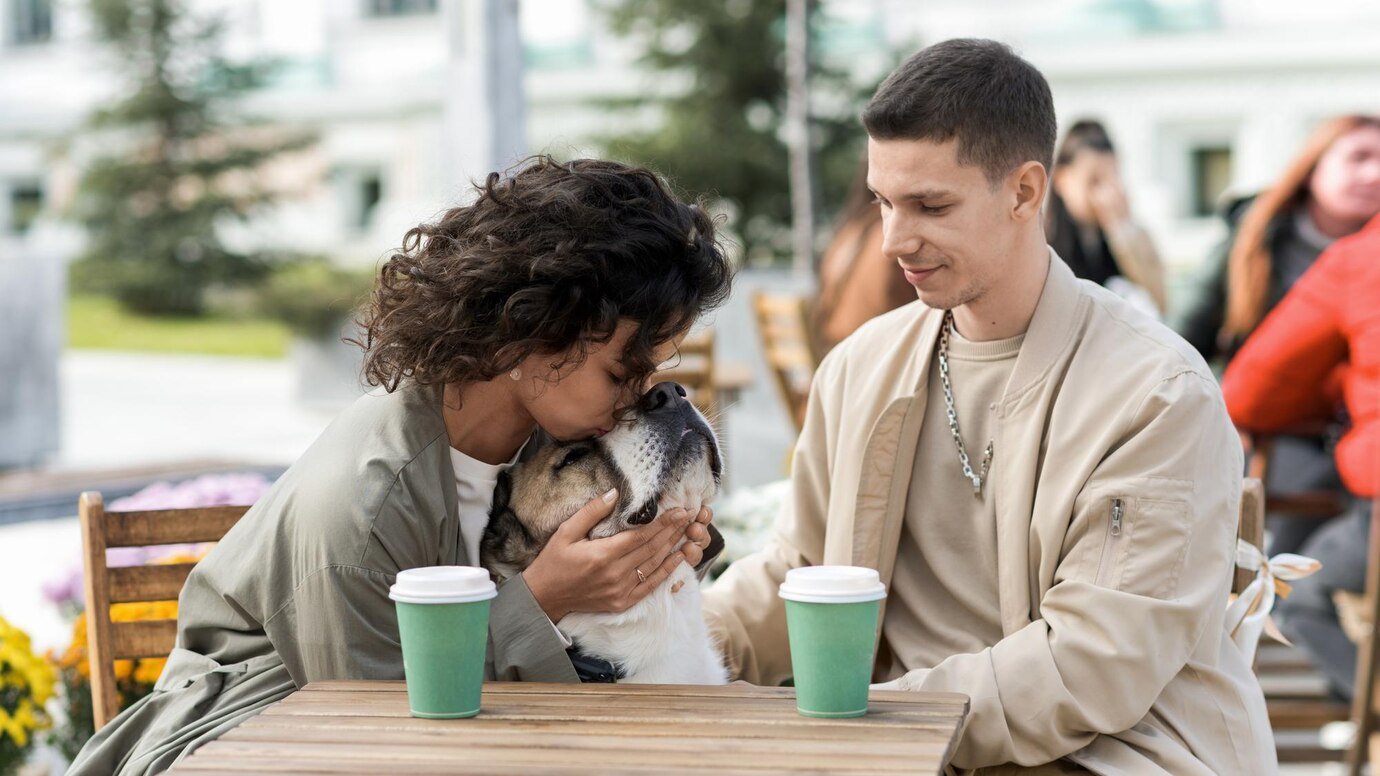
Our canine companions do not talk in the same way that humans do, but they can easily communicate with each other and, ultimately, we can learn to communicate with them too. Dogs use a variety of sounds, such as barking, whining, howling and growling, to show us what they want to say. They also use body postures and other movements, to communicate. Puppies will learn these skills from their mothers - and those who are removed from the litter too quickly, before eight weeks of age, might never learn them. If you want to learn to communicate with animals, whether you are considering a job in animal care or even to better interact with the dog(s) in your own household, this course will give you the information you require to understand canine communication. With practice, you will soon be able to understand what these furry creatures are trying to say.
1.1 Vocal Communication
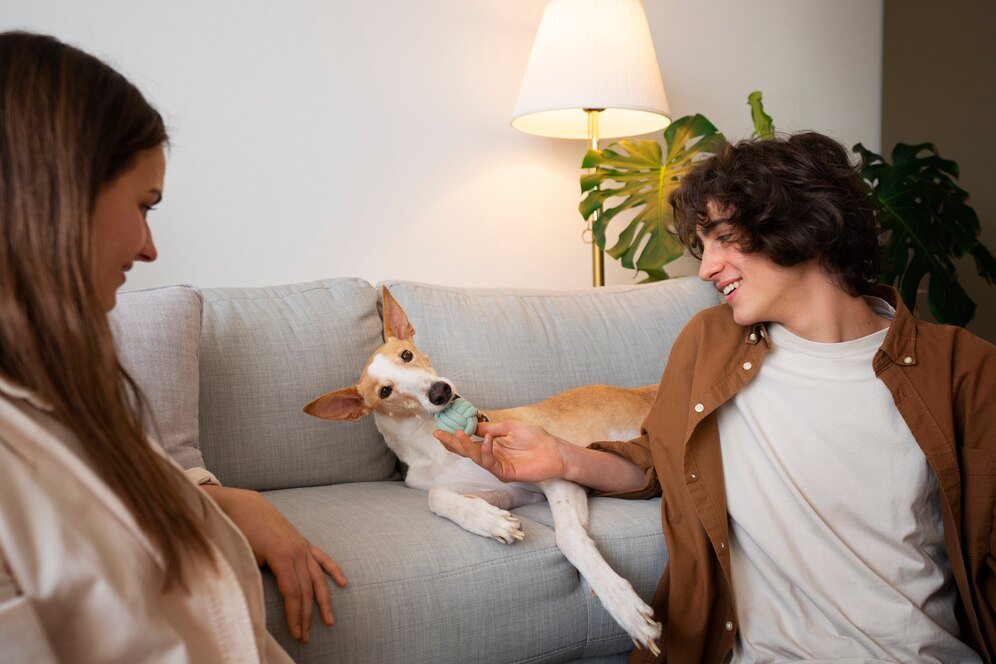
If you have a dog, or you are often around dogs, you know that they use a variety of vocalisations to communicate. Barking, growling and whining are all common types of vocalisation - and you must learn what each of these mean, in order to become an effective canine communicator.
Whining
Whining, for instance, is often used by a dog to indicate they are feeling stressed or anxious. Dogs might also whine because they are frightened, or because they do not like something. True whining is always an indication that the dog is in an uncomfortable situation, though it might not be a totally negative situation. For instance, if a dog wants to eat their dinner, they might whine to their owners. This does not mean that the dog is in pain, of course, but it could instead mean that he or she is uncomfortable because they are hungry.
Growling
Growling is another form of verbal communication. In this case, growling can take one of two different forms - a 'play' growl, or a 'warning' growl. Play growls are often heard when a dog is playing, or mock fighting. If you listen closely, it usually sounds low in the throat and soft. Warning growls are different, however. These growls often start out soft but then increase in volume. The dog also takes a certain body posture, to accompany the growl. This is telling any person or animal around that this dog means to attack if provoked.
Dogs should never be punished for growling, as this is a very useful warning sign. Dogs that are punished will certainly stop growling, but there is still a reason for the growl, which means there is no warning should things turn sour. This could be very dangerous in the case of aggressive dogs, as a growl might indicate you are too close, or the dog does not like your behaviour. The vast majority of dogs will growl to warn you - and then attack. If the dog has been disciplined for growling, there might not be a warning - and then you could find yourself facing trouble.
Barking
Barking is the most familiar verbalisation of a dog - and some dog breeds are more prone to barking than other breeds. Barking is the most mysterious type of communication from a dog, as it can mean a number of different things. As you learn to better communicate with dogs, you will find that there are different tones and sounds that make up a bark, and, eventually, you can even distinguish a 'bored' bark from an 'alert' bark. There are also dogs, just like some people, who simply like to hear the sound of their own voices and will bark just to bark.
Some humans go to extremes, in order to control barking. This might range from electronic collars that shock the dog, to cutting their vocal cords. Even these extreme methods will not get to the root of the problem, however, as even though one might not hear the dog bark, that does not mean that the dog's emotional state is good. Instead, the dog still remains fearful or anxious - they just cannot express that to you.
1.2 Body Language in Canines
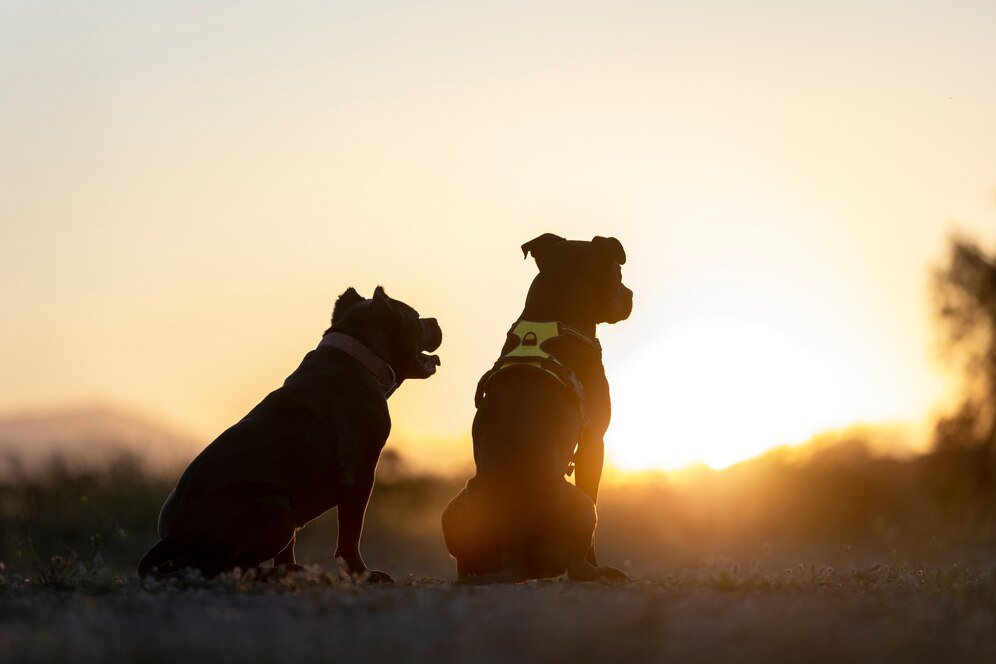
Most dogs communicate through their voice - and all dogs communicate with each other and with their human companions, through body language. Canine body language is quite sophisticated, yet subtle. Research shows that some body language signals from a dog might only last for a tenth of a second and might only include a centimetre of movement. A dog leaning forward just a centimetre indicates that you should not get any closer and leaning back a centimetre is a dog's way of saying 'come closer to me'.
Dogs can convey a huge amount of information, simply by making small changes in their demeanour or posture. A slowly wagging tail indicates anxiety and uncertainty. In these cases, the dog is usually trying to decide what he feels about the new person or animal in front of him. While a rapidly wagging tail usually signals happiness and excitement, it can also indicate aggression in certain cases. Observe the entire body together with the tail movement to decode your pet's behaviour correctly. The tail is not the only way to tell how a dog is feeling. In fact, there are likely other cues to look for too.
For example
The hackles, which is the hair along the back of its neck, may rise. This trick is an evolutionary reaction, which helps to make a dog look bigger to its enemies. Sometimes, however, the hackles rise because the dog is excited, or playful. So you must continue looking for other signs, within the dog's body language. A dog will also show aggression, by leaning forward and putting most of the weight on the front legs. It might also flatten its ears, growl slowly and show its teeth. A dog that plans on an attack will also often stare intently at its victim.
Submissive dogs show an entirely different set of movements and postures. Submissive dogs will keep their heads low and, in some cases, will lower their bodies to the ground. Dogs that are extra submissive might lay on their backs or even urinate when they are approached. These movements show that the dog does not want to fight and wants to avoid conflict. They will also often not look directly into your eyes, though a dog that is extremely frightened might stare. Tail wagging is a very common behaviour and to make sure that the dog is happy, you should also look for other signs. You might notice that their entire body is wagging in excitement and a happy dog usually has its mouth open slightly and its face is relaxed. It might even seem as if they are laughing - and their entire body is at ease.
It is difficult for beginners in canine communication to tell whether dogs intend to fight or play, especially when they are with each other. One way to determine a dog's intention is to play bow. When a dog plays bow, they will rest their chest and front legs on the ground and push their hindquarters up into the air. The dog's tail will often wag furiously and it will jump from side to side. Humans can often get their dog to play bow, by getting down on the ground and doing the bow to the dog.
A dog that wants to fight, however, will have a very stiff body posture and sharper, more deliberate movements. These are only the basic ways that canines will communicate with each other - and with the humans that they interact with. This course will go much deeper than this quick overview. However, you should make sure that you are not relying on just one of these aspects of communication. Instead, it is important that you look at the gestures and vocalisation as a whole, if you truly want to know what the dog is trying to convey.
FACT
Dogs see in a kind of slow motion. Their eyes take in information more than 25% faster than us, making them extra talented at catching a ball or frisbee in the park.
1.3 Canine Evolution
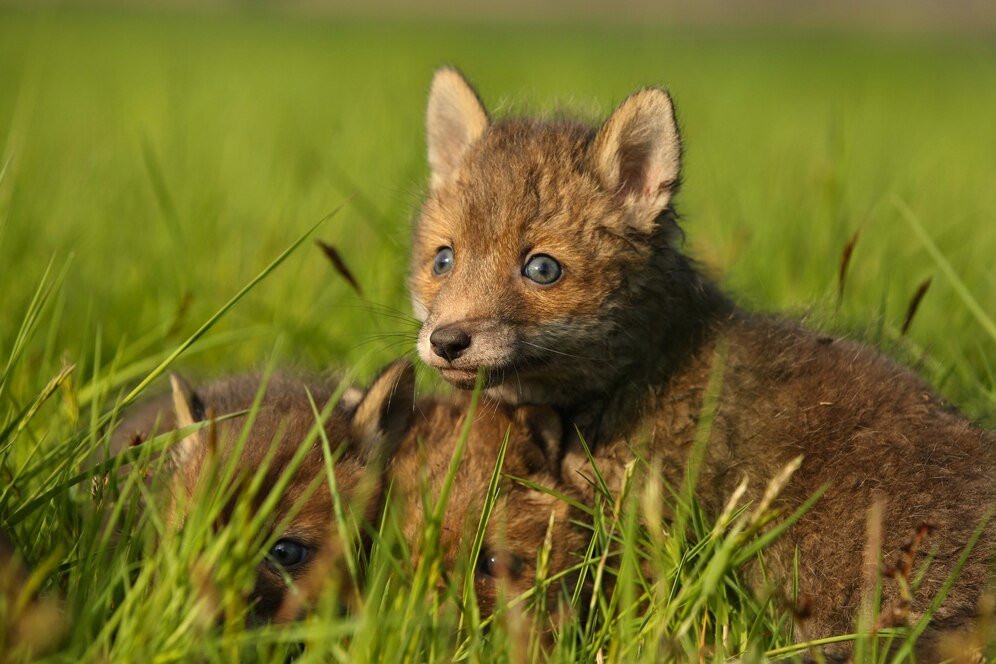
In order to truly understand canine communication, one must understand canine evolution. For those of us who have dogs, or work with dogs, it is not difficult to understand how important the relationship between dogs and humans is. There is no other domestic animal that has a relationship with humans, quite like canines - and this has to do with the way dogs have evolved over time. There are a number of theories as to how dogs evolved and one of the most common is known as 'artificial selection'. This theory suggests that ancient man took in the puppies of wild wolves.
They then bred these wolves and, eventually, started training them, to provide protection and help with hunting. These wolves became tamer, generation after generation - and when tame wolves bred with other tame wolves over thousands of years, it created what we now know as the domestic dog. Anthropological evidence suggests that the relationship between man and dog could be as old as the total existence of modern man. Dogs have helped to domesticate humans, just as humans have helped to domesticate dogs.
Both humans and dogs live complex social lives and have developed rich systems of communication. It is possible, however, that dogs have, based on thousands of years of relying on humans, evolved methods that help them to understand human communication signals.
There are four main reasons to account for this:-
-Since dogs have interacted with humans over thousands of years, they have learned to be responsive to the social cues that they receive from human interaction.
-Throughout evolution and domestication, dogs have developed a reduction in their fear of humans. They also began to apply their unique problem-solving skills, when interacting with people. This helps dogs to read and understand human social gestures.
-Dogs have also developed a type of cognitive machinery, which allows them to understand the human mental state. Dog owners will often marvel at how their pets simply 'know' when they are upset or need companionship. This is due to the dog's ability to read the body language of their humans.
-Dogs are predisposed to learn the ways humans communicate, just as we are predisposed to learn how to understand each other. This, too, can be traced back to the thousands of years that humans and dogs have spent evolving, together.
You can see this in action, by looking at a specific human signal - the act of pointing - and how dogs recognise this gesture, easily. Human infants begin pointing weeks before they begin speaking, which shows us that this is part of our cognitive development. A 2009 study looked at how dogs and human children at age two and three reacted to several pointing gestures. The findings were extremely interesting. Children that were two years old had the same performance as the dogs when it came to understanding the pointing gestures.
The three-year- old children performed higher. This tells us that dogs demonstrate the same level of understanding as a two-year-old child. To add further evidence, you can look at it from the human side and our understanding of dogs. Most people are able to tell whether or not a dog's bark is showing aggression or playfulness, simply by hearing it. Additionally, most people can tell how large a dog is by hearing their growl, but not necessarily seeing the dog. Researchers use this as evidence of the coevolution of humans and dogs.
1.4 Canine Intelligence
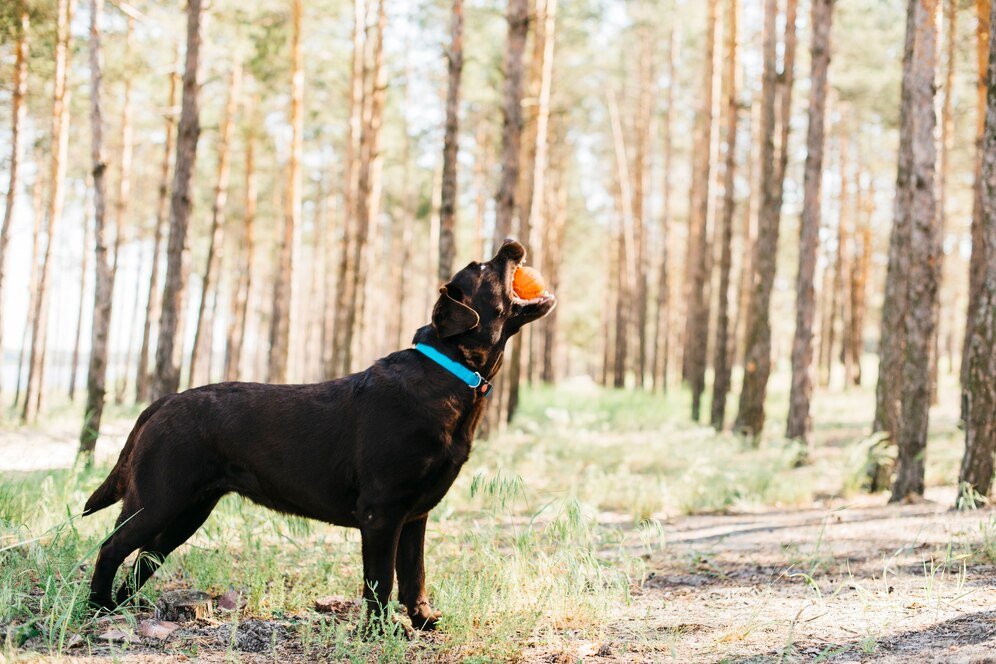
Canine intelligence is the dog's ability to think, learn and solve problems. As mentioned above, canine intelligence can be directly compared to that of a two-year-old, which means that dogs are much smarter than other animals. Dogs can also display many of the behaviours that are associated with intelligence, such as showing off advanced memories. It is generally agreed that the average dogs can learn 165 words, but with some learning up to 250 words. However, there was one particular US study where, over the period of three years, a Border Collie named Chaser, was taught the names of more than 1,000 objects and was able to retrieve these objects, on command.
To truly measure full intelligence, you must look at the different aspects of intelligence.
Emotional Intelligence
Studies show that dogs can feel complex emotions, such as anticipation and jealousy, but might not understand certain concepts, such as guilt. A study from 1996 looked at dogs and guilt - and specifically looked at a particular dog, who had a habit of shredding up newspapers. When her owner found the newspapers, she was scolded and acted guilty. However, when the dog's owner shredded the paper without the dog realising and then the shreds were placed in the same room as the dog, she also acted guilty. This tells us that the 'guilt' the animal displayed, is not truly guilt.
Instead, it is the anticipation of a scolding from the owner. Dogs also understand the concept of deception. Most dog owners understand this too, simply by looking at the behaviour of their own dogs.
For instance
If the owner places a treat within reach of a trained dog and tells the dog not to eat the treat, more often than not, the dog will eat the treat, when the owner leaves the room. This, of course, is similar to the behaviour of a two-year-old child.
Problem Solving
Dogs are also excellent problem solvers, which is part of their intelligence. However, wild dogs, such as dingoes, often outperform the domestic dog, when compared head to head. This indicates that at some point throughout the evolution process, domestic dogs lost some of their problem-solving abilities. Another study looked at dogs who were trained to solve a simple problem involving the manipulation of an object. When given this problem, the dogs could solve it each and every time.
However, the dogs were then given an unsolvable version of the same task. In this situation, the dogs looked towards their human owners for assistance. The same experiment was done with socialised wolves, who did not look to their human trainers to solve their problem. This shows us that domestic dogs rely on humans, to help them solve their problems.
Dogs and Human Cues
We have discussed how dogs can read and react to human body language and can also understand voice commands, from humans. There are studies which show that dogs have social cognition, just like the social cognition of humans. Dogs are able to follow complex gestures from humans, including slight gestures, such as those made with the foot, elbow, or knee. Dogs also have the ability to look at the human body and associate human body parts with certain actions.
For example
They know that human hands are used to feed, or pet them and a human foot is used to kick a ball around with them. This is why dogs who want to have their heads rubbed will go straight to the hands of their human owner. Dogs can also follow gestures, such as pointing. Wild dogs can also do this, however, as is shown in the behaviour of Dingoes and New Guinea Singing dogs, which are a type of hybrid wild domestic dog.
Studies show that many dogs have human-like social cognition. The same applies to wolves. Both animals can look at human gestures, even with body parts that they are not familiar with, such as the knee and have an idea of what is being communicated. Keep in mind, however, that just because they have the ability to do this, not all of them will.
In order for them to actually carry out these tasks and follow the commands of their human companions, they must be socialised to do so and they must have had the experience of interacting with humans. This is similar to the fact that most humans have the physical and mental capabilities to run a marathon, but without training and experience, most of us could not do it.
1.5 Canine Perception

Dogs have actually been used in intelligence studies, especially when it comes to awareness, learning and perception, for many years.Over time, scientists have found several surprising social-cognitive abilities in dogs, which are not found in other animals, including the smartest animals, such as apes and dolphins. Instead, the same social-cognitive skills found in dogs, are also found in humans. This could be an example of convergent evolution, which occurs when species that are not related evolve independently, to develop similar solutions to problems.
For instance
Penguins, fish and dolphins, which are not related to each other, all evolved flippers, to enable them to move through the water. With dogs and humans, there is a psychological convergence - dogs are ultimately more cognitively similar to humans than we are to apes, our closest relatives.
Module Summary
Canine communication is the process of dogs communicating with each other and with humans. There is a special relationship between humans and domestic dogs - and this is evident in the way we communicate with each other. We communicate with dogs through our voice and our body movements, whilst they communicate with us with their barks, growls, whines and body movements.
Dogs also communicate by using body language and their stances and actions can tell us a lot about their moods and their intentions. Dogs have friendly stances, but they will also not hesitate to become aggressive, when necessary. In this situation, they will change their stance. Learning to tell the difference between these stances is something that you will learn, later in this course. The way we communicate with dogs and how they communicate with us, comes from the way we both evolved. Man and dogs evolved together - and this certainly supports the thought of dogs as man's best friend.
We can communicate so well with dogs, thanks to their intelligence, which is highly evolved and strong. In fact, the intelligence of a dog is very similar to that of a young, human child. Dogs are also able to use their perception to read social cues from the humans they are close with.
.svg)



