

Before using any medication…
Check if there is an expiry date on the medication and if there is, check that the date is in the future. If the date is in the past, the medication should not be used. Some medications may need to be stored in the fridge.

Tablets are usually taken orally via the mouth.
The correct dose and strength will be as directed on the packet or by a GP or pharmacist.
Make sure tablets are swallowed. People can pretend to swallow medication. They can also get stuck under a tongue or in a cheek, especially if a person has a dry mouth.

Inhalers are used and worked by the individual when they breathe.
A gas is placed into a chamber at the base of a mask, a fine mist of the medication is released into the mask and the individual inhales.
- Assemble properly and check to make sure nothing is obstructing the mouthpiece.
- Test the inhaler. If it hasn’t been used for seven days, shake it and spray two puffs into the air.
- If possible, the individual should sit up, or stand to enable good lung expansion.
- Get the person to blow into the spacer device.
- Tell them to take a slow deep breath. As they breathe in, fire a puff into the spacer.
- Tell them to hold their breath for 10 seconds. Count the seconds for them.
- Alternatively, as they breathe in and out, fire in one puff. Keep the spacer in their mouth for 5 breaths in and out.
Spacers can also be used to aid the individual.

Creams and Lotions:
Ear Drops

- Shake the bottle and unscrew the lid.
- Gently pull the ear upwards and backward a little bit.
- Gently squeeze the correct number of drops down the side of the ear canal, not down the centre.
- Hold the ear closed for 5 seconds. Repeat 2-3 times to suck the drops down into the ear canal.
- Don’t touch the ear with the dropper.
- Ask the individual to stay laying down or sitting for about 5 minutes.
- If both ears need drops, wait for 5 minutes after the first drops.
Nose drops

- Ask the individual to gently blow their nose.
- Ask them to sit down as they will need to tip their head back and this may put them off balance.
- Hold the dropper just above their nostril and gently squeeze a drop down the centre of the nostril, whilst holding the other nostril closed.
- Ask the individual to inhale slowly and deeply through the nose, hold their breath for several seconds then breathe slowly out.

Eye drops

- Sit the person in an upright position.
- If worn, remove any contact lenses.
- Shake the bottle and unscrew the lid.
- Push out a drop and leave it hanging on the tip of the dropper to check that the end of the bottle is clear.
- Pull the lower lid gently away from the eyeball to make a pocket in which you can place the drop.
- Tell the individual to look away and upwards.
- Gently touch the drop onto the lower lid.
- Tell them to close their eyes for 30 seconds.
- Wipe excess away with a tissue.
Nasal spray
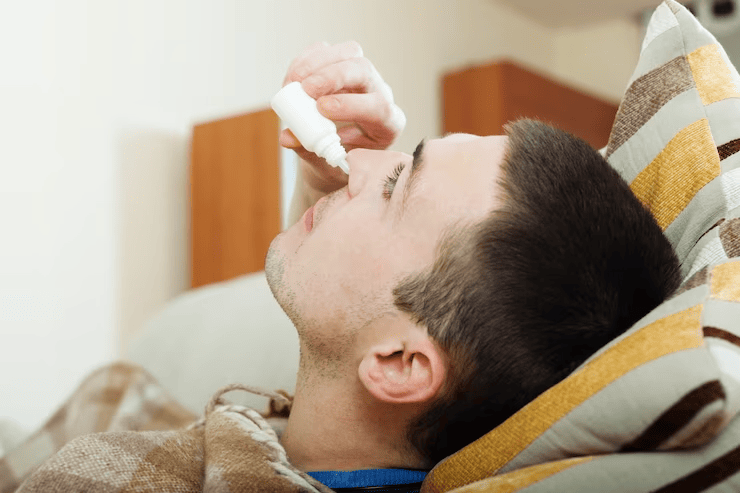
- The individual may sit upright when a nasal spray is used.
- The bottle should be inserted into one nostril while the other is gently compressed.
Eye ointment
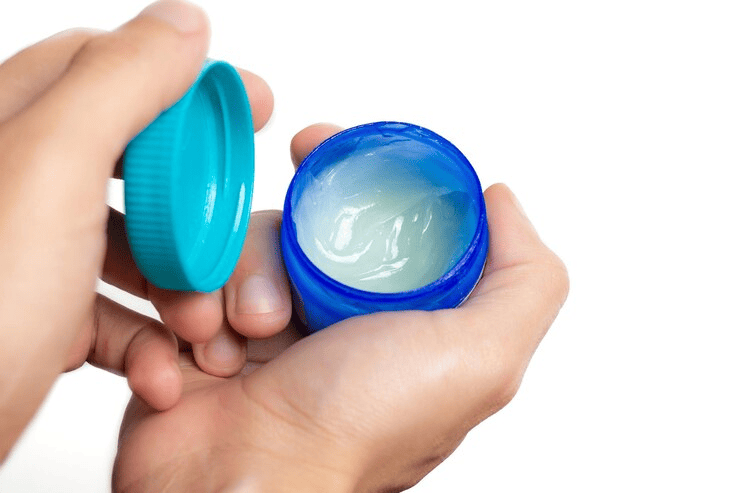
- Apply a 1 cm line along lower eyelid, from inside edge to outer edge of eye.
- Use a clean cotton bud to pass over the end of tube. This will help keep the ointment on the eye lid.
- Ask the person to close their eyes for 30 seconds after applying.
- The vision can become blurred. This is normal but should clear quickly as the ointment spreads over the eye.
- Check for redness, pain, itching, and swelling in the eye.
Liquid medicine
May be described as an elixir, a mixture, a suspension, a solution, or a syrup depending on what the active ingredient is mixed with.
Some liquids may need to be stored in the fridge.
Transdermal patches are medicated adhesive patches that are put on the skin.
It gives a dose of medication through the skin into the bloodstream. A Nicotine Patch is an example of a transdermal patch.
- Shake the bottle before use as the ingredients may become more concentrated at the bottom or they may have separated.
- Always use the measuring device which is supplied with the bottle. This could be a spoon, syringe or plunger to ensure the dose can be measured accurately.
- Be careful not to confuse measurements of volume, for example mls with measurements of strength like mgs.
- If the individual is able, ask them to drink the liquid from the dispenser. If not put it into the individual’s mouth and ensure all liquid is taken.

- If the patch is to replace an old one, then remove the old patch first. Do not touch the adhesive. Fold in half and dispose of it correctly.
- Choose a clean, accessible and healthy place to put the patch. It’s best to avoid skin that’s very hairy, oily, sunburned, scarred, rough or damaged.
- The location must be cleaned with clean water only. Soaps, alcohol, oils, lotions or abrasive devices must not be used.
- Do not put the patch on broken skin, unless directed to. Never cut a patch in half. Do not expose location to heat e.g. electric blanket.
- Record the date and position of the new patch.
- Remove the patch immediately if there are signs of allergy.
Oxygen
You must not administer oxygen unless you have been specifically trained on how to do this and your competence to administer oxygen has been checked.
 Oxygen is highly flammable it must be kept away from heat. You must ensure the place where it is stored is labelled correctly. It must be given through the correct mask. Check the comfort of mask. An upright position supports breathing. It must be given at the correct flow rate. Tubing must not cause a slip, trip hazard. Oxygen will dry out mucosa. Good mouth care is essential. A gentle non-flammable cream should be used to moisturise the skin.
Medication which requires specific physiological measurement.
For certain medications it is important that other checks are made both before and after administering medication. For example:
- Blood sugar levels should be checked before administering insulin.
- An individual’s pulse must be taken before administering medication used for heart irregularities such as digoxin.
- Blood pressure must be checked after administering medication that is used for lowering individuals’ blood pressure.
- Warfarin doses may need to be changed following INR (international normalized ratio) blood tests. This is usually organised by a GP or pharmacy.
You must be aware of:
Drug Interaction
When one drug interacts with another and causes an adverse reaction.
Food or Drink Interaction
Food and drink can interact with medication, for example:
- Drinking alcohol may stop antibiotics from working.
- Consuming cranberries (food or drink) with coagulants is harmful.
Double Dispensed Medication
You should never administer medication that has been double dispensed because you have no way of knowing or checking what the medication is, for example, administering medication that has been placed in a nomad box by a family member.
Covert
(This means to crush and disguise medication)
Under human rights law, people who are capable of making the decision have the right to accept or refuse medical treatment, even if that may lead to their death. The Mental Health Act (MHA) overrides that right in specific circumstances.
This is an important decision and must be properly documented. The Mental Capacity Act course covers this in detail.
Without appropriate decision making and documented permission, you must not crush or disguise medication.
If it is decided that medication should be either crushed or disguised, the GP or pharmacist must have approved and agreed that this is a safe course of action. Some medication can act very powerfully if their protective coating is removed.
Always ensure you consider the individual’s safety, consent, privacy and dignity.
.svg)



