Module 6: Personal Protective Equipment (PPE) for Asbestos Safety
Learning Objectives
By the end of this module, learners will be able to:
Identify the types of PPE required for asbestos work in data centers
Understand how to properly use, don, and doff PPE to prevent contamination
Apply correct decontamination and disposal procedures for contaminated PPE
Recognize the requirements for respirator fit-testing and medical fitness
Protect themselves and the clean data center environment from asbestos contamination
6.1 Introduction: The Last Line of Defense
.jpg)
Why PPE Matters in Data Center Cleaning
Personal Protective Equipment (PPE) serves as the last line of defense against asbestos exposure. While the hierarchy of controls prioritizes elimination, engineering controls, and administrative measures first, PPE remains essential when other controls cannot fully eliminate the risk.
In data center environments, cleaning staff may encounter asbestos-containing materials in ceiling voids, raised floors, and mechanical rooms. Even when asbestos registers and management plans are in place, the risk of accidental disturbance means workers must be prepared with appropriate PPE.
The Core Principle: PPE protects not only the worker but also the data center environment. Contaminated clothing can spread asbestos fibers to clean areas, potentially exposing others and compromising sensitive equipment.
Legal Requirements
OSHA regulations require workers to wear protective clothing and respiratory protection whenever they are exposed, or likely to be exposed, to fiber levels above permissible levels. Additionally, employers must provide a medical evaluation to determine an employee's ability to use a respirator before fit testing or requiring respirator use.
Key Point: "Do not use single use, disposable paper dust masks when dealing with asbestos". Only approved respirators with appropriate protection factors are acceptable.
6.2 Types of PPE for Asbestos Work
6.2.1 Respiratory Protective Equipment (RPE)
Why RPE is Critical
Asbestos fibers are microscopic and invisible. When inhaled, they can penetrate deep into the lungs, causing asbestosis, mesothelioma, and lung cancer. RPE is specifically designed to filter these fibers from the breathing air.
Selecting the Right Respirator
The choice of respirator depends on the airborne asbestos concentration and the required protection factor.
Protection Factor Considerations
A respirator's assigned protection factor may only be applied if the respirator has been quantitatively fit tested on the individual. If only qualitative fit testing (a less exacting procedure) has been done, the wearer can only assume a protection factor of 10.
RPE Options for Data Center Cleaners
Half-Mask Air-Purifying Respirators: Fitted with P3 or HEPA filters, these are suitable for lower-risk cleaning activities where airborne asbestos concentrations are not expected to exceed 2 f/cc.
Full Facepiece Respirators: Provide eye protection and a higher protection factor (50) for medium-risk tasks.
Powered Air-Purifying Respirators (PAPRs): Battery-powered units that blow filtered air to the wearer, reducing breathing resistance. May be more comfortable for extended wear.
Important: All respirators used for asbestos work must be equipped with HEPA (High-Efficiency Particulate Air) filters that capture 99.97% of particles down to 0.3 micrometers.
6.2.2 Protective Clothing
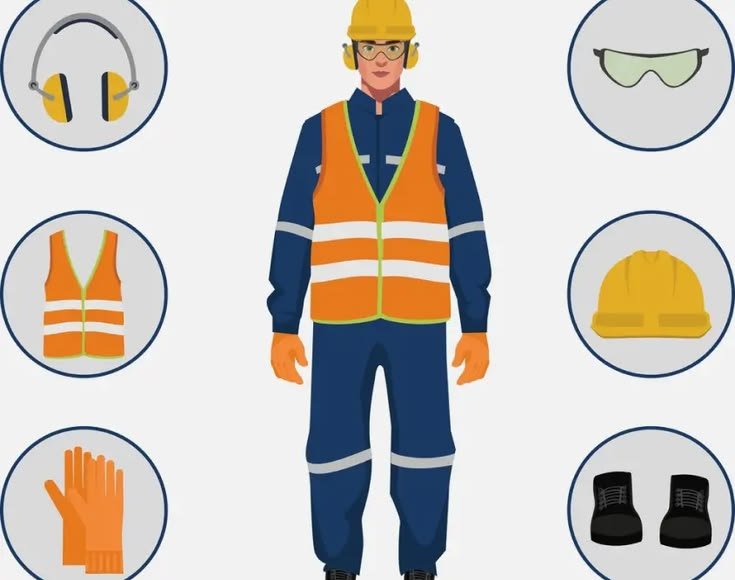
Coveralls
Disposable coveralls prevent workers' regular clothing from becoming contaminated with asbestos fibers. Coveralls should:
Be made of synthetic fabric that does not allow asbestos fibers to pass through
Have a hood and elasticized cuffs and ankles
Be worn inside the work area and removed before leaving
Be disposed of as asbestos waste after each use
Boot Covers and Head Covers
Additional protective coverings prevent contamination of footwear and hair.
6.2.3 Gloves
Gloves protect hands from contact with asbestos-containing materials and are typically disposed of with other contaminated PPE.
6.2.4 Eye Protection
When using full facepiece respirators, eye protection is integrated. For half-mask respirators, separate safety goggles may be needed to prevent eye contact with fibers.
6.3 Donning (Putting On) PPE
The Correct Order of Donning
Proper donning order prevents contamination during the process:
Medical clearance and fit testing: Ensure you are medically fit to wear a respirator and have passed a fit test for your specific respirator model.
Gather all PPE: Check that all items are in good condition and the correct size.
Put on coveralls: Step into coveralls, pull up, and fasten.
Put on boot covers: If separate from coveralls.
Put on respirator: Perform a user seal check (fit check) each time you put on the respirator. Cover the filter inlets with your palms and inhale gently—the respirator should collapse slightly against your face, indicating a good seal.
Adjust and secure: Ensure the hood of the coverall is pulled over the head and any gaps are sealed.
Final check: Have a colleague check that all PPE is properly positioned.
Important: Always don PPE before entering the work area. Never put on respirators inside the contaminated zone.
6.4 Safe Work Practices with PPE
During Asbestos Work
Maintain PPE Integrity
Do not adjust or remove PPE while in the work area
Avoid touching the face or respirator
If PPE becomes damaged, leave the area and replace it
Breathing Zone Protection
Suppress or minimize dust at the source to reduce reliance on respiratory protection
Use wet methods and HEPA vacuuming as primary controls
Ensure the respirator remains properly fitted throughout the work
Taking Breaks
Leave the work area completely before removing PPE
Remove PPE in the designated decontamination area
Do not wear contaminated PPE into clean areas
What NOT to Do with PPE
DON'T remove PPE in the work area—this contaminates the wearer and potentially others.
DON'T wear contaminated clothing outside the work area—this can spread asbestos fibers to vehicles, homes, and families.
DON'T reuse disposable PPE—once removed, it must be disposed of as asbestos waste.
DON'T combine dirty PPE with other contaminated waste in the same bag—use a separate clean bag for PPE disposal to minimize cross-contamination.
6.5 Doffing (Removing) and Decontamination
The Critical Process
The removal of PPE is one of the most critical steps in preventing asbestos exposure. If performed incorrectly, it can contaminate the worker and the environment.
Three-Stage Dry Decontamination Process
Based on guidance for non-friable asbestos removal, the following process is recommended:
Stage 1: Clean Down in the Work Area
Keep all PPE on—including the respirator.
Move to the external fringe of the work area.
Clean down coveralls, mask, and boots using:
Wet sprays or wipes (using a surfactant/detergent)
HEPA vacuum with a clean brush attachment
Stage 2: Move to Designated Decontamination Area
Move to a designated Decon Area defined by a clean drop sheet.
Set up a clean 200-micron bag for PPE disposal.
Keep your mask on during this entire process.
Stage 3: Remove PPE and Decontaminate
Remove gloves and dispose in the designated clean bag.
Carefully peel off disposable coveralls inside out (from the top down) and place in the bag.
Clean boots again with wipes or vacuum—dispose of wipes in the same bag.
Move to a designated clean area and set up another clean bag on a drop sheet.
Wet wipe or wash exposed skin—hands, forearms, forehead, neck—while mask is still on.
Remove the respirator LAST—it must be the final piece of PPE removed.
Dispose of filters as appropriate.
Clean the mask thoroughly if reusable; dispose of disposable masks completely.
Wash face and hands thoroughly with soapy water after mask removal.
Double-Bagging Requirements
All contaminated PPE must be placed in two separate bags:
Place contaminated PPE in the first bag, seal, and gooseneck tie.
Place the first sealed bag inside a second bag and seal/gooseneck.
Label each bag clearly: "DANGER: ASBESTOS WASTE".
Important: Do not combine dirty PPE with other asbestos waste in the same bag—use a dedicated "clean bag" for PPE to minimize cross-contamination.
Wet Decontamination Methods
When cleaning PPE:
Use damp rags with a gentle patting action (rubbing can disturb fibers).
Spray coveralls with a fine mist to suppress dust.
Where two employees are present, they can help each other.
Use amended water—water with a surfactant/detergent—as it penetrates materials better than regular water.
Never use compressed air for cleaning.
Tools and Equipment Decontamination
All tools and equipment must be decontaminated before removal from the work area:
Use HEPA vacuum or wet rags.
If tools cannot be decontaminated:
Tag to indicate asbestos contamination
Double-bag in clearly labelled asbestos bags
Decontaminate the bag exterior before removal
6.6 Respirator Fit Testing and Medical Fitness
Fit Testing Requirements
OSHA regulations require that either qualitative or quantitative respirator fit testing be conducted to ensure that a negative pressure, air-purifying respirator seals properly to the worker's face.
Important Principles:
If a fit test is not successful with one brand or size of respirator, other brands or sizes should be tested until a proper fit is achieved.
Fit factors are specific to an individual and model of respirator.
Fit factors may be greater or less than the assigned protection factor. If the fit factor for a specific respirator is found to be lower than the assigned protection factor, the calculated fit factor must be used to determine the maximum fiber concentration in which the respirator may be worn.
Qualitative Fit Testing
Qualitative tests determine the subject's sensitivity to a certain smell, taste, or irritation from a "challenge" atmosphere. Recognized test protocols include:
Isoamyl acetate vapor (banana oil/IAA test)
Saccharin solution aerosol (taste test)
Irritant smoke (stannic chloride)
Medical Fitness Requirements

Employers must provide a medical evaluation to determine an employee's ability to use a respirator before the employee is fit tested or required to use the respirator in the workplace.
Why Medical Fitness Matters:
Respirators can create breathing resistance—a concern for individuals with respiratory conditions
Some users may experience claustrophobia or anxiety
Cardiovascular conditions may be exacerbated by increased breathing effort
What Medical Evaluation Includes:
Medical history and questionnaire
Physical examination as indicated
Clearance from a physician or other licensed healthcare professional
6.7 PPE Maintenance, Storage, and Disposal
Daily Checks
Before each use, respirator users should perform a quick seal and valve test on their face daily:
Check the seal by covering the filter inlets and inhaling
Check the exhalation valve by covering it and exhaling
Inspect for cracks, tears, or deformities
Cleaning Reusable Respirators
If respirators are reused:
Clean thoroughly after each use
Do not use strong detergents, hot water, or household cleaners or solvents—they can damage rubber parts
Store with the main filter covered or sealed (e.g., tape over) to prevent contamination
Consider sealing the mask in a clean bag to prevent cross-contamination
Disposal of PPE
All PPE used in asbestos work is contaminated asbestos waste:
Double-bag in clearly labelled asbestos waste bags (200 microns thick)
Label: "DANGER: ASBESTOS WASTE"
Transport to a licensed landfill authorized to accept asbestos waste
PPE should be disposed of in the same manner as the hazardous materials that you are working with
Never take contaminated clothing home—this creates a possible risk to the worker's family members.
6.8 Special Considerations for Data Center Cleaning
Protecting the Clean Environment
Data centers are sensitive environments where contamination affects not only human health but also sensitive equipment. Contaminated PPE can spread fibers to:
Server racks and sensitive electronics
Air handling systems that distribute fibers throughout the facility
Other workers who may not be wearing PPE
Best Practice: Establish a designated "clean change area" for donning and doffing PPE, separate from both the work area and the main data center floor.
When to Use PPE
In data center cleaning, PPE requirements depend on the work task:
Key Equipment for Data Center Cleaners
Essential PPE Kit:
Half-mask or full-face air-purifying respirator with P3/HEPA filters
Disposable Type 5/6 coveralls with hood and elasticized cuffs
Boot covers or dedicated foot protection
Gloves
HEPA-filtered vacuum for decontamination
Wet wipes for cleaning
Emergency Asbestos Kit: Some sites provide an emergency kit containing FFP3 dust masks, wet wipes, waste bags, and coveralls for accidental disturbances.
.svg)