
2.1 Introduction

Health and safety is extremely important when working in the painting and decorating industry. You will spend your days climbing ladders, using caustic chemicals, and breathing in fumes that can be dangerous to your health. Working in the painting and decorating industry is both satisfying and rewarding, but the risks that you are exposed to can be harmful. Fortunately, there are laws, best practices, and other actions that you can take to limit your exposure to these risks. This module will introduce the risks that you might be exposed to in the painting and decorating industry. It will also show you how to keep yourself and your clients safe from harm.
2.2 The Health and Safety Risks You Face in the Painting and Decorating Industry
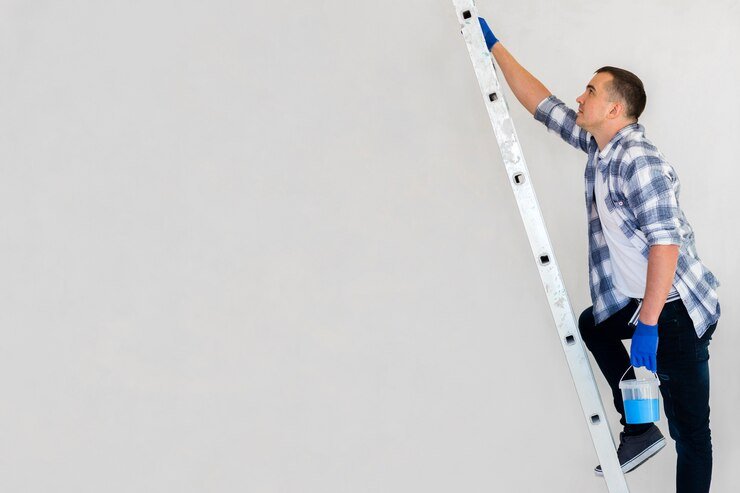
Here are some of the main health and safety risks that you might face as a part of this industry:
*Exposure to electricity
*Falls from height
*Proximity to combustible or flammable materials
*Climbing working platforms, ladders, and steps
*Risk of eye injury from dust and particles in the air
*Risk of cancer from asbestos
*Trips, slips, and falls due to untidy work areas
*Risks from using tools and machinery
*Fungi, mould, and bacteria exposure
*Dermatitis
*Abrasions and cuts
*Risk of injury or pain from repetitive tasks
*Exposure to noise
*Being struck by falling objects
*Sun exposure
These are only some of the risks that you will face whilst working in the painting and decorating industry, but there are certainly other risks that might appear depending on the type of work that you do. As you work through this module, keep this list in mind.
FACT
According to health and safety statistics, 144 workers were killed on the job in the UK in 2015. Three-quarters of these fatal injuries were attributed to six different types of accidents. Over one quarter of these fatal injuries occurred as a result of fall from height accidents.
Source: hse.gov.uk
2.3 General Health and Safety Law in the Painting and Decorating Trade
As a part of the painting and decorating trade, you will provide a valuable service to those in the construction industry, as well as for private clients. Thus, it is imperative that you receive adequate training that is specific to the work you do. The training you will receive in health and safety will ensure that you always follow the best practice procedures when on site. Your health, welfare, and safety at work are all protected by law. If you work for someone else, they have a duty to protect you and provide the appropriate information, training, instruction, and supervision to ensure that you remain as safe as possible. However, the responsibility for your safety doesn't solely fall upon your employer. You also have legal duties to ensure your own safety. For instance, you are legally bound to take reasonable care of your own safety and health, and of others, who might be affected by your actions at work. You also must comply with safety measures, such as wearing personal protective equipment. Additionally, you must cooperate with your employer in regards to all safety training requirements, and must correctly use equipment, including tools and machinery. If you are self-employed, you also have a duty, by law, to ensure your own health and safety and the health and safety of those who are affected by your work, including employees and clients.
2.4 Working at Height
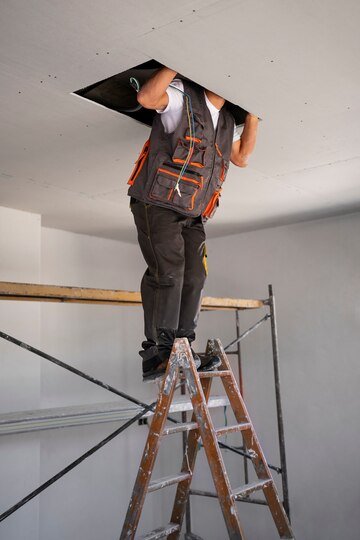
As a professional in the painting and decorating industry, you might find yourself working at height. In the UK, the Work at Height Regulations 2005, or WAHR, is the law that sets out the guidance you must comply with. Falls from height, such as falling from a roof, are one of the most common causes for fatalities and major injuries at the workplace. Work at height means that you work in any place where you might injure yourself if you fall. Some examples of working at height include working on a roof or ladder, falling through a surface, or falling into an opening, such as a hole in the ground.
As a painter or decorator, you will often work on ladders or up at heights where you could fall. Thus, you must take the steps to ensure that you remain safe. For instance, you want to avoid working at height if you do not have to. If you cannot avoid working at height, it is imperative that you make your immediate workspace safe. You might do this by using certain safety equipment, such as using safety nets or lifts. You should also try to do as much work as possible from the ground, and ensure that your equipment is well-maintained, checked regularly, and is strong enough for the job. Finally, make sure that you are not overloading or overreaching when you work at height, take precautions when working near thin or fragile surfaces, and always consider emergency or rescue procedures.
Activity #1
Estimated Time: 10 minutes
When working in the painting and decorating industry, it is crucial to be aware of the many risks associated with the job. Throughout your day, you will come across various chemicals, and fumes, in addition to climbing ladders and moving platforms. Thus, you might be exposed to a variety of health and safety risks including abrasions, eye injuries, exposure to electricity, a risk of cancer, and much more. Of the risks associated with working in the painting and decorating industry, falls from heights, such as falling from a roof, are one of the most common causes of fatalities. Some further examples of heights include working on a roof or ladder, falling through a surface, or falling into an opening, such as a hole in the ground. Considering the severity of this risk, and the many possibilities throughout your career that you might be working at heights, there are steps you must take to protect yourself. What can you do to protect yourself when working on heights? Are there any laws that you must follow? What kind of protective gear or safety equipment can you use?
2.5 Personal Protective Equipment (PPE)
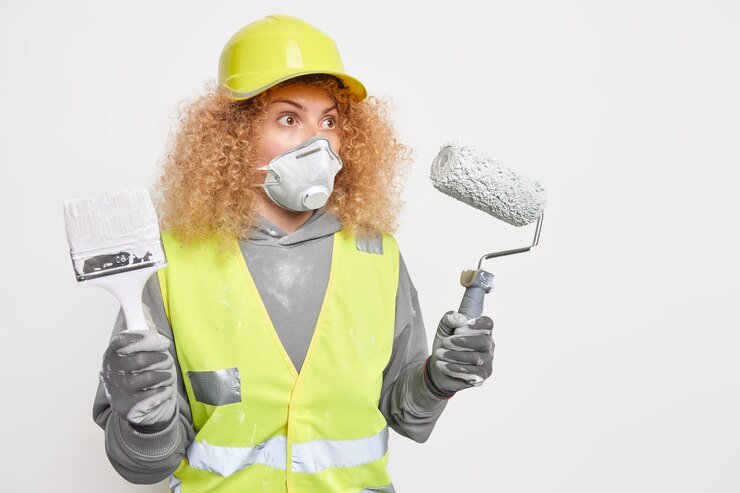
Personal protective equipment, or PPE, is equipment that protects you whilst at work. It includes items such as eye protection, gloves, respiratory protective equipment, and safety harnesses. Making the workplace safe includes offering procedures, instructions, supervision, and training when using PPE. Even when all other hazards are eliminated, there still might be the potential for injury, which is where PPE comes into play. Some of the parts of the body that might be protected with PPE include: the lungs, the head and feet, the eyes, the skin, the body.
It is imperative that you only use PPE that is in good working order and that are marked as being in accordance with the Personal Protective Equipment Regulations All PPE should fit correctly, and users must know how to use the equipment appropriately. The following are the types of PPE you might use:
Head and neck hazards include flying or falling objects, bumping the head, or chemical splashes or drips. Helmets are suggested when in hazardous areas, and caps or hairnets are often used to protect the hair.
Eye PPE
The hazards associated with the eyes include dust, metal, gas, projectiles, and vapours. The PPE that you will likely use to protect the eyes include goggles, safety spectacles, visors, or face shields. Make sure that the PPE fits correctly, and ensure that you use the correct PPE for the task at hand.
Ear PPE
Ear PPE might be required if you are around loud noises, which might happen when you are in the painting and decorating industry, as you might be working at construction sites. Earplugs, ear canal caps, or ear muffs are all types of ear PPE. The most important thing to remember about PPE for the ears is to lower the noise to an acceptable level, but make sure that you can still communicate with others.
Hands and Arms PPE
There might also be situations where you need to protect your arms and hands from abrasions, cuts, chemicals, or impact. Thus, you will require gloves with cuffs, gauntlets, or sleeves that cover the arms.
Feet and Legs PPE
Your feet and legs might be in danger, too, from things such as slipping, chemical splashes, or other events. Safety boots and shoes might be necessary, or you might consider wearing wellington boots to protect from splashing chemicals.
Lung PPE
You might require lung PPE when working in this industry, too. This is especially the case because you will be around a lot of fumes from paint, varnish, etc. The most common form of lung PPE are respirators, which filter the contaminants from the air. It is extremely important that the PPE fits correctly, and that the filter is changed, when necessary.
Body PPE
Finally, you might require full-body PPE in certain cases. Chemicals can spray upon you, which can cause skin discomfort on the application of these substances to the skin.
Activity #2
Estimated Time: 10 minutes
Now that you are protected against falls, it is imperative that you take precautions to protect yourself against other hazards in the workplace. Personal protective equipment, or PPE, includes items such as eye protection, gloves, respiratory protective equipment, and safety harnesses. The protective equipment protects parts of the body that are affected including the lungs, the head, feet, eyes, skin, and body. This equipment is used in combination with workplace procedures, and training to eliminate hazards and the potential for injury. As you enter the painting and decorating industry, you will need to know the different types of PPE, and their functions.
What are the various forms of personal protective equipment?
What do they protect against?
Are there any important considerations or regulations to consider when using personal protective equipment?
2.6 Handling Waste in the Painting and Decorating Industry

Whilst working in the painting and decorating industry, you will also need to handle your waste. In this case, the biggest amount of waste you will likely have is paint. Water-based paint is more friendly to the environment than those that are solvent-based, so if you can, choose those that are water-based. There are many high-quality water-based paints on the market to choose from. You should also make sure that you are following the precautions that are printed on the tin or given to you when you purchase. Another thing that you can do when using paint is to only purchase as much paint as you will require for your job.
This way, you won't have to worry about disposal. If you do have some paint remaining following the application, try to find a use for it. You might, for instance, be able to store it to use for another client or job. You also might want to consider giving the paint to the client should they require a touch-up down the road. Storing the paint is also an option, but there is a shelf-life on paint, so make sure that the lid is on quite tightly, and that you are storing it correctly, depending on the type of paint it is.
Finally, if you must dispose of the paint, contact your local authority. It is likely that they have schemes in place that you must comply with. Never pour any leftover paint down the drain, nor put it out with other waste. Many authorities participate in the Community Re-Paint Network, which donate used paint to charities throughout the UK.
2.7 Handling Materials in the Painting and Decorating Industry

Handling your materials is a part of being in this industry, and you need to make sure that you are doing this safely. Moving materials can be difficult, and if you do it in an incorrect way, you might suffer from back injuries or long- term pain. All heavy loads, if possible, should be lifted and transported to work areas by using lifting equipment if it is up high, such as on a scaffold. Trolleys should be used for moving loads around on flat work areas. The question that most people have is how heavy is too heavy to carry without a trolley? The accepted safety guidelines in the UK state that if a load is more than 20kg in weight, you should use other lifting arrangements, such as a trolley.
If you have to move materials that weigh more than 20kg, you should make sure that the load is positioned with lifting equipment. When moving the materials, it is best to avoid any repetitive tasks or awkward positions, and take breaks. You should learn safe lifting techniques, too, as it's not simply the weight of the load that can cause an injury. Even very light loads, when lifted incorrectly, can become problematic. Make sure to always keep your work area clear of clutter and tripping hazards, and when you do lift something, make sure to do it properly. Bend your knees and use your legs to lift instead of your back. Also, make sure to put one foot slightly in front, which will give you more stability.
Activity #3
Estimated Time: 10 minutes
After you have learned all the risks associated with the job, and armed yourself with the proper protective equipment, you will be ready to begin handling various materials. In the painting and decorating industry, handling and moving materials is a pivotal part of your day. One of the more common materials that you will work with is paint, as well as different varnishes, and chemical vapours. Paints and coatings are made of many different chemicals, which poses a significant risk to your health.
As a painting and decorating professional, part of your job involves learning how to properly store paint and solvents. Imagine you are setting up your workspace and you have just received a shipment of paint and varnishes. What is the first thing you need to consider when storing paint, or vapours? Are there any laws or controls that limit the sizes or amount of liquid you can store? How should you label your paint? Once all your paint is properly stored, are there any considerations that you should make to prevent spillage, or the accumulation of vapours?
2.8 Storing Paint

Part of the job for those in the painting and decorating field is storing the paint, which includes solvents. Paints and coatings are made of many different chemicals, so the risks that you might experience are quite varied. Not only does this affect you personally, it also might affect how it is stored. The Health and Safety Executive has released guidance on this subject in the form of HSG51, the Storage of Flammable Liquids in Containers. This applies to any flammable liquids, including paints and varnishes that are stored in containers up to 1000 litres in size. The following control measures must be followed:
Using the Correct Containers
The first thing you must consider when storing paint and other chemicals is the container. It is imperative that you ensure that the container is appropriate for the chemical, and that the container be constructed of materials that are compatible with the chemicals inside. Containers must be free of leaks, and the openings should be equipped with a well-fitting lid or cap that contains the liquid or vapours, especially if the container rolls or falls over. These containers must also be labelled with the appropriate packaging labels, such as the symbol for flammable.
Preventing the Accumulation of Vapours
It is also important that you prevent the accumulation of chemical vapours when storing paint. Vapours can accumulate if the container leaks. The best location for storing paint is in a site that is open and uncongested, and the containers should be stored at ground level. It is possible to keep paint indoors, but you must make sure that there is enough ventilation in order to prevent the buildup of vapours.
Preventing Spillage
Locations where you store flammable liquid should also be set up in a way so that you avoid leaks or spillage. This is ensured by choosing the right containers and setting up an area that encloses the containers, such as installing a low bund wall. You also might consider a drainage channel. Additionally, you should also consider metal containers for paint, as plastic containers are quite vulnerable to fire, and you could lose all of your inventory in the event of a fire in a matter of minutes. Finally, consider storing paint at a slight angle, such as on a gradient surface. This way, if there are leaks or spills, the liquid will flow away from the traffic area.
2.9 Cleaning Paint and Varnish Equipment

After each successful day's work, you have to make sure that you are cleaning your equipment correctly. First, you want to remove excess paint from the brush, by squeezing the bristles of the brush against the edge of the paint tin. This draws out much of the moisture. Then, wipe any excess paint from the rollers or brushes by using cloths or newspapers. If you are using water-based paint, you can clean your paint with soapy, warm water. Use rubber gloves to keep your hands safe, and use a container to wash the brushes, instead of your kitchen or bathroom sink.
You might have to change the water several times until all of the paint is out of the brush or roller. If you are using oil-based paint, you cannot use soap and water. Instead, you will require white spirit to clean it away. Pour the white spirit into a container, and then swirl the brush or roller in the liquid. Keep in mind that some plastic containers might interact with the spirit, so choose a container that is glass or plastic and is labelled as safe to use with white spirit. Like cleaning the brushes with water-based paint, you must refresh the solution a few times until the paint is all removed.
Rinsing and Drying
After cleaning the brush or roller, you should rinse it with water until the water runs clean. You should then pat the roller and brush dry with old cloths and store them vertically. Point the bristles towards the sky in order to avoid damaging them. When the rollers are dry, you can store them in a plastic bag. Keep in mind that the rollers and brushes that you will use the next day do not need to be cleaned, but you should wrap them in cling film to prevent the paint from drying.
2.10 Dealing with Emergency Situations
For emergencies in the UK, the Management of Health and Safety at Work Regulations 1999 covers the procedures for emergency situations whilst on the job. Workplaces must have a plan in the case of emergencies, and your workplace as a painter and decorator should be no different... even if you are not working in the same place each and every day. Special procedures must be in place for events such as flood, serious injuries, fire, electrocution, chemical spills, or explosions. Quick actions might help to ease the situation and reduce any consequences. In an emergency, people are more likely to respond to emergencies if they are well trained, take part in practice situations, and have a recorded plan and responsibility. Write up an emergency plan if there is a risk of a major incident, especially if it involves risks to employees or the public. Here are some of the things that you should include in your emergency procedures: Consider the possibilities of what can happen when on the job Have a plan about calling emergency services If you have more than 25 tonnes of dangerous chemicals, you must have warning signs posted Set a place of safety for you and your team, if applicable Nominate people on your team to take control when an emergency occurs, and give them all specific tasks to do Train any new employee or team member about emergency preparedness as soon as you hire them
Module Summary
This module covered health and safety in the painting and decorating industry. At this point in the course, you should understand some of the risks that are associated with the painting and decorating industry. These include falls from height, dermatitis, risks from breathing in chemicals, and exposure to noise. You were also introduced to some of the health and safety laws that apply to the painting and decorating trade. You also learned that both you and your employer, if applicable, are both responsible for your health and safety. Additionally, if you have your own employees or contractors, you are also responsible for their health and safety. This module also explored specifics of certain safety issues that you will meet whilst working in the painting and decorating industry.
For example, working at height, wearing and using personal protective equipment correctly, and handling waste. You also were given information about how to care for and store paint and other materials that you will use when on the job. Additionally, information on cleaning up after working with paint and varnish was covered, including how to clean different types of paint. Finally, this module focused on how to deal with emergency situations that might occur when working in the painting or decorating trade. This included how to write up an emergency plan. As you continue to move through this course, keep in mind the health and safety factors that go along with working in this trade, and how your actions each day might put you, your team, and your clients, at risk.
.svg)



