
5.1 Introduction
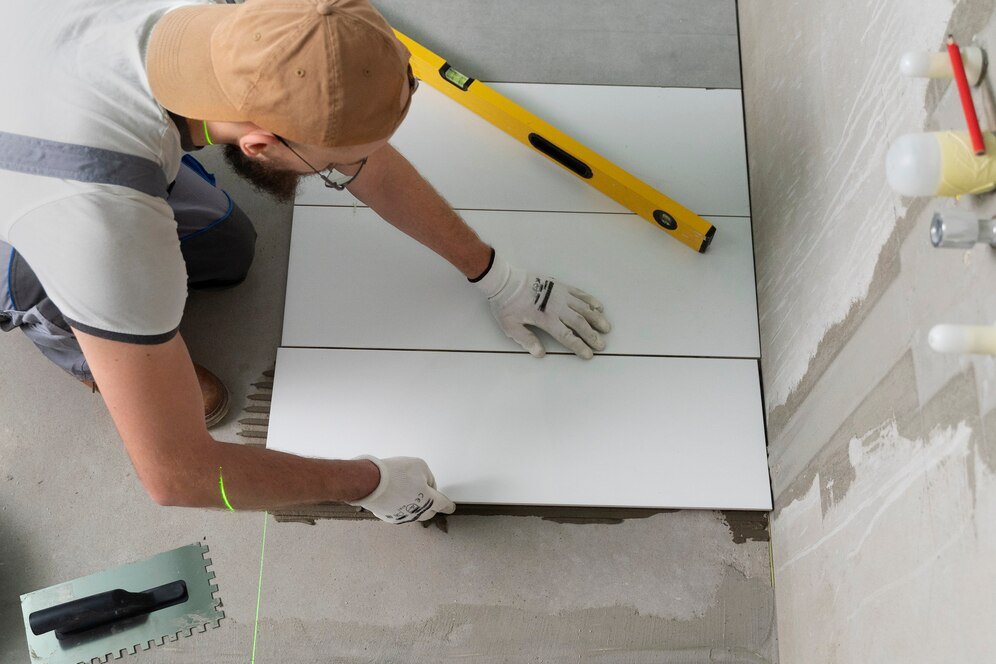
The previous modules gave you information on painting and wallpapering, and this final module in this mini-course will give you information on tiling .Many people love the look of tiling in their home, and even if you do not tile an entire wall, some clients will ask for decorative tile. The act of tiling is a bit more difficult than painting or wallpapering, but there is no reason why you cannot learn how to do this and become a pro. The other concept that this module will cover is what you need to do to start your own business as a painter and decorator in the UK.
5.2 Tools Required for Tiling

When you take on a tiling job, you will require a number of tools. In most cases, you should have the following on hand:
*Tape Measure
*Tile File
*Spirit Level
*Claw Hammer
*Tile Cutter
*Tile Spacer
*Jigsaw
*Tile Adhesive Trowel
*Pipe Detector
*Sealant Gun
*Grout Spreader
*Tile Edge Nipper
You might be able to hire some of these tools when you first begin, but if you are going to run a serious business, you should make sure that you have these tools readily available.
5.3 Measuring for Tiling

Before you do anything with tiling, you must make sure that you have correctly measured the area. First, you should measure the length of the area, and then divide that number by the length of one tile. Do the same with the width. Round up the numbers for length and width, and then multiply those to get the number of tiles you will require. You should add an extra 5%, just to allow for breakage or incorrect cuts.
5.4 Planning Your Tile Layout

Planning the layout for your tile is also important, as it will help you avoid any uneven spacing or rows that are poorly aligned. Use a spacer between your tiles for the best result. You don't have to necessarily use a professional spacer, but you should have an object that you use each time, such as a matchstick. Ensure that there is even spacing around each tile
Mark up only one wall at a time, ensuring that the horizontal lines all match up. You can do this by creating a baseline that runs around the walls. You also must take into account doors, window sills, work tops or other objects. If you are working with a wall that you will only tile partially, you must also decide at this point which layer of the wall will consist of whole tiles. If you only tile the bottom half of the wall, for instance, it is best to put the whole tiles at the top.
However, if you tile over a bath or worktop, you should put the whole tiles on top of the surface. If you have to tile around a door or window sill, you should consider your starting point, too. It is usually best to have tiles of equal size on the sides of the door or window, but you will also have to consider if you require equal sized tiles on the ends of the wall.
Marking Out the Wall
Now that you have an idea of how to arrange your tiles, you should also mark out the wall. Measure the wall's height and then divide that by two. Mark this on the wall. Take a gauge and make a light mark where tiles will be placed, all the way down to the bottom. Don't be surprised if the final tile is less than a full tile. This is why you have a tile cutter available. Take your spirit level and draw a line across the wall, horizontally, which allows you to mark out the bottom of the lowest row of whole, not partial, tiles. Place a batten to the wall along this new line. This is where you will begin to tile from. That takes care of the horizontal lines. To ensure the vertical lines are vertical, use your gauge rod and measure, then mark, guide lines. Space them about 1m apart. This way, you will have a guide to follow as you move around
the room.
Marking Your Tiles
With the wall marked out, you can now mark your tiles. If the walls are square, this is quite easy. To measure the wall tiles for cutting, place it upside down on the top of the fill tile or that it hangs over the other tile, and touches the wall you are tiling. Mark this at the point where the tile overlaps. Don't forget to take into account the space required for grouting. This then shows where you should cut.
Cutting Wall Tiles

With the tiles marked, it is time to cut. Make sure that you are wearing PPE, such as gloves and safety glasses. With the tile cutter at hand, score the surface where you will cut. Take a small, wooden batten on the floor, and then place the tile over it, ensuring that the scored edge is in line with the batten. Then, apply pressure on the sides to snap the tile at the line. If the tile isn't breaking, use pliers for more pressure.
Preparing the Wall Surface
Now, you must prepare the surface, and it must be clean and dry before applying the adhesive and tile. You might want to consider using detergent if the wall surface is dirty. If the surface is not even, you can also apply a self- levelling compound. Just keep in mind that this must dry overnight. If there are still ridges, use sandpaper to even it out.
Understanding Adhesives
When laying tile, you will have your choice of adhesives. Usually, the type of adhesive you choose will depend on where you will lay the tile.
For instance, if you are laying tiles in a bathroom, you will want to choose a waterproof adhesive. Take your chosen adhesive and begin where you have the wooden batten guides in place. Use a trowel or spreader to create ridges in the adhesive as you spread it onto the wall. It's best to work in areas of 1 - 2m.
Laying the Tile
Before you lay tile, make sure there are no small variations in colour. Then you can begin. Fix the first tile against the batten, directly onto the adhesive. Line that up with the vertical mark you made earlier, and then press the tile into the adhesive. The tile should be flat and fixed firmly. Place the second tile next to the first, making sure you are leaving space for the grouting. Remember, use an object, like a spacer or even a matchstick, to keep your spaces even. When you finish the first row, begin the second, moving up with each additional row. Leavethe batten in place until all of the tiles have dried into the adhesive.
Grouting the Tiles
When the tiles are all affixed to the wall with the adhesive, you are almost done. The final step is to grout. Again, there are different types of grout on the market, so make sure you use the right one for the job. Also, allow the tiles to sit for 24 hours before you begin grouting. When you are ready to begin, use a squeegee with a rubber-edge, which you can use to guide the grout into the spaces. Grout dries quickly, so make sure to only work in small areas. Work the grout in all directions, and push it into all of the tile joins. To smooth out the grout, use a small dowel and run it over each join. Remove excess grout quickly before it dries on the surface of the tile. Wipe away any wet grout, too, by using a damp sponge. Do this carefully, as you do not want to remove any grout that is between the spaces of the tile. When you finish, you will notice a thin film on the surface of the tile. Remove this with a rag by using a buffing motion.
Activity #1
Estimated Time: 10 minutes
In the previous modules, you learned a variety of painting and decorating techniques that you will use throughout the course of your career in the industry. You have covered basic painting, wallpapering, and how to paint using special techniques like stencilling and graining.
Now you are ready to learn tiling, a look that many homeowners request when building or upgrading their homes. The first thing you will want to do when preparing to tile is gather the tools you will need for the job. Next, measure the length of the area you are tiling and divide that number by the length of one tile, and repeat this process with the width. Once you get your figures, round them up for both length and width, and multiply them. This process will determine how many tiles you need to complete the job, although you should always add an extra 5%, for breakage or incorrect cuts. Your next steps involve arranging your tiles, how would you go about doing that? After arranging your tiles, what are the next steps?
5.5 Starting Your Own Painting and Decorating Business

As a professional in the painting and decorating trade, you can work for someone else, or you can work for yourself. If you do choose to work for yourself, you might find a lot of success, but you also might face difficulties ahead. In the UK, 20 percent of all businesses fail within the first year, and 50 percent fail within three years. There are different reasons for this, but in most cases, you will notice that the businesses were set up without the owner understanding all of the challenges involved and how the market works. The rest of this module will focus on what one needs to know before starting a business, and it will give you information about finding out if running your own business is right for you.
Are You Ready to Own a Business?
If you are even considering the thought of running a business, it is likely that you enjoy the work you do, and that you are good at it. However, you also must have other qualities, too. Making it through the first three years of owning a business requires a lot of hard work from the first day you start, and you will have to make both financial and personal sacrifices. If you are ready for this, you might be ready to start a painting and decorating business.
The Financial Side

Many people falsely believe that owning a business makes you wealthy. However, it generally takes years before a business starts earning a profit, and in the first couple of years, you might be lucky just to break even. So, you must decide if it is worth it for you to go without things, such as a holiday with the family or a new car for a couple of years.
The Personal Side
Your life will certainly change when you start a business, and there are both positive and negative aspects of this. For instance, you will be in control of your destiny, but there is a price to this, such as the emotional toll of the stress you might experience. Not only will this affect you, it can also affect your family. Hard work and long hours are non-negotiable when you own a business. Thus, you must always be committed. Do you have the self-motivation to do this?
Planning for Your Success
Having a business plan is essential to your success. Not only will this help you to secure financing for your new business, it also serves as a roadmap to follow as you move into the future. When you have a good business plan to follow, you can see issues coming before they start. Because of the importance of a business plan, there are a number of agencies that help to support new business owners in the UK. You can find out more by contacting the National Federation of Enterprise Agencies. Securing Your Finances
There is a false belief that you must be a financial wizard to run a business, but this is not true. However, you do have to know the basics of finances and know when you are out of your league; at this point, you should hire a professional. When you start a painting and decorating business, you will require money for supplies, such as a vehicle, and for marketing. You first must assess how much you need to borrow, bearing in mind cash flow. Most experts recommend borrowing enough to cover all expenses for the first six months.
Activity #2
Estimated Time: 10 minutes
With a solid business plan under your belt, you can now move on to securing the start-up capital required to start your business. The funds you need will go towards paying for supplies, marketing, a vehicle, and other expenses. You should know the basics of finances, or be willing to hire a professional prior to moving forward. Once you have secured enough funds to cover the first six months of your business, you should secure the proper insurance. Keep in mind that some insurance is required in the UK, and consider hiring a professional to help you. Now that all the start-up requirements are taken care of, you can start marketing your business in a way that will attract customers.
Based on the business plan you just wrote, which form of marketing is the best for you? Will you use direct or word of mouth advertisement? How will you attract customers to set your business apart from your competition? Considering the importance of communication and customer service, explain how you plan to provide exceptional customer service.
Finding Help
Because the financial aspects of owning a business can be difficult, it is important that you find help to put together a financial plan and help you to manage finances. The Institute of Chartered Accountants website has good information on how to find a good accountant in your area. These people will give you advice on financing, and they can also help with your taxes.
It is also important to get insurance for your business. Some types of insurance are compulsory in the UK, such as motor or liability insurance. However, other types of insurance are not, yet it's a good idea to get it just to be safe. An example of this is equipment insurance. Speak with an insurance professional who is familiar with the trade in your area for more specifics on insurance.
Marketing
You will also have to market your company. But, before you spend too much on advertising, you must understand where you stand in the marketplace. This means you have to know where to find customers, and know what your competition is doing. The goal, of course, is to give your business an edge. Word of mouth is okay in certain situations, but it will only get you so far. Direct marketing is a better way to get customers, but it is also an expensive way. So, it's suggested that you find the best marketing you can that still fits within your budget. Marketing is so important, in fact, that it might be worth your time to take a marketing course.
Working with Customers
Customer service is also an essential part of owning a business. The way you communicate with and treat your customers will certainly have an effect on the success of your business. Remember, when it comes to your customers, they are constantly comparing your services to those of your competitors, so make sure that you are always conducting yourself professionally - this is what the customer is looking for.
Record Keeping
When owning a business, record keeping is also important. You will not be able to keep your business running without at least a basic system for keeping records. At the very least, you should keep records on the amounts received, all expenditures, and any purchases or sales. You can do this on paper, of course, but it is always easier to use a system that is computerised. This makes it easy to delete, add, share, or amend your data. Additionally, these programs have features such as calculating a running total, which will save you a lot of work in the long run. Some banks offer free software to help with accounting, or there are other programs on the market that are specifically used for small businesses. Some examples of these include Intuit, Quicken, Microsoft Money, and Instant Accounting from Sage.
You can also find examples of spreadsheets online at Businesslink.gov.uk, which you can adapt to your business. This website also offers information on choosing the VAT scheme that is best for your company. This includes a Flat Rate Scheme, which helps to simplify VAT.
Keeping Up on Training
As you might have realised, the painting and decorating industry is constantly evolving, and trends will come in and out. In order to keep up with new innovations and decorating techniques, you should make sure that youkeep training. Many companies will offer training courses that you can take both online and in person. This not only gives you more knowledge, it can also be a good sales tactic to bring in more customers. If they know that you have knowledge on the latest and greatest trends and techniques, they are much more likely to choose you over your competition.
FACT
According to data collected this year, entrepreneurs are starting a record pace of 80 new companies an hour. Research further shows 342,927 new businesses registered between January and June, compared with 608,110 for all of 2015, itself a record year. The figures suggest 2016 will be a bumper year for small businesses, already beating the 70-an-hour pace of new company registrations clocked in 2015.
Source: telegraph.co.uk
5.6 Resources for Small Business Owners
As you venture out into the world of a small business owner, you will require support along the way. There are a number of UK organisations that offer support for small business owners. Some of these services are free, and others, though you must pay for them, are affordable. The following resources are worth looking into:
Business Link
Business Link is an organisation that was specifically designed to help small business owners comply with regulations that have been set forth by the government. These include managing your finances, paying the correct taxes, how to correctly employ people, how to market to customers, complying with environmental legislation, international trade, and more.
The National Federation of Enterprise Agencies

The National Federation of Enterprise Agencies, or NFEA, offers support for start-up businesses and for the self- employed. This is an organisation in England that essentially forms a network of agencies that are designed to
respond to the needs of start-up businesses. In particular, this federation helps small business owners to start and sustain their businesses, and then offers assistance with growing and stabilising the business.
Business Gateway
Business Gateway is a Scottish organisation that offers advice, help, and support for small businesses that arebased in Scotland.
Flexible Support for Business
Flexible Support for Business is an organisation based in Wales. This is a good organisation to contact if you have a small or medium-sized business in Wales.
Invest Northern Ireland
Invest Northern Ireland is an independent organisation that supports small business owners in Northern Ireland.
Activity #3
Estimated Time: 10 minutes
Now that you have learned all that is required of you as a painting and decorating professional, you may be ready to open your own business. If you have decided that you are ready to own a business, there are some challenges and things you must first consider. There are long hours associated with opening a business, and it may take years to begin earning a profit. The first thing you should do is prepare a proper business plan, which will help you to foresee any future problems, and act as a roadmap for business success. To prepare yourself to own a painting and decorating business of your own, map out your business plan. What elements will you include in your plan? Are there any agencies that you can contact in the United Kingdom for support?
The following are other organisations that you should consider looking into when starting your small business:
*British Chambers of Commerce
*Federation of Small Businesses
*Painting and Decorating Association
*The Scottish Decorators Federation
*The Northern Ireland Master Painters Association
Module Summary
This final module in the course was almost like two separate modules when considering the subject matter. The first half of this module focused on tiling. As you worked through the material, you learned which tools are required for tiling, and how to measure areas for tiling. Additionally, you learned the steps that are required for planning out your tiling area, including how to plan out areas around worktops and baths. The module also included information on marking out walls and marking on tiles, and then showed how to cut tiles by hand or with a tile cutting machine. The module went even further and explained how to apply adhesive to tiling areas and how to lay the tiles upon the adhesive. Finally, you received information on how to grout tiles and how to clean and buff the tiles when the job is completed.
The second half of the module focused on starting a business in the painting and decorating trade. The module presented information about whether starting a business is right for you, and explained some of the things that it takes to run a small business. Additionally, the module presented information on the financial side of running a small business, and how basic accounting and financial skills are required. You also should have learnt how marketing and customer service are essential to having a successful business. You were also told about the importance of training and record keeping. Finally, the module offered some information on resources that are available for small business owners in the UK.
.svg)



