
5.1 Module Introduction

Welcome to our final module in this Zen garden course. As you have worked through this course, you have learned about the concept of Zen, as well as the steps required to build a Zen garden on your property. We also introduced information on how to add different elements to your Zen garden, including water features such as ponds, waterfalls, and fountains.
In this module, we show you how to care for your Zen garden after it is built. We discuss the tools you require to maintain your Zen garden and we focus on raking gravel and the symbolism behind it. Additionally, we focus on general garden maintenance and pest control.
5.2 Tools Required for Zen Garden Care

To successfully care for your Zen garden, it is important to use the correct tools. Because every Zen garden is different, the tools that you have for your garden might be different from the tools your neighbour might use in their Zen garden.
For instance
If you have a traditional dry Zen garden, you do not require a hedge trimmer, but if you have greenery in your garden, you might need this.
Tweezers
Rakes aside, the most important tool you need for a Zen garden is a pair of large tweezers. These are used to remove weeds from the gravel and mosses. Remember, when you build your Zen garden you should have something under the gravel to dissuade weed growth, but weeds still find their way in there.
Removing weeds is a task that takes a lot of time, so you might want to consider buying several tweezers of different sizes. There are large tweezers on the market that are excellent for removing roots, but smaller tweezers are ideal for removing invasive moss or other small weeds. You can combine tweezer use with rakes to get large roots out of the garden.
Hedge Trimmers
If you have trees or shrubs in your Zen garden, you also need a pair of hedge trimmers. These help to keep trees and shrubs from becoming overgrown.
Grabbing Tools
Another tool you need for your Zen garden is a grabbing tool. This tool is used to remove debris, such as branches or leaves, which have fallen onto the raked gravel. If you step on the gravel, it ruins the design, so instead, you can use a grabbing tool to extend your reach and pick up the debris.
Rakes
Of course, you also need rakes for your Zen garden regardless of if you have a dry rock garden or one that is filled with greenery. Raking the gravel in a Zen garden is one of the primary tasks people do in their gardens, and we have information about that later in this module. The gravel rake for a Japanese Zen garden is a bit different from a typical rake.
In fact, there are two types of rakes used in a Zen garden: a saw-tooth rake and dowel-tooth rake. The saw-tooth rake is made of a single piece of wood and the teeth look like the teeth of a saw. There is a triangular shape between each tooth. The dowel-tooth rake is generally made from wood or bamboo, and it features wooden dowels that form the teeth. When you start looking for rakes for your Zen garden, you might notice that the space between the teeth is varied. This is due to the varying sizes of gravel. If you have chosen coarse gravel for your garden, you must choose a Zen garden rake that has more space between the teeth. If you have smaller gravel, or sand, choose a rake that has less space between the teeth. You also might find grakes of different widths.
If you are an enterprising individual, you also might decide to make your own rake. There are a lot of plans on the internet that you can use. Both rakes should have a βlat side, too, as you need those to flatten out the gravel before you start raking designs into the garden.
Fact
Most people rake their Zen garden every week or two, but some choose to flatten and rake the garden each day.
Source: Independent.co.uk
Hard-Bristled Brush
You also should have a hard-bristled brush. This might be a broom, or even a hand brush, that you can use to clean up gravel that has come onto paths or around moss or greenery. Just be careful that you do not brush moss too hard, as it can damage the moss.
Activity 1
Estimated time: 10 - 15 minutes
Having the right tools on hand for your Zen garden is extremely important, but everyone who works through this course has a different design in their garden.
So, think about your personal Zen garden and start to make a list of the tools you need. Everyone, of course, needs to get a rake or two, but depending on the types of plants or other elements you have in the garden, such as a pond, you might require different tools.
5.3 Preparing the Gravel in Your Zen Garden for Raking
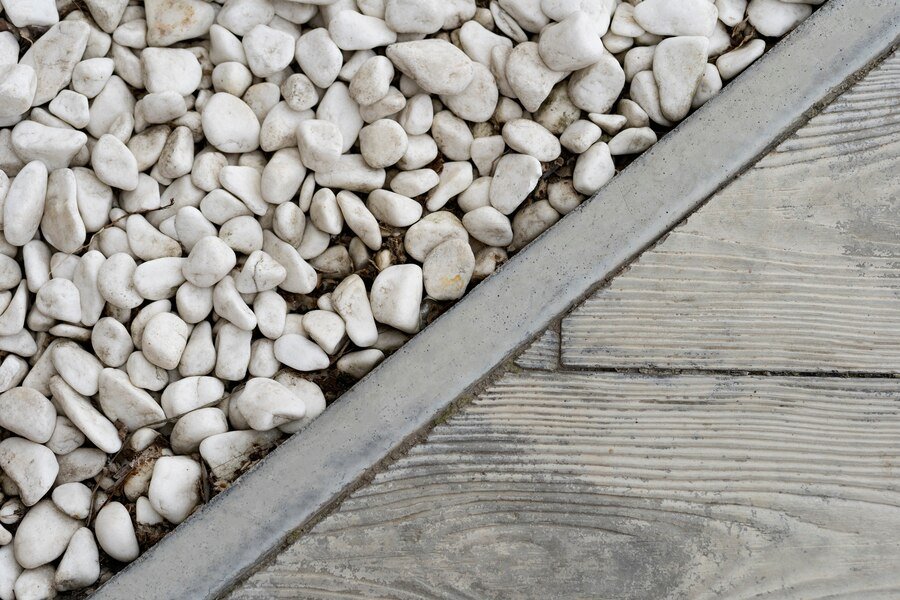
You are probably really looking forward to the act of raking the garden, but before you do, you must make sure that the gravel is ready for raking. This is something that must be done every time you rake the gravel, as you have to have a clean, smooth surface to work with. The first step in gravel preparation is to thoroughly clean the gravel. This means cleaning up all debris and pulling all of the weeds. You can walk on the gravel at this point, so do not worry about using your grabbing tool, unless you are unable to bend down. You must also remove any branches or leaves, which you can do with tweezers or a rake. The more weeds you get out at the start, the easier it is to maintain your garden in the future.
After you are done removing weeds and other debris from the gravel, you then must flatten it. When you first start your Zen garden, you have to make sure to tamp down the gravel before flattening it. You can do this with a tamping tool, or you can use a heavy brick or piece of wood to tamp by hand. You want to tamp the gravel to get all of the air out and to make it as firm as possible. When pulling the rake through, it can be difficult to create lines if the gravel is too loose.
After you have tamped down the gravel, it must also be flattened. The rake that you use to create your Zen garden has a flat top, and this is the part you should use to flatten the gravel. Put the flat part on the gravel and use a back and forth motion to βlatten it out. Your gravel surface should be entirely level before moving on.
Before raking your gravel, you should 'water' it with a hose or even a watering can. If you use a hose, however, make sure that you do not drag the hose over the gravel. If you do, it might make marks, which will not look right when the raking is done. Why water? It helps the lines to be crisper and more noticeable.
Tips to Keep in Mind Before Raking
We are almost ready to rake, but before we give you instruction on this, it is important to keep a few things in mind about symbolism. As you likely remember, every part of the Zen garden has some type of symbolic meaning. So, it should not be a surprise to know that the way a person rakes is symbolic, too. However, you must remember that everyone has their own interpretation of what the lines and designs in a Zen garden mean.
At a basic level, you might find this:
-Wavy lines often represent fluidity, and you often see them as symbolic of water, though some look at these lines to represent movement. -Different wavy lines offer different meanings depending on how you look at them.
-Straight lines add a sense of power and strength to the design of the garden, or might represent a journey.
-You might also see cross patterns, and these might represent change or conflict.
-The point is, each viewer who looks at your garden might have a different attitude to it or they might see different things. When you are first starting, have fun with it; you can always change the pattern at any time.
The Japanese Names of Different Patterns
The Japanese have speciβic names for different patterns in Zen gardens.
Here are some of these:
Chokusen-mon - Straight lines raked into the gravel
Kyokusen-mon - Stream patterns that seem to meander
Ryushi-mon - Stream patterns that do not meander
Ren-mon - Patterns in gravel that look like ripples in water
Maru-uzu-mon - Patterns that look like water drop waves
Shokubutsu-mon - Plant patterns
You might also see these when looking at different patterns for your Zen garden:
Mizu-mon - A water pattern that is very common, and is usually raked around rocks to indicate ripples.
Aranami - Stormy waves, which are representative of turbulent oceans. These are large, sweeping raking patterns.
Tatsunami - Great waves, which are created by large wave patterns.
Ryusui - The raking is done to look like a stream or river, and it looks like running water.
Sazanamimon - Ripple patterns, which are created around rocks.
Activity 2
Estimated time: 10 - 15 minutes
To fully appreciate how to create these lines in your Zen garden, it is best to watch someone else do it. If you know of a local Zen garden in your area, βind out if they have any public demonstrations.
If you cannot βind a local Zen garden, or you would rather continue your studies online, you should look to a video site, such as YouTube, and do a search about raking Zen gardens. There are thousands of videos out there that give you a look at creating Zen gardens.
5.4 Raking Your Zen Garden

When you rake your Zen garden, you are adding a sense of tranquillity. People rake their Zen gardens into patterns in order to enjoy the specific type of meditation they receive through creating these patterns. Remember, this course has taught you that a Zen garden is a place for peace and meditation, so you should not ever think of raking your Zen garden as a chore.
Instead, this is a task that you should enjoy. The process of raking all of the pebbles, sand, and gravel in the garden should bring a sense of calm, and most people find that creating circular patterns, such as around rocks or boulders, is extremely relaxing because it takes a lot more concentration to create a circle than it does lines. As you begin to rake, you might find that it is difficult to make straight lines or circles in the gravel; this is normal.
Even Buddhist priests who spend much of their time in these gardens often take a couple of years before they can perfect their raking. However, in Zen, the goal of these gardens is not to achieve perfection; instead, the goal is to move through the process and the journey of learning perfection.
You might wonder why we have not yet given you specific instructions on raking, or why it is difficult to find a raking guide. Well, it is because another point of these gardens is to learn to tend them on your own. There are no rules in Zen gardening, there is no correct way to hold a rake or a tool, and there is no method for creating grooves in the gravel. Instead, you use the rakes and tools in the way that is most comfortable to you.
Another important point about this is that another part of Zen is to learn through trial and error. When we learn something new, there is usually a sense of frustration or irritation associated with this new task. Zen gardening is no exception, and you might experience these negative feelings. However, Zen is also about moving past these frustrations and finding stillness and silence in the mind. Eventually, Zen gardeners find a sense of tranquillity as they continue to practice Zen gardening. Every time you rake, you get better, but every time is also different. Each gardener learns what methods work for them, and eventually learns to find peace.
Raking a Zen garden is both an art and a practice, just as it is a mental and physical exercise. Peace and tranquillity do not automatically enter into your mind and body simply because you make a perfect circle in your Zen garden. Instead, it comes from exercising and improving your meditative focus through the physical act of raking. You start the process the moment that you look at the Zen garden, and it continues as you do certain acts in your garden from raking lines and removing debris to feeding your koi or trimming your cherry blossom tree. You might experience this for only a few fleeting moments or for several hours.
5.5 Zen Garden Maintenance

At this point in the course, you know how to build your Zen garden and you know how to rake your Zen garden, but as the weeks turn into months and the months into years, you have to maintain your garden. Every few days you must clean up the debris in your garden, and you should remove weeds quite often, too. However, you might notice that you are not just dealing with leaves and weeds, as over time, the grass might start growing over the edge of your garden or moss might grow in places where you do not want it to. How do you deal with these issues? We have some suggestions.
Removing Creeping Groundcover
Ground covering plants have a tendency to creep onto the gravel in Zen gardens over time. Thus, they require strict maintenance to keep their edges. Therefore, you have to make sure that you trim the edges frequently; at least two to three times each year. Over time, the lines between your gravel and the groundcover you have chosen may blur. The only exception is if you have some type of edging, but even so, you might see the plants coming over the edging. Again, in the spirit of Zen, the process of removing this groundcover is largely up to you, but there are a few things you should remember.
First, raking the gravel out of the creeping plants is important. Do this with a hand rake, making sure that you get as much of the gravel back into the gravel area as possible. The second thing to do is to take secateurs and cut away the part of the plant that has crept over the gravel. Try to keep the waste out of the gravel as much as possible, and dispose of it. You do not want to leave it there, as it can blow back into the gravel of the Zen garden.
At this point, if you have weed control fabric or another layer under the gravel, you should see it. Remember, this helps to control weeds and creeping, so it is strongly recommended. Your gravel likely is dirty at this point, as much of the soil has come to the surface. You can hose down the gravel if you like, or wait for a good rain. Either way, you must rake the gravel back against the edge of the garden again. If you keep a small space between the gravel and plant cover, you can slow down the growth. At this point, you likely have to rake the gravel again, so wet it down, flatten it, and begin raking your clean Zen garden.
Pest Control
When you have any type of garden, yes, even a traditional Zen rock garden, you must utilise pest control. Now, this leaves us in a bit of a sticky situation. Why? Buddhists, in general, do not believe in killing a living being, which includes insects. So, if you are following an extreme Buddhist practise, here, you might want to choose Buddhist methods of pest control, which we have some information on.
Before we get into pest control, it is important that you understand the care that you must take when using insecticides and pesticides. Not only are some pest control chemicals dangerous to you and animals, it could also be dangerous to your plants. Thus, it is important to follow all directions when utilising these chemicals.
It is also important to remember that not all insects are enemies. Some work to pollinate the plants in your garden, whilst others help to break down organic matter, which might help plants grow. It is important that you realise what insects are good and what insects are bad.
Below are some pest control tips for your Zen garden.
Fact
The Buddhist belief of karma teaches practitioners that negative behaviour, such as killing or harming animals, including insects, must be paid for in a future lifetime.
Source: BBC.co.uk
Controlling Spiders
Spiders are a fact of life in a garden, and though they can be helpful as they eat other insects, sometimes you just might want them out of there. Once you set up your garden, spiders might be attracted to it, so if you do not want them there, you can remove them. The Buddhist way of doing this is to simply collect the spiders by hand and relocate them to another area. If you are not interested in touching spiders, there are collection products on the market that do not harm the spiders. Think of them as a spider hoover that you can later empty elsewhere.
Controlling Ants
Ants also are in your Zen garden, especially if you do not keep it as clean and tidy as you should. Ants also naturally love certain vegetation, including those that might appear in your Zen garden. You might not see a couple of ants as an issue, but a few ants mean that there is a colony nearby, and the ants in these colonies can number in the thousands. There are plenty of ant repelling substances on the market, including traps, powders, and granules. If you are Buddhist, or wish to not harm the ants, there are other methods that you might want to
utilise.
First, you can buy an inexpensive hoover and simply suck the ants up before relocating them in a different area. Another option is to repel the ants from your garden. A mixture lemon juice, tea tree oil, mint tea, and grapefruit extract can work wonders. Ants also do not enjoy pepper, so a sprinkle of black pepper or chilli powder also works well.
Snails and Slugs
There are a number of anti-slug and snail pesticides on the market, too. You should also make sure to clean up debris, daily, as this is where snails and slugs like to gather. If you want to take care of snails and slugs the Buddhist way, by not killing them, we have some suggestions.
First, slugs and snails do not like copper, so placing copper in your garden, which is metal and a perfect addition to a Zen garden, can greatly help. There are also homemade snail and slug traps you can build with things you likely have around your home, such as plastic bottles from your favourite fizzy drinks.
Mice
It is also possible that mice could come into your Zen garden. In this case, you have to urge the mice to move, or move them yourself. If you do not, you risk new housemates, as it is only a matter of time before they find themselves in your home. Humane traps are some of the best ways to remove mice if you prescribe to Buddhist ideals. These are available at most garden centres, and you can even find them at many large retail stores. These traps lure the mice in and hold them, but do not kill them. Once the mouse is in the trap, you can take it to a more suitable environment.
Aphids and Other Leaf Eating Insects
Another common issue in gardens are aphids. These insects eat the leaves of your plants, and other insects might choose to dine on the stems or branches. Even if you do not have traditional plants in your Zen garden, you might find that aphids and other insects attack trees.Aphids are small, but you can easily see them so many people choose to pick them off of the leaves when they see them. You can also repel these insects by misting peppermint essential oil mixed with water around the garden.
Cats
It does not matter if you have a traditional rock garden or a garden that includes plants, you might find that cats use your Zen garden as their personal toilet. You certainly do not want cats to walk across the gravel that you have raked, and you certainly do not want to have clean up after them. Fortunately, there are some Buddhist-friendly ways to keep cats out of your garden. One thing to try if cats are making their way into your Zen garden is to set up a bit of an obstacle course.
You can use branches stuck into the ground in an upright position, wooden chopsticks, or any number of other wooden devices that are not too sharp. Place these around the garden with one every few centimetres. You want to choose wood because it will not harm the cat and it can add into the natural balance of the garden. Another way to keep cats out of the garden is to place strong smelling plants around the edges of the garden. Some of these plants include lemon thyme, ruta/rue, and Coleus canina. These plants do not harm cats, but they keep them away.
Using Meditation
Finally, to get rid of all pests, many Buddhists and Zen garden lovers utilise metta meditation. Your Zen garden is meant to be a place to meditate anyway, so you might as well give this practice a try. Metta meditation is also called 'loving-kindness' meditation, and is quite easy to master. Essentially, the basic practice of metta meditation consists of repeating phrases such as 'may you be free from suffering,' 'may I be happy,' or 'may you be happy.' These, of course, are supposed to be directed at a person, or yourself, but this can also be used in the garden.
The idea here, is that the more you practice this type of meditation in your garden, the more positive energy flows throughout. Since pests bring negative energy into the garden, this positive energy helps to push it out.
Activity 3
Estimated time: 10 to 15 minutes
Some spiders in the garden are very helpful in controlling pest populations, yet others are not. You should know what spiders are good and which are bad.
Do some research about your specific area and learn to identify the spiders that you should keep and which you should remove. This is a helpful task that improves your garden
MODULE SUMMARY
In this final module, you learned about the special tools you might use as you create a Zen garden,and you also learned about how to prepare the gravel in your garden for raking. Additionally, we shared information about how to rake your Zen garden, but also explained that part of the concept of Zen is for you to learn how to do this in a way that is the most comfortable for you.
We discussed the symbolism behind some of the raking patterns, and explained how these patterns vary from each other. Finally, we closed the module with information about pest control in a Zen garden, including both western and Buddhist methods of eradication.We have come to the end of our Zen garden course. Throughout this course, you learned all there is to know about creating a basic Zen garden.We encourage you to continue your studies of Zen and Buddhism to see how to better incorporate these ideals into your garden.
.svg)



